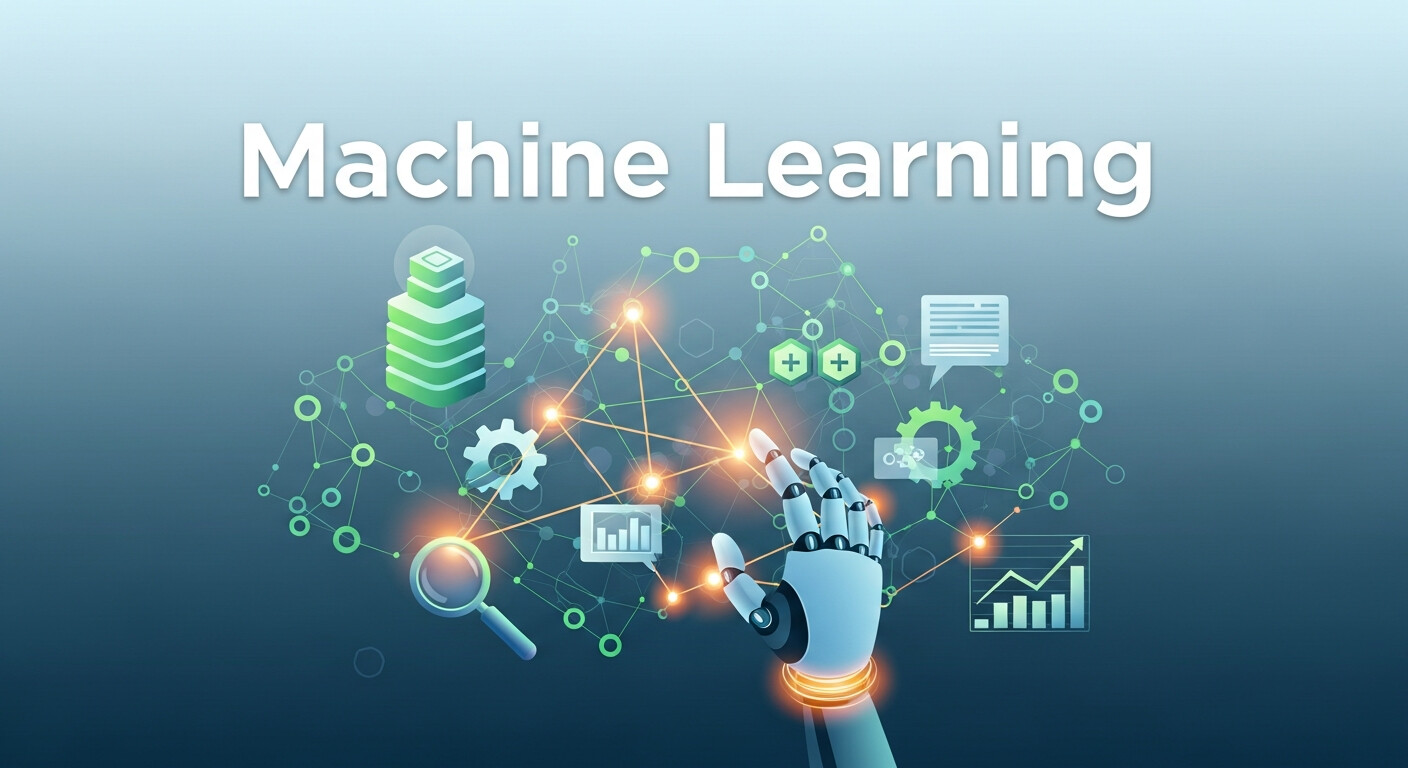
Machine learning is no longer just a buzzword; it’s at the forefront of some of the most exciting advancements in the digital age. From recommendation algorithms to self-driving cars, machine learning is shaping industries and transforming the global economy. If you’re eager to dig deeper into this field and gain a solid understanding of its principles and applications, there’s no better way than to turn to books written by experts in the industry.
Whether you’re a beginner curious to understand the fundamentals or an advanced learner looking to refine your skills, this guide highlights the best machine learning books to suit your learning needs.
Why Learning Machine Learning Requires the Right Books
Before jumping into our list, it’s worth considering why books remain one of the best resources for mastering machine learning. Unlike quick tutorials or online courses, many books provide in-depth knowledge and thoughtful explanations of both theory and practical applications. They’re authored by field experts who understand the evolution and nuances of the subject, offering valuable insights that stand the test of time.
Now, without further ado, here is a curated list of the top machine learning books to get you started or enhance your expertise.
Hands-On Machine Learning with Scikit-Learn, Keras, and TensorFlow by Aurélien Géron
What Makes It Great
Designed for beginners and intermediate learners, this takes a hands-on approach to teach you how to implement machine learning techniques. Using Python’s most popular libraries like Scikit-Learn, TensorFlow, and Keras, the book combines clear explanations with practical examples.
You’ll learn about supervised learning, unsupervised learning, neural networks, and even deep learning in a structured and digestible manner.
Key Features
- Practical projects to solidify your knowledge.
- Coverage of real-world use cases like recommendation systems and deployment techniques.
- Code examples and exercises for hands-on experience.
Who Is This Book For? If you are a beginner with some Python programming experience, this book will give you a comprehensive introduction to machine learning and deep learning.
Pattern Recognition and Machine Learning by Christopher M. Bishop
What Makes It Great
This book is often considered a gold standard in the field of machine learning. Christopher M. Bishop’s detailed work focuses on statistical pattern recognition and probabilistic models. While it is math-heavy, it lays a solid theoretical foundation and is recommended for those with a good understanding of linear algebra, probability, and calculus.
Key Features
- Detailed mathematical explanations and illustrative examples.
- Covers Bayesian networks, the Expectation-Maximization algorithm, and kernel methods.
- Provides theoretical depth for graduate students and researchers.
Who Is This Book For? Advanced learners or graduate students aiming to master the mathematical underpinnings of machine learning.
Machine Learning Yearning by Andrew Ng
What Makes It Great
Written by Andrew Ng, one of the most prominent names in AI, this book is a concise guide to machine learning project workflows. Unlike technical textbooks, this book focuses on how to structure machine learning projects for real-world applications. It’s a great resource for business professionals and engineers who want to bridge the gap between theory and practice.
Key Features
- Guidance on setting up machine learning projects effectively.
- Tips for error analysis, transfer learning, and scalability.
- Written in simple, accessible language.
Who Is This Book For? Anyone who wants practical advice on implementing machine learning in business or engineering contexts.
Deep Learning by Ian Goodfellow, Yoshua Bengio, and Aaron Courville
What Makes It Great
This book, authored by leading AI experts, dives deep into the world of deep learning. It provides a comprehensive overview of the concepts, algorithms, and applications of deep neural networks. While it’s academically focused, it remains approachable for those who take the time to understand its math-heavy content.
Key Features
- Explores the theoretical foundations of deep architectures.
- Covers topics like optimization algorithms, convolutional networks, and sequence processing.
- Extensive references and in-depth explanations.
Who Is This Book For? Aspiring deep learning researchers and students with a background in statistics and math.
Python Machine Learning by Sebastian Raschka and Vahid Mirjalili
What Makes It Great
For anyone wanting to combine theory with immediate coding practice, this book strikes the perfect balance. It uses Python’s machine learning libraries, such as NumPy, Pandas, and TensorFlow, to teach foundational concepts and advanced methods like reinforcement learning and GANs (Generative Adversarial Networks).
Key Features
- Step-by-step guides for implementing algorithms in Python.
- Covers a broad range of concepts, from preprocessing data to deploying models.
- Updated regularly to include the latest advancements.
Who Is This Book For? Intermediate students and developers looking to implement advanced machine learning projects.
The Hundred-Page Machine Learning Book by Andriy Burkov
What Makes It Great
Short on time? Andriy Burkov’s book distills the most important concepts of machine learning into just 100 pages, making it an excellent resource for quick learners. Despite its brevity, it manages to explore key topics like supervised and unsupervised learning, feature engineering, and model optimization.
Key Features
- Simplified, no-nonsense explanations of core concepts.
- Easily approachable, even for beginners.
- Offers theoretical and practical insights.
Who Is This Book For? Anyone who wants a compact, no-fluff introduction to machine learning.
Machine Learning and the Rise of Intelligent Conversations
Machine learning has become the backbone of intelligent conversational systems that businesses now rely on for customer engagement. Modern chatbots are no longer limited to scripted replies; they analyze user intent, behavior, and sentiment to deliver meaningful responses. By combining natural language processing with predictive modeling, organizations can create conversational experiences that feel more human. This evolution has significantly impacted marketing strategies, especially in areas like emotion AI chatbot marketing, where understanding customer emotions drives higher engagement. Machine learning models continuously learn from interactions, improving accuracy and relevance over time. As a result, businesses can automate conversations while still maintaining personalization, consistency, and scalability across multiple digital touchpoints.
How Data-Driven Personalization Enhances User Experience
Personalization is no longer optional in today’s digital ecosystem, and machine learning plays a critical role in making it effective. By analyzing user data such as browsing history, preferences, and interaction patterns, intelligent systems can tailor conversations and recommendations in real time. This approach is central to chatbot personalization strategies, where responses adapt based on user context rather than generic flows. Machine learning algorithms identify patterns that humans might overlook, allowing brands to anticipate needs and deliver relevant messages instantly. The result is higher user satisfaction, improved retention, and stronger brand trust. Personalized chatbot interactions also reduce friction in customer journeys, making experiences smoother and more intuitive.
Understanding Customer Emotions Through AI Models
Emotion recognition has become a powerful application of machine learning in customer communication. Advanced models can analyze text, tone, and interaction behavior to detect emotions such as frustration, satisfaction, or confusion. These insights allow businesses to respond empathetically and adjust messaging accordingly. Emotion AI chatbot marketing leverages this capability to create emotionally intelligent interactions that resonate with users. Instead of offering one-size-fits-all responses, systems adapt their tone and recommendations based on emotional signals. This leads to more meaningful conversations, faster issue resolution, and improved brand perception. Over time, emotion-aware models help organizations refine their communication strategies by learning how emotional patterns influence customer decisions.
Measuring Conversational Performance With Smart Analytics
Analytics is essential for understanding how conversational systems perform, and machine learning makes this analysis more actionable. By tracking engagement rates, response accuracy, and conversion metrics, businesses gain deeper insights into what works and what doesn’t. Chatbot marketing analytics uses machine learning to process large volumes of conversational data and uncover trends that manual analysis cannot. These insights help marketers optimize scripts, improve personalization logic, and identify drop-off points in user journeys. Predictive analytics can also forecast future behavior, allowing proactive improvements. With continuous data feedback, conversational systems evolve into high-performing marketing tools that drive measurable business outcomes.
Bridging Marketing Strategy and Automation With AI
Machine learning enables a seamless connection between marketing goals and automated communication. Instead of static campaigns, AI-driven systems adjust messaging based on user behavior and intent. This flexibility supports advanced chatbot personalization strategies that align with broader marketing funnels. Machine learning models determine when to nurture leads, offer promotions, or escalate conversations to human agents. This balance between automation and relevance improves efficiency without sacrificing user experience. As campaigns scale, AI ensures consistent messaging across platforms while adapting to individual preferences. The result is a smarter, more agile marketing approach where automation supports strategy rather than replacing human insight.
Ethical Considerations in Intelligent Chatbot Design
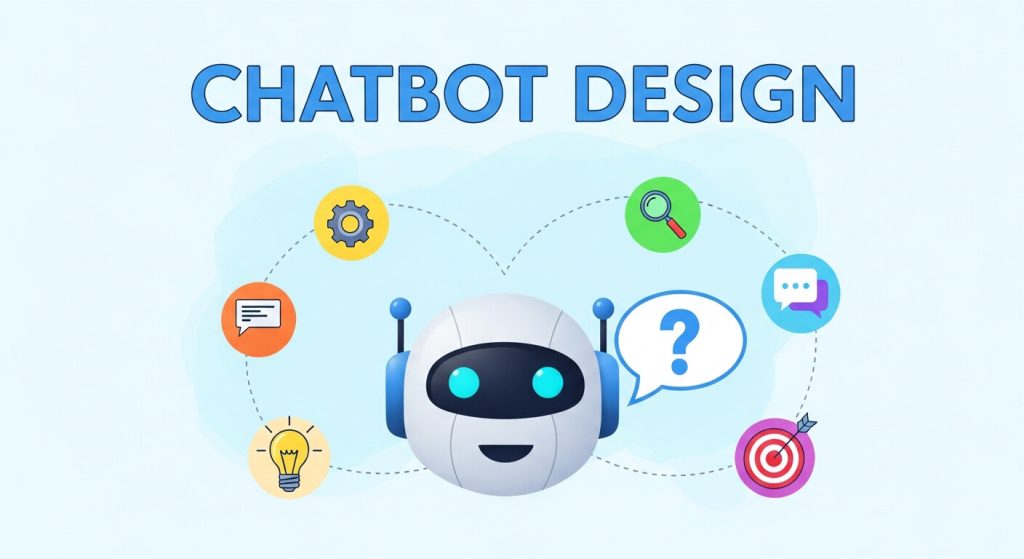
As machine learning becomes more integrated into customer interactions, ethical considerations grow increasingly important. Responsible use of data, transparency, and user consent must guide chatbot development. Emotion AI chatbot marketing, in particular, requires careful handling to avoid manipulation or privacy concerns. Machine learning models should be trained on unbiased data and designed to respect user boundaries. Clear disclosure about data usage builds trust and long-term credibility. Ethical design also improves performance, as users are more likely to engage with systems they trust. By prioritizing fairness and accountability, businesses can leverage intelligent chatbots while maintaining strong ethical standards.
Which Book Should You Start With?
If you’re new to machine learning, start with “Hands-On Machine Learning with Scikit-Learn, Keras, and TensorFlow.” It introduces practical examples using Python while explaining key concepts in an approachable way. For those looking to strengthen their theoretical understanding, “Pattern Recognition and Machine Learning” or “Deep Learning” are excellent choices.
Remember, no single book can encompass every nuance of machine learning. It’s a vast and evolving field, and exploring multiple resources will enable you to build a well-rounded understanding.
Take the Next Step in Your Machine Learning Journey
The future of technology is heavily influenced by machine learning, and the best way to stay ahead is to strengthen your understanding and skills today. Whether you’re an aspiring data scientist, engineer, or AI enthusiast, the books on this list will be your stepping stones to mastering machine learning.
Which title caught your interest? Grab a copy and start your learning adventure today. If you’re looking for further guidance, check out our beginner’s guide to Python programming and boost your machine learning skills even more.
Preparing for the Future of AI-Driven Marketing
The future of digital marketing will be shaped by increasingly intelligent conversational systems powered by machine learning. As models become more advanced, chatbots will move from reactive tools to proactive engagement channels. Innovations in chatbot marketing analytics will allow real-time optimization, while personalization strategies will become even more refined. Businesses that invest early in machine learning expertise and quality data infrastructure will gain a competitive edge. Continuous learning, experimentation, and ethical implementation will define success in this space. By embracing AI-driven conversations today, organizations position themselves to meet evolving customer expectations and adapt to tomorrow’s marketing landscape.
Frequently Asked Questions (FAQ)
What is machine learning in simple terms?
Machine learning is a branch of artificial intelligence that allows computers to learn from data and improve their performance without being explicitly programmed. It helps systems identify patterns, make predictions, and automate decision-making in areas like recommendations, image recognition, and fraud detection.
Are machine learning books better than online courses?
Machine learning books often provide deeper theoretical understanding and structured explanations compared to short tutorials or courses. While online courses are great for quick learning, books written by experts offer long-term value, detailed examples, and a stronger conceptual foundation.
Which machine learning book is best for beginners?
For beginners with basic Python knowledge, Hands-On Machine Learning with Scikit-Learn, Keras, and TensorFlow is one of the best starting points. It balances theory with practical coding examples and real-world use cases.
Do I need strong math skills to learn machine learning?
Basic machine learning can be learned with minimal math, especially using practical books. However, advanced topics like deep learning and probabilistic models require a solid understanding of linear algebra, probability, and calculus.
What is the best book for understanding machine learning theory?
Pattern Recognition and Machine Learning by Christopher M. Bishop is widely regarded as one of the best books for mastering the theoretical and mathematical foundations of machine learning.
Is Python necessary for learning machine learning?
Python is not strictly mandatory, but it is highly recommended. Most modern machine learning libraries, tools, and books use Python, making it the most practical language for beginners and professionals alike.
Which book is best for deep learning?
Deep Learning by Ian Goodfellow, Yoshua Bengio, and Aaron Courville is considered the definitive resource for deep learning concepts, algorithms, and research-level understanding.
Can I learn machine learning only by reading books?
Books provide an excellent foundation, but hands-on practice is essential. Combining books with coding exercises, projects, and experimentation will help you truly understand and apply machine learning concepts.