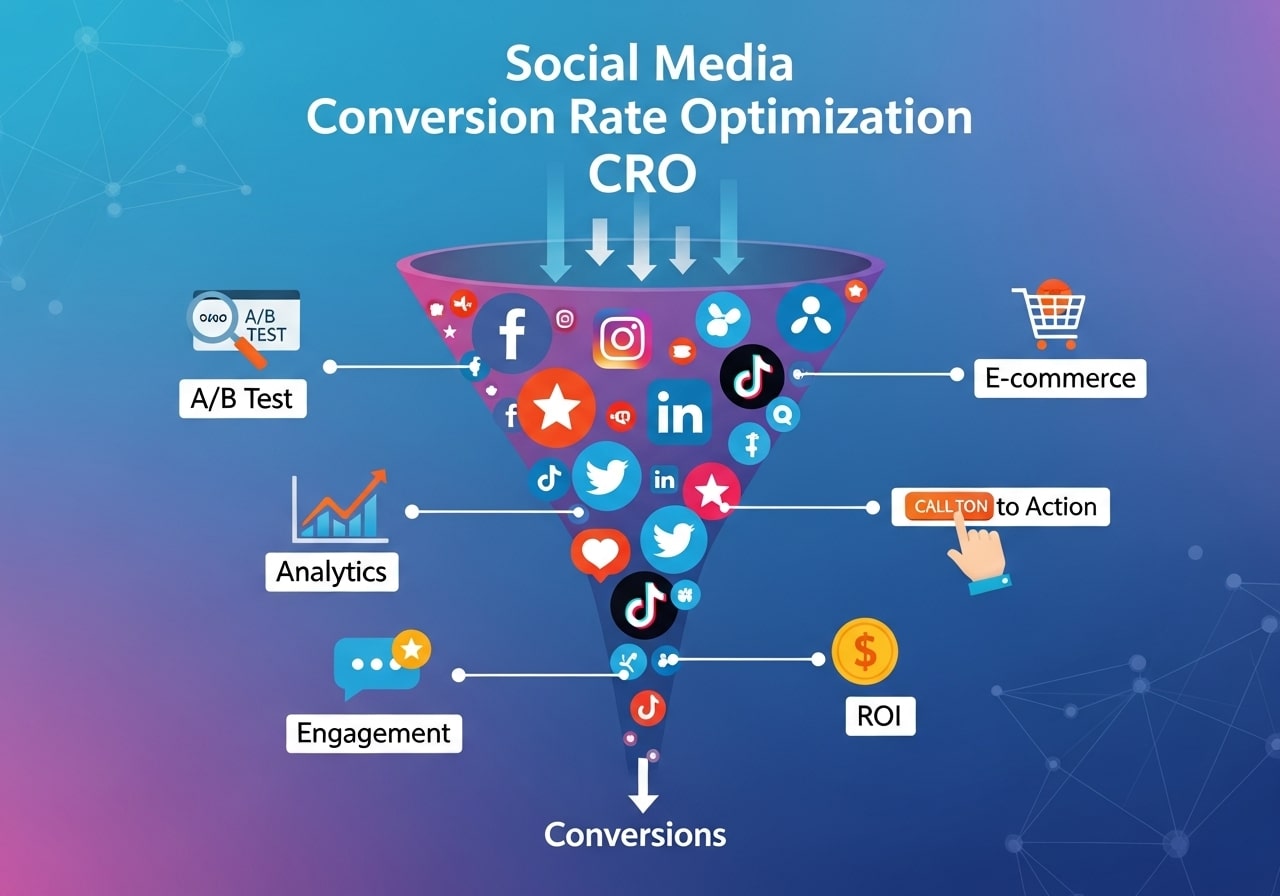
Social media management enhances Conversion Rate Optimization (CRO) by driving targeted traffic, building trust through social proof, enabling retargeting, and providing insights. Combined with optimized content, personalized messaging, and consistent user experiences, it significantly boosts conversions and ROI.
Effective Conversion Rate Optimization (CRO) isn’t just about tweaking landing pages or running endless A/B tests. To truly maximize results, businesses are turning to an often-underutilized asset: social media management. Today, social platforms are a goldmine for brands eager to strengthen their marketing efforts and maximize conversions. This blog explores how thoughtful social media management can amplify your CRO strategy while uncovering actionable tips to put this approach into practice.
Understanding CRO and Social Media Management

Before we connect the dots, let’s briefly define these key concepts:
- Conversion Rate Optimization (CRO): CRO is the strategy of increasing the percentage of users who take a desired action, whether that’s making a purchase, signing up for a newsletter, or downloading a resource.
- Social Media Management: This refers to the process of creating, scheduling, analyzing, and engaging with content across various social channels to build and nurture an audience.
Social media and CRO intersect at a crucial point: user engagement. Social platforms provide an unparalleled opportunity to drive traffic, build trust, and guide users further down the funnel toward conversion.
The Role of Social Media in CRO
1. Driving High-Quality Traffic to Your Website
When leveraged correctly, social media becomes a powerful engine for driving high-quality traffic to your website.
How it helps CRO:
- Social media platforms allow you to interact with pre-qualified audiences. For example, a well-targeted Facebook ad or Instagram Story can reach users already interested in your product, increasing the likelihood of conversion.
- Referral traffic from social media often comes with intent. Someone clicking a tweet promoting your free trial is one step closer to converting than someone who stumbles upon your page randomly.
Example in action: A brand offering productivity software might create engaging LinkedIn posts highlighting relatable workplace challenges. By embedding strategic CTAs (“Try our solution for free”), users who click through are already actively seeking solutions for their problems.
2. Tapping into Retargeting Opportunities
Social media channels are ideal for retargeting efforts because they allow you to re-engage potential customers in a familiar, less-intrusive environment.
How it helps CRO:
- Retargeting ads on platforms like Facebook or Instagram keep your brand top of mind for users who’ve already visited your site but didn’t convert.
- Specialized offers or reminders tailored to your audience (such as “Complete your purchase for 10% off”) can trigger conversions more effectively when users feel they’re valued.
Actionable tip: Use Facebook Pixel to track visitors on your website and serve retargeted ads addressing their specific actions or stages in your funnel.
3. Leveraging Social Proof to Build Trust
A key factor in CRO is establishing credibility and trust with your audience, and social media platforms offer various avenues to accomplish this.
How it helps CRO:
- User-generated content (UGC): Posts of real customers using your products, often shared on Instagram or TikTok, act as endorsements, reinforcing your brand’s reliability.
- Reviews & Testimonials: Sharing positive reviews or social shoutouts amplifies social proof, making new users feel confident enough to engage with your offerings.
Example: Imagine seeing a video of TikTok fitness influencers raving about a sustainable sportswear brand. If testimonials include discount links or swipe-up CTAs, followers are more inclined to check out the website and convert.
4. Optimizing CTAs with Social Insights
Social platforms are treasure troves of behavioral data that can inform and improve your CRO strategies.
How it helps CRO:
- By analyzing metrics such as click-throughs and engagement rates on social ads or posts, you gather valuable insights about the types of CTAs and content that prompt action.
- For example, a Twitter post with a direct “Buy Now” CTA could outperform one that says “Learn More,” revealing users’ preferred paths to conversion.
Pro tip: Test different CTAs (purchase now, subscribe today, get started free) across social accounts to identify what resonates best with your audience.
5. Creating a Seamless User Experience
To propel social media users farther along the path to conversion, providing a smooth, intuitive user experience is crucial.
How it helps CRO:
- Align your social media visuals, tone, and messaging with the landing pages they lead to. Consistency inspires trust and reduces drop-off rates.
- Similarly, ensuring mobile-friendly designs for landing pages receiving traffic via social apps like Instagram is critical.
Actionable example: Your Instagram ad promoting an eco-friendly water bottle shows an aspirational design with green hues. The linked landing page should match this design and message while offering a clear purchase CTA, minimizing confusion.
6. Enhancing Content Relevance Through Personalization
Social media allows you to target specific audiences with tailored messages, which is where personalized experiences fuel your CRO efforts.
How it helps CRO:
- Platforms like Facebook and LinkedIn provide detailed demographic and behavioral targeting, helping you craft hyper-relevant messages.
- Personalizing your outreach ensures users feel seen and valued, making them more likely to convert.
Pro tip: Use tools like dynamic ads on Facebook that automatically adjust visuals and text based on who’s viewing them for a personalized touch.
Understanding Your Audience
A deep understanding of your audience is essential for effective CRO through social media. Knowing demographics, interests, pain points, and online behavior helps you craft content that resonates. Use platform analytics, surveys, and customer feedback to uncover insights into what motivates your audience. Tailoring posts, ads, and CTAs to these insights ensures that users feel seen and understood. When content aligns with audience expectations, engagement rises, and conversion rates improve. Understanding audience preferences also allows you to segment campaigns, optimize targeting, and create personalized experiences that drive higher-quality traffic and increase the likelihood of desired actions.
Crafting Compelling Content
Content is the foundation of social media-driven CRO. High-quality visuals, videos, and copy capture attention and guide users toward conversions. Focus on storytelling that connects emotionally, demonstrates value, and encourages action. For example, product demos or customer testimonials can highlight benefits while building credibility. Incorporate clear and actionable CTAs within each post to direct users along the conversion funnel. Consistency in style, tone, and branding ensures users recognize your brand across platforms. Engaging content not only attracts attention but also fosters trust, encourages shares, and drives high-quality traffic to your landing pages, ultimately boosting your overall conversion rates.
Optimizing Landing Pages
Even the most effective social campaigns can fail without optimized landing pages. Ensure landing pages match social media visuals, messaging, and CTAs to create a seamless experience. Prioritize mobile responsiveness and fast loading speeds, as most social traffic comes from mobile devices. Simplify forms, reduce distractions, and focus on a single conversion goal per page. Use persuasive copy, social proof, and relevant imagery to reinforce trust and encourage action. Regularly A/B test elements like headlines, buttons, and layouts to determine which variations yield the highest conversion rates. A well-optimized landing page turns engaged social media users into loyal customers.
Leveraging Paid Social Advertising

Paid social campaigns complement organic efforts by targeting specific audience segments. Platforms like Facebook, Instagram, LinkedIn, and TikTok offer advanced targeting options based on interests, behaviors, and demographics. Retarget users who previously interacted with your website or content to increase conversion probability. Paid ads allow for rapid testing of creative formats, messaging, and CTAs, helping you identify what resonates best. Budget allocation should balance acquisition costs and expected ROI. Continuous monitoring, optimization, and scaling of high-performing campaigns ensure maximum efficiency. When executed thoughtfully, paid social advertising drives quality traffic, strengthens brand visibility, and enhances CRO results.
Engaging Through Community
Active engagement on social media strengthens trust and encourages conversions. Respond promptly to comments, DMs, and mentions to show that your brand cares about user needs. Hosting live sessions, Q&As, or AMAs fosters two-way interaction, creating personal connections that influence decision-making. Encourage user-generated content, reviews, and testimonials to amplify social proof. A strong, interactive community also provides valuable insights into user behavior and preferences, which can inform CRO strategies. Engaging consistently increases brand loyalty, reduces friction in the conversion process, and makes users more likely to take desired actions, turning followers into repeat customers.
Tracking Metrics and Analytics
Data-driven insights are crucial for optimizing social media-driven CRO. Monitor key metrics like click-through rates, engagement, conversions, and cost per acquisition to measure campaign effectiveness. Use tools like Google Analytics, Facebook Pixel, and LinkedIn Insights to track user behavior from social interactions to final conversions. Analyze which posts, ads, or formats drive the highest-quality traffic. Regular reporting identifies patterns, highlights opportunities for improvement, and informs content strategy. With actionable insights, you can refine targeting, optimize CTAs, and adjust creative elements. Continuous measurement ensures campaigns remain efficient and maximize ROI while driving higher conversion rates.
Continuous Testing and Optimization
CRO is an ongoing process that requires experimentation and refinement. Test different social post formats, headlines, CTAs, and landing page designs to determine what resonates with your audience. Use A/B testing and multivariate testing to measure incremental improvements in conversions. Analyze results, implement learnings, and iterate continuously. Small adjustments, such as changing button colors, copy tone, or video length, can significantly impact performance. Combine quantitative data with qualitative feedback to understand user motivations. A culture of testing and optimization ensures that your social media strategy evolves alongside audience behavior, maximizing conversions and driving sustainable growth over time.
Successfully Integrating Social Media with CRO
Strategies to Get Started
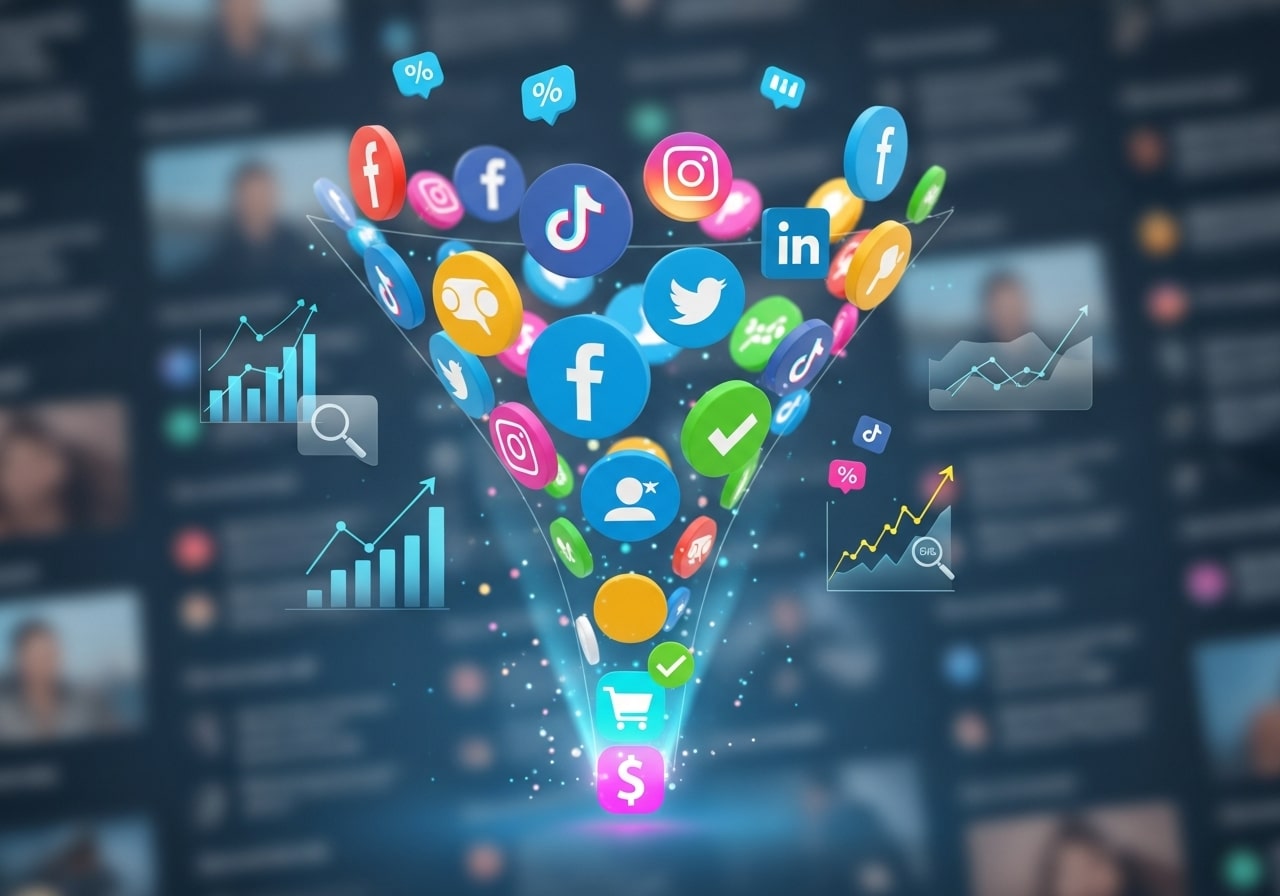
To fully maximize the synergy between social media management and CRO, consider implementing these strategies:
- Content That Aligns with the Funnel: Produce posts catering to awareness, consideration, and decision stages. For instance, a blog link in a LinkedIn post might build awareness, while an Instagram promotion offering a discount directly drives decision-making.
- A/B Testing Social Posts and Ads: Regularly test different visuals, headlines, and CTAs on your social platforms to identify what yields the best conversion rates.
- Partner With Influencers: Influencer partnerships, particularly in niches like fashion or tech, can bring in highly targeted traffic that’s ripe for conversion.
- Engage Proactively: Answer questions in DMs, respond to comments, and host live AMAs (Ask Me Anything) to reduce pre-conversion hesitation.
Reap the Rewards of Social Media-Driven CRO
Social media isn’t just a marketing channel; it’s a conversion powerhouse. By leveraging platforms like Instagram, LinkedIn, and Facebook to not only drive traffic but also build trust and engagement, brands can drastically improve conversion rates.
If navigating the intersection of social media and CRO feels overwhelming, don’t worry. With the right strategies and a consistent focus on your audience, you’ll unlock extraordinary results.
Want to take your CRO strategy to the next level? Start aligning your social campaigns with measurable results today.
Frequently Asked Questions (FAQ)
1. What is Conversion Rate Optimization (CRO)?
CRO is the process of increasing the percentage of users who complete a desired action, such as making a purchase, signing up for a newsletter, or downloading a resource.
2. How does social media management impact CRO?
Social media drives high-quality traffic, builds trust through social proof, enables retargeting, and provides behavioral insights, all of which can improve conversion rates on your website or landing pages.
3. Which social platforms are most effective for CRO?
Platforms like Facebook, Instagram, LinkedIn, and TikTok are highly effective due to their targeting capabilities, advertising tools, and ability to engage audiences with visual content.
4. What is social proof, and why does it matter?
Social proof includes user-generated content, reviews, and testimonials that show others trust or use your product. It builds credibility and encourages new users to convert.
5. How can retargeting improve conversion rates?
Retargeting re-engages visitors who previously interacted with your website or content, keeping your brand top-of-mind and encouraging them to complete desired actions.
6. What types of content work best for CRO on social media?
Engaging posts that align with the funnel stages—such as awareness, consideration, and decision—combined with clear CTAs, videos, demos, and personalized ads perform best.
7. How can personalization help CRO?
Tailored messaging based on audience demographics, behaviors, or previous interactions makes users feel valued, increasing the likelihood they will convert.
8. Why is consistency between social media and landing pages important?
Consistent messaging, visuals, and tone reduce confusion, build trust, and create a seamless user experience, which minimizes drop-offs and boosts conversions.
9. How do I measure the success of social media-driven CRO?
Track metrics such as click-through rates, conversion rates, cost per acquisition, engagement rates, and the performance of different CTAs and campaigns to determine effectiveness.
10. Can influencer partnerships help with CRO?
Yes. Influencers bring targeted audiences that are already interested in your niche, increasing the chances of traffic converting when promoted authentically.