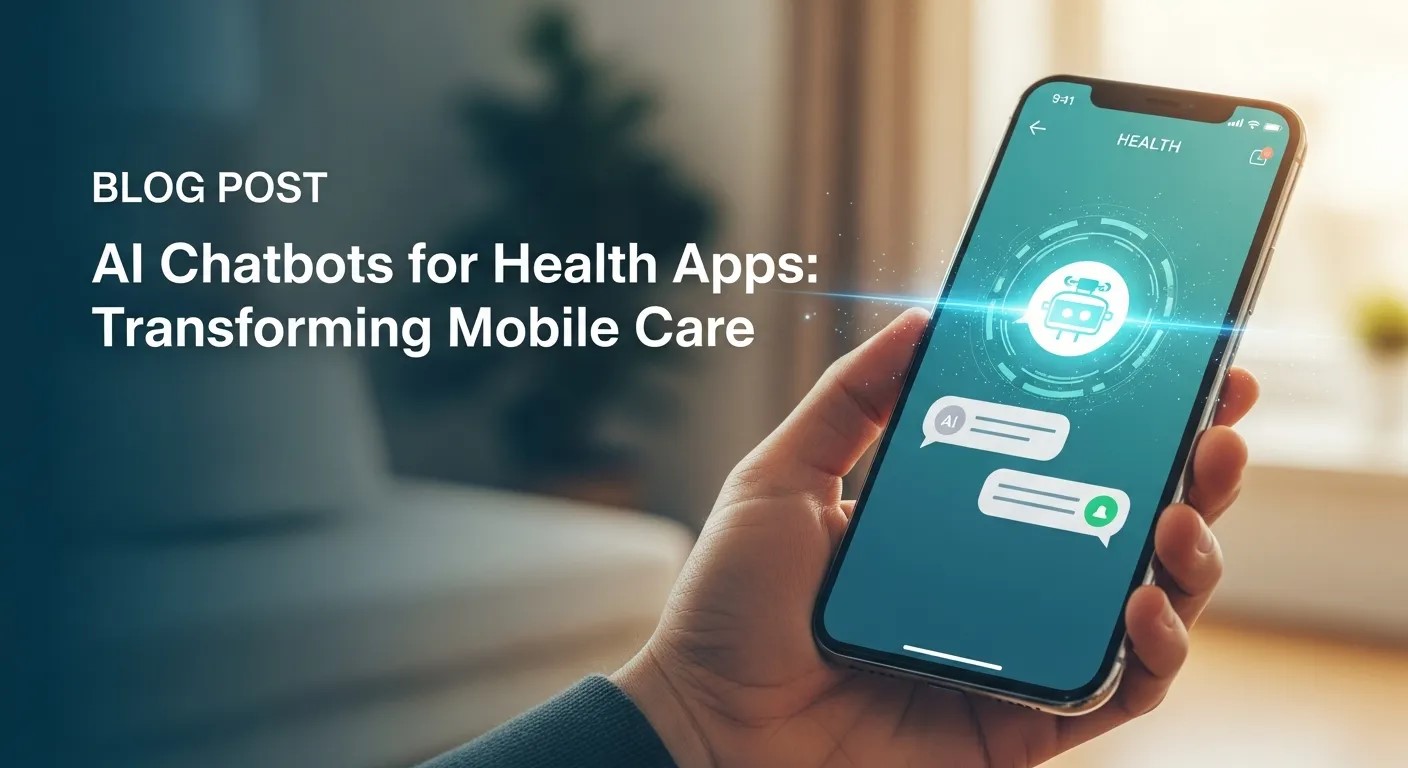
AI Chatbots for Health Apps provide personalized, real-time healthcare support, improve engagement, and streamline preventive care. By integrating AI, AR, and data insights, they empower patients and transform mobile healthcare experiences worldwide.
AI Chatbots for Health Apps: Transforming Mobile Care
The rapid evolution of healthcare technology has brought a significant shift in how patients access medical services. Among the most transformative innovations are AI Chatbots for Health Apps, which integrate artificial intelligence into mobile platforms to provide real-time support, guidance, and personalized healthcare interactions. These intelligent systems are designed to enhance patient experience, reduce administrative burdens, and improve overall efficiency within healthcare ecosystems.
Healthcare is no longer limited to face-to-face interactions or phone consultations. With mobile apps powered by AI chatbots, patients can now monitor symptoms, receive medication reminders, and even schedule appointments without the need for human intervention. This shift has led to increased accessibility and convenience, particularly for individuals in remote or underserved areas. Furthermore, AI Chatbots for Health Apps can provide mental health support, nutritional guidance, and preventive care recommendations, making healthcare more proactive rather than reactive.
The Role of AI Chatbots in Modern Healthcare

AI chatbots in mobile health applications are transforming the way healthcare providers interact with patients. By leveraging natural language processing (NLP) and machine learning algorithms, these chatbots can understand and respond to user queries with high accuracy. This enables apps to provide personalized healthcare guidance, ranging from simple symptom assessments to complex medical advice.
One of the most notable advantages of AI Chatbots for Health Apps is their ability to operate 24/7, offering continuous support for patients. Unlike traditional healthcare systems, which are limited by office hours and staff availability, AI-driven apps ensure that users receive instant assistance at any time. For chronic disease patients, this can mean timely interventions that prevent complications and improve long-term outcomes.
Additionally, AI chatbots collect valuable data that helps healthcare providers identify trends and patient behaviors. This data-driven approach enhances diagnosis accuracy, allows for predictive healthcare modeling, and supports research into more efficient treatment plans. In this way, AI Chatbots for Health Apps are not just tools for convenience—they are powerful instruments for improving healthcare quality and accessibility.
Integrating AI Chatbots with Social Media
Social media platforms have become central to digital communication, and integrating AI chatbots into these channels has opened new avenues for patient engagement. Patients can now access healthcare information, schedule appointments, and receive reminders directly through familiar messaging apps. This integration ensures that healthcare support is just a click away, reducing barriers to care.
Moreover, social media integration allows AI Chatbots for Health Apps to reach broader audiences, including younger demographics who primarily rely on digital communication. By meeting patients where they already spend their time, healthcare providers can encourage preventive care and health awareness in ways that were previously impossible.
The combination of AI technology and social media also facilitates seamless communication between patients and providers. For example, users can upload photos of skin conditions or input symptoms to receive preliminary advice, enabling quicker triage and targeted care. This integration is gradually transforming mobile healthcare into a fully interactive and personalized experience.
Key Benefits of AI Chatbots in Mobile Health Apps
The adoption of AI Chatbots for Health Apps offers numerous benefits for both patients and healthcare providers:
- Accessibility: Patients can access medical support anytime and anywhere, eliminating the constraints of traditional healthcare scheduling.
- Personalization: AI-driven algorithms tailor responses based on patient history, preferences, and symptoms.
- Efficiency: Routine administrative tasks such as appointment scheduling, prescription reminders, and initial assessments are automated, freeing up human resources for more complex tasks.
- Data-Driven Insights: Continuous interaction allows apps to gather health data, monitor trends, and support predictive analytics.
- Patient Engagement: Interactive and conversational interfaces encourage consistent use, improving adherence to treatment plans.
Beyond these core benefits, AI chatbots are also reshaping marketing and research strategies within healthcare. For instance, tools like AI Chatbots in Market Research are being leveraged to understand patient needs, gather feedback, and optimize mobile app experiences. Similarly, insights from Chatbot Marketing Research allow healthcare providers to tailor their outreach efforts more effectively, ensuring that patients receive relevant and timely information.
Applications in Telemedicine and Remote Care
Telemedicine has seen exponential growth, and AI Chatbots for Health Apps play a critical role in supporting this trend. Patients can use mobile apps to conduct virtual consultations, receive follow-up care, and monitor chronic conditions without physically visiting a clinic. This not only improves patient convenience but also reduces the burden on healthcare facilities.
AI chatbots also help bridge the gap in underserved regions where medical professionals may be scarce. By providing preliminary assessments and health education, these apps empower users to make informed decisions and take proactive steps in managing their health. For instance, mental health apps utilize AI chatbots to offer guided counseling sessions, mood tracking, and coping strategies—all within a mobile platform.
Interestingly, the use of chatbots in broader business contexts has parallels in healthcare. Just as Chatbots in B2B Marketing streamline communication and engagement in professional sectors, AI chatbots in health apps optimize patient interaction, making every touchpoint efficient and meaningful. This crossover highlights the versatility of AI conversational tools across industries.
Enhancing Patient Experience with AI Conversational Commerce
Another emerging application of AI chatbots in mobile health is the integration of AI Conversational Commerce. This approach enables healthcare apps to offer services such as prescription refills, appointment bookings, and wellness product recommendations directly through chatbot interactions. By blending conversational AI with commerce functionalities, patients experience a more seamless and integrated healthcare journey.
This innovation reduces friction in accessing healthcare products and services, ensuring that patients can obtain what they need without navigating multiple platforms. The personalized nature of conversational commerce also fosters trust and engagement, encouraging consistent interaction with mobile health apps.
Synergy with AR Technologies
While AI chatbots revolutionize communication and accessibility, pairing them with augmented reality can further enhance healthcare experiences. For example, AR Navigation Systems integrated into hospital apps can guide patients to clinics, diagnostic centers, or pharmacies in real-time, reducing confusion and wait times.
Similarly, AR Environment Mapping allows healthcare providers to visualize patient data or equipment placement in clinical settings. When combined with AI chatbots, these AR-enabled insights create an interactive, immersive healthcare environment where patients and staff can engage more efficiently.
This synergy of AI chatbots and AR technology represents a new frontier in mobile healthcare, providing both practical assistance and enhanced user experiences. As adoption grows, patients can expect more intuitive, accessible, and personalized care delivered through their mobile devices.
Advanced Capabilities of AI Chatbots for Health Apps
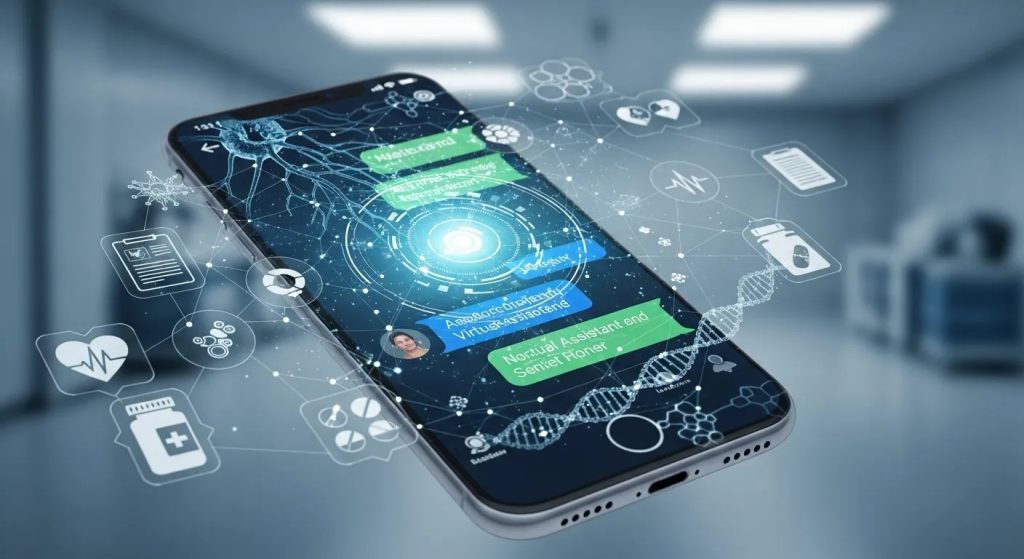
The evolution of AI Chatbots for Health Apps has moved far beyond simple question-and-answer functionalities. Modern chatbots leverage machine learning and natural language processing to interpret complex patient inputs, provide context-aware recommendations, and learn from past interactions. This continuous learning loop ensures that each interaction becomes increasingly personalized and accurate.
For example, a patient reporting recurring headaches can receive tailored guidance based on medical history, lifestyle factors, and medication schedules. This level of customization demonstrates how AI Chatbots for Health Apps are not just tools—they are intelligent health companions. By interpreting data and predicting potential health issues, these chatbots empower patients to take proactive measures, ultimately improving outcomes.
Moreover, AI chatbots now integrate seamlessly with wearable devices. Health metrics such as heart rate, blood sugar, or sleep patterns can be analyzed in real-time, allowing AI Chatbots for Health Apps to provide actionable insights immediately. Patients can receive notifications, preventive care suggestions, or reminders for lifestyle adjustments—all from a single app. The convergence of mobile AI and IoT devices is reshaping patient engagement and fostering continuous health monitoring.
Supporting Chronic Disease Management
Chronic diseases such as diabetes, hypertension, and cardiovascular conditions require consistent monitoring and intervention. AI Chatbots for Health Apps are uniquely positioned to support this ongoing care by providing daily guidance, tracking vital signs, and reminding patients to adhere to medication schedules.
Consider diabetes management: AI chatbots can analyze glucose levels, recommend dietary adjustments, and send timely alerts if readings deviate from safe ranges. Similarly, for patients with hypertension, the chatbots can track blood pressure data, provide lifestyle tips, and help schedule follow-up consultations. The integration of AI Chatbots in Market Research also enables app developers to collect insights from these interactions, improving app design and tailoring features to meet patient needs more effectively.
AI Chatbots in Mental Health Support
Mental health care has historically faced challenges in accessibility and stigma. AI Chatbots for Health Apps are transforming this landscape by offering discreet, non-judgmental support accessible at any time. Patients experiencing anxiety, depression, or stress can engage in guided conversations, track mood patterns, and receive coping strategies through their mobile devices.
By analyzing language patterns, sentiment, and response frequency, chatbots can identify high-risk situations and recommend professional intervention if necessary. This predictive capability is an example of how Chatbot Marketing Research techniques, typically applied to consumer behavior, are being adapted in healthcare to enhance user engagement and ensure timely support.
AI Chatbots for Preventive Healthcare
Beyond reactive care, AI Chatbots for Health Apps play a significant role in preventive health. They provide personalized advice for diet, exercise, sleep hygiene, and regular health screenings. By nudging patients toward healthier habits and reminding them of preventive measures, chatbots contribute to reducing long-term healthcare costs and improving population health outcomes.
Healthcare providers can use insights from Chatbots in B2B Marketing strategies to understand patient preferences, refine engagement methods, and develop targeted preventive campaigns. This crossover demonstrates how AI technology in healthcare borrows from broader business intelligence practices, enhancing both patient care and operational efficiency.
Enhancing Telehealth Services
Telehealth services have surged in popularity, especially in the post-pandemic era. AI Chatbots for Health Apps enhance these services by handling preliminary consultations, collecting patient information, and triaging cases based on urgency. This allows human medical professionals to focus on complex cases while routine interactions are efficiently managed by AI.
The integration of AI Conversational Commerce in these apps enables patients to schedule teleconsultations, refill prescriptions, or purchase health supplements directly through chatbot interactions. This seamless experience not only improves convenience but also drives patient adherence to treatment plans and engagement with mobile healthcare platforms.
Data Security and Patient Privacy
A critical aspect of AI Chatbots for Health Apps is the handling of sensitive patient information. Robust encryption, secure authentication, and compliance with healthcare regulations such as HIPAA are essential to protect user data. Patients are more likely to trust AI-powered apps when privacy measures are transparent and comprehensive, reinforcing engagement and long-term use.
By collecting anonymized data, developers can enhance app functionality, analyze population health trends, and improve AI algorithms. This dual focus on privacy and data utility ensures that AI Chatbots for Health Apps remain both ethical and effective, providing reliable guidance while safeguarding personal health information.
Integration with AR and Future Technologies

While AI chatbots focus on communication and personalized guidance, integration with technologies like AR Navigation Systems and AR Environment Mapping can further enrich the healthcare experience. For instance, AR can guide patients within hospital premises, showing them the fastest route to departments or testing labs. Combined with AI chatbot support, patients receive real-time directions, reminders, and interactive instructions all within a single mobile interface.
Future applications may include augmented reality-assisted consultations, where AI chatbots analyze patient input and overlay AR visualizations for doctors or patients to interpret. This fusion of AI chatbots with AR technology is likely to redefine patient interactions, creating highly intuitive and immersive mobile healthcare experiences.
Cross-Industry Learnings
Interestingly, the success of AI Chatbots for Health Apps draws from AI adoption strategies in other sectors. Concepts like AI Chatbots in Market Research and Chatbot Marketing Research inform how healthcare apps gather insights and improve user experience. Similarly, principles used in Chatbots in B2B Marketing—such as targeted engagement, behavior tracking, and personalization—translate well into mobile health applications.
These cross-industry learnings ensure that AI Chatbots for Health Apps are not only technologically advanced but also designed with user psychology and behavior in mind. By leveraging proven engagement strategies from commerce and marketing, healthcare apps can achieve higher adoption rates and sustained patient interaction.
The Role of Continuous Improvement
The effectiveness of AI Chatbots for Health Apps depends on continuous updates and algorithm refinement. As user interactions increase, chatbots collect data on common queries, symptoms, and treatment outcomes. Developers use this information to improve response accuracy, expand knowledge databases, and enhance personalization.
This iterative improvement process is similar to how AI tools in AI Conversational Commerce evolve, learning from user behavior and feedback to optimize performance. By applying these principles, mobile health apps can stay adaptive, reliable, and highly relevant to patient needs.
Introduction & Core Benefits of AI Chatbots in Health Apps
This section introduces AI Chatbots for Health Apps, their significance, and key advantages. It also briefly touches on social media integration and patient engagement.
Key Points to Cover:
- What are AI chatbots in mobile health apps
- 24/7 accessibility and personalization
- Basic functionalities: symptom checking, appointment scheduling, medication reminders
- Data collection & predictive analytics
- Early introduction of secondary keywords: AI Chatbots in Market Research
Advanced Applications & Cross-Industry Insights
This section dives deeper into practical use cases of AI chatbots and draws parallels with other industries.
Key Points to Cover:
- Chronic disease management and monitoring
- Mental health support
- Preventive care and lifestyle guidance
- Integration with telehealth and AI Conversational Commerce
- Cross-industry learnings: Chatbot Marketing Research, Chatbots in B2B Marketing
- AR integration: AR Navigation Systems, AR Environment Mapping
Future Outlook & Global Adoption
The final section focuses on trends, scalability, and the evolving impact of AI chatbots in healthcare.
Key Points to Cover:
- Continuous learning and improvement of AI chatbots
- Predictive analytics and enhanced personalization
- Global adoption trends and patient acceptance
- Integration with emerging tech and immersive experiences
- Reiterate benefits and long-term impact of AI Chatbots for Health Apps
Conclusion
AI Chatbots for Health Apps are redefining mobile healthcare by providing 24/7 personalized support, improving patient engagement, and enabling proactive health management. From symptom checking and chronic disease monitoring to mental health guidance and preventive care, these AI-driven tools bridge gaps between patients and healthcare providers. By integrating with emerging technologies like AR and leveraging insights from market research and conversational commerce, these apps enhance efficiency, accessibility, and patient satisfaction. As adoption grows globally, AI chatbots will continue to evolve, offering smarter, more responsive, and highly personalized healthcare solutions for users across diverse demographics and healthcare needs.
Frequently Asked Questions (FAQ)
What are AI Chatbots for Health Apps?
AI Chatbots for Health Apps are mobile-based AI systems that provide real-time medical guidance, symptom checking, appointment scheduling, and health monitoring.
How do AI chatbots improve patient engagement?
They offer 24/7 support, personalized advice, reminders, and interactive communication, increasing adherence and proactive health management.
Are AI chatbots secure for personal health data?
Yes, most apps use encryption, secure authentication, and comply with healthcare regulations like HIPAA to protect patient data.
Can AI chatbots assist with mental health?
Absolutely. They provide discreet support, mood tracking, guided conversations, and coping strategies for anxiety, depression, or stress.
How do AI chatbots integrate with emerging tech?
They work alongside AR for navigation, data visualization, and immersive healthcare experiences, enhancing patient interaction and accessibility.