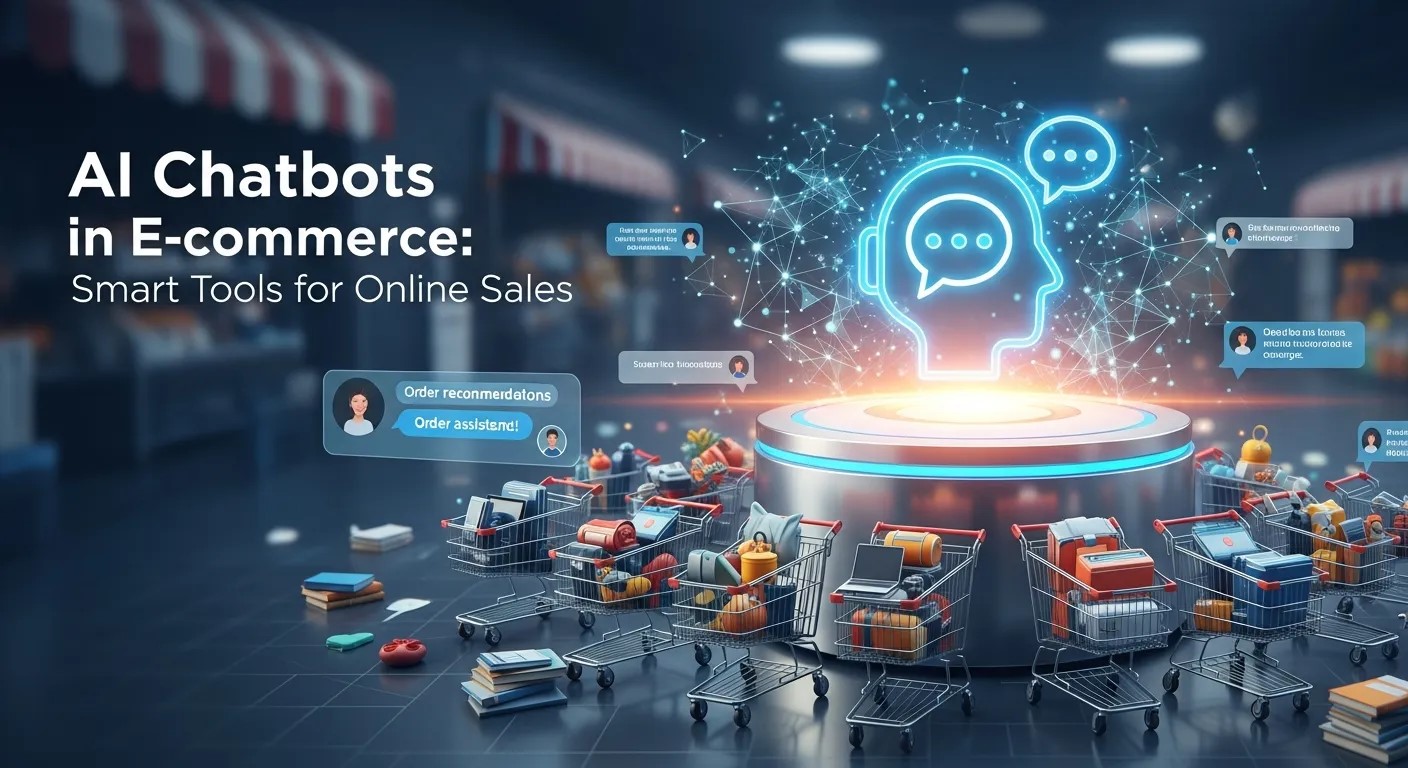
AI Chatbots in E-commerce enhance user experiences, automate support, and drive sales. By combining personalization, analytics, and emerging technologies like AR, they create seamless, engaging, and efficient online shopping journeys while boosting customer satisfaction and business performance.
Why AI Chatbots in E-commerce Matter Today
The e-commerce landscape is evolving at a rapid pace. Online shoppers now expect instant responses, personalized product suggestions, and a seamless buying experience. To meet these expectations, businesses are increasingly turning to AI Chatbots in E-commerce. These intelligent assistants offer real-time support, answer queries, and guide customers through the shopping journey without the need for constant human intervention.
With AI Chatbots in E-commerce, companies can handle high volumes of interactions efficiently, reduce operational costs, and maintain consistent customer service quality. The modern shopper values speed, accuracy, and convenience, and AI Chatbots in E-commerce deliver exactly that by combining advanced algorithms with natural conversational design.
Key Benefits of AI Chatbots in E-commerce
Implementing AI Chatbots in E-commerce provides a wide range of benefits. First, they improve efficiency by automating repetitive tasks such as answering FAQs or tracking orders. Second, they enhance engagement by offering personalized recommendations based on browsing behavior. Third, AI Chatbots in E-commerce gather valuable customer data that businesses can use to refine their strategies and product offerings.
In addition to retail applications, B2B Chatbot Marketing leverages AI technology to streamline communication with business clients. For example, a B2B company can integrate AI Chatbots in E-commerce to manage inquiries about bulk orders or schedule virtual meetings, improving efficiency while maintaining a professional touch.
Enhancing the Customer Journey with E-commerce Chatbots

The online shopping journey consists of multiple touchpoints, from discovery to purchase. E-commerce Chatbots enhance each stage by providing timely guidance, personalized suggestions, and answers to product-related questions. Integrating AI Chatbots in E-commerce at key points ensures customers feel supported and confident throughout the process.
Retailers benefit from the insights collected by AI Chatbots in E-commerce, which can track user preferences, monitor behavior, and identify trends. These insights allow businesses to adjust marketing campaigns, refine product recommendations, and deliver a more satisfying shopping experience. Technologies like AR Retail further elevate this interaction by letting customers visualize products in their own space, with Web AR Experiences complementing chatbot guidance for immersive engagement.
Driving Sales with AI-Powered Tools
A subset of AI chatbots focuses on boosting revenue. AI-Powered Sales Bots work alongside AI Chatbots in E-commerce to recognize buying intent, suggest complementary products, and assist in checkout. By providing timely suggestions and personalized assistance, these bots help increase average order value and conversion rates.
Similarly, AI Sales Bots integrated into AI Chatbots in E-commerce platforms nurture leads, send reminders for abandoned carts, and respond to post-purchase inquiries. This ensures the shopping experience remains proactive and customer-focused while reducing friction in the sales funnel.
Integrating AI Chatbots in E-commerce with Technology
The future of online retail relies on combining AI with emerging technologies. AI Chatbots in E-commerce paired with AR Retail enable shoppers to virtually try products before purchasing, reducing uncertainty and boosting confidence. Web AR Experiences further complement this integration by allowing interactive, immersive demonstrations while the chatbot provides guidance and answers questions.
By merging AI intelligence with interactive technologies, AI Chatbots in E-commerce become central to a more engaging, efficient, and personalized online shopping experience.
Personalization and Customer Engagement
One of the key advantages of AI Chatbots in E-commerce is their ability to deliver highly personalized experiences. By analyzing customer behavior, previous purchases, and browsing patterns, these chatbots can suggest products that align with individual preferences. With AI Chatbots in E-commerce, businesses can offer dynamic recommendations that feel intuitive, helping customers make informed decisions without feeling pressured.
For example, when a customer shows interest in a particular product category, the chatbot can recommend complementary items, showcase current promotions, or highlight trending products. The integration of E-commerce Chatbots with personalized algorithms ensures that each interaction is relevant, increasing the likelihood of conversion and fostering loyalty.
AI-Powered Sales Bots for Smarter Upselling
Advanced AI-Powered Sales Bots work in tandem with AI Chatbots in E-commerce to boost revenue through intelligent upselling and cross-selling. These systems identify opportunities where additional products or premium versions could be relevant to the customer’s current interests. By offering subtle suggestions rather than aggressive promotions, AI-Powered Sales Bots help maintain a smooth customer experience while increasing order value.
Additionally, AI Chatbots in E-commerce can support multi-channel interactions, meaning customers receive consistent guidance whether they are browsing on mobile, desktop, or through social media platforms. The combination of AI Sales Bots and multi-channel support ensures that no potential conversion is missed and that shoppers enjoy a seamless, consistent experience.
Real-Time Analytics and Data-Driven Decisions
Another critical capability of AI Chatbots in E-commerce is the integration with analytics platforms. By tracking interactions, purchase patterns, and engagement metrics, businesses gain actionable insights that inform marketing strategies, inventory management, and product development. AI Chatbots in E-commerce act not just as customer support tools but also as data collection engines that help retailers anticipate needs and refine their offerings.
For example, by analyzing frequent queries or product searches, companies can identify gaps in their catalog or optimize their website navigation. Combining AI Chatbots in E-commerce with analytics allows for proactive support, where chatbots anticipate common questions and guide users before issues arise. This enhances the overall user experience and positions the business as responsive and customer-centric.
Integration with Emerging Technologies
AI Chatbots in E-commerce are most powerful when integrated with emerging technologies. For instance, AR Retail enables customers to visualize products in their own environment, while the chatbot provides contextual guidance. This combination improves confidence in purchasing decisions and reduces return rates. Similarly, Web AR Experiences can be embedded directly into online stores, creating immersive demonstrations that complement chatbot interactions.
Retailers are also exploring AI-driven personalization engines that work alongside AI Chatbots in E-commerce, ensuring that every interaction is tailored to the shopper’s interests. By combining artificial intelligence with augmented reality and interactive web experiences, businesses create a more engaging, memorable shopping journey that blends convenience with innovation.
Supporting Customer Retention and Loyalty

Beyond driving sales, AI Chatbots in E-commerce play a crucial role in customer retention. By maintaining consistent engagement, reminding users of loyalty programs, and offering timely promotions, these chatbots foster long-term relationships. Integration with B2B Chatbot Marketing strategies further allows businesses to maintain professional and proactive communication with corporate clients, ensuring repeat business and brand trust.
For instance, after a purchase, AI Chatbots in E-commerce can follow up with personalized suggestions for related items or notify customers of upcoming deals. This continuous interaction creates a sense of attentiveness and reliability, encouraging shoppers to return to the store for future purchases.
Case Studies of AI Chatbots in Action
Several e-commerce platforms have successfully implemented AI Chatbots in E-commerce to improve both customer experience and operational efficiency. One fashion retailer integrated AI Chatbots in E-commerce with AR Retail tools, allowing users to try on clothing virtually while receiving chatbot guidance. As a result, engagement increased, and return rates dropped.
Another electronics platform deployed AI-Powered Sales Bots alongside their main AI Chatbots in E-commerce, which helped upsell accessories and warranty packages in real-time. The seamless integration of chatbots with analytics and sales automation tools boosted overall revenue and enhanced customer satisfaction.
Streamlining Customer Support with AI Chatbots in E-commerce
One of the most transformative applications of AI Chatbots in E-commerce is in automating customer support. These chatbots can answer a wide range of queries instantly, from product availability to shipping information, reducing wait times and freeing human agents for more complex tasks. By leveraging AI Chatbots in E-commerce, retailers can maintain consistent service levels even during peak shopping seasons, ensuring customers never feel neglected.
Automation with AI Chatbots in E-commerce also enables proactive support. For instance, if a customer encounters an error during checkout, the chatbot can immediately detect the problem, suggest solutions, and guide the user toward completion. This proactive assistance increases conversion rates and creates a smoother, more satisfying shopping experience.
Multilingual and Global Applications
The global nature of online shopping requires businesses to interact with customers in multiple languages. AI Chatbots in E-commerce are increasingly designed with multilingual capabilities, allowing brands to provide localized support worldwide. Customers can engage naturally in their preferred language, enhancing accessibility and satisfaction.
In addition to language, AI Chatbots in E-commerce can adjust for cultural preferences and regional shopping behaviors. By understanding time zones, local trends, and payment preferences, these chatbots offer a truly global shopping experience. Integration with B2B Chatbot Marketing strategies ensures that international business clients also receive tailored support, maintaining professionalism across borders.
Enhancing Marketing Campaigns and Loyalty Programs
Marketing is another area where AI Chatbots in E-commerce make a significant impact. These chatbots can deliver personalized promotional messages, alert customers to sales or limited-time offers, and even suggest products based on past purchases. By integrating with loyalty programs, AI Chatbots in E-commerce help retain customers, encourage repeat purchases, and increase lifetime value.
For instance, when a user reaches a milestone in a loyalty program, AI Chatbots in E-commerce can notify them of available rewards and guide them on redeeming points. Similarly, during promotional campaigns, chatbots can segment users based on purchase behavior, ensuring that offers are relevant and well-timed. This targeted engagement is achieved without overwhelming the customer, preserving a positive brand experience.
Sentiment Analysis and Predictive Recommendations
Advanced AI Chatbots in E-commerce are now equipped with sentiment analysis capabilities. By evaluating the tone and mood of customer messages, chatbots can tailor responses to ensure empathy and appropriateness. If a customer expresses frustration or confusion, AI Chatbots in E-commerce can escalate the issue to human agents while continuing to provide helpful guidance.
Predictive recommendations are another critical feature. AI Chatbots in E-commerce analyze historical data and current browsing behavior to suggest products before the customer explicitly searches for them. This proactive assistance drives sales, enhances engagement, and creates a personalized shopping journey that feels intuitive and seamless.
Integrating AI Chatbots in E-commerce with Emerging Tech
Modern AI Chatbots in E-commerce continue to evolve through integration with technologies like AR Retail and Web AR Experiences. By combining interactive visual tools with intelligent conversation, retailers provide customers with immersive product demonstrations. For example, a home decor store can allow customers to virtually place furniture in their rooms while the chatbot offers guidance and recommendations.
Additionally, integration with AI-Powered Sales Bots ensures that these immersive experiences translate into higher conversion rates. By suggesting complementary items or highlighting ongoing promotions during AR interactions, AI Chatbots in E-commerce create a holistic, engaging, and revenue-driving experience.
Tracking Performance with AI Chatbots in E-commerce

The effectiveness of AI Chatbots in E-commerce depends heavily on their ability to collect and analyze data. By monitoring interactions, response times, and conversion metrics, businesses can continuously optimize chatbot performance. AI Chatbots in E-commerce provide insights into common customer questions, friction points in the buying process, and opportunities for upselling or cross-selling.
For example, analytics from AI Chatbots in E-commerce can reveal which product recommendations are most effective, which prompts lead to higher engagement, and which areas may require human intervention. These insights allow retailers to adjust the chatbot’s algorithms, improve messaging strategies, and enhance overall customer satisfaction.
Leveraging Customer Feedback Loops
Customer feedback is crucial for refining AI Chatbots in E-commerce. Through surveys, rating prompts, or direct chat interactions, these chatbots gather user opinions in real time. By analyzing this feedback, businesses can identify strengths, weaknesses, and potential improvements. AI Chatbots in E-commerce use this information to adjust responses, enhance personalization, and provide a more intuitive shopping experience.
Integrating feedback loops also strengthens loyalty. When users see that their input directly influences chatbot behavior or product recommendations, they perceive the brand as attentive and responsive. Coupled with B2B Chatbot Marketing, feedback loops help maintain strong relationships with corporate clients as well.
Cross-Platform Integration
Modern shoppers interact with brands across multiple channels—websites, mobile apps, social media, and messaging platforms. AI Chatbots in E-commerce can seamlessly integrate across these channels, providing consistent assistance regardless of where the customer engages. For instance, a user who begins browsing products on a mobile app can continue the conversation via social media without losing context.
Cross-platform integration ensures that E-commerce Chatbots maintain conversation history, recognize user preferences, and deliver personalized recommendations anywhere. When combined with AI-Powered Sales Bots, these chatbots can suggest complementary products, highlight promotions, and guide the customer toward purchase across multiple touchpoints.
Security, Privacy, and Ethical AI
As AI Chatbots in E-commerce collect sensitive customer information, security and privacy are paramount. Retailers must implement robust encryption, secure authentication, and data protection protocols. Customers need assurance that their personal details, payment information, and chat histories are safeguarded.
Ethical AI practices are equally important. AI Chatbots in E-commerce should avoid bias in product recommendations, maintain transparency about automated responses, and ensure that user data is used responsibly. Companies adopting ethical AI gain trust and strengthen customer relationships while minimizing potential legal and reputational risks.
Advanced Use Cases: Predictive Marketing and AI Insights
Beyond support and sales, AI Chatbots in E-commerce are being leveraged for predictive marketing. By analyzing past behaviors and current trends, chatbots can anticipate what a customer might want next. Integration with Web AR Experiences or AR Retail allows the chatbot to suggest products dynamically during an interactive session, enhancing both engagement and sales potential.
Predictive insights from AI Chatbots in E-commerce also inform inventory management, marketing campaigns, and seasonal promotions. Retailers can proactively stock high-demand items, personalize campaigns, and optimize their overall operational strategy.
Conclusion
AI Chatbots in E-commerce have revolutionized online shopping by providing instant support, personalized recommendations, and seamless automation. These intelligent systems enhance customer engagement, reduce operational costs, and boost sales conversion rates. By integrating advanced features like predictive analytics, AI-Powered Sales Bots, and immersive technologies such as AR Retail and Web AR Experiences, businesses can deliver highly interactive and tailored experiences. From streamlining customer support to driving loyalty programs and global multilingual interactions, AI Chatbots in E-commerce are indispensable tools for modern retailers. Embracing these solutions ensures scalability, efficiency, and a competitive advantage in the digital marketplace.
Frequently Asked Questions (FAQ)
What are AI Chatbots in E-commerce?
AI chatbots are intelligent virtual assistants that help online shoppers with product recommendations, support, and transactions, improving engagement and convenience.
How do AI-Powered Sales Bots work?
They analyze user behavior, recognize buying intent, and suggest complementary products to increase sales while providing a personalized experience.
Can AI Chatbots in E-commerce integrate with AR technologies?
Yes, chatbots can work alongside AR Retail and Web AR Experiences to offer immersive product visualization and interactive demonstrations.
Are AI Chatbots suitable for global businesses?
Absolutely. Multilingual and culturally aware chatbots can engage international customers and support B2B Chatbot Marketing strategies.
How do AI Chatbots impact ROI?
By automating support, reducing operational costs, enhancing personalization, and driving sales, AI chatbots significantly improve business efficiency and revenue.