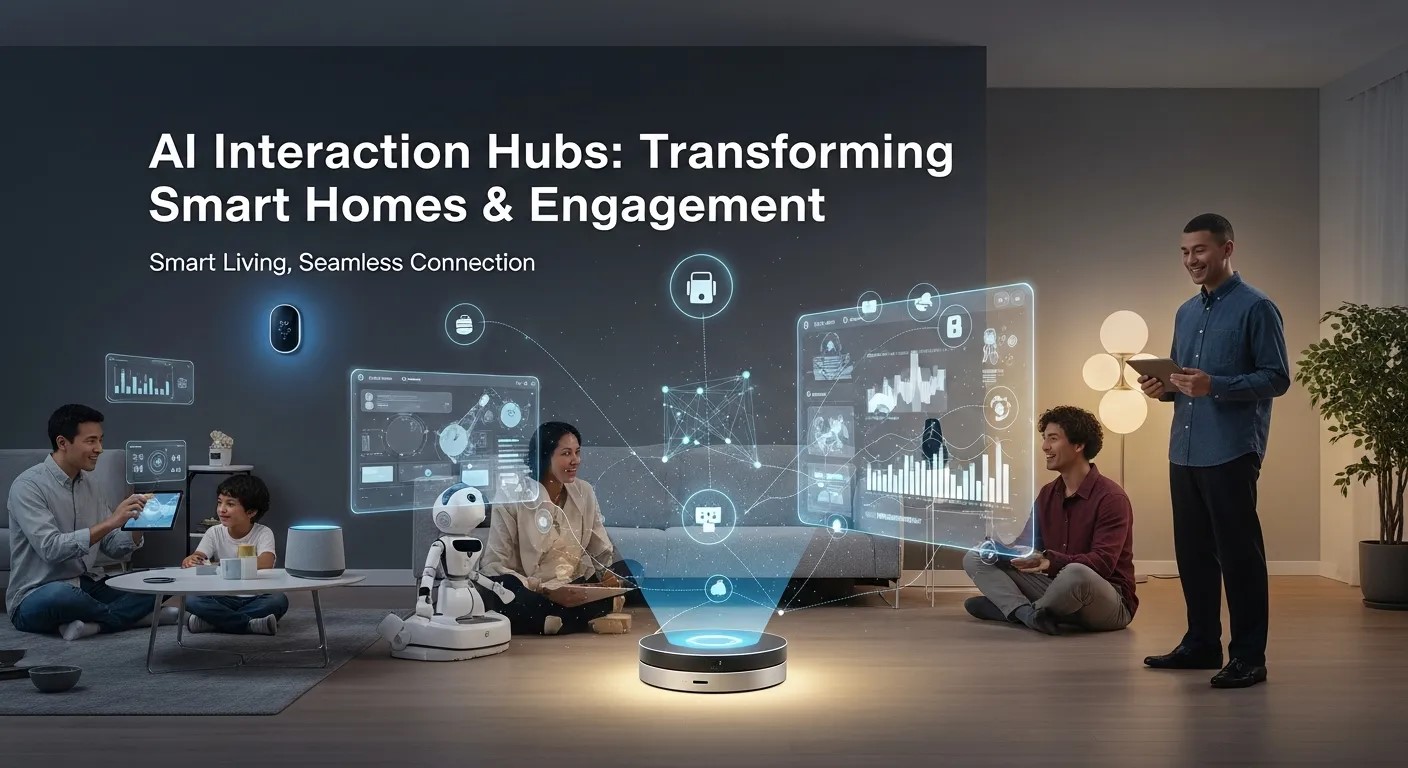
AI Interaction Hubs combine voice AI, AR, and predictive analytics to enhance smart homes and customer engagement. Features like chatbots, AR vision, and facial tracking create secure, personalized, and seamless experiences for both personal and enterprise applications.
Introduction to AI Interaction Hubs
In the modern digital era, the way humans interact with technology is evolving rapidly. AI Interaction Hubs represent a revolutionary shift in both personal and professional environments. By seamlessly integrating artificial intelligence with voice recognition, smart home systems, and interactive platforms, these hubs provide a more intuitive and responsive experience for users. Unlike traditional devices that require manual input, these AI-driven systems anticipate user needs, streamline tasks, and create environments where interactions feel natural and contextually intelligent.
The adoption of Voice Assistant Bots within AI Interaction Hubs has significantly enhanced everyday usability. These bots are not limited to basic voice commands but now incorporate sophisticated natural language understanding, making communication with devices as effortless as speaking to another human. This progression is particularly evident in smart home ecosystems, where controlling lighting, climate, and entertainment systems can now be done entirely through conversational interfaces.
Moreover, businesses are leveraging Lead Generation Chatbot technologies within AI Interaction Hubs to optimize customer interactions. By integrating conversational AI into websites and mobile platforms, companies can proactively engage potential clients, gather critical data, and deliver personalized recommendations. The seamlessness of these interactions enhances user experience, making customers more likely to complete desired actions, such as signing up for services or purchasing products.
How AI Interaction Hubs Transform Smart Homes
Smart homes have transitioned from basic automated systems to fully integrated intelligent environments. AI Interaction Hubs serve as the central node that orchestrates all connected devices. With Voice Enabled Chatbots, users can manage complex routines with simple spoken commands. For example, one command can simultaneously adjust room temperature, close blinds, and play a preferred playlist. This level of integration not only simplifies daily life but also fosters a sense of connectivity and responsiveness in the living space.
Security and personalization are other areas where AI Interaction Hubs shine. By incorporating AR Facial Tracking, homes can identify residents and tailor experiences according to individual preferences. Lights, music, and temperature settings can be customized automatically, creating a more comfortable and immersive environment. Additionally, the integration of AI-Powered AR Vision enables enhanced monitoring systems that can detect unusual activity and alert homeowners in real time, combining convenience with safety.
Energy efficiency is another major advantage. By learning household patterns, AI Interaction Hubs can optimize power usage, reducing unnecessary consumption. Smart scheduling algorithms analyze activity trends and adjust heating, cooling, and lighting accordingly. This not only decreases utility costs but also aligns with sustainability goals, making homes smarter and greener.
AI Interaction Hubs in Customer Engagement
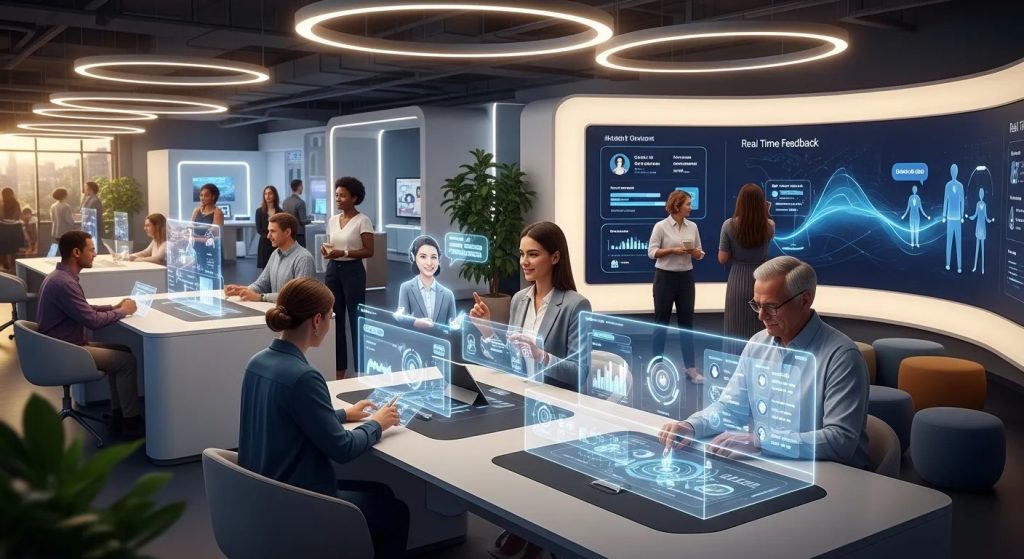
Beyond residential applications, AI Interaction Hubs are redefining the customer service landscape. Businesses are increasingly using Live Chatbot Support integrated with AI hubs to provide instantaneous, round-the-clock assistance. This approach significantly reduces wait times and enhances customer satisfaction, as users receive immediate answers to inquiries without human intervention. Over time, these systems learn from interactions, refining responses and predicting needs more accurately.
The integration of Voice Assistant Bots in customer-facing environments also facilitates more natural engagement. For instance, retail businesses can employ voice-activated kiosks or virtual assistants to guide shoppers, provide product recommendations, and assist with transactions. These interactions are frictionless, reducing the cognitive load on customers and improving overall experience.
Moreover, Lead Generation Chatbot technologies embedded in AI Interaction Hubs allow businesses to capture potential client information proactively. By analyzing conversational patterns and behavioral cues, these chatbots can identify high-intent users and guide them toward desired outcomes. This smart, data-driven approach increases conversion rates while maintaining a personalized touch that users appreciate.
Technical Architecture of AI Interaction Hubs
Understanding the technical backbone of AI Interaction Hubs is essential to appreciate their capabilities. These systems typically combine multiple AI disciplines including natural language processing, computer vision, and predictive analytics. Voice recognition modules allow for seamless speech interaction, while Voice Enabled Chatbots handle complex command parsing and context retention. In parallel, computer vision components, often powered by AR Facial Tracking or AI-Powered AR Vision, enhance environmental awareness and user identification.
A typical AI Interaction Hub architecture can be broken down into three layers:
| Layer | Function | Example Technologies |
|---|---|---|
| Input Layer | Captures user interactions via voice, gestures, or visual cues | Microphones, Cameras, Motion Sensors |
| Processing Layer | Analyzes inputs, interprets commands, and generates responses | NLP Engines, Predictive AI Models, AR Vision Systems |
| Output Layer | Executes actions and provides feedback | Smart Home Devices, Display Interfaces, Audio Feedback |
This modular structure allows for flexibility, enabling developers to integrate new functionalities over time without overhauling the entire system. It also supports continuous learning, where AI models adapt based on user behavior, improving performance and personalization.
Advanced Use Cases of AI Interaction Hubs
The evolution of AI Interaction Hubs has unlocked a range of advanced applications in both domestic and business environments. These hubs are no longer limited to simple command execution; they now provide intelligent insights, predictive interactions, and context-aware recommendations. For instance, in a smart home, a user can interact with Voice Enabled Chatbots to not only adjust devices but also receive suggestions based on previous behavior patterns. For example, the system might recommend dimming the lights and playing soft music at a certain time of day to optimize relaxation.
In commercial settings, Lead Generation Chatbot capabilities embedded in AI Interaction Hubs have transformed marketing strategies. Companies can now analyze conversational data to identify customer preferences, segment audiences, and tailor promotions with high precision. This reduces inefficiencies in outreach campaigns while enhancing user engagement. The predictive nature of these chatbots ensures that businesses can anticipate customer needs before they explicitly express them.
Additionally, Live Chatbot Support powered by AI Interaction Hubs is being deployed in industries like banking, healthcare, and e-commerce. These systems handle repetitive queries, schedule appointments, and even process basic transactions without human intervention. By automating these processes, companies can reallocate human resources to complex problem-solving tasks, improving both efficiency and satisfaction.
Personalization Through AI Interaction Hubs
One of the most powerful aspects of AI Interaction Hubs is their ability to deliver hyper-personalized experiences. Using technologies like AR Facial Tracking and AI-Powered AR Vision, these hubs can recognize individual users and tailor interactions based on personal preferences, historical behavior, and real-time context. For example, a smart home can adjust room temperature, lighting, and even content recommendations based on the identity of the resident entering the space.
In a commercial context, personalization enhances customer loyalty and engagement. A retail environment equipped with AI Interaction Hubs can greet customers by name, suggest products they are likely to buy, and provide a seamless checkout experience. Integrating Voice Assistant Bots in these scenarios allows for a natural conversational interface, reducing friction and increasing user satisfaction.
Furthermore, AI systems embedded in these hubs continually learn from user interactions. Over time, the AI refines its recommendations, understands user intent more accurately, and even predicts future needs. This creates a dynamic relationship between technology and users, where interactions feel increasingly intuitive and less mechanical.
Enterprise Adoption of AI Interaction Hubs

Organizations across sectors are realizing the value of AI Interaction Hubs for improving operational efficiency and customer engagement. For example, corporate offices are using Voice Enabled Chatbots to manage meeting schedules, provide employee assistance, and streamline internal communications. This reduces administrative overhead and allows teams to focus on strategic initiatives.
In customer-facing industries, Lead Generation Chatbot integration helps enterprises capture high-value leads efficiently. When combined with analytics from AI Interaction Hubs, businesses can identify trends, measure engagement success, and make data-driven decisions that enhance overall performance. The ability to combine multiple AI functions such as conversational AI, predictive modeling, and AR capabilities into a single interaction hub provides a unified, scalable solution.
Healthcare institutions are also exploring AI Interaction Hubs to improve patient care. Live Chatbot Support can assist with appointment scheduling, symptom tracking, and basic triage, reducing wait times and improving patient experience. When augmented with AR Facial Tracking, these hubs can identify patients and access relevant records, ensuring personalized attention while maintaining privacy standards.
Integration with Augmented Reality Technologies
A key differentiator for modern AI Interaction Hubs is their integration with augmented reality. Using AI-Powered AR Vision, hubs can overlay digital information on the physical world, creating interactive experiences that go beyond traditional interfaces. In smart retail, for instance, AR can provide product details, reviews, or virtual try-on experiences as customers navigate a store, all coordinated through a central AI hub.
Similarly, AR Facial Tracking enhances both security and personalization. Homes equipped with these systems can recognize family members and trusted guests, automatically unlocking doors or adjusting environmental settings. Enterprises can leverage the same technology for secure access control, employee verification, and interactive customer experiences.
Optimizing User Experience with Voice Assistant Bots
The inclusion of Voice Assistant Bots in AI Interaction Hubs ensures that interactions are effortless and human-centric. Unlike rigid command-based systems, these bots understand context, handle multi-step requests, and learn from user behavior. For example, a user can ask a voice bot to “prepare the home for movie night,” and the AI will dim lights, adjust the thermostat, close curtains, and start the selected movie—demonstrating a holistic understanding of the request.
Voice-driven interfaces also expand accessibility. Users with mobility challenges or visual impairments can control environments and access services without needing physical interaction. This makes AI Interaction Hubs inclusive and adaptable for diverse populations, further enhancing their adoption across smart homes and enterprises.
Security and Privacy in AI Interaction Hubs
As AI Interaction Hubs become central to homes and businesses, ensuring security and privacy has become a critical concern. These systems handle sensitive data such as voice recordings, behavioral patterns, and personal preferences, making robust security protocols essential. By integrating AR Facial Tracking, AI hubs can authenticate users in a secure manner, preventing unauthorized access while providing personalized experiences. Unlike traditional passwords or PINs, facial recognition offers a seamless, non-intrusive security layer.
Moreover, AI-Powered AR Vision contributes to surveillance and anomaly detection without compromising privacy. Smart cameras can distinguish between authorized residents and unknown individuals, triggering alerts only when necessary. Encryption of data at rest and in transit ensures that even if communications are intercepted, personal information remains secure. Enterprises adopting AI Interaction Hubs must comply with regional regulations, including GDPR and HIPAA, to maintain trust and regulatory compliance.
The rise of Voice Enabled Chatbots also demands attention to privacy. While conversational interfaces enhance convenience, they collect sensitive conversational data. AI Interaction Hubs employ local processing and edge computing wherever possible, minimizing the need to transmit private information to cloud servers. This approach ensures that users maintain control over their data, while still benefiting from intelligent assistance and automation.
Predictive Analytics and Smart Recommendations

One of the most powerful capabilities of AI Interaction Hubs is predictive analytics. By analyzing historical behavior and environmental patterns, these hubs anticipate user needs before they are explicitly requested. For example, Voice Assistant Bots can suggest tasks, such as ordering groceries or adjusting home settings, based on previous routines and seasonal trends. Predictive AI reduces cognitive load on users and enhances satisfaction by making interactions feel proactive rather than reactive.
Businesses also benefit from predictive capabilities integrated with Lead Generation Chatbot technologies. By tracking engagement metrics and conversational behavior, enterprises can identify high-value prospects, predict purchase likelihood, and offer personalized incentives. This not only improves conversion rates but also strengthens long-term customer relationships. Integrating predictive analytics with Live Chatbot Support ensures that customer service teams are informed in advance about potential issues, allowing for proactive problem resolution.
Cross-Device Integration and Ecosystem Connectivity
A true AI Interaction Hub functions as a central node, orchestrating multiple devices across an ecosystem. Integration with smart home devices, enterprise software, and mobile platforms allows for synchronized operations. For instance, a user can start a task on a mobile device, continue it via a smart display, and receive reminders through a Voice Enabled Chatbot. This seamless connectivity enhances efficiency and creates a more cohesive user experience.
In retail and hospitality, AI Interaction Hubs enable omnichannel engagement. A customer interacting with a Lead Generation Chatbot online can transition to in-store assistance powered by Voice Assistant Bots or AR-enhanced kiosks. This creates a consistent brand experience across digital and physical touchpoints. Cross-device integration also allows predictive suggestions to be context-aware; for example, a hub may recommend adjusting home lighting based on the weather forecast accessed through another connected system.
Scalability and Future-Proofing
Scalability is a defining feature of advanced AI Interaction Hubs. Modular architectures allow developers to add new functionalities such as AI-Powered AR Vision or AR Facial Tracking without redesigning the entire system. This ensures that homes and enterprises can adopt emerging AI technologies over time, extending the lifecycle of their investments.
For businesses, scalable AI hubs mean that increasing customer volume or operational complexity does not compromise performance. Systems can handle multiple concurrent interactions, manage extensive datasets, and maintain responsiveness. By integrating cloud-based intelligence with local processing, hubs balance speed, privacy, and computational efficiency. Scalable solutions also support multi-language capabilities, making them suitable for global adoption in diverse markets.
AI Interaction Hubs Driving Global Trends

The adoption of AI Interaction Hubs is accelerating worldwide. Smart homes in urban areas are increasingly equipped with Voice Enabled Chatbots to manage energy, security, and entertainment systems. Enterprises in sectors like retail, healthcare, and finance are deploying Live Chatbot Support to improve operational efficiency and customer satisfaction. Integration with AR technologies such as AR Facial Tracking and AI-Powered AR Vision is also on the rise, enhancing both personalization and interactive experiences.
Global trends indicate a growing convergence of AI, voice, and AR technologies within single hubs. Consumers expect intelligent systems that not only respond to commands but anticipate needs, adapt to preferences, and provide immersive experiences. As adoption grows, AI Interaction Hubs are poised to become the standard interface for smart environments, bridging the gap between digital intelligence and real-world usability.
Conclusion
AI Interaction Hubs are redefining the way humans interact with technology, bridging smart homes, customer engagement, and enterprise efficiency. By integrating Voice Assistant Bots, Voice Enabled Chatbots, and advanced AR technologies like AI-Powered AR Vision and AR Facial Tracking, these hubs provide personalized, intuitive, and predictive experiences. Businesses leverage Lead Generation Chatbot and Live Chatbot Support capabilities to enhance customer satisfaction and streamline operations. With robust security, cross-device integration, and scalability, AI Interaction Hubs represent the future of intelligent environments, transforming daily routines, business processes, and digital interactions into seamless, adaptive, and human-centric experiences.
Frequently Asked Questions (FAQs)
What are AI Interaction Hubs?
AI Interaction Hubs are centralized systems that integrate voice AI, chatbots, and AR technologies to enable smart, predictive, and personalized interactions in homes and businesses.
How do they enhance smart homes?
They connect devices, automate routines, recognize users via AR Facial Tracking, and optimize energy, comfort, and entertainment experiences.
Can businesses benefit from AI Interaction Hubs?
Yes, by using Lead Generation Chatbot and Live Chatbot Support, businesses improve customer engagement, operational efficiency, and predictive decision-making.
Are AI Interaction Hubs secure?
These hubs use encryption, local processing, and AR-based authentication to protect sensitive data and ensure privacy.
What role does AR play in AI Interaction Hubs?
Technologies like AI-Powered AR Vision and AR Facial Tracking enhance personalization, monitoring, security, and interactive experiences in smart homes and enterprise applications.