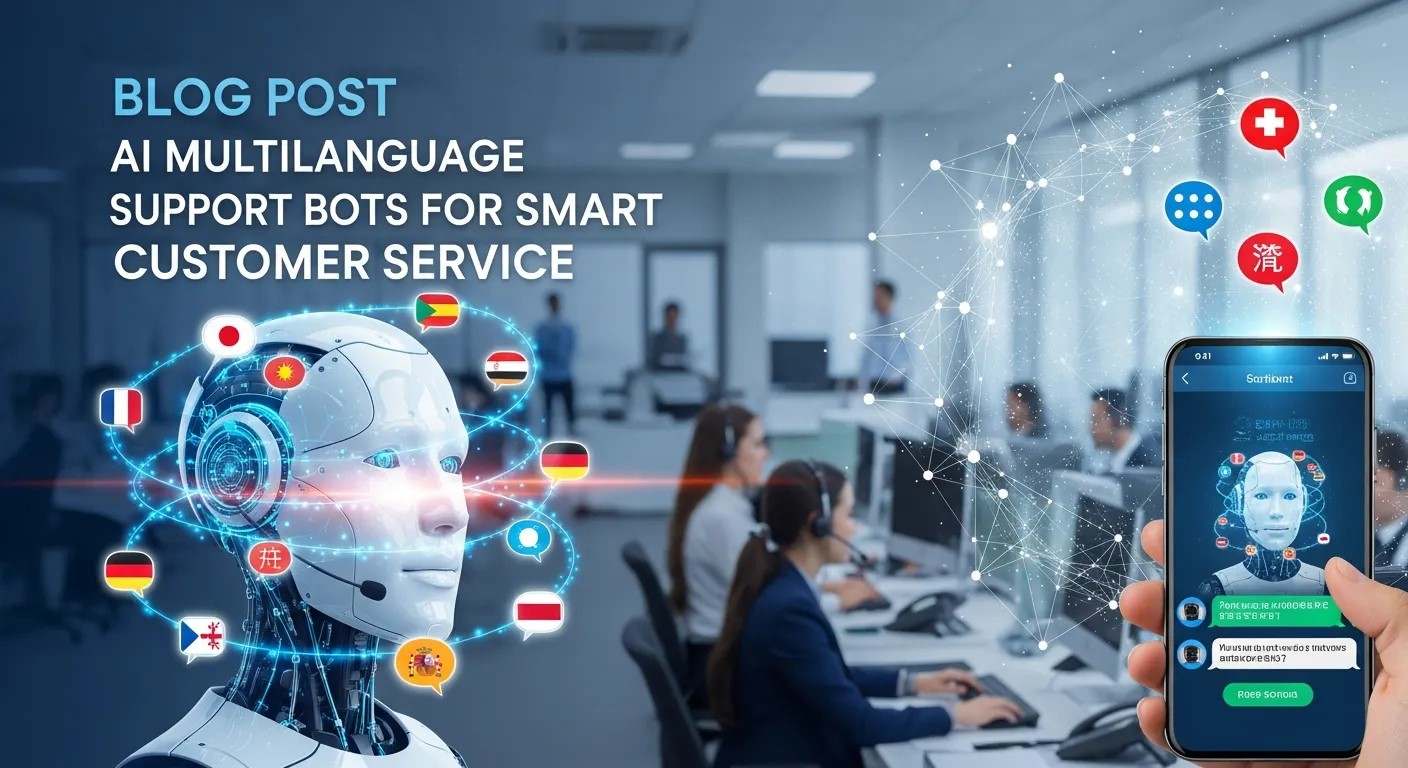
AI Multilanguage Support Bots revolutionize customer service by providing seamless, multilingual interactions. Leveraging AI-NLP translation, conversational commerce, and emerging tech like AR, these bots improve efficiency, customer satisfaction, and global reach, enabling businesses to operate smarter and scale effortlessly.
Introduction Breaking Language Barriers with AI
In today’s globalized business environment, customer expectations have evolved dramatically. Users demand seamless, real-time support in their native languages. This is where AI Multilanguage Support Bots come into play. Unlike traditional customer service methods, these advanced systems leverage artificial intelligence to provide consistent, accurate, and culturally sensitive responses across multiple languages.
The core advantage of AI Multilanguage Support Bots lies in their ability to understand intent and context, ensuring customers receive meaningful answers rather than generic responses. Companies adopting these solutions are not just enhancing user experience; they are redefining how customer support operates in a borderless digital economy. By integrating advanced AI algorithms, these bots can handle complex queries, route issues intelligently, and reduce response times, creating a more efficient workflow for support teams.
One exciting development in this space is AI Conversational Commerce, which allows businesses to engage users in natural dialogue for transactions. Customers can ask questions about products, check availability, or even make purchases directly through conversation. This integration transforms customer service into an interactive, revenue-generating channel rather than merely a support function.
How AI Multilanguage Support Bots Work
Understanding the mechanics behind AI Multilanguage Support Bots is key for companies considering their deployment. These systems rely on a combination of natural language processing (NLP), machine learning, and multilingual databases. The NLP component interprets user input, while machine learning ensures the bot continuously improves over time.
A critical element of this technology is AI-NLP Chatbot Translation, which allows bots to translate queries in real time while maintaining context. Unlike simple word-for-word translation, this process accounts for nuances, idiomatic expressions, and cultural sensitivities. The result is a more authentic conversation experience, regardless of the user’s language.
The architecture of these bots often includes:
- Language Detection Module: Automatically identifies the language of the incoming query.
- Intent Recognition: Determines the user’s goal, whether it’s troubleshooting, purchasing, or information seeking.
- Contextual Translation Engine: Converts responses accurately into the user’s preferred language.
- Feedback Loop: Learns from each interaction to improve accuracy and relevance over time.
By integrating these layers, companies can provide 24/7 support globally without the need for large, multilingual call centers.
Business Applications Across Industries

The versatility of AI Multilanguage Support Bots allows them to be deployed across various industries. Each sector benefits uniquely from their capabilities, enhancing customer engagement, operational efficiency, and revenue opportunities.
E-commerce and Retail
Retailers can harness AI-driven multilingual support to assist global customers. For instance, queries about shipping policies, returns, or product specifications can be answered instantly. When combined with AI Chatbots for Stock Analysis, businesses can provide real-time inventory updates, ensuring customers receive accurate product availability information without human intervention.
Financial Services
Banks and investment firms are increasingly deploying AI support bots for multilingual customer interactions. Not only can these bots answer routine banking questions, but they can also provide assistance in stock trends, investment options, or account management. By using AI in customer service, institutions reduce operational costs while enhancing client trust.
Technology and SaaS
Software companies with global user bases often face challenges in multilingual support. AI Multilanguage Support Bots allow SaaS platforms to provide onboarding, troubleshooting, and feature guidance in any user’s language. Additionally, emerging tech trends like AR Quantum Computing are being explored in these environments to visualize complex data through immersive support tools.
Sales and Marketing
Sales teams can integrate AI Sales Bot capabilities into their support systems, enabling interactive product recommendations and upselling strategies. Customers feel understood and valued, which directly contributes to conversion rates. When tied to multilingual capabilities, the reach of these bots extends to international markets, allowing brands to expand globally with minimal friction.
Enhancing Customer Experience with AI
Customer experience is at the heart of modern business success. Deploying AI Multilanguage Support Bots ensures that users receive timely, relevant, and accurate information regardless of language barriers. This accessibility reduces frustration, builds loyalty, and enhances brand perception.
One innovative approach is the use of AR Autonomous Agents in conjunction with AI support. These agents can visually guide users through complex processes, such as device setup or software installation, while simultaneously communicating in multiple languages. By combining augmented reality with AI-driven multilingual support, companies create a highly interactive, intuitive support experience.
Another key factor is personalization. Advanced bots can track user preferences, previous interactions, and purchase history to tailor responses. For example, a returning customer asking about a subscription renewal can receive a prompt, relevant, and context-aware answer in their preferred language.
Technology Behind AI Multilanguage Support Bots
From a technical perspective, these bots rely on state-of-the-art AI models trained on diverse datasets. The development process typically involves:
- Data Collection: Gathering multilingual corpora from customer interactions, manuals, and online resources.
- Model Training: Using supervised and unsupervised learning to teach the bot language comprehension and contextual understanding.
- Continuous Learning: Leveraging reinforcement learning to adapt responses based on user feedback and evolving trends.
- Integration with Platforms: Deploying the bot across websites, apps, and messaging platforms to ensure consistent availability.
An important consideration is security and privacy. Multilingual bots must comply with data protection regulations like GDPR, ensuring that customer data is handled securely across borders.
Key Features of AI Multilanguage Support Bots
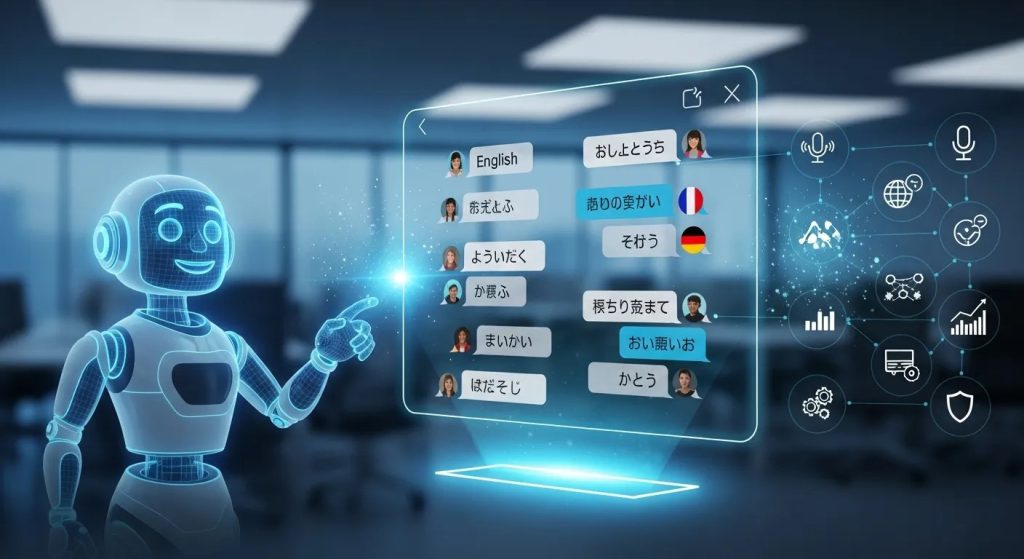
Implementing AI Multilanguage Support Bots can transform a company’s customer service landscape. One of the primary features is real-time language detection, which enables the system to immediately recognize a user’s preferred language and respond accordingly. Unlike standard translation tools, these bots consider the context of a conversation, ensuring accurate and meaningful interactions.
Another critical feature is intent recognition, allowing the bot to understand what the user truly wants, whether it’s technical support, billing questions, or product recommendations. With the integration of AI-NLP Chatbot Translation, these bots can manage multiple simultaneous conversations across various languages, making them indispensable for global businesses.
The scalability of AI Multilanguage Support Bots is another major advantage. Companies can deploy them to handle thousands of queries simultaneously, eliminating wait times and reducing human error. This efficiency not only improves customer satisfaction but also reduces operational costs significantly.
Use Cases Across Global Markets
E-commerce Platforms
E-commerce businesses often deal with international customers who speak different languages. By leveraging AI Multilanguage Support Bots, platforms can automatically answer queries regarding product availability, order tracking, and returns in the customer’s native language. Integrating these bots with AI Chatbots for Stock Analysis can further enhance their utility by providing real-time inventory updates in a multilingual environment.
For instance, a customer in Japan can inquire about product stock levels and receive instant, accurate responses without any manual translation. Similarly, a French-speaking customer can ask about shipping times, and the bot responds fluently, reducing friction and enhancing trust.
Financial Services
Financial institutions have a unique set of challenges due to regulatory requirements and sensitive data handling. AI Multilanguage Support Bots help banks and investment firms provide multilingual assistance, ranging from basic account inquiries to investment advice. These bots can work alongside AI Sales Bot tools to offer personalized product recommendations or guide users through financial products seamlessly.
Moreover, they can provide support for global trading platforms, ensuring that customers can access stock performance updates, investment reports, and transaction confirmations in their preferred language without compromising accuracy or compliance.
Healthcare Sector
Healthcare providers are increasingly deploying AI Multilanguage Support Bots to assist patients in scheduling appointments, understanding medication instructions, and accessing telehealth services. Language barriers in healthcare can have serious consequences; hence, multilingual bots play a crucial role in improving patient outcomes.
By integrating AI Conversational Commerce, these bots can even handle payment processing for teleconsultations or online pharmacy orders. This creates a smoother patient journey while ensuring that communication remains clear and precise in any language.
Technology and SaaS Companies
Software-as-a-Service (SaaS) platforms often serve global user bases, making multilingual support essential. AI Multilanguage Support Bots provide on-demand guidance, troubleshooting, and onboarding instructions in multiple languages, reducing the dependency on human support teams.
Emerging technologies such as AR Quantum Computing can further enhance support by providing visual walkthroughs of complex processes. By combining AR and AI-driven multilingual assistance, software companies can offer interactive, context-aware help that is both intuitive and language-inclusive.
Implementation Strategies for Businesses
Deploying AI Multilanguage Support Bots requires careful planning to maximize their impact. Here are key strategies:
- Assessment of Customer Needs: Identify which languages are most frequently used by your global customer base.
- Integration with Existing Systems: Ensure the bot works seamlessly with CRM platforms, chat tools, and helpdesk software.
- Training and Fine-Tuning: Use historical customer interactions to train the bot for industry-specific terminology.
- Monitoring and Continuous Improvement: Regularly evaluate performance metrics, including response accuracy, resolution times, and customer satisfaction scores.
By following these strategies, businesses can ensure that their multilingual bots provide value, improve operational efficiency, and enhance the customer experience.
Advanced Capabilities of AI Multilanguage Support Bots

Modern AI Multilanguage Support Bots go beyond simple question-and-answer functionality. They can engage in proactive support, anticipate user needs, and even handle transactions. For example, AI Conversational Commerce enables bots to suggest products, provide discount offers, and complete sales directly through a chat interface in the user’s native language.
Integration with AI-NLP Chatbot Translation ensures that these interactions are not only accurate but also contextually relevant. This capability is especially valuable for businesses operating in diverse linguistic regions, where misinterpretation can lead to lost revenue or poor customer experiences.
Comparative Analysis: Traditional Support vs AI Multilanguage Bots
| Feature | Traditional Support | AI Multilanguage Support Bots |
|---|---|---|
| Availability | Limited hours | 24/7 multilingual support |
| Response Time | Minutes to hours | Instant responses |
| Language Coverage | Limited | Supports multiple languages seamlessly |
| Cost Efficiency | High (staff, training) | Lower operational costs |
| Scalability | Challenging | Handles thousands of queries simultaneously |
| Accuracy | Human error possible | Consistently accurate with context |
As the table illustrates, AI Multilanguage Support Bots significantly outperform traditional customer support systems, particularly in multilingual contexts. Their ability to combine speed, accuracy, and language inclusivity creates a compelling business case for adoption.
Future Trends in AI Multilanguage Support Bots
The evolution of AI Multilanguage Support Bots is closely tied to advances in AI, NLP, and AR. Future trends include:
- Proactive AI Support: Bots that anticipate user questions before they are asked.
- Immersive AR Assistance: Integration with AR Autonomous Agents to provide visual, step-by-step guidance.
- Enhanced Personalization: Learning from previous interactions to tailor responses in real time.
- Cross-Platform Deployment: Seamless support across apps, websites, social media, and IoT devices.
These trends indicate that multilingual AI support is not just a temporary solution but a strategic investment in global customer experience.
Real-Life Case Studies of AI Multilanguage Support Bots
Numerous global companies have successfully implemented AI Multilanguage Support Bots, showcasing their value in real-world scenarios.
Case Study 1: E-commerce Giant
A leading e-commerce platform serving millions of customers worldwide integrated AI Multilanguage Support Bots to handle queries across 12 languages. Before deployment, customer support teams struggled with delayed responses and translation errors. After implementation, the platform observed:
- 40% reduction in average response time
- 30% increase in customer satisfaction scores
- Seamless support across multiple regions
Additionally, combining AI Chatbots for Stock Analysis allowed the bot to provide accurate product availability in real time, reducing cart abandonment and improving revenue.
Financial Institution
A multinational bank incorporated AI Multilanguage Support Bots to assist clients in banking and investment inquiries. The bots provided multilingual support for routine questions, account management, and international transaction assistance. Key outcomes included:
- 50% reduction in call center workload
- Improved client trust due to precise multilingual interactions
- Integration with AI Sales Bot tools led to higher upselling success
By leveraging AI, the bank transformed customer experience while ensuring compliance with global data protection standards.
Case Study 3: Healthcare Provider
A global telehealth service adopted AI Multilanguage Support Bots to assist patients in scheduling appointments and accessing medical information. The bots ensured that users received clear, contextually accurate responses, improving patient satisfaction and operational efficiency.
Integration with AI Conversational Commerce enabled seamless payment processing for teleconsultations, making the entire patient journey smoother and more reliable.
Technical Architecture of AI Multilanguage Support Bots

To understand why AI Multilanguage Support Bots are so effective, it is essential to examine their technical foundation. These systems combine several advanced technologies:
- Natural Language Processing (NLP): Enables comprehension of user queries and intent detection.
- Machine Learning Models: Continuously learn from interactions, improving accuracy over time.
- Multilingual Translation Engine: Powered by AI-NLP Chatbot Translation, ensures semantic and contextually correct communication.
- Integration Layer: Connects the bot with CRM, ERP, and messaging platforms.
- Analytics and Reporting: Provides insights into query trends, language performance, and user behavior.
Modern implementations often employ cloud infrastructure for scalability, allowing AI Multilanguage Support Bots to manage thousands of concurrent interactions globally.
Measuring ROI and Performance Metrics
Businesses investing in AI Multilanguage Support Bots need to quantify benefits. Key metrics include:
- Customer Satisfaction (CSAT): Tracks overall satisfaction post-interaction.
- First Response Time (FRT): Reduced dramatically with AI bots.
- Cost per Interaction: Significantly lower compared to human agents.
- Query Resolution Rate: Monitors how many issues are resolved without escalation.
Companies that measure these metrics consistently find that AI-driven multilingual support not only reduces operational costs but also increases retention rates and customer loyalty.
By leveraging analytics, businesses can fine-tune bot responses, ensuring continuous improvement in user experience.
Integrating AI Multilanguage Support Bots with Emerging Technologies
The future of multilingual support is tightly coupled with emerging technologies.
AR and Immersive Support
Integration with AR Autonomous Agents allows users to receive step-by-step visual guidance while interacting with AI Multilanguage Support Bots. This is especially valuable for technical product support, healthcare procedures, and software onboarding, where visual cues complement textual or spoken instructions.
Quantum Computing
Though still emerging, AR Quantum Computing offers opportunities to accelerate AI algorithms used in multilingual bots. Faster data processing enables more sophisticated predictive responses, real-time translation improvements, and advanced personalization at scale.
Conversational Commerce
By combining AI Conversational Commerce with multilingual bots, businesses can transform customer interactions into direct revenue opportunities. For example, a customer asking about product availability can receive personalized recommendations and complete the purchase without switching platforms.
Implementation Best Practices
Deploying AI Multilanguage Support Bots effectively requires a structured approach:
- Identify Target Languages: Focus on markets with the highest customer volume first.
- Data Preparation: Collect multilingual training data, including slang, idioms, and regional variations.
- Pilot Testing: Launch in a controlled environment to monitor performance and user acceptance.
- Continuous Learning: Use reinforcement learning to improve translation and contextual accuracy.
- Feedback Mechanisms: Integrate post-interaction surveys to monitor satisfaction and identify gaps.
Following these steps ensures that bots not only function effectively but also align with broader business goals.
Advantages Over Traditional Multilingual Support
| Feature | Human Support | AI Multilanguage Support Bots |
|---|---|---|
| Response Speed | Minutes to hours | Instant |
| 24/7 Availability | Limited | Around-the-clock |
| Scalability | Difficult | Handles thousands of users simultaneously |
| Accuracy | Depends on staff | High, with context-aware translation |
| Cost | High | Lower operational expenditure |
| Analytics | Manual | Real-time insights into customer behavior |
This comparison highlights why companies are increasingly shifting toward AI-driven multilingual support systems.
Challenges and Solutions

While AI Multilanguage Support Bots offer significant benefits, there are challenges to consider:
- Contextual Misinterpretation: Some phrases may lose meaning during translation. Solution: Train bots using region-specific datasets.
- Data Privacy: Handling sensitive customer information across borders requires compliance. Solution: Implement GDPR-compliant practices and encryption.
- Integration Complexity: Connecting bots with legacy systems can be difficult. Solution: Use middleware or APIs for seamless integration.
By addressing these challenges proactively, organizations can maximize the impact of their multilingual AI initiatives.
Conclusion
AI Multilanguage Support Bots represent a transformative step in modern customer service. By combining natural language processing, machine learning, and real-time translation, these bots break language barriers and provide consistent, accurate support worldwide. Businesses deploying these solutions benefit from reduced operational costs, improved response times, and enhanced customer loyalty. Integration with technologies such as AR Autonomous Agents, AI Conversational Commerce, and AI Chatbots for Stock Analysis further amplifies value, creating interactive, intelligent experiences. As global markets expand, adopting AI Multilanguage Support Bots is no longer optional but essential for companies seeking efficiency, scalability, and a competitive edge in multilingual customer engagement.
Frequently Asked Questions (FAQs)
What are AI Multilanguage Support Bots?
They are AI-powered systems that provide customer support across multiple languages, interpreting user intent and delivering accurate, context-aware responses in real time.
How do these bots handle multiple languages?
Using AI-NLP Chatbot Translation, bots detect the user’s language and translate responses while maintaining meaning, tone, and cultural context.
Which industries benefit the most from AI Multilanguage Support Bots?
E-commerce, finance, healthcare, SaaS, and global retail sectors benefit by reducing costs, increasing efficiency, and improving customer satisfaction.
Can AI Multilanguage Support Bots integrate with other technologies?
Yes, they can work alongside AR Autonomous Agents, AI Conversational Commerce, AI Sales Bot systems, and even AI Chatbots for Stock Analysis for enhanced support and engagement.
Are these bots cost-effective compared to human support teams?
Absolutely. They reduce operational costs, handle thousands of queries simultaneously, and operate 24/7 without fatigue, ensuring scalable and consistent service globally.