AI-powered Messenger Bots transform business communication by automating engagement, personalizing experiences, and supporting multilingual audiences. Integrating AI Chatbots Development, AR technologies, and marketing automation boosts sales, improves customer satisfaction, and enables data-driven insights for global growth.
Introduction to AI-powered Messenger Bots
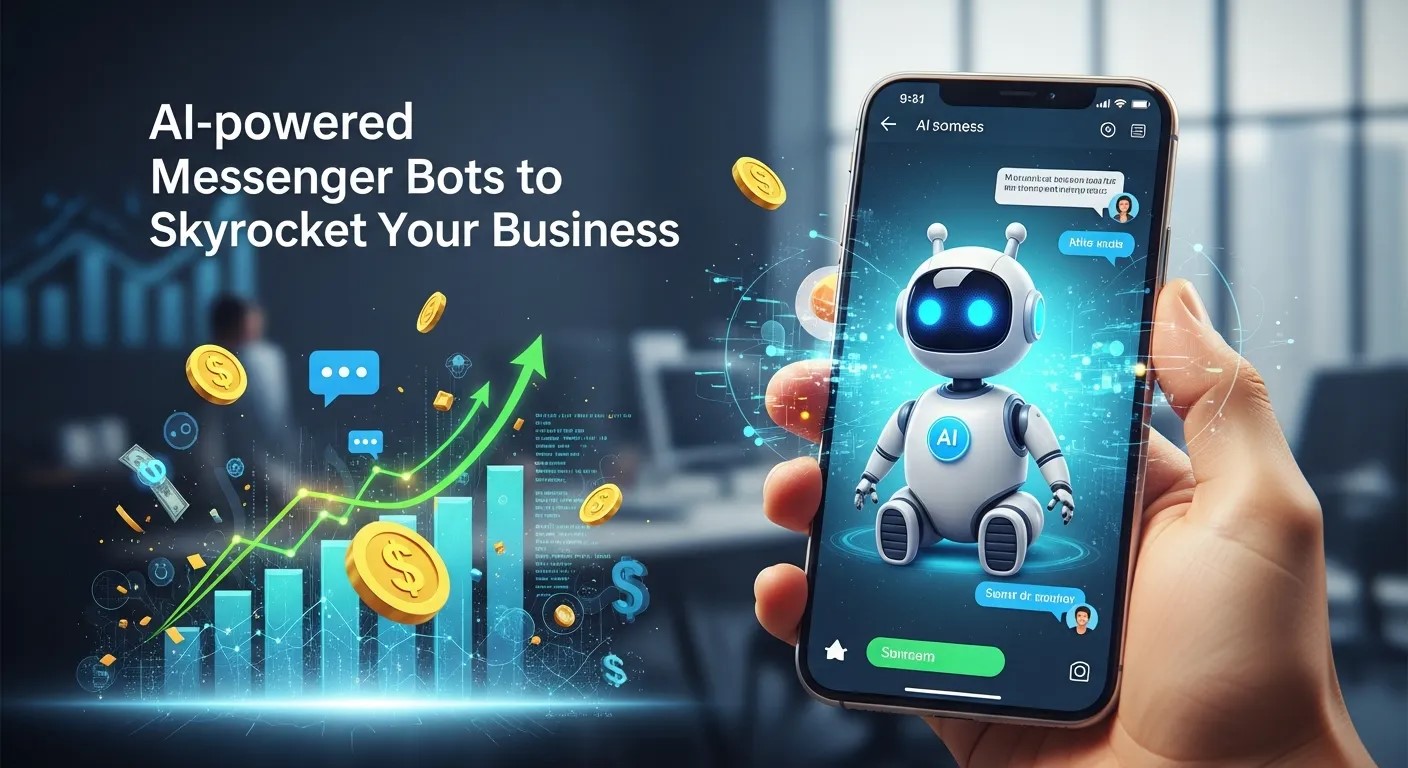
In today’s digital-first world, AI-powered Messenger Bots are transforming how businesses engage with customers. These intelligent conversational agents use artificial intelligence and Machine Learning to automate interactions, provide instant support, and deliver personalized experiences. With billions of active users on Facebook Messenger, leveraging these bots allows companies to reach a global audience efficiently, enhance customer satisfaction, and streamline operational workflows.
Businesses that adopt AI Chatbots Development frameworks can build Messenger bots capable of understanding user intent, handling complex queries, and learning from interactions over time. Unlike traditional scripted chat systems, AI-powered bots continuously improve, providing more accurate and context-aware responses with each conversation.
Why Businesses Need Messenger Bots
AI-powered Messenger Bots have become an essential component of modern business strategy. Companies can automate Ecommerce Messenger Bots to manage customer inquiries, track orders, suggest products, and even process payments—all without human intervention. This not only improves efficiency but also creates a seamless, interactive customer experience.
Moreover, businesses focused on Automated Chatbot Marketing can use Messenger bots to send targeted promotions, recommend products, and segment audiences automatically. By analyzing user behavior, these bots optimize campaigns in real-time, delivering personalized engagement that drives conversions.
AI Chatbots Development Basics
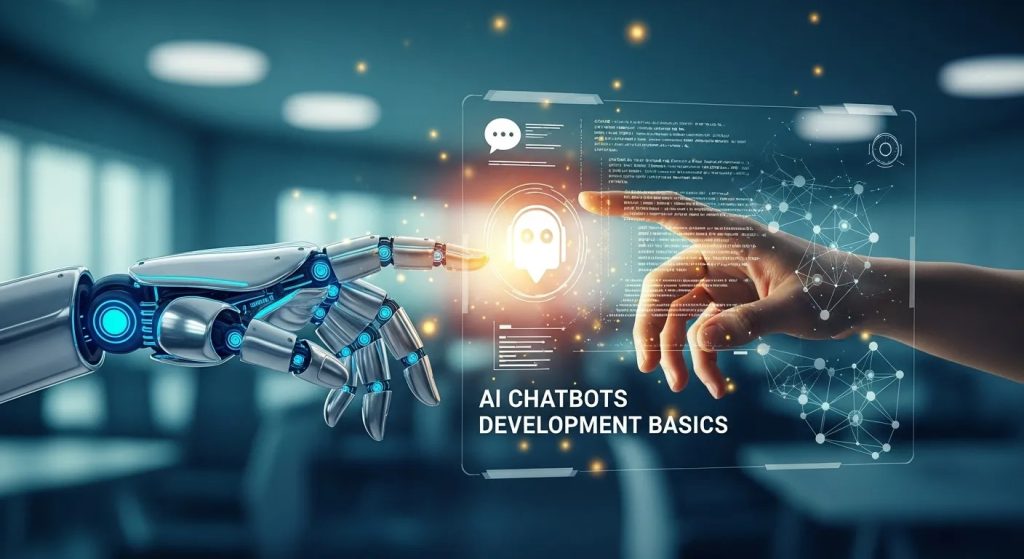
Developing effective AI-powered Messenger Bots requires a solid understanding of AI Chatbots Development principles. Key components include:
- Natural Language Processing (NLP): Enables bots to understand and interpret human language.
- Machine Learning Algorithms: Allow bots to learn from interactions and improve over time.
- Conversation Design: Ensures smooth, intuitive dialogues that mimic human interactions.
Through AI-NLP Chatbot Translation, bots can also communicate across multiple languages, expanding their reach for international audiences. This capability is especially important for companies deploying AI Chatbots in Market Research, where collecting feedback from diverse demographics is critical.
Ecommerce Messenger Bots: Driving Sales and Engagement
For online retailers, Ecommerce Messenger Bots provide a direct line to customers. These bots can recommend products based on browsing history, manage customer service inquiries, and even handle transactional processes. By automating repetitive tasks, businesses free up human resources for higher-level strategic work while maintaining 24/7 support.
Integration with analytics and CRM systems allows bots to track engagement, measure conversion rates, and refine marketing strategies. Companies can also deploy AI Chatbot Learning Resources internally to train staff and optimize chatbot workflows, ensuring that both AI and human teams are aligned toward business goals.
Expanding Possibilities with AR Integration
Emerging technologies such as Inclusive AR Design and Industrial AR Applications enhance the capabilities of AI-powered Messenger Bots. AR-powered interfaces can provide immersive product demonstrations, step-by-step tutorials, and interactive user experiences, increasing engagement and retention. Integrating AI chatbots with AR ensures context-aware interactions, guiding users in real-time and enhancing the overall customer journey.
Businesses experimenting with AR can leverage AI-powered Messenger Bots to bridge digital and physical experiences, whether in retail, training, or industrial settings. Machine learning algorithms analyze interactions to improve recommendations and predict customer needs dynamically.
Leveraging Machine Learning Frameworks
Modern AI-powered Messenger Bots rely heavily on Machine Learning frameworks to deliver intelligent, adaptive, and context-aware conversations. Frameworks like TensorFlow, PyTorch, and Keras allow developers to implement AI-NLP Chatbot Translation, enabling Messenger bots to understand multiple languages and maintain context across conversations. By training models on large datasets, bots can provide accurate responses, predict user intent, and continuously improve through interaction analytics.
For businesses focused on Chatbots for Marketing, these frameworks allow seamless integration with CRM systems, enabling bots to segment audiences, personalize messages, and optimize engagement automatically.
Multilingual Support with AI Chatbots
As global markets expand, AI Multilanguage Support Bots are essential for companies aiming to communicate across regions. These bots use AI-NLP Chatbot Translation to convert user input into multiple languages while preserving intent and context. This ensures smooth and natural interactions, increasing user satisfaction and reducing friction in customer communication.
By integrating multilingual capabilities, companies can deploy AI-powered Messenger Bots for international Ecommerce Messenger Bots, enabling them to recommend products, answer inquiries, and complete transactions in various languages—all without manual intervention.
Tools for Building Messenger Bots
Developers have a variety of tools to accelerate AI Chatbots Development:
- Dialogflow: Simplifies conversation flow design and integrates seamlessly with Facebook Messenger.
- Rasa: Offers open-source flexibility for custom machine learning models and multi-language support.
- Microsoft Bot Framework: Provides enterprise-grade solutions and integration with various APIs.
These tools allow bots to perform advanced tasks while reducing development time. Businesses can leverage these tools to implement Transparent AI Chatbots, ensuring users understand the bot’s capabilities and limitations, which builds trust and increases engagement.
Marketing Applications of Messenger Bots
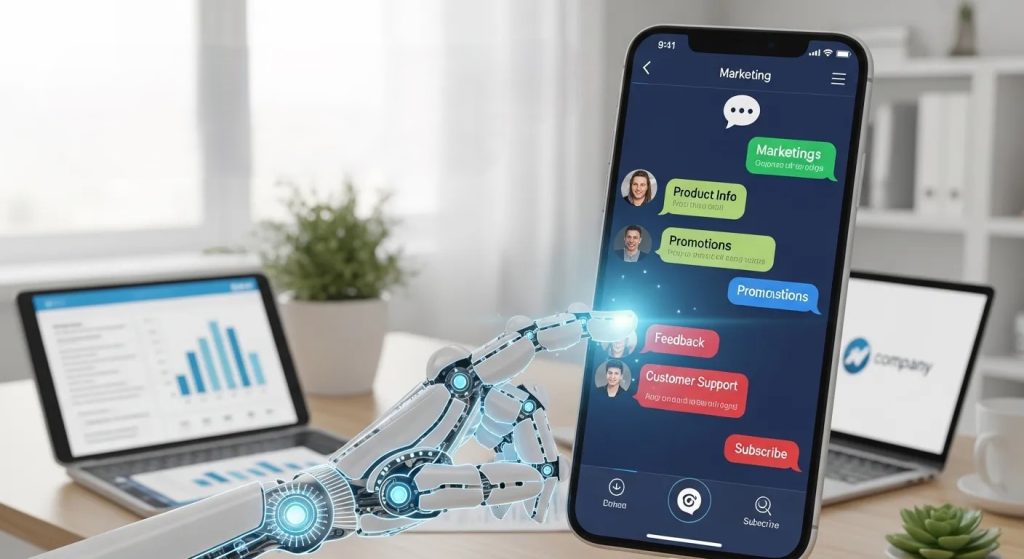
AI-powered Messenger Bots are transforming marketing strategies. By automating customer interactions, businesses can provide instant responses, recommend products, and gather real-time feedback. Chatbots for Marketing analyze user behavior to optimize campaigns, personalize content, and increase conversions.
For Ecommerce Messenger Bots, machine learning models track purchase patterns, suggest complementary products, and re-engage customers who abandon carts. This automation allows marketing teams to focus on strategy while the bot handles repetitive, high-volume tasks efficiently.
AR Integration for Next-Level Engagement
Emerging technologies such as AR Quantum Computing and AR Autonomous Agents enhance AI-powered Messenger Bots by delivering immersive, interactive experiences. Retailers can use AR-enabled bots to provide virtual product try-ons, interactive demos, or step-by-step tutorials. Industrial applications also benefit, as bots guide technicians through complex procedures, ensuring accuracy and efficiency.
By combining AR with AI-powered Messenger Bots, companies create a unique blend of interactive marketing and customer support, improving both engagement and operational outcomes.
Choosing the Right Programming Languages for AI-powered Messenger Bots
Selecting the appropriate programming language is crucial for efficient AI-powered Messenger Bots development. The right choice affects bot performance, scalability, and integration capabilities with marketing tools, AR interfaces, and multilingual support.
| Programming Language | Strengths | Weaknesses | Ideal Use Cases |
|---|---|---|---|
| Python | Easy syntax, extensive libraries for machine learning, NLP support | Slower execution for extremely high-traffic bots | AI-powered Messenger Bots, multilingual bots, AI Chatbots Development |
| JavaScript | Real-time interactivity, Node.js scalability, web integration | Limited native ML libraries | Ecommerce Messenger Bots, web-based marketing bots |
| Java | Enterprise-grade reliability, cross-platform | Verbose syntax, steeper learning curve | Large-scale Messenger bots, Industrial AR Applications |
| C++ | High-performance, low-latency | Complex syntax, slower development | AR Quantum Computing bots, intensive computation tasks |
| Go | Efficient concurrency, lightweight | Smaller AI ecosystem | High-traffic AI-powered Messenger Bots |
This comparative analysis helps developers select a language aligned with business objectives, user experience, and technical requirements.
AI-powered Multilanguage Support Bots
Global businesses require AI Multilanguage Support Bots to engage diverse audiences effectively. Using AI-NLP Chatbot Translation, these bots can seamlessly convert messages between languages while maintaining context and intent. Multilingual bots expand customer reach, improve accessibility, and enhance engagement across regions.
For example, Ecommerce Messenger Bots can recommend products in the customer’s preferred language, answer inquiries, and even handle transactions without requiring manual intervention. Integrating Transparent AI Chatbots ensures that users are aware of the bot’s capabilities, increasing trust and satisfaction.
Machine learning algorithms enable these bots to learn from user interactions, improving accuracy over time and adapting to cultural and linguistic nuances. Combining these capabilities with Chatbots for Marketing ensures personalized campaigns that resonate globally.
Real-World Business Applications
Marketing and Customer Engagement
AI-powered Messenger Bots allow businesses to automate engagement at scale. By leveraging behavioral data, bots can provide tailored product recommendations, personalized messages, and targeted campaigns. Businesses using Chatbots for Marketing see increased conversions, higher retention rates, and improved overall ROI.
Market Research
AI Chatbots in Market Research streamline the process of collecting customer insights. Bots can conduct surveys, analyze sentiment, and deliver actionable reports. These insights guide product development, marketing strategies, and customer support improvements without heavy human involvement.
AR-Enhanced Experiences
Integrating AR with Messenger bots, through Inclusive AR Design or AR Autonomous Agents, enhances interactive experiences. Retailers can provide virtual try-ons or demos, while industrial applications benefit from real-time guidance in complex procedures. AI-powered Messenger Bots coupled with AR offer dynamic and immersive experiences that increase engagement and efficiency.
Neural Networks Powering AI-powered Messenger Bots
Modern AI-powered Messenger Bots rely on Machine Learning and neural networks to understand complex user queries, manage context, and generate human-like responses. Deep learning models, such as Recurrent Neural Networks (RNNs), Long Short-Term Memory (LSTM) networks, and Transformer-based architectures, enable bots to process sequential conversation data and predict the most relevant replies.
These architectures are crucial for AI Multilanguage Support Bots, allowing them to maintain conversation context across multiple languages. By continuously learning from user interactions, the bots improve accuracy, making them effective tools for Ecommerce Messenger Bots, market research, and customer engagement.
Deep Learning Techniques for Conversational AI
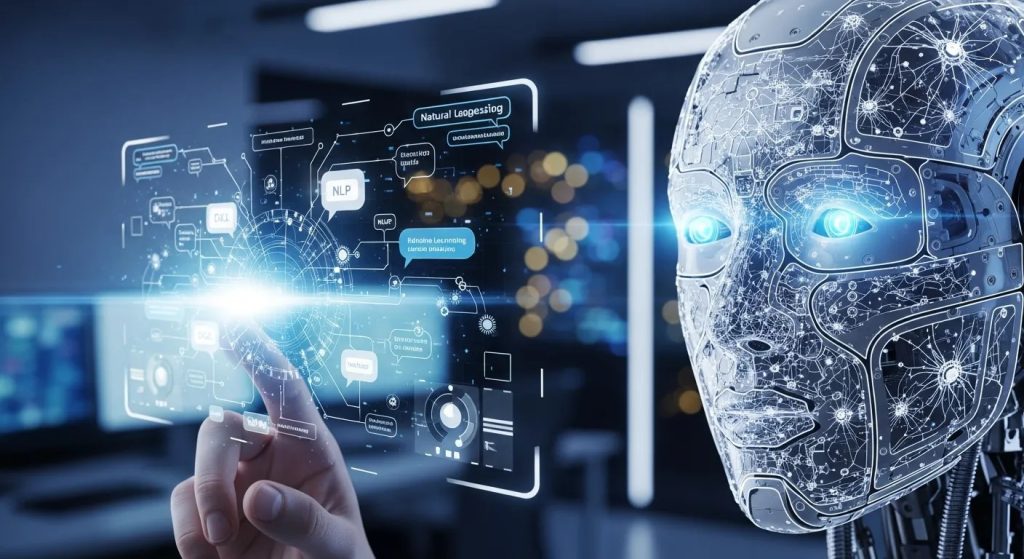
Several key techniques make Messenger bots more intelligent and adaptable:
- Intent Recognition: Identifies the user’s goal or query in real-time.
- Entity Extraction: Extracts essential information such as names, dates, or product details.
- Context Management: Maintains conversation flow across multiple exchanges.
- Response Generation: Uses neural network models to generate natural, human-like replies.
Integrating AI-NLP Chatbot Translation ensures that bots can handle multilingual inputs while preserving meaning, tone, and intent. This is particularly critical for global businesses using AI Chatbots in Market Research, where understanding nuanced feedback from international users is key.
Real-World Case Studies
E-commerce Growth
Retailers implementing AI-powered Messenger Bots for their Ecommerce Messenger Bots solutions have seen significant improvements in sales and engagement. Bots provide product recommendations, assist with order tracking, and re-engage users who abandon carts. By analyzing interaction patterns, bots also optimize Chatbots for Marketing campaigns, improving conversion rates.
Market Research and Customer Insights
Companies leveraging AI Chatbots in Market Research collect large volumes of customer feedback effortlessly. Machine learning algorithms analyze sentiment, identify trends, and generate actionable insights. This helps businesses refine products, enhance marketing strategies, and improve overall customer experience.
AR-Integrated Experiences
Emerging technologies such as AR Quantum Computing and AR Autonomous Agents allow Messenger bots to deliver immersive, interactive experiences. Retailers can offer virtual try-ons or AR-guided product demos, while industrial applications benefit from bots guiding technicians through complex procedures. Combining AR and AI-powered Messenger Bots creates context-aware, engaging, and adaptive interactions.
Transparent AI Bots for Trust and Engagement
Implementing Transparent AI Chatbots ensures users understand the capabilities and limitations of the bot. Transparency builds trust, which is critical for both marketing interactions and sensitive operations, such as financial transactions or customer support in regulated industries.
By maintaining ethical AI practices and clear communication, businesses enhance user satisfaction while remaining compliant with privacy standards. Transparency is particularly important for AI Multilanguage Support Bots, which interact with users across cultures and regulatory environments.
Performance Optimization and Scalability
To maximize the impact of AI-powered Messenger Bots, businesses must ensure bots are fast, responsive, and capable of handling large-scale interactions. Optimizing server architecture, leveraging cloud computing, and using efficient programming languages like Python and Node.js allow bots to scale seamlessly.
For enterprises deploying Ecommerce Messenger Bots, this ensures hundreds or thousands of concurrent conversations without delays. Similarly, Industrial AR Applications integrated with Messenger bots require robust systems that manage complex data streams in real-time.
Personalization with Machine Learning
Personalization is key to user engagement. AI-powered Messenger Bots use Machine Learning to analyze user behavior, preferences, and interaction patterns. Bots can then provide tailored recommendations, promotional offers, and proactive customer support.
By implementing AI Multilanguage Support Bots and AI-NLP Chatbot Translation, businesses can deliver personalized, multilingual content to global users, enhancing engagement and fostering loyalty. Personalization also supports Chatbots for Marketing, allowing campaigns to be targeted based on real-time user insights.
Advanced Analytics for Smarter Decision-Making
Analytics is a cornerstone of successful AI Chatbots Development. Bots collect data on user interactions, query types, and engagement metrics. This information can inform business strategy, refine marketing campaigns, and improve overall customer experience.
For example, companies using AI Chatbots in Market Research can track trends, perform sentiment analysis, and generate actionable reports. Combining this with AR-enabled interfaces, such as Inclusive AR Design, provides interactive insights that are both engaging and informative.
Enterprise Integration
For large organizations, AI-powered Messenger Bots must integrate with existing CRM, ERP, and marketing platforms. This allows seamless data flow, real-time updates, and coordinated customer interactions across departments.
By leveraging Transparent AI Chatbots, enterprises ensure that automated interactions are clear, ethical, and aligned with brand messaging. Integration with AR Quantum Computing and AR Autonomous Agents also enables advanced simulations, training, and immersive marketing campaigns, creating a competitive edge.
Future-Proofing Your Messenger Bots
The future of AI-powered Messenger Bots lies in adaptability. Continuous learning, updates, and expansion of multilingual capabilities ensure long-term relevance. By combining AI Chatbots Development, Machine Learning, AR technologies, and analytics, businesses can maintain innovative, high-performing conversational systems that drive growth and engagement.
Integrating AR and AI for Next-Level Engagement
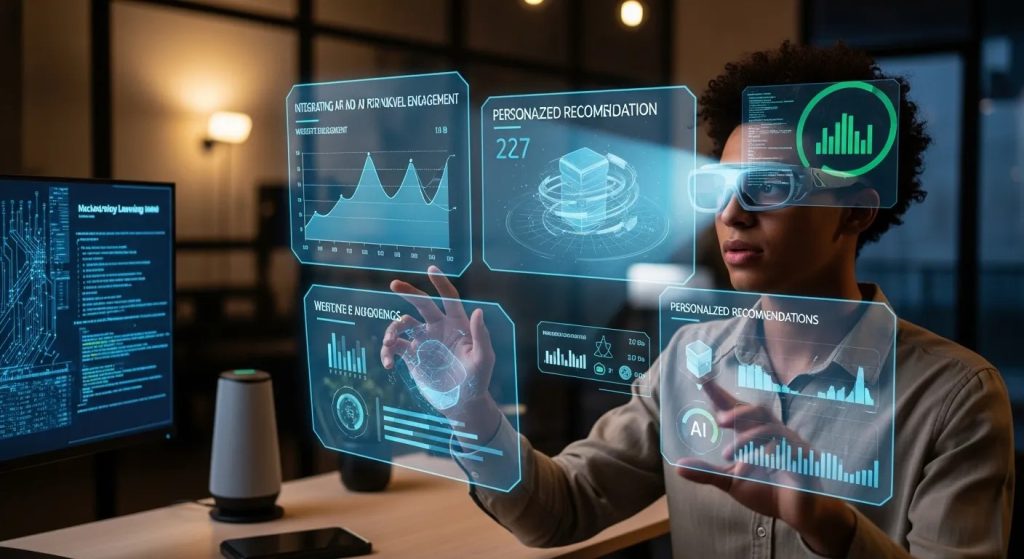
Businesses can combine AI-powered Messenger Bots with AR Quantum Computing and AR Autonomous Agents to create immersive, interactive experiences. For example, a retail company could deploy a Messenger bot that guides users through an AR-based virtual store, providing product recommendations, step-by-step tutorials, or live demonstrations.
Industrial applications also benefit—technicians can receive live AR instructions while interacting with a Transparent AI Chatbot, ensuring safety, precision, and efficiency. Combining AI and AR provides not just automation, but intelligent, context-aware interactions that enhance both engagement and operational performance.
Enhancing Marketing with AI Chatbots
Chatbots for Marketing have transformed the way businesses approach customer engagement. By leveraging AI-powered Messenger Bots, companies can automatically send personalized promotions, suggest complementary products, and retarget users who have interacted previously.
For global audiences, AI Multilanguage Support Bots with AI-NLP Chatbot Translation ensure that marketing messages are delivered in the user’s preferred language. This creates a seamless, personalized experience that drives higher conversion rates and builds brand loyalty.
Ecommerce Messenger Bots are particularly effective in this context, managing order tracking, upselling products, and providing real-time support, all while maintaining a consistent, human-like conversational flow.
Real-World Business Examples
- Global E-Commerce Platforms: Leveraging AI-powered Messenger Bots for order management, product recommendations, and multilingual support, driving sales growth and customer retention.
- Financial Services: Using Transparent AI Chatbots to assist clients with account inquiries, payments, and fraud alerts while maintaining compliance and trust.
- Industrial Training: Implementing Industrial AR Applications alongside Messenger bots to guide technicians in complex machinery operations, reducing errors and improving efficiency.
- Market Research Firms: Deploying AI Chatbots in Market Research to conduct surveys, analyze sentiment, and provide actionable insights across diverse markets.
These examples demonstrate the versatility and scalability of AI-powered Messenger Bots, showing that both marketing and operational functions can benefit.
Future Outlook for Messenger Bots
The future of AI-powered Messenger Bots includes:
- Greater integration with AR Autonomous Agents for immersive training and shopping experiences.
- Expanded multilingual capabilities through AI-NLP Chatbot Translation, enabling global business reach.
- Smarter Chatbots for Marketing using predictive analytics and behavior-driven personalization.
- Enhanced transparency and trust with Transparent AI Chatbots, addressing ethical AI concerns.
Businesses that invest in advanced AI Chatbots Development and continually optimize their Messenger bots will maintain a competitive edge, improve customer engagement, and drive measurable growth.
Conclusion
By integrating AI-powered Messenger Bots with Machine Learning, AR technologies, and multilingual capabilities, businesses can revolutionize customer interaction, marketing, and operational processes. From Ecommerce Messenger Bots to AI Multilanguage Support Bots, the opportunities are vast. Proper optimization, personalization, and transparent AI practices ensure that these bots not only enhance engagement but also deliver actionable insights and measurable ROI. The combination of AI, AR, and conversational analytics positions businesses for long-term success in the rapidly evolving digital landscape.
Frequently Asked Questions (FAQ)
What are AI-powered Messenger Bots?
Intelligent chatbots on Facebook Messenger that use AI and machine learning to automate conversations, provide support, and engage customers.
How can Messenger bots help my business?
They improve customer service, automate marketing, provide multilingual support, and collect insights to boost sales and engagement.
Can Messenger bots handle multiple languages?
Yes, AI Multilanguage Support Bots with AI-NLP Chatbot Translation enable seamless multilingual communication.
Are Messenger bots useful for market research?
Absolutely. AI Chatbots in Market Research collect feedback, analyze sentiment, and generate actionable insights efficiently.
Can Messenger bots integrate with AR technology?
Yes, AR Quantum Computing and AR Autonomous Agents allow bots to deliver immersive, interactive, and context-aware experiences.