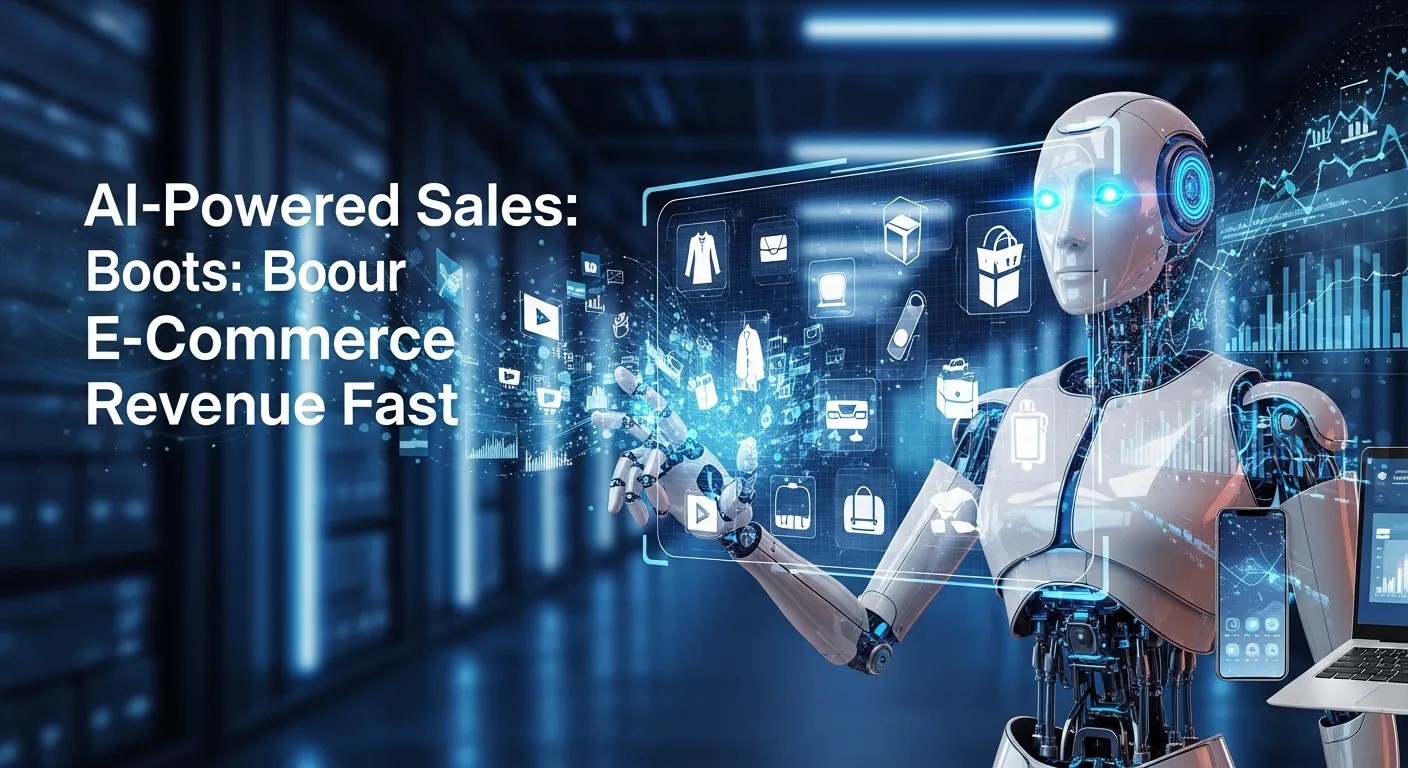
AI-Powered Sales Bots enhance e-commerce through personalized recommendations, interactive experiences, and predictive analytics. Integrating bots across platforms, including AI-powered Messenger Bots and AR Retail, increases sales, loyalty, and customer satisfaction, making them essential for modern businesses.
The Rise of AI-Powered Sales Bots in E-Commerce
In the rapidly evolving world of e-commerce, businesses are constantly seeking innovative ways to improve customer engagement, streamline sales processes, and drive higher revenue. One of the most effective solutions today is leveraging AI-Powered Sales Bots. These intelligent systems are designed to interact with customers, analyze preferences, and provide personalized product recommendations, all without human intervention. By implementing these bots, companies can ensure that each visitor on their platform receives a seamless shopping experience, which directly impacts conversion rates and overall sales performance.
Understanding AI-Powered Sales Bots
AI-Powered Sales Bots are more than just automated chat systems. They combine artificial intelligence, natural language processing (NLP), and machine learning to deliver human-like interactions. Unlike traditional chatbots, which follow a static script, these bots can learn from previous interactions, predict user behavior, and adapt responses in real time. This intelligence allows businesses to offer highly personalized shopping experiences that increase the likelihood of purchases and foster long-term customer loyalty.
Key capabilities of AI-powered sales bots include:
- Product Recommendations: Suggesting items based on customer browsing history and past purchases.
- Real-Time Assistance: Providing instant answers to product questions, shipping details, and return policies.
- Behavior Analysis: Understanding customer patterns to anticipate needs and preferences.
- Cross-Selling & Upselling: Promoting complementary products without being intrusive.
By integrating these functionalities, businesses can reduce cart abandonment rates, improve engagement metrics, and ultimately boost revenue.
How AI-Powered Sales Bots Enhance Customer Experience
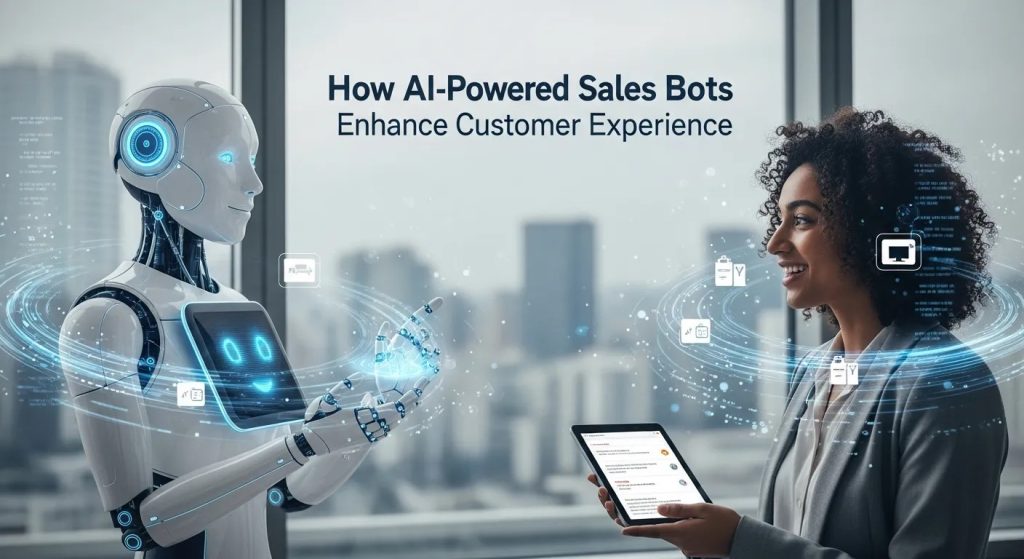
The modern consumer expects a personalized and frictionless shopping experience. AI-Powered Sales Bots meet these expectations by creating interactive and intuitive communication channels. Customers can ask questions, receive tailored recommendations, or explore new products effortlessly. Unlike human agents, these bots operate 24/7, ensuring no lead or query goes unattended.
Moreover, businesses implementing these bots often notice improved customer satisfaction. The ability of AI to anticipate preferences, remember past interactions, and provide timely suggestions makes the shopping journey feel natural and human-like. For example, a returning visitor to an online fashion store might be greeted with new arrivals that align with their previous choices, demonstrating a level of personalization that traditional platforms cannot achieve.
AI-Powered Sales Bots for B2B Environments
While most people associate sales bots with B2C e-commerce, they are increasingly vital in B2B contexts as well. B2B Chatbot Marketing strategies often incorporate AI-Powered Sales Bots to handle lead qualification, scheduling meetings, and nurturing relationships at scale. These bots can communicate complex product details, answer technical questions, and guide potential clients through multi-step purchasing processes, saving businesses valuable time and resources.
In B2B interactions, trust and accuracy are critical. AI-Powered Sales Bots excel in providing precise information consistently, reducing the chances of miscommunication, and improving the efficiency of the sales funnel. Companies that adopt these bots in B2B settings can experience shorter sales cycles and higher lead-to-customer conversion rates.
Integrating AI-Powered Messenger Bots
One of the most popular channels for deploying AI-Powered Sales Bots is through messaging platforms. AI-powered Messenger Bots allow businesses to reach customers where they are most active, whether on social media or messaging apps. By interacting in familiar environments, these bots make communication seamless and less intrusive.
For instance, a customer browsing a new gadget can receive instant recommendations via a messenger bot, including specifications, pricing, and reviews. This kind of real-time, personalized interaction not only enhances the shopping experience but also significantly increases the probability of a purchase.
Creating an Interactive Customer Journey with Chatbot Interactive Touch
A key advantage of AI-Powered Sales Bots is their ability to deliver a Chatbot Interactive Touch that makes online shopping engaging and dynamic. Unlike static recommendation systems, these bots use conversational AI to simulate real human interaction. From guiding users through product catalogs to answering nuanced questions, the interactive element creates a sense of presence that encourages customers to spend more time exploring products.
For example, a customer exploring a tech store might interact with a bot that suggests accessories, demonstrates product features through interactive visuals, or even provides instant comparisons. This immersive experience transforms passive browsing into an engaging journey, helping businesses not only retain users longer but also increase the likelihood of conversion.
By leveraging this interactive approach, businesses can also gather valuable behavioral insights. Every interaction informs the bot’s understanding of customer preferences, enabling smarter product recommendations in real time. This continuous learning loop ensures that AI-Powered Sales Bots remain effective and increasingly accurate over time.
Bridging B2B and B2C with AI-Powered Sales Bots
Another critical application of AI-Powered Sales Bots is their versatility across both B2B and B2C Chatbot environments. While B2C bots focus on personalized shopping and upselling, B2B bots handle lead qualification, client onboarding, and complex purchase workflows. By unifying both approaches, businesses can create scalable, intelligent systems that adapt to the needs of various customer segments.
For instance, a SaaS company might use a B2B bot to guide enterprise clients through feature comparisons, pricing plans, and integration options, while simultaneously using a B2C bot on its website to assist retail customers with product selection and checkout. This dual-functionality reduces operational friction, ensures consistent customer experiences, and maximizes the ROI of AI deployments.
Leveraging AR Retail with AI-Powered Sales Bots
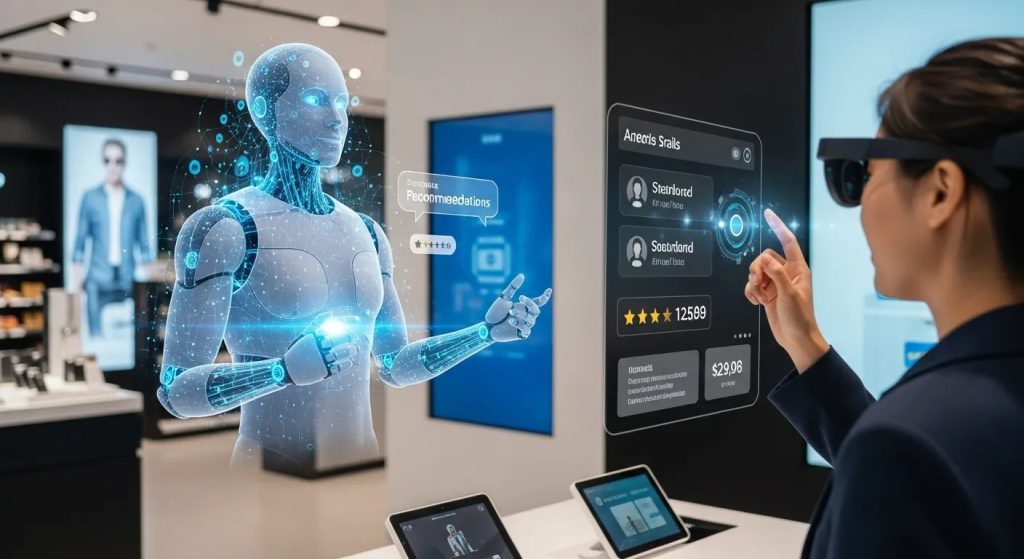
The intersection of AI-Powered Sales Bots and AR Retail technologies is transforming how customers explore products. Augmented reality allows users to visualize items in their own space for example, trying furniture in a living room or seeing how apparel fits via virtual try-ons. When combined with AI-Powered Sales Bots, AR Retail becomes not just a visualization tool but an intelligent shopping assistant.
These bots can guide users through AR experiences, suggest complementary products, and answer questions in real time. For example, a bot in an AR-enabled fashion store can recommend accessories based on the user’s virtual outfit selection or suggest alternative color options. This integration enhances engagement, boosts confidence in purchasing decisions, and ultimately drives higher conversion rates.
The Role of AR Intelligence in Enhancing Bots
AR Intelligence takes AI-Powered Sales Bots a step further by combining spatial recognition, computer vision, and machine learning. This allows bots to understand not only what the customer is looking for but also how they interact with virtual environments. With AR Intelligence, bots can provide context-aware suggestions, detect preferences, and even anticipate future needs.
For instance, in a virtual electronics store, a bot using AR Intelligence might notice that a user frequently examines smartphones with large screens and proactively suggest compatible accessories or upcoming releases. This level of insight transforms AI-Powered Sales Bots into proactive sales agents rather than reactive assistants, providing businesses with a competitive edge.
Personalization at Scale with AI-Powered Sales Bots
One of the most powerful aspects of AI-Powered Sales Bots is their ability to deliver personalized shopping experiences at scale. Unlike traditional marketing campaigns that target broad audiences, these bots analyze individual behaviors, purchase history, and browsing patterns to tailor interactions. By understanding what each customer values, AI-powered bots can suggest products, promotions, or bundles that are most relevant, increasing engagement and purchase likelihood.
For example, a returning customer on an online skincare store might receive suggestions for complementary products based on prior purchases, seasonal trends, or even current promotions. This dynamic personalization ensures that customers feel understood and valued, fostering loyalty while boosting revenue.
AI-Powered Analytics for Smarter Sales Strategies
Beyond personalized recommendations, AI-Powered Sales Bots provide businesses with deep insights into customer behavior. These bots track interactions, analyze engagement patterns, and generate actionable reports that inform marketing and sales strategies.
Key analytical capabilities include:
| Feature | Benefit |
|---|---|
| Customer Behavior Tracking | Understand what products users are interested in and when they are most likely to purchase |
| Conversion Analysis | Identify bottlenecks in the sales funnel and optimize the customer journey |
| Product Performance Insights | Measure which products are frequently recommended and purchased |
| Predictive Analytics | Anticipate customer needs and proactively suggest relevant items |
By leveraging these insights, businesses can continuously optimize product recommendations, promotional campaigns, and inventory strategies. Integrating analytics into AI-Powered Sales Bots ensures that companies are not just reacting to trends but actively shaping their sales outcomes.
Enhancing Customer Retention and Loyalty
Customer retention is just as critical as acquisition. AI-Powered Sales Bots excel at nurturing long-term relationships by providing ongoing value through intelligent engagement. Whether through timely product suggestions, helpful tips, or personalized offers, these bots keep customers engaged over time.
For instance, subscription-based businesses can use AI bots to notify users of renewal deadlines, recommend add-ons, or highlight new features tailored to their usage patterns. By consistently providing relevant information and support, businesses increase customer satisfaction and reduce churn, ultimately enhancing lifetime value.
Cross-Platform Integration for Seamless Experiences
To maximize effectiveness, AI-Powered Sales Bots must operate seamlessly across multiple channels. From website chat windows to social media messaging apps, mobile platforms, and even AR-enabled environments, bots need to provide a unified experience.
Integrating AI bots across platforms ensures that customer interactions are consistent. A shopper who begins exploring products on social media can continue seamlessly on a website or app without repeating preferences or questions. This cross-platform integration not only improves usability but also reinforces brand reliability and trust.
Real-World Examples of AI-Powered Sales Bots
Many leading brands have successfully implemented AI-Powered Sales Bots to drive sales and enhance customer engagement:
- Retail & Fashion: Online stores use AI bots to suggest outfits, size recommendations, and styling tips based on customer history.
- Electronics & Gadgets: Bots provide instant specifications, comparisons, and accessory recommendations.
- B2B SaaS: Bots assist in onboarding, answer technical queries, and guide prospects through complex purchasing decisions.
These real-world applications demonstrate how AI-powered bots bridge the gap between automated efficiency and personalized human-like engagement, delivering measurable business outcomes.
Automating Upselling and Cross-Selling with AI-Powered Sales Bots
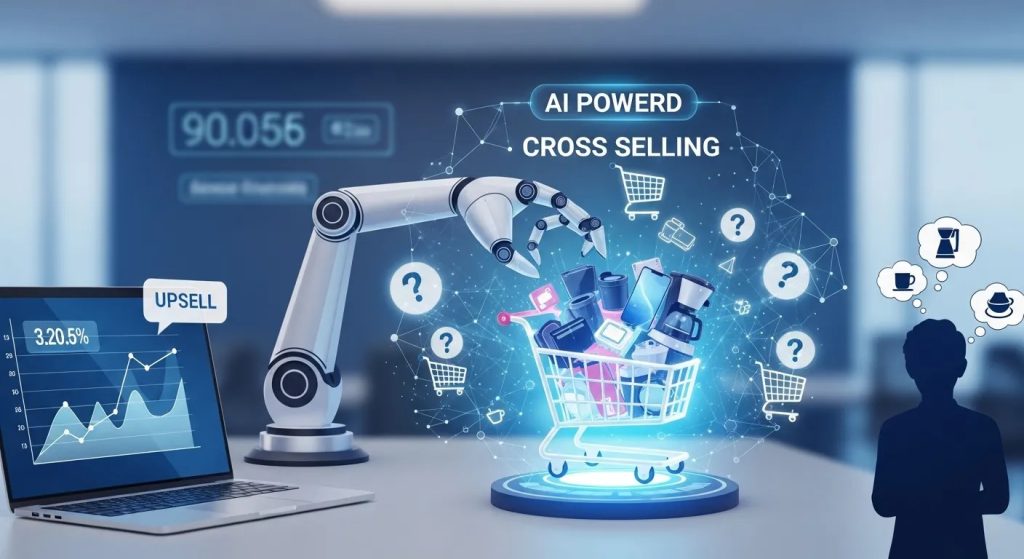
A major advantage of AI-Powered Sales Bots is their ability to automate upselling and cross-selling intelligently. By analyzing a customer’s preferences, purchase history, and browsing behavior, these bots can suggest complementary or higher-value products at the right moment.
For example, a customer buying a laptop might receive suggestions for compatible accessories like a laptop bag, wireless mouse, or extended warranty. Unlike generic pop-ups or email promotions, AI-Powered Sales Bots provide context-aware suggestions that feel personalized and helpful rather than intrusive.
Automation of upselling and cross-selling not only increases the average order value but also improves the overall shopping experience. Customers appreciate receiving relevant suggestions tailored to their specific needs, which can boost satisfaction and loyalty.
Decision-Making with AI Intelligence
AI-powered bots don’t just react—they make informed decisions that optimize sales. Leveraging machine learning algorithms, these bots can prioritize product recommendations, schedule follow-ups, and determine the best engagement strategy for each customer.
For instance, the bot might determine that a first-time visitor should receive product education content, while a returning customer is more likely to respond to a discount offer. By continuously learning from interactions, AI-Powered Sales Bots refine their strategies, increasing efficiency and driving higher conversion rates over time.
Addressing Challenges in AI-Powered Sales Bots Implementation
While the benefits of AI-Powered Sales Bots are significant, businesses must also consider common challenges to ensure success:
- Integration Complexity: Connecting bots to multiple platforms, CRM systems, and analytics tools can be challenging.
- Data Privacy: Handling sensitive customer data responsibly is crucial to maintain trust.
- Natural Interaction: Ensuring the bot communicates naturally without seeming robotic requires advanced NLP and continuous training.
- Performance Monitoring: Businesses must track metrics and fine-tune the bot’s responses to maintain relevance and accuracy.
Addressing these challenges proactively ensures that AI-Powered Sales Bots deliver their full potential without disrupting customer experiences.
Future Trends in AI-Powered Sales Bots
The future of AI-Powered Sales Bots is closely tied to advancements in artificial intelligence, machine learning, and augmented reality. Emerging trends include:
- Voice-Enabled Bots: Allowing customers to interact using voice commands for faster, hands-free shopping.
- Hyper-Personalization: Bots analyzing real-time behavioral data to deliver ultra-targeted product suggestions.
- AR & VR Integration: Combining bots with immersive shopping experiences for try-ons and product visualization.
- Predictive Sales Automation: Bots anticipating customer needs and initiating conversations proactively.
Businesses that stay ahead of these trends will be better positioned to provide seamless, personalized, and engaging shopping experiences that drive higher revenue and customer loyalty.
Enhancing E-Commerce with AI-Powered Messenger Bots
Integrating AI-powered Messenger Bots into your e-commerce strategy allows for immediate customer engagement. These bots are ideal for handling customer inquiries, promoting products, and offering instant support across popular messaging platforms.
For instance, a customer browsing a fashion retailer’s social media page can interact with a messenger bot to receive recommendations, check stock availability, or even complete purchases without leaving the app. This convenience enhances user experience, increases sales opportunities, and reinforces brand presence in digital channels.
Measuring ROI and Business Impact
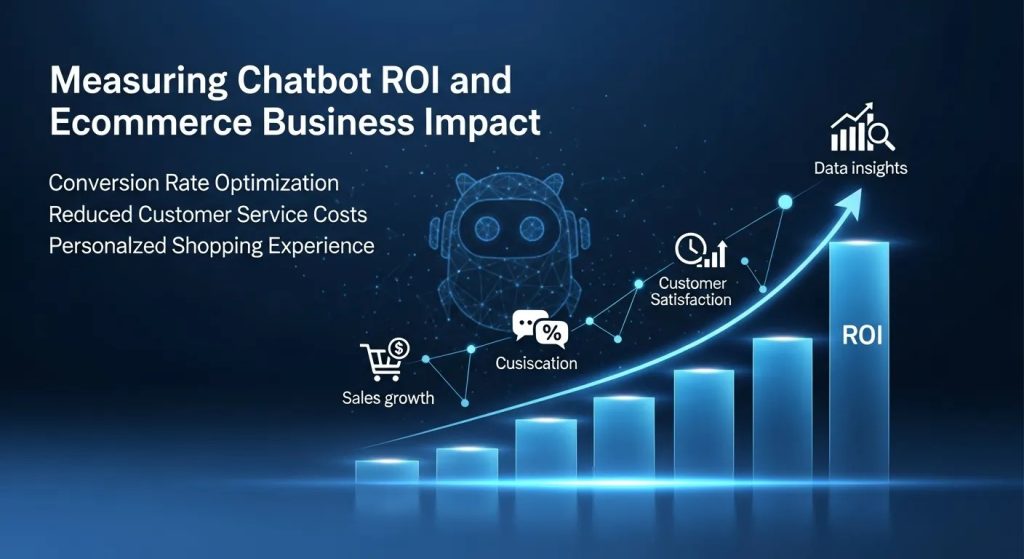
One of the key advantages of implementing AI-Powered Sales Bots is the ability to measure return on investment (ROI) with precision. By tracking metrics such as conversion rates, average order value, and customer engagement, businesses can assess the direct impact of these bots on revenue. Additionally, AI-powered bots provide insights into which product recommendations and interactions are most effective, helping refine strategies over time.
For example, an e-commerce platform using AI-Powered Sales Bots may notice a significant reduction in cart abandonment and an increase in repeat purchases, demonstrating tangible financial benefits. When combined with AR Retail experiences or interactive touchpoints, the impact becomes even more pronounced, offering both measurable ROI and enhanced customer satisfaction.
Practical Deployment Tips
Successfully deploying AI-Powered Sales Bots requires careful planning. Start by identifying key customer touchpoints where the bot can provide the most value—such as product discovery, checkout assistance, or post-purchase support. Integrate these bots with analytics tools to continuously monitor performance and fine-tune interactions.
Businesses should also consider multi-channel deployment, including websites, mobile apps, and AI-powered Messenger Bots, to ensure a seamless and consistent user experience. By following these best practices, companies can maximize the effectiveness of AI-Powered Sales Bots, drive meaningful engagement, and achieve sustainable growth in both B2B and B2C contexts.
Conclusion
AI-Powered Sales Bots are revolutionizing e-commerce by delivering personalized, interactive, and intelligent shopping experiences. From enhancing customer engagement and boosting conversions to enabling cross-selling, upselling, and real-time support, these bots drive measurable business outcomes. Integrating AI-powered bots across B2B and B2C channels, including websites, messaging platforms, and AR Retail environments, ensures consistent, scalable, and seamless interactions. Businesses leveraging AI-powered Messenger Bots and AR intelligence gain a competitive edge through smarter product recommendations, predictive analytics, and enhanced customer satisfaction. As technology evolves, adopting AI-Powered Sales Bots is essential for companies aiming to grow revenue and improve customer loyalty.
Frequently Asked Questions (FAQs)
What are AI-Powered Sales Bots?
AI-Powered Sales Bots are intelligent systems that automate customer interactions, provide product recommendations, and personalize shopping experiences using AI and machine learning.
How do AI-Powered Sales Bots increase revenue?
They improve conversion rates by offering personalized suggestions, automating upselling/cross-selling, and engaging customers in real time across multiple platforms.
Can AI-Powered Sales Bots work for B2B businesses?
Yes. They handle lead qualification, onboarding, and complex purchase workflows, making them valuable for both B2B and B2C environments.
What role does AR Retail play with these bots?
AR Retail enhances the shopping experience by allowing customers to visualize products virtually, with AI bots guiding recommendations and interactions in real time.
Are AI-Powered Messenger Bots effective?
Absolutely. Messenger bots enable instant, personalized communication on popular messaging platforms, increasing engagement and conversion while providing seamless customer support.