AI Sales Bots enable seamless shopping, personalized recommendations, and efficient support. By combining AI, AR Retail, and analytics, businesses can enhance engagement, increase sales, and build lasting customer loyalty in the evolving digital marketplace.
Sell smarter with AI Sales Bots to unlock faster growth and better customer engagement online.
In today’s fast-paced digital marketplace, businesses are constantly looking for innovative ways to improve customer engagement, streamline sales processes, and maximize revenue. Among the most effective solutions emerging in recent years are AI Sales Bots. These intelligent tools are designed to interact with customers in real time, understand their preferences, and provide tailored product recommendations that increase conversion rates. Unlike traditional customer service channels, these bots can operate 24/7, ensuring that no opportunity is missed and that potential buyers receive consistent support whenever they visit an online store.
The adoption of AI Sales Bots has grown significantly, especially among e-commerce platforms looking to compete in a crowded marketplace. By automating routine tasks such as answering FAQs, processing orders, and guiding users through checkout, these bots allow human teams to focus on more strategic initiatives. Additionally, AI-driven solutions can analyze vast amounts of customer data to identify purchasing patterns, which enables smarter product suggestions and dynamic upselling opportunities. Businesses integrating these bots often see a measurable improvement in both customer satisfaction and overall revenue.
How AI Sales Bots Transform Online Retail
The core strength of AI Sales Bots lies in their ability to understand and predict customer behavior. Modern consumers expect fast, accurate, and personalized interactions when shopping online. With AI-powered automation, businesses can deliver these experiences at scale. For instance, when a visitor shows interest in a particular product category, the bot can suggest complementary items, highlight ongoing promotions, and even provide alternative choices that match the user’s preferences. This level of personalization, which once required dedicated human staff, is now possible through intelligent algorithms that continuously learn from customer interactions.
One notable trend in the retail sector is the integration of E-commerce Chatbots into digital storefronts. These bots not only assist with sales but also enhance the overall shopping experience by providing guidance, responding to queries instantly, and offering recommendations based on real-time browsing behavior. Unlike static web pages or email campaigns, chatbots can dynamically adapt to customer inputs, making the shopping journey more engaging and interactive.
Enhancing B2B Interactions with AI

For businesses operating in the B2B space, B2B Chatbot Marketing has emerged as a powerful strategy. AI Sales Bots can help streamline communications between suppliers, distributors, and clients by automating order processing, scheduling meetings, and providing instant updates on product availability. This capability ensures that businesses maintain high responsiveness while minimizing manual workload. Moreover, AI-driven analytics can offer insights into buying patterns, helping B2B companies optimize their marketing campaigns and improve client retention. By incorporating chatbots into the marketing workflow, companies can reduce friction in the buyer’s journey and create a more seamless experience for clients.
The Role of AI-Powered Sales Bots in Customer Retention
One of the often-overlooked advantages of AI-Powered Sales Bots is their ability to improve customer retention. These bots are not only focused on acquiring new customers but also on nurturing existing relationships. By tracking previous interactions and purchase history, bots can offer tailored recommendations, remind customers about ongoing deals, and provide proactive support when issues arise. For example, if a customer frequently purchases a particular type of product, the bot can suggest new arrivals in that category or provide information about loyalty programs that enhance long-term engagement. This proactive approach helps businesses maintain a steady flow of repeat purchases and strengthen brand loyalty.
Supporting Seamless Returns and Exchanges
A critical aspect of the online shopping experience is the ease of returns and exchanges. Many customers abandon carts or hesitate to purchase if they are uncertain about the return policy. AI Sales Bots can alleviate these concerns through Bot Returns Support, guiding users step by step through the returns process. By automating responses to common return-related queries, these bots reduce the need for human intervention while ensuring clarity and speed. This not only enhances customer satisfaction but also builds trust, encouraging shoppers to complete purchases without hesitation.
Integrating AR Retail and Web AR Experiences
In addition to traditional chatbots, the integration of augmented reality is transforming how customers interact with online stores. AR Retail solutions enable shoppers to visualize products in real-world contexts, whether trying on clothes virtually or previewing furniture in their homes. When paired with Web AR Experiences, AI Sales Bots can provide real-time guidance during these immersive interactions. For instance, a bot can suggest complementary items based on what a user is viewing in AR or answer questions about dimensions, colors, and availability. This combination of AI and AR creates a highly interactive shopping journey that blends convenience with experiential engagement, further driving conversions and customer satisfaction.
Improving Decision-Making with Data Analytics
One of the key advantages of AI Sales Bots is their ability to leverage data analytics for smarter decision-making. These bots can analyze customer behavior, track popular products, and identify trends in purchasing patterns. Insights derived from this data allow businesses to adjust inventory levels, create targeted marketing campaigns, and optimize pricing strategies. For example, if a bot identifies that a particular product is frequently added to carts but not purchased, the system can trigger promotional offers or provide additional product information to encourage completion. By integrating analytics with conversational AI, companies can make informed decisions that enhance both operational efficiency and revenue growth.
Advanced Strategies for Implementing AI Sales Bots
Implementing AI Sales Bots effectively requires more than just installing a chatbot on your website. Businesses need to adopt a strategic approach that aligns the bot’s capabilities with customer expectations and operational goals. One essential strategy is segmenting users based on behavior and demographics. By analyzing past interactions and purchase history, AI Sales Bots can provide highly relevant product suggestions, tailored messaging, and targeted promotions that increase the likelihood of conversion. For instance, returning customers may receive different recommendations than first-time visitors, ensuring that every interaction feels personalized and valuable.
Another crucial approach is integrating AI Sales Bots with existing CRM systems and marketing platforms. This allows businesses to leverage comprehensive customer data, track engagement metrics, and refine messaging in real time. By connecting bots to sales dashboards, teams can monitor performance, identify trends, and optimize campaigns quickly. As AI continues to evolve, these bots are becoming more than just support tools they are central to driving strategic decisions in digital commerce.
Enhancing User Experience with Conversational Design
The success of AI Sales Bots also depends heavily on conversational design. A well-designed bot understands natural language inputs, responds promptly, and guides users toward meaningful actions without friction. For example, if a customer inquires about a product feature, the bot should provide concise, informative responses while suggesting related items. This type of intelligent interaction not only reduces bounce rates but also encourages users to explore more products, increasing average order value. In this context, E-commerce Chatbots play a vital role in creating engaging shopping journeys, making the user experience both intuitive and enjoyable.
To maximize engagement, businesses can leverage dynamic messaging sequences where AI Sales Bots proactively offer assistance or promotional incentives. These sequences can be tailored for various customer segments, ensuring relevance and enhancing conversion potential. Over time, machine learning algorithms allow the bots to refine their strategies based on historical outcomes, making each subsequent interaction smarter and more effective.
Case Studies: AI Sales Bots Driving Revenue
Several online retailers have successfully implemented AI Sales Bots to drive revenue growth. For example, a mid-sized e-commerce platform integrated a bot to manage upselling and cross-selling during checkout. By analyzing user behavior, the bot suggested complementary products and personalized offers, resulting in a 20% increase in average order value. Similarly, a B2B supplier deployed B2B Chatbot Marketing to streamline client communications, automate follow-ups, and provide instant support for complex inquiries. This implementation not only reduced response times but also improved client retention by 15%, highlighting the tangible benefits of intelligent sales automation.
In addition, AI-driven chatbots have transformed how online stores handle returns and exchanges. By implementing Bot Returns Support, retailers can provide instant guidance on return policies, shipping options, and refunds. Customers experience faster resolutions, reducing frustration and building trust with the brand. Over time, these automated interactions generate data that helps businesses optimize product offerings, identify recurring issues, and improve overall operational efficiency.
Integrating AR Retail and Web AR Experiences
The convergence of AI and augmented reality is another powerful trend in online retail. AR Retail solutions enable users to visualize products in real-world contexts, while Web AR Experiences make these interactions accessible directly through web browsers without requiring app downloads. When paired with AI Sales Bots, these immersive experiences become more personalized and actionable. For example, a bot can detect which AR product the user is exploring and suggest complementary items, provide dimension details, or highlight ongoing promotions. This seamless integration of AI and AR not only enhances engagement but also reduces decision-making friction, leading to higher conversion rates.
By providing guided AR experiences, AI Sales Bots can simulate in-store assistance virtually, bridging the gap between physical and digital shopping. Customers feel more confident in their purchasing decisions, and retailers benefit from increased engagement, reduced returns, and improved customer satisfaction.
Optimizing AI Sales Bots for Mobile and Omnichannel
As mobile commerce continues to grow, optimizing AI Sales Bots for mobile devices is essential. Mobile-optimized bots should offer quick response times, intuitive interfaces, and easy navigation, ensuring that users can interact seamlessly across devices. Furthermore, integrating bots into omnichannel strategies—including social media platforms, messaging apps, and email—allows businesses to meet customers wherever they are.
For instance, integrating AI-Powered Sales Bots with popular messaging platforms enables brands to provide instant support, product recommendations, and promotional updates directly in users’ preferred channels. This approach not only improves engagement but also strengthens brand presence and trust. By delivering consistent experiences across multiple touchpoints, businesses can foster long-term customer loyalty while increasing sales opportunities.
Leveraging Analytics for Continuous Improvement
A defining feature of AI Sales Bots is their ability to continuously learn and improve. Every interaction generates valuable data, which can be analyzed to optimize performance and refine marketing strategies. By tracking metrics such as click-through rates, conversion rates, and user engagement, businesses can identify what works and adjust approaches accordingly.
For example, if a bot detects that a particular product recommendation is frequently ignored, it can update its algorithms to suggest alternative items that better match user preferences. Similarly, insights from E-commerce Chatbots interactions can inform product development, inventory management, and promotional strategies. The ability to adapt and evolve makes AI-driven bots indispensable for businesses seeking to stay competitive in a rapidly changing digital landscape.
Overcoming Implementation Challenges with AI Sales Bots
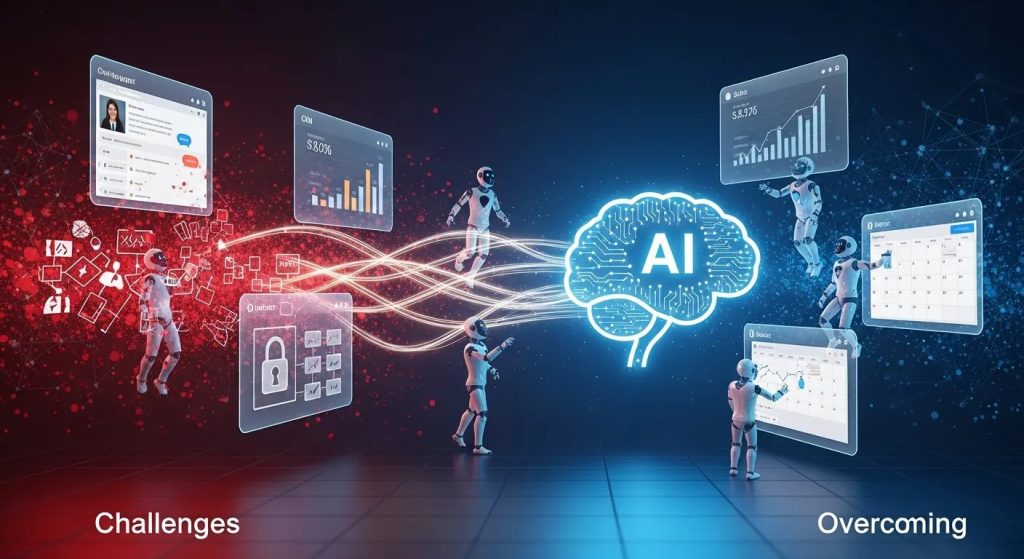
While AI Sales Bots offer significant advantages, implementing them effectively comes with challenges that businesses must address. One of the primary hurdles is ensuring that the bot can handle complex customer queries without frustration. Poorly configured bots may provide irrelevant suggestions or fail to understand context, leading to negative experiences. To prevent this, companies should invest in high-quality natural language processing (NLP) capabilities and regularly update training data to reflect evolving customer behavior.
Integration with existing systems is another challenge. Many retailers rely on multiple platforms CRMs, inventory management systems, and marketing automation tools—that must communicate seamlessly with the AI bot. Without proper integration, AI Sales Bots may provide outdated or inconsistent information, which can confuse customers and reduce trust. Businesses should plan carefully, mapping out all necessary connections and performing thorough testing before full deployment.
Additionally, maintaining a balance between automation and human intervention is critical. While bots can handle routine queries efficiently, certain complex situations still require human oversight. Hybrid models that allow smooth escalation from bot to human agent ensure that customers receive accurate and empathetic support, maximizing satisfaction while maintaining operational efficiency.
Security and Data Privacy Considerations
With the increasing adoption of AI Sales Bots, data security and privacy have become paramount. These bots often access sensitive customer information, including personal details, purchase history, and payment data. Ensuring robust encryption, secure authentication, and compliance with data protection regulations is essential to prevent breaches and build customer trust.
Furthermore, businesses should implement strict access controls and regular audits of bot interactions. Monitoring how AI-Powered Sales Bots process data can identify potential vulnerabilities and ensure compliance with privacy standards like GDPR or CCPA. Transparent communication with customers about how their data is used can also enhance trust and encourage repeat interactions, strengthening long-term loyalty.
Scaling AI Sales Bots for Large E-commerce Platforms
As businesses grow, AI Sales Bots must scale to handle increasing volumes of customer interactions without compromising performance. Cloud-based solutions are ideal for scalability, allowing bots to process thousands of concurrent conversations while maintaining speed and reliability. Additionally, leveraging AI frameworks that support distributed processing can help ensure seamless performance across multiple channels.
Omnichannel scalability is equally important. Customers expect consistent experiences across websites, mobile apps, social media platforms, and messaging apps. Implementing AI Sales Bots that operate cohesively across these channels ensures that interactions remain smooth and personalized, regardless of where the customer engages. This approach not only supports growth but also reinforces brand consistency and customer trust.
Customization and Personalization Strategies
One of the defining features of AI Sales Bots is their ability to deliver personalized experiences at scale. Businesses can customize bot interactions based on individual preferences, shopping history, and real-time browsing behavior. For example, a returning customer exploring a particular category may receive tailored product suggestions, notifications about promotions, or reminders about previous purchases.
Integrating E-commerce Chatbots with loyalty programs and personalized discounts enhances this experience further. By recognizing customer value and behavior, bots can encourage repeat purchases and improve lifetime value. Similarly, B2B Chatbot Marketing strategies can be customized for client tiers, ensuring that high-value partners receive premium support and tailored recommendations that drive engagement.
Conclusion
AI Sales Bots have revolutionized online retail by offering intelligent, scalable, and personalized customer interactions. From boosting conversion rates to streamlining returns, these bots enhance both operational efficiency and customer satisfaction. By integrating features like predictive recommendations, AR Retail experiences, and omnichannel support, businesses can create highly engaging shopping journeys. Proper implementation, robust data security, and continuous analytics ensure that AI-driven bots deliver tangible ROI. As technology evolves, AI Sales Bots will remain essential for businesses aiming to stay competitive, providing smarter automation, actionable insights, and enhanced customer experiences that drive long-term growth.
Frequently Asked Questions
What are AI Sales Bots?
AI Sales Bots are intelligent software programs that interact with customers, provide product recommendations, automate support, and drive sales in online stores.
How do AI Sales Bots improve customer experience?
They offer personalized suggestions, instant responses, and 24/7 assistance, ensuring smooth and engaging shopping journeys.
Can AI Sales Bots handle returns and refunds?
Yes, with Bot Returns Support, they guide customers through returns and exchanges efficiently, reducing manual workload.
Are AI Sales Bots suitable for B2B businesses?
Absolutely. B2B Chatbot Marketing leverages these bots to manage client communications, automate follow-ups, and improve retention.
How do AI Sales Bots integrate with AR Retail?
They enhance Web AR Experiences by providing real-time guidance, personalized suggestions, and interactive product visualization.