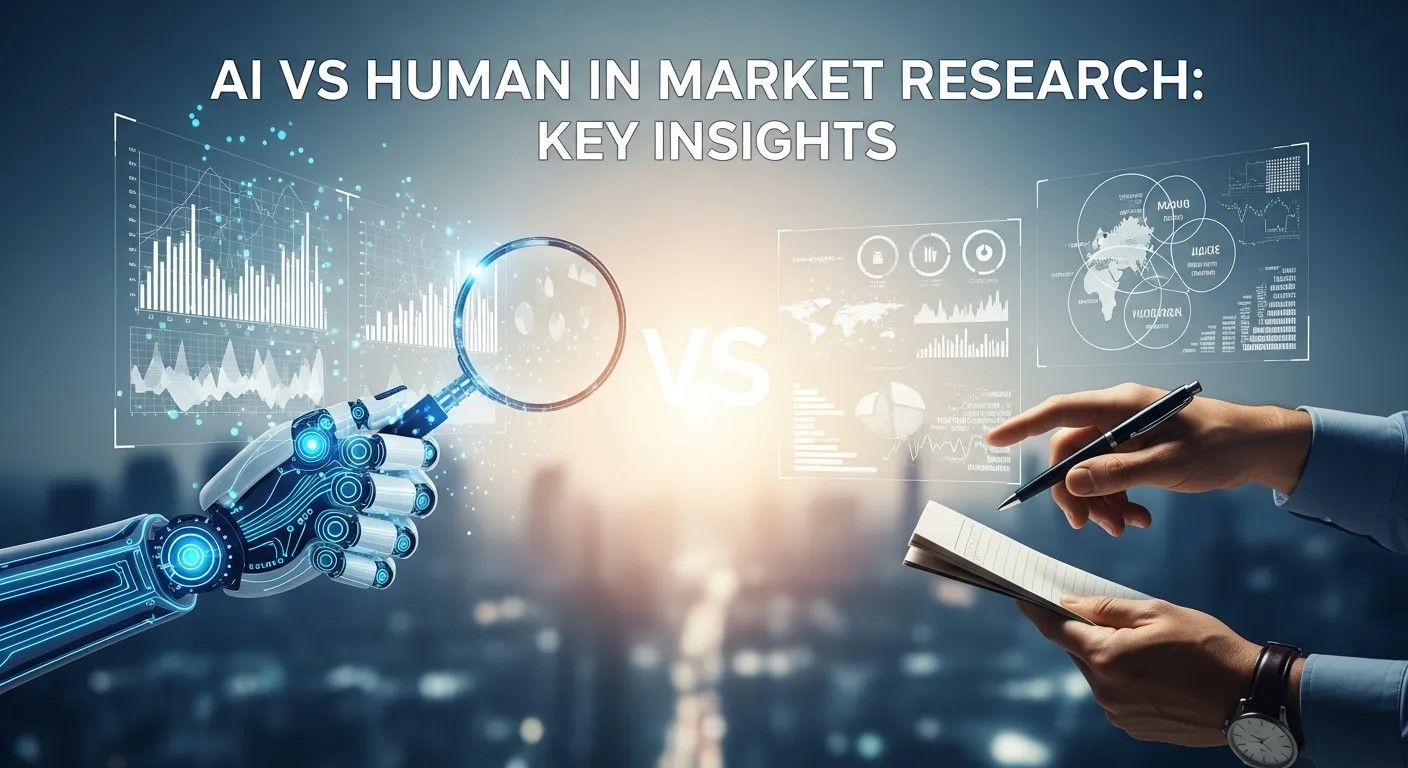
AI vs Human in Market Research highlights a balanced approach: AI provides speed, scalability, and data accuracy, while humans offer empathy, creativity, and context. Integrating both ensures faster, deeper, and ethically grounded insights for smarter business decisions.
The Shift in Market Research: AI vs Human Insights
Market research has always been the backbone of smart business decisions. Companies that understand their customers deeply tend to innovate faster, adapt better, and outperform competitors. Today, a major shift is happening as organizations compare AI vs Human in Market Research to determine which approach delivers the most reliable, scalable, and actionable insights. This comparison is not about replacing people or blindly trusting machines. Instead, it is about understanding how each method shapes modern research strategies and influences business psychology.
When businesses evaluate AI vs Human in Market Research, they are essentially examining two different intelligence systems. One relies on computational speed, automation, and pattern recognition. The other depends on human intuition, empathy, and contextual reasoning. Both systems influence how brands interpret consumer behavior, predict trends, and design strategies. Understanding their differences is critical for leaders who want to build research frameworks that are both efficient and human-centered.
The Evolution of Market Research in the Digital Age
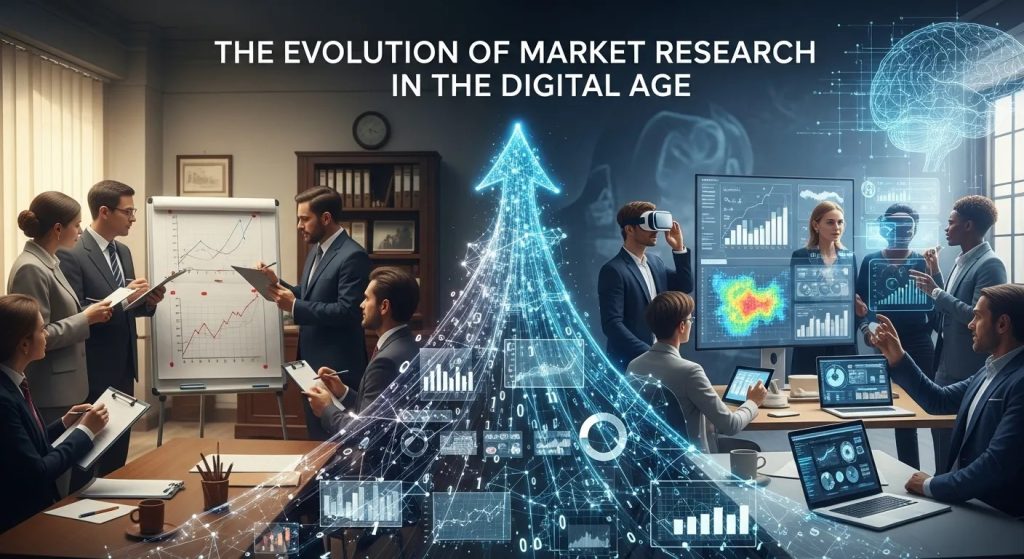
Market research has evolved from manual surveys and focus groups to sophisticated digital analytics platforms. In the past, researchers spent weeks collecting and analyzing data. Today, automation tools can process millions of data points in seconds. This evolution has intensified the debate around AI vs Human in Market Research, especially as businesses demand faster insights without sacrificing accuracy.
Digital transformation has introduced new research channels such as social media analytics, real-time behavioral tracking, and predictive modeling. These tools generate massive datasets that humans alone cannot efficiently process. As a result, artificial intelligence has become a powerful ally in extracting meaningful patterns. However, raw data does not automatically translate into understanding. Human researchers still play a crucial role in interpreting context, cultural nuances, and emotional drivers.
The growing integration of intelligent systems such as AI Conversational Commerce platforms demonstrates how businesses now gather insights directly from customer interactions. These systems capture behavioral signals at scale, but they still require human oversight to ensure ethical use and strategic alignment.
Understanding the Core Strengths of AI in Research
Artificial intelligence excels in speed, scalability, and consistency. One of the biggest advantages in AI vs Human in Market Research is the ability of AI systems to process vast datasets without fatigue. Machine learning algorithms can identify correlations and trends that might be invisible to human analysts.
AI-powered research tools can automate surveys, sentiment analysis, and predictive forecasting. They continuously learn from new data, improving their accuracy over time. This capability allows organizations to respond quickly to market changes and emerging consumer preferences.
Another important factor is objectivity. AI systems analyze data without emotional bias. They apply the same criteria consistently across datasets, reducing the risk of subjective interpretation. This consistency is particularly valuable in large-scale studies where human error can accumulate.
Advanced systems like Deep Learning Chatbots are increasingly used to conduct interactive surveys and gather qualitative feedback. These chatbots simulate natural conversations, encouraging participants to share more detailed responses. They also standardize the research process, ensuring uniform data collection across diverse audiences.
The Human Advantage in Context and Empathy
While AI offers remarkable efficiency, human researchers bring qualities that machines cannot fully replicate. Emotional intelligence, cultural awareness, and ethical judgment remain uniquely human strengths. In discussions about AI vs Human in Market Research, these qualities often define the limits of automation.
Human researchers excel at interpreting ambiguous responses and understanding subtle emotional cues. They can detect sarcasm, hesitation, and underlying motivations that algorithms may misinterpret. This depth of understanding is essential when exploring complex consumer behaviors.
Humans also adapt their questioning strategies dynamically. During interviews or focus groups, experienced researchers adjust their approach based on participant reactions. This flexibility creates richer conversations and more nuanced insights.
Accessibility is another important dimension. Technologies such as AI Chatbots for Accessibility aim to make research more inclusive by supporting users with disabilities. However, designing truly inclusive research experiences still requires human empathy and ethical consideration.
Speed Versus Depth: A Strategic Trade-Off
One of the central tensions in AI vs Human in Market Research is the trade-off between speed and depth. AI systems deliver rapid results, enabling real-time decision-making. Human-led research, on the other hand, often produces deeper qualitative insights.
Fast insights are critical in competitive markets where timing determines success. Automated analytics platforms can monitor trends continuously, alerting businesses to shifts in consumer sentiment. This real-time capability allows organizations to pivot strategies quickly.
However, speed does not always equal understanding. Complex consumer behaviors require thoughtful interpretation. Human researchers connect data points to broader social and psychological contexts. They ask why patterns exist, not just what the patterns are.
The most effective research strategies recognize that speed and depth are complementary rather than opposing forces. Businesses that balance AI efficiency with human interpretation gain a more holistic view of their markets.
Scalability and Global Reach

Globalization has expanded the scope of market research. Companies now target audiences across multiple regions and cultures. In this environment, scalability becomes a decisive factor in AI vs Human in Market Research.
AI-powered systems can manage multilingual interactions at scale. Multilingual Chatbots enable organizations to collect feedback from diverse populations without language barriers. These tools increase participation rates and improve data diversity.
Scalability also reduces costs. Automated systems handle repetitive tasks such as data cleaning and preliminary analysis. This efficiency allows human researchers to focus on strategic interpretation and creative problem-solving.
Despite these advantages, global research still demands cultural sensitivity. Human experts ensure that automated tools respect local norms and avoid misinterpretation. Cultural context shapes how questions are framed and how responses are understood.
Accuracy, Bias, and Ethical Considerations
Accuracy is a critical benchmark in research. Both AI and human methods face challenges related to bias. In AI vs Human in Market Research, understanding these biases is essential for building trustworthy systems.
AI models learn from historical data. If that data contains biases, the models may replicate or amplify them. Human oversight is necessary to audit algorithms and correct distortions. Ethical frameworks guide how data is collected, stored, and interpreted.
Human researchers are not immune to bias either. Personal experiences and expectations can influence interpretation. Structured methodologies and peer review help mitigate these risks.
Ethical research also involves transparency and consent. Participants must understand how their data will be used. Combining AI efficiency with human ethical judgment creates more responsible research practices.
The Role of Emerging Technologies
Technological innovation continues to reshape research methodologies. Experimental concepts such as AR Quantum Computing suggest future possibilities where immersive analytics and advanced computation merge. While still developing, these ideas highlight how rapidly the research landscape is evolving.
Similarly, AR Autonomous Agents represent a vision of intelligent systems that operate within augmented environments. These agents could eventually assist researchers by visualizing complex datasets in interactive formats. Such tools would enhance both AI-driven analysis and human interpretation.
Emerging technologies expand the toolkit available to researchers. They do not eliminate the need for human expertise. Instead, they create new opportunities for collaboration between machines and people.
Cost Efficiency and Resource Allocation
Budget considerations influence every research decision. Comparing AI vs Human in Market Research often involves analyzing cost structures. Automated systems reduce labor expenses and accelerate workflows.
AI platforms operate continuously without fatigue. They scale operations without proportional increases in staffing costs. This efficiency makes advanced research accessible to smaller organizations.
However, investing in AI infrastructure requires upfront resources. Training models, maintaining systems, and ensuring security involve ongoing expenses. Human expertise remains necessary for strategic planning and system management.
The most cost-effective approach integrates automation with targeted human involvement. Businesses allocate resources to maximize both efficiency and insight quality.
Creativity and Innovation in Insight Generation
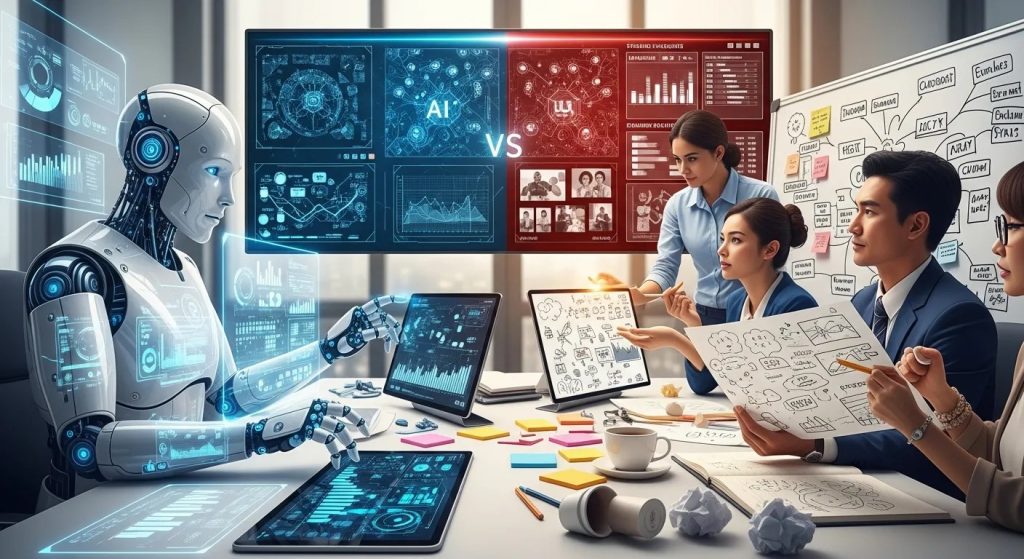
Creativity plays a vital role in interpreting research findings. Human researchers connect disparate ideas and generate innovative hypotheses. In discussions of AI vs Human in Market Research, creativity often emerges as a defining human strength.
AI contributes by revealing unexpected correlations. These discoveries inspire new research questions and strategic directions. Human analysts then interpret these patterns within broader narratives.
Innovation thrives when analytical precision meets imaginative thinking. Collaborative workflows encourage researchers to experiment with new methodologies and perspectives.
Decision-Making and Strategic Impact
Market research ultimately informs decisions. The effectiveness of those decisions depends on how insights are generated and applied. Evaluating AI vs Human in Market Research requires examining their influence on strategic thinking.
AI-driven analytics provide quantitative clarity. They identify measurable trends and forecast outcomes. Decision-makers rely on these projections to assess risks and opportunities.
Human judgment adds qualitative depth. Leaders interpret data through the lens of experience and organizational values. They consider long-term implications and ethical dimensions.
Strategic success emerges from integrating both perspectives. Data-driven insights guide choices, while human wisdom shapes their implementation.
Building a Hybrid Research Model
The future of market research is not a contest between machines and people. It is a partnership. Organizations increasingly adopt hybrid models that combine AI efficiency with human expertise.
In hybrid systems, AI handles large-scale data processing and pattern detection. Human researchers focus on interpretation, storytelling, and ethical oversight. This division of labor maximizes strengths on both sides.
Training becomes essential in hybrid environments. Researchers learn to collaborate with intelligent tools, understanding their capabilities and limitations. Continuous education ensures that teams remain adaptable as technologies evolve.
Hybrid models also foster resilience. Diverse perspectives reduce the risk of blind spots and enhance problem-solving capacity.
Psychological Drivers Behind Technology Adoption
Adopting new research technologies involves psychological factors. Organizations evaluate trust, control, and perceived value when comparing AI vs Human in Market Research.
Trust develops through transparency and reliability. Stakeholders must understand how AI systems generate insights. Clear communication builds confidence in automated processes.
Control relates to autonomy and accountability. Human oversight reassures decision-makers that they retain authority over outcomes. Balanced integration preserves a sense of agency.
Perceived value emerges from demonstrated success. Case studies and measurable improvements encourage adoption. When teams see tangible benefits, resistance decreases.
Training and Skill Development
As research methods evolve, skill requirements change. Professionals must develop competencies in data literacy, critical thinking, and ethical reasoning.
Training programs emphasize collaboration between technical and human-centered skills. Researchers learn to interpret algorithmic outputs while maintaining empathy and communication abilities.
Continuous learning supports adaptability. Organizations invest in professional development to stay competitive in dynamic markets.
Data Privacy and Security
Data protection is a central concern in modern research. Comparing AI vs Human in Market Research includes evaluating how each approach manages sensitive information.
AI systems require robust cybersecurity measures. Encryption, access controls, and compliance frameworks safeguard participant data. Human oversight ensures adherence to ethical standards.
Transparency fosters trust. Participants are more willing to share information when they understand how it will be protected and used responsibly.
Measuring Research Effectiveness
Evaluating research performance involves multiple metrics. Accuracy, speed, cost efficiency, and participant satisfaction all contribute to overall effectiveness.
AI excels in quantitative metrics such as processing speed and scalability. Human-led methods often achieve higher qualitative richness. Balanced evaluation recognizes the complementary value of both.
Continuous assessment drives improvement. Feedback loops refine methodologies and enhance outcomes.
Organizational Culture and Change Management
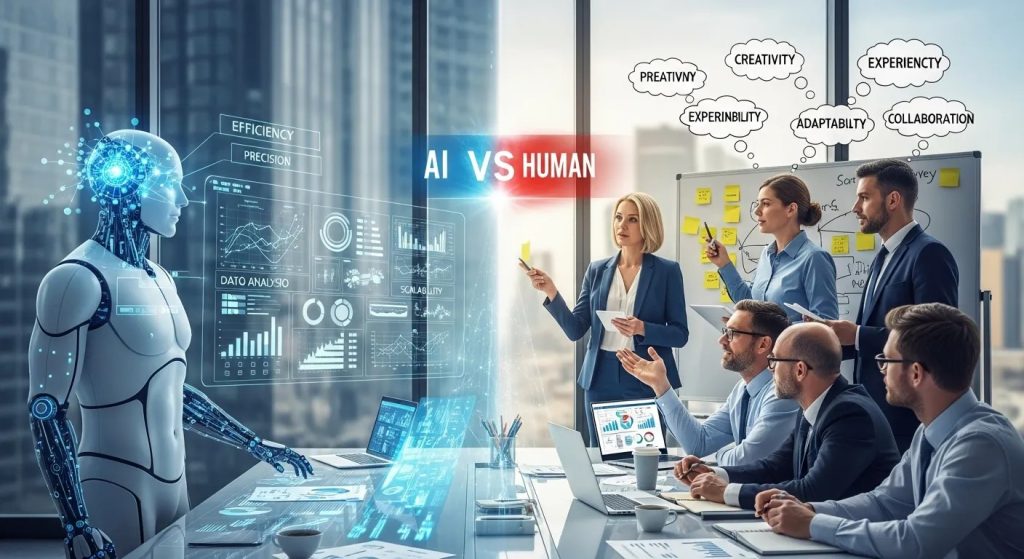
Implementing advanced research tools affects organizational culture. Leaders must manage transitions carefully to maintain morale and productivity.
Open communication reduces uncertainty. Teams understand how new systems support rather than replace their roles. Inclusive planning encourages collaboration.
Change management strategies emphasize gradual integration. Pilot projects demonstrate value before large-scale adoption.
Future Outlook
The trajectory of market research points toward deeper integration of intelligent systems. As technologies mature, collaboration between AI and human researchers will intensify.
Future research environments will likely feature seamless interaction between automated analytics and human creativity. Organizations that embrace this synergy will gain competitive advantages.
Understanding AI vs Human in Market Research prepares businesses for this evolving landscape. By recognizing strengths and limitations on both sides, leaders design research frameworks that are efficient, ethical, and insightful.
Toward Smarter Research Ecosystems
Smarter research ecosystems combine technology, expertise, and ethical responsibility. They prioritize participant well-being while delivering actionable insights.
Collaboration remains the guiding principle. Machines amplify human capabilities, and humans provide direction and meaning. Together, they create research systems that adapt to complex markets.
As businesses continue exploring AI vs Human in Market Research, the focus shifts from comparison to integration. The goal is not to choose one over the other, but to orchestrate their strengths in pursuit of deeper understanding and better decisions.
Integrating Intelligence for Competitive Advantage
In today’s rapidly evolving business landscape, organizations that understand the balance between AI vs Human in Market Research gain a measurable competitive edge. The conversation around AI vs Human in Market Research is no longer theoretical; it directly influences how companies design research systems, interpret customer behavior, and build long-term strategies. When businesses intentionally evaluate AI vs Human in Market Research, they discover that success depends on structured integration rather than simple replacement.
A strong framework built around AI vs Human in Market Research enables companies to process massive datasets while preserving the human ability to interpret emotion, context, and motivation. This dual capability transforms raw information into strategic intelligence. Leaders who prioritize AI vs Human in Market Research often develop faster feedback loops, improved customer understanding, and more adaptive decision-making processes.
As markets become more data-driven, AI vs Human in Market Research will shape how brands compete for attention and loyalty. Automated systems deliver speed and scalability, but human researchers refine meaning and ethical direction. Organizations that repeatedly reassess AI vs Human in Market Research create agile research cultures capable of responding to unpredictable change.
Ultimately, AI vs Human in Market Research represents a blueprint for smarter innovation. Companies that embed AI vs Human in Market Research into their operational mindset build resilient ecosystems where technology enhances human judgment. This synergy ensures that insights remain both analytically precise and deeply human, positioning businesses to thrive in increasingly complex global markets.
Conclusion
AI vs Human in Market Research shows that the strongest research strategies combine technology with human expertise. AI delivers speed, scale, and data accuracy, while human researchers add empathy, creativity, and contextual understanding. Businesses that balance AI vs Human in Market Research gain faster insights without losing depth or ethical judgment. Instead of replacing people, AI enhances human capabilities and improves decision-making. Organizations that adopt this integrated approach build smarter research systems, understand customers more clearly, and stay competitive in a rapidly changing, data-driven market.
Frequently Asked Questions (FAQ)
What is the main difference between AI and human researchers in market research?
AI excels in speed, scalability, and processing large datasets, while humans bring empathy, context, and nuanced interpretation.
Can AI replace humans entirely in market research?
No. AI enhances efficiency but cannot replicate human intuition, creativity, or ethical judgment. The best results come from a hybrid approach.
How does AI improve accessibility in research?
AI Chatbots for Accessibility allow participants with disabilities to engage easily, enabling more inclusive data collection.
Are multilingual surveys possible with AI?
Yes. Multilingual Chatbots enable companies to reach global audiences without language barriers, ensuring diverse feedback.
Why should businesses use both AI and humans in research?
Combining AI and humans ensures speed, accuracy, and contextual understanding, providing deeper insights for strategic decisions.