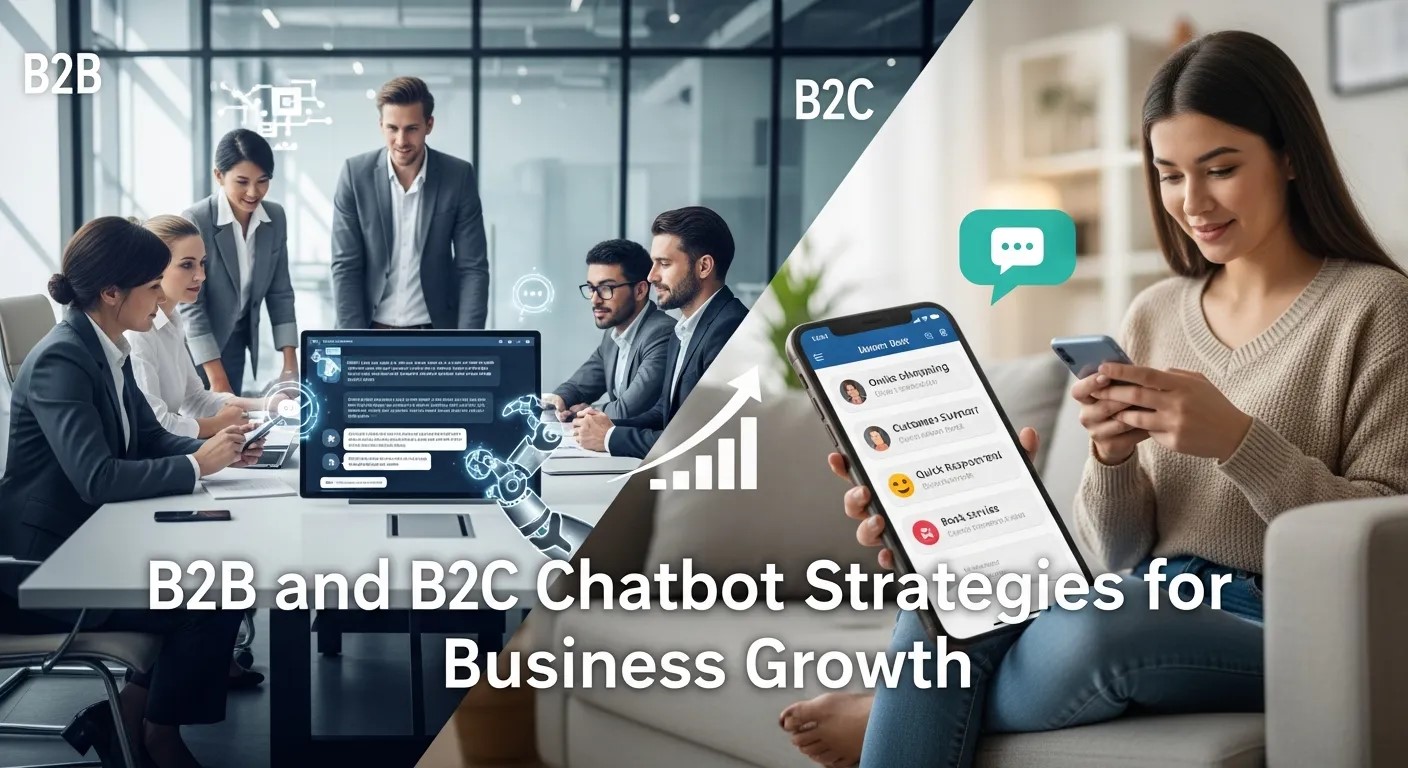
B2B and B2C Chatbot Strategies empower businesses to deliver personalized, efficient, and engaging experiences. Integrating AI, AR, multilingual support, and marketing automation enhances conversion, loyalty, and operational efficiency across diverse industries, bridging digital and real-world interactions seamlessly.
Introduction to B2B and B2C Chatbot Strategies
In the rapidly evolving digital landscape, businesses are realizing the transformative potential of B2B and B2C Chatbot Strategies for growth and engagement. Companies leveraging B2B and B2C Chatbot Strategies can streamline customer support, enhance user experience, and boost conversion rates across different market segments. While B2C environments focus on instant gratification and personalized interactions, B2B chatbot strategies prioritize relationship-building, multi-stakeholder communication, and data-driven decision-making.
The adoption of AI technologies has made B2B and B2C Chatbot Strategies more sophisticated. AI Chatbots Development enables chatbots to handle complex queries, perform predictive analytics, and interact with users in ways that feel personal and human-like. Implementing these strategies allows businesses to stay ahead of competitors and meet the rising expectations of their audiences.
Core Differences in B2B and B2C Chatbot Strategies
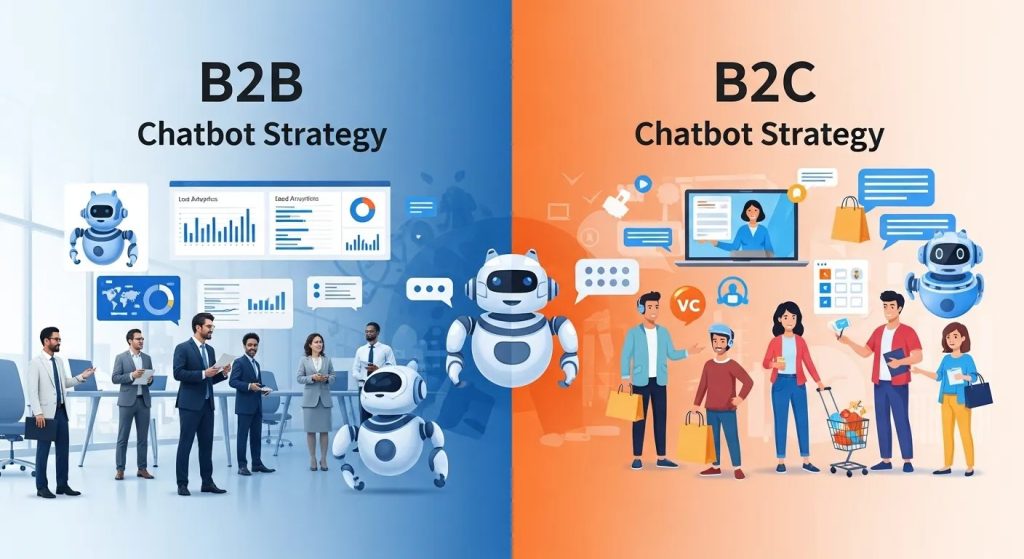
Understanding the distinctions in B2B and B2C Chatbot Strategies is critical for marketers and developers. While both approaches leverage AI, their focus, execution, and performance metrics differ significantly.
1. Decision-Making Complexity
In B2B contexts, purchasing decisions involve multiple stakeholders, long sales cycles, and extensive evaluation. Chatbots designed for B2B applications must support detailed technical inquiries, provide strategic insights, and facilitate consultations. Effective B2B and B2C Chatbot Strategies in this context can simplify complex communications while maintaining professionalism.
For B2C, decision-making is typically faster, with customers expecting instant answers, recommendations, and simplified processes. Here, chatbots act as AI-NLP Chatbot Translation tools, helping users navigate content, understand products, and receive personalized assistance.
2. Personalization and Engagement
B2C chatbots thrive on engagement, delivering tailored recommendations and interactive experiences. Implementing Chatbot Interactive Touch enhances the user experience by making the interaction feel conversational and natural. Meanwhile, B2B and B2C Chatbot Strategies focus on account-specific personalization, predictive insights, and strategic support.
The ability to incorporate Inclusive AR Design in chatbot interactions ensures accessibility and engagement for all users, making these strategies more effective in both B2B and B2C scenarios.
3. Automation vs. Relationship Building
While automation is central to B2C chatbots, B2B applications often require balancing automation with relationship management. B2B and B2C Chatbot Strategies must consider when to escalate to human support, especially in negotiations or complex inquiries. Using AI efficiently allows B2B teams to focus on high-value interactions while chatbots manage routine tasks.
In B2C, chatbots automate order confirmations, product guidance, and customer support. Integrating Industrial AR Applications in B2B operations enhances remote training, product demonstrations, and maintenance workflows, complementing AI chatbot interactions.
Designing Effective Chatbot Experiences
Developing strong B2B and B2C Chatbot Strategies requires aligning technology with business goals, user expectations, and operational efficiency.
1. Goal Alignment
Chatbot strategies must match the business’s objectives. In B2B, goals may include lead nurturing, technical support, or industry insights. B2C chatbots focus on engagement, retention, and sales. Deploying AI Chatbots in Market Research helps inform strategy, providing data-driven insights for more effective chatbot experiences.
2. User Experience Design
Designing a seamless experience involves intuitive navigation, natural conversation flow, and clarity. Integrating Chatbot Interactive Touch makes interactions more engaging, while inclusive design ensures accessibility across different demographics. These elements strengthen B2B and B2C Chatbot Strategies by improving satisfaction and adoption.
3. Data and Analytics
Analyzing interactions, feedback, and trends allows businesses to optimize their chatbot strategies. B2B applications use this data for account-specific decisions, while B2C chatbots refine recommendations, support, and engagement tactics. Using the right tools ensures B2B and B2C Chatbot Strategies remain agile and effective.
Industry Use Cases
| Industry | B2B Use Case | B2C Use Case |
|---|---|---|
| Retail | Wholesale inquiries, supply chain support | Personalized shopping assistant, promotions |
| Healthcare | Patient scheduling, professional referrals | Symptom checking, appointment reminders |
| Manufacturing | Technical support, Industrial AR Applications | Product guidance, warranty info |
| Marketing & Advertising | Lead nurturing, analytics | Campaign engagement, chat-based surveys |
Incorporating emerging technologies into B2B and B2C Chatbot Strategies ensures businesses remain competitive, efficient, and user-friendly across industries.
Advanced AI Integration in B2B and B2C Chatbot Strategies
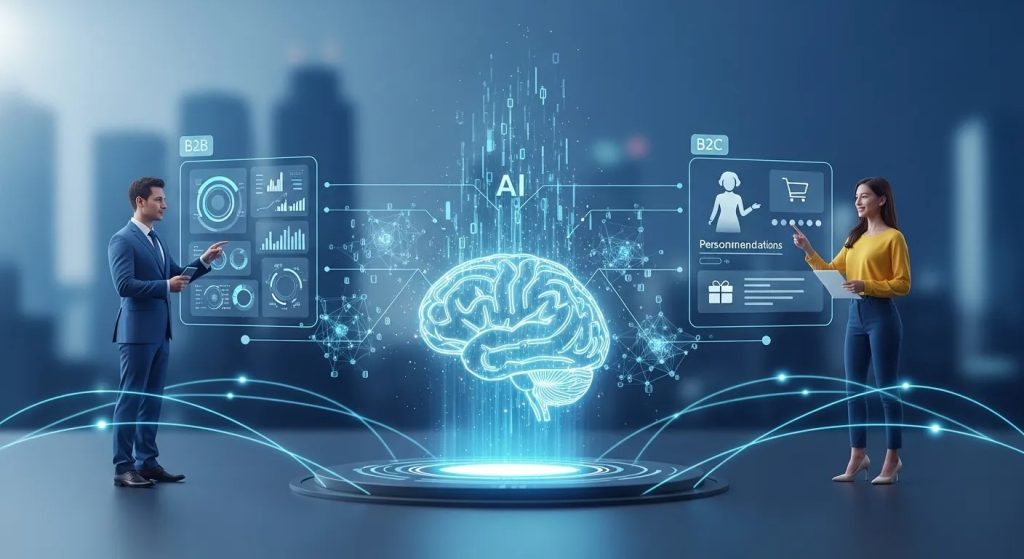
The evolution of B2B and B2C Chatbot Strategies has been driven by artificial intelligence, enabling businesses to provide smarter, predictive, and highly personalized interactions. Modern enterprises now integrate AI Multilanguage Support Bots to communicate seamlessly with global clients, ensuring consistent engagement across regions. Incorporating these bots within B2B and B2C Chatbot Strategies allows businesses to manage multiple markets without compromising the quality of customer interactions.
For B2B applications, AI-powered chatbots analyze complex datasets, predict client needs, and provide actionable insights, which are essential for decision-making across departments. In B2C, these strategies deliver tailored recommendations, guide users through purchase journeys, and enhance customer satisfaction, demonstrating the versatility of B2B and B2C Chatbot Strategies in different contexts.
Multilingual Capabilities for Global Reach
Global businesses face language barriers that can affect client relationships and operational efficiency. By integrating AI-NLP Chatbot Translation, companies can break down these barriers. In B2B scenarios, multilingual chatbots enable smooth interactions with international clients, simplifying technical discussions and contractual negotiations. In B2C, multilingual bots ensure that users from different regions can engage with products and services naturally.
Implementing multilingual capabilities strengthens B2B and B2C Chatbot Strategies by expanding market reach, improving user experience, and reducing the need for manual translation. Over time, AI algorithms learn from interactions to refine accuracy, context, and tone, making these bots indispensable for scaling global operations.
Building Trust with Transparent AI Chatbots
Transparency is crucial in chatbot adoption. Deploying Transparent AI Chatbots within B2B and B2C Chatbot Strategies helps establish trust with users. In B2B, transparency is key when handling sensitive client data or financial transactions. In B2C, transparent interactions reduce friction, reassure customers, and improve engagement rates.
For example, a B2B chatbot assisting with procurement can clearly outline which data it collects and how it is used for recommendations. A B2C shopping assistant can explain why specific products are suggested, enhancing customer confidence and fostering repeat business.
Chatbots for Marketing Across Sectors
B2B and B2C Chatbot Strategies are highly effective when applied to marketing campaigns. Chatbots for Marketing segment audiences, deliver personalized content, and engage users interactively.
- B2B Marketing Applications: Chatbots streamline lead generation, support client education, provide industry insights, and schedule product demos automatically. AI-driven analytics track campaign performance, helping teams optimize messaging for individual accounts.
- B2C Marketing Applications: Chatbots handle promotional campaigns, deliver loyalty rewards, suggest complementary products, and guide users through checkout processes. These strategies enhance user experience while driving conversion and retention.
By carefully balancing automation and human oversight, businesses can maximize the effectiveness of B2B and B2C Chatbot Strategies, ensuring that campaigns resonate with both corporate clients and individual consumers.
AR and Emerging Technologies in B2B and B2C Chatbot Strategies
The integration of AR with chatbots provides immersive experiences that differentiate brands and boost engagement.
AR Quantum Computing
Emerging innovations like AR Quantum Computing allow chatbots to process massive datasets rapidly, delivering actionable insights to users. B2B clients benefit from scenario modeling, resource planning, and predictive simulations, enhancing decision-making. B2C users experience interactive product visualizations, gamified tutorials, and real-time guidance that create memorable engagement.
AR Autonomous Agents
AR Autonomous Agents complement B2B and B2C Chatbot Strategies by automating tasks while providing rich visual interactions. In B2B, these agents assist with remote equipment demonstrations, employee training, and maintenance workflows. In B2C, they enhance shopping, educational, and entertainment experiences by overlaying interactive content in real-world environments.
Integrating AR technologies with AI chatbots strengthens B2B and B2C Chatbot Strategies, bridging the gap between digital interactions and physical experiences.
Practical Industry Applications
| Industry | B2B Chatbot Strategy | B2C Chatbot Strategy |
|---|---|---|
| Manufacturing | Technical support using AR Autonomous Agents | AR-assisted product assembly guides |
| Healthcare | Multilingual follow-ups via AI Multilanguage Support Bots | Appointment reminders and interactive AR tutorials |
| Retail | Lead nurturing and sales forecasting | Personalized shopping assistant with AR try-ons |
| Marketing Agencies | Predictive analytics for client campaigns | Conversational marketing campaigns |
These examples demonstrate how the integration of AI, multilingual support, and AR technologies enhances B2B and B2C Chatbot Strategies, enabling businesses to deliver impactful and measurable outcomes.
Comparative Performance Metrics in B2B and B2C Chatbot Strategies
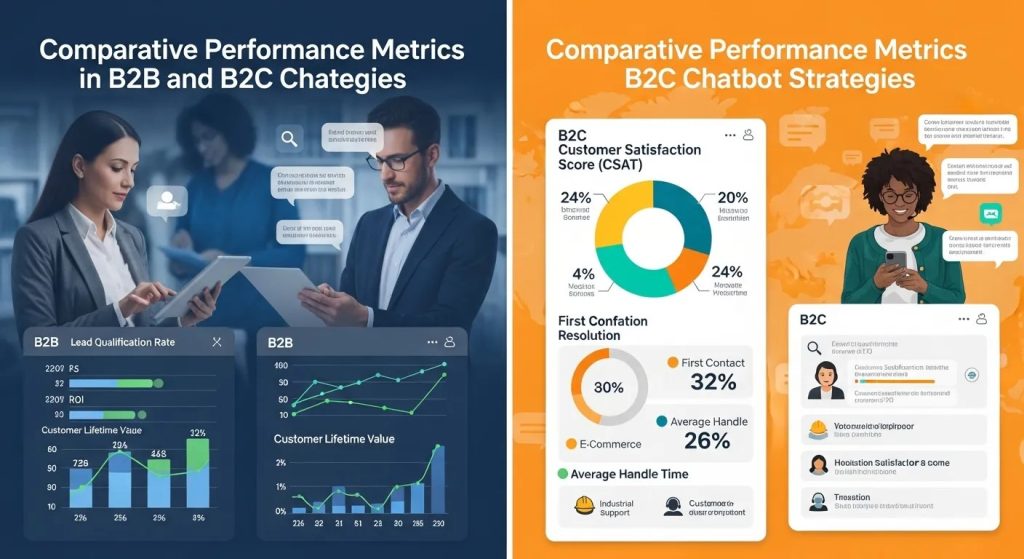
Measuring the effectiveness of B2B and B2C Chatbot Strategies is essential to ensure ROI and strategic success. Key performance metrics help businesses understand engagement, conversion, and operational efficiency. In B2B contexts, metrics such as lead conversion rates, average response time, and customer satisfaction scores reveal how well chatbots support complex sales processes. In B2C, metrics like session duration, click-through rates, and repeat engagement indicate the chatbot’s effectiveness in driving sales and enhancing user experience.
Incorporating AI Multilanguage Support Bots improves performance across both B2B and B2C operations by enabling consistent communication in multiple languages. This reduces misunderstandings, improves engagement, and provides more accurate analytics for performance evaluation. By measuring interactions and outcomes, businesses can refine B2B and B2C Chatbot Strategies to meet evolving customer needs.
Conversion Optimization Across Markets
Optimizing B2B and B2C Chatbot Strategies requires understanding the unique buying behaviors of each audience. B2B buyers often research products extensively and consult multiple stakeholders, so chatbots must provide detailed, actionable insights. B2C customers, in contrast, prioritize convenience, personalization, and speed.
Using Chatbots for Marketing allows businesses to guide users through tailored journeys. For B2B, this may include sending follow-ups, scheduling demos, or providing industry-specific content. For B2C, it could involve personalized offers, product recommendations, or interactive promotions. By aligning content delivery with audience intent, B2B and B2C Chatbot Strategies maximize engagement and conversion potential.
Advanced Personalization Techniques
Personalization is a cornerstone of modern chatbot strategies. Implementing Transparent AI Chatbots within B2B and B2C Chatbot Strategies ensures that recommendations and interactions feel relevant while maintaining user trust. B2B chatbots can analyze account behavior, purchase history, and industry trends to provide customized suggestions for clients. B2C chatbots focus on individual preferences, browsing history, and previous interactions to create dynamic experiences that increase loyalty and satisfaction.
Integrating AR Autonomous Agents into chatbot interactions further enhances personalization. In B2B, AR agents can demonstrate equipment functionality tailored to client needs. In B2C, AR guides can provide immersive tutorials or product try-ons, making interactions more engaging and memorable.
Automation with Human Oversight
While automation is essential for efficiency, B2B and B2C Chatbot Strategies must maintain a balance with human oversight. In B2B applications, chatbots can manage routine inquiries, schedule meetings, or provide documentation, freeing up account managers for high-value interactions. In B2C, chatbots handle common support issues, facilitate orders, and provide instant responses, ensuring seamless service around the clock.
The combination of AI Chatbots Development and strategic human intervention ensures that chatbots deliver both speed and accuracy. By doing so, businesses can optimize engagement while building trust across diverse audiences.
Integrating Emerging Technologies
To stay competitive, businesses must integrate cutting-edge technologies into B2B and B2C Chatbot Strategies.
- AR Quantum Computing enables chatbots to process complex datasets rapidly, supporting predictive analytics and scenario simulations in B2B.
- Inclusive AR Design ensures accessibility and engagement in B2C experiences, allowing users of all abilities to interact seamlessly with chatbot interfaces.
- AI-NLP Chatbot Translation ensures consistent communication in global markets, critical for both B2B and B2C operations.
By combining these technologies, companies can create immersive, intelligent, and highly efficient chatbot experiences that elevate their brand and operational effectiveness.
Industry Examples of Optimized Chatbot Strategies
| Industry | Optimized B2B Chatbot Strategy | Optimized B2C Chatbot Strategy |
|---|---|---|
| Manufacturing | AR-assisted technical training and client support | Interactive product demos with AR features |
| Healthcare | Multilingual patient follow-ups using AI bots | Symptom checker and appointment management |
| Retail | Predictive analytics for wholesale accounts | Personalized shopping assistant with AR try-ons |
| Marketing Agencies | AI-driven campaign performance analytics | Conversational campaigns for social audiences |
These examples demonstrate how B2B and B2C Chatbot Strategies can be refined for maximum impact, driving both efficiency and user satisfaction.
Future Trends in B2B and B2C Chatbot Strategies

The evolution of B2B and B2C Chatbot Strategies is reshaping how businesses interact with clients and consumers. AI-driven chatbots are no longer just automated responders they are intelligent assistants capable of learning from interactions, predicting customer behavior, and providing tailored solutions. The use of AI Multilanguage Support Bots allows businesses to communicate effortlessly across global markets, breaking down language barriers and providing a consistent user experience. Companies that integrate these advanced solutions into their B2B and B2C Chatbot Strategies position themselves for long-term growth and customer loyalty.
AI-Driven Automation: Enhancing Efficiency and Engagement
Automation remains at the heart of effective B2B and B2C Chatbot Strategies. In B2B environments, chatbots automate repetitive tasks such as scheduling meetings, sending follow-up emails, and collecting lead data. This frees human teams to focus on high-value interactions, strategy, and account management.
For B2C, automation powers real-time support, personalized product recommendations, and interactive campaigns. Integrating AI-NLP Chatbot Translation ensures that both B2B clients and B2C consumers receive accurate, contextual responses in their preferred language. This enhances engagement, reduces friction, and makes chatbot interactions feel seamless and human-like, reinforcing the value of B2B and B2C Chatbot Strategies across all touchpoints.
AR and Immersive Experiences: Bridging Digital and Physical
Augmented reality is expanding the capabilities of B2B and B2C Chatbot Strategies. AR Quantum Computing enables rapid processing of complex datasets, which helps chatbots deliver predictive insights, real-time simulations, and interactive decision support in B2B contexts. Meanwhile, AR Autonomous Agents create immersive experiences for both B2B and B2C audiences.
In B2B, AR can showcase product demos, technical training, and remote troubleshooting. In B2C, AR-enhanced shopping experiences, tutorials, and interactive content drive engagement, brand affinity, and conversion. Combining AR with intelligent chatbots ensures a richer, more memorable experience that strengthens overall B2B and B2C Chatbot Strategies.
Marketing and Strategic Growth: Leveraging Chatbots for Business Impact
The marketing potential of B2B and B2C Chatbot Strategies is immense. Businesses leveraging Chatbots for Marketing can segment audiences, automate personalized campaigns, and gather actionable insights. B2B chatbots nurture leads, provide industry-specific content, and facilitate account-based marketing, while B2C chatbots offer promotions, loyalty rewards, and guided purchasing experiences.
Incorporating Transparent AI Chatbots within these strategies builds trust by clearly communicating bot capabilities, data usage, and decision logic. This transparency strengthens user confidence, encourages longer engagement, and drives conversion—key factors in maximizing the effectiveness of B2B and B2C Chatbot Strategies.
Industry Adaptation: Real-World Applications
Across industries such as healthcare, retail, manufacturing, and marketing, advanced B2B and B2C Chatbot Strategies provide measurable benefits. Multilingual support, AI-driven personalization, and AR integration ensure efficiency, accessibility, and engaging experiences. Businesses that adopt these intelligent, inclusive solutions position themselves as innovators, capable of meeting the diverse needs of both B2B clients and B2C consumers while staying ahead in competitive markets.
Conclusion
Implementing effective B2B and B2C Chatbot Strategies is essential for modern businesses seeking growth, efficiency, and enhanced customer engagement. By combining AI-driven automation, multilingual support, and immersive AR experiences, companies can meet the diverse needs of both B2B clients and B2C consumers. These strategies not only streamline workflows but also improve personalization, trust, and conversion rates across industries. Leveraging Chatbots for Marketing, Transparent AI Chatbots, and advanced analytics ensures actionable insights and measurable ROI. Businesses that adopt intelligent, inclusive, and strategically aligned chatbots position themselves as industry leaders in a competitive digital landscape.
Frequently Asked Questions (FAQ)
What are B2B and B2C Chatbot Strategies?
They are tailored approaches using AI chatbots to engage business clients (B2B) or consumers (B2C), optimizing support, sales, and marketing interactions.
How do AI Multilanguage Support Bots enhance these strategies?
They enable global communication, ensuring accurate responses and improved engagement across multiple languages for both B2B and B2C audiences.
Can chatbots be used for marketing in both B2B and B2C?
Yes, chatbots segment audiences, deliver personalized campaigns, and track engagement metrics to drive conversions and ROI in marketing strategies.
What role does AR play in chatbot strategies?
AR enhances immersive experiences, such as virtual demos for B2B or interactive shopping in B2C, boosting engagement and customer satisfaction.
Are Transparent AI Chatbots important?
Yes, transparency builds user trust, clarifies data usage, and ensures interactions feel secure and reliable, improving adoption and retention rates.