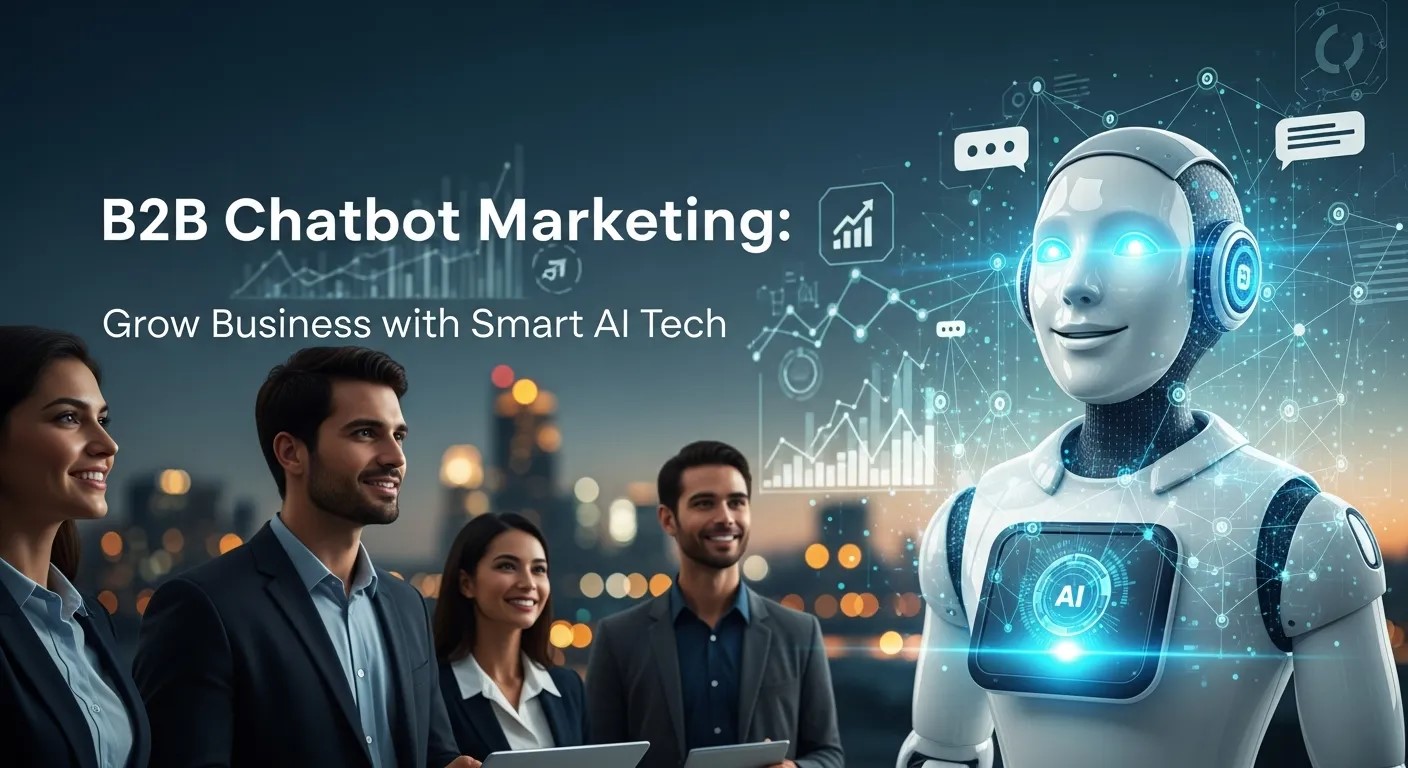
B2B Chatbot Marketing uses AI-driven automation to engage prospects, qualify leads, and enhance conversion rates. With integration of advanced technologies, personalization, and predictive analytics, it empowers businesses to deliver scalable, efficient, and innovative customer experiences.
The Rise of Intelligent Business Communication
B2B Chatbot Marketing has emerged as one of the most transformative strategies in modern digital business. As companies compete in increasingly crowded markets, the need for instant communication, personalized engagement, and scalable customer interaction has never been greater. B2B Chatbot Marketing enables organizations to meet these needs by combining automation with intelligent conversational design.
Today’s business buyers expect fast answers, relevant information, and seamless digital experiences. Traditional email chains and delayed responses often lead to lost opportunities. B2B Chatbot Marketing solves this challenge by providing real-time engagement that captures attention and builds trust from the first interaction.
The psychological foundation behind B2B Chatbot Marketing is rooted in immediacy and perceived value. When prospects receive instant support, their confidence in the brand increases. Over time, B2B Chatbot Marketing becomes more than a tool; it becomes a central pillar of relationship building and long-term customer loyalty.
In competitive B2B environments, decision cycles are complex and involve multiple stakeholders. B2B Chatbot Marketing helps guide these stakeholders through structured conversations that clarify needs and deliver relevant solutions. This structured guidance reduces uncertainty and accelerates decision-making.
Understanding the Core Concept of B2B Chatbot Marketing
B2B Chatbot Marketing refers to the strategic use of AI-driven conversational systems to attract, qualify, and nurture business clients. Unlike simple automated replies, modern systems powered by advanced Machine Learning Languages can understand context and intent, making interactions feel natural and human-like.
The purpose of B2B Chatbot Marketing is not just automation. Its deeper goal is to enhance communication efficiency while preserving personalization. Businesses use these systems to answer questions, recommend services, schedule meetings, and collect valuable customer insights.
A key advantage of B2B Chatbot Marketing is scalability. Companies can engage thousands of prospects simultaneously without sacrificing quality. This scalability allows businesses to maintain consistent messaging and service standards across multiple channels.
Another defining characteristic of B2B Chatbot Marketing is adaptability. As conversations unfold, the system adjusts responses based on user behavior. This adaptability ensures that each interaction remains relevant and meaningful.
When implemented correctly, B2B Chatbot Marketing becomes an extension of the sales and marketing teams. It acts as a digital ambassador that represents brand voice and values at every touchpoint.
The Psychology Behind Conversational Engagement
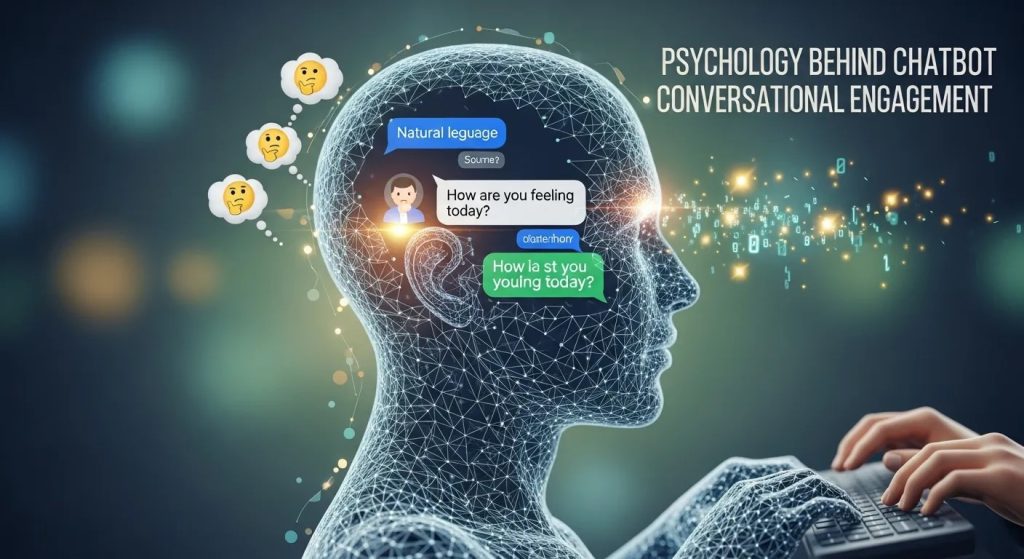
Human psychology plays a crucial role in the success of B2B Chatbot Marketing. People respond positively to conversational interfaces because they mimic natural human dialogue. A well-designed Chatbot Interactive Touch reduces friction and makes information exchange feel effortless.
Trust is built through clarity and responsiveness. When prospects receive accurate answers instantly, they perceive the company as reliable and professional. B2B Chatbot Marketing leverages this perception to strengthen brand credibility.
Another psychological factor is personalization. Tailored conversations make users feel recognized and valued. B2B Chatbot Marketing uses behavioral data to deliver customized experiences that resonate with individual needs.
Consistency also influences perception. Predictable and coherent communication reinforces confidence. Through structured messaging frameworks, B2B Chatbot Marketing ensures that every interaction aligns with brand identity.
By understanding these psychological triggers, businesses can design conversational strategies that maximize engagement and retention.
Key Technologies Powering Modern Chatbots
B2B Chatbot Marketing relies on a sophisticated technology stack that integrates artificial intelligence, natural language processing, and cloud computing. These technologies work together to create intelligent conversational systems capable of handling complex queries.
Natural language processing allows chatbots to interpret user intent beyond simple keyword matching. This capability enables meaningful dialogue and reduces misunderstandings. In B2B Chatbot Marketing, accurate interpretation is essential for guiding prospects through multi-step decision processes.
Artificial intelligence continuously learns from interactions. Each conversation contributes to system improvement, making responses more precise over time. B2B Chatbot Marketing platforms often integrate AI-powered Messenger Bots to expand communication across multiple channels.
Emerging innovations such as AR Hologram Technology influence how businesses envision future interaction models. While still evolving, these immersive technologies suggest that B2B Chatbot Marketing will increasingly merge conversational AI with visual engagement.
Security is another critical technological component. Encryption protocols and compliance standards protect sensitive business information. Trust in B2B Chatbot Marketing depends on maintaining strong data protection practices.
Lead Generation and Qualification Strategies
One of the most powerful applications of B2B Chatbot Marketing is automated lead generation. Chatbots initiate conversations that capture essential prospect information while maintaining a friendly tone.
Qualification questions are carefully designed to identify decision authority, budget range, and organizational needs. This structured filtering ensures that sales teams focus on high-value opportunities. B2B Chatbot Marketing streamlines this process and reduces manual workload.
The distinction between B2B and B2C Chatbot strategies becomes evident in lead qualification. B2B interactions require deeper context and more detailed conversations. B2B Chatbot Marketing addresses this complexity through layered dialogue structures.
Behavioral tracking enhances targeting accuracy. By analyzing browsing patterns and engagement history, chatbots adapt their approach. This adaptive strategy increases the likelihood of conversion and strengthens pipeline quality.
Continuous testing and optimization refine lead capture performance. B2B Chatbot Marketing platforms provide analytics that reveal conversation bottlenecks and improvement opportunities.
Personalization and Customer Journey Mapping
Personalization is central to effective B2B Chatbot Marketing. Every prospect follows a unique journey shaped by industry, company size, and strategic priorities. Chatbots use stored data to tailor conversations accordingly.
Customer journey mapping helps businesses anticipate needs at each stage of engagement. B2B Chatbot Marketing aligns messaging with awareness, consideration, and decision phases. This alignment ensures that information remains relevant and timely.
Advanced personalization engines incorporate AR Intelligence concepts to analyze complex behavioral signals. These insights enable predictive recommendations that guide prospects toward optimal solutions.
Returning visitors benefit from contextual memory. Chatbots recall previous interactions and continue conversations seamlessly. This continuity enhances user experience and reinforces brand professionalism.
Through intelligent personalization, B2B Chatbot Marketing transforms generic automation into meaningful dialogue.
Integration with Sales and Marketing Ecosystems
Successful implementation requires integration with existing digital ecosystems. B2B Chatbot Marketing connects with CRM platforms, email systems, and analytics tools to create unified workflows.
When data flows seamlessly between departments, collaboration improves. Sales teams receive enriched prospect profiles that support targeted outreach. Marketing teams gain insights into engagement patterns that inform campaign strategy.
Automation reduces repetitive tasks and frees human resources for high-value activities. B2B Chatbot Marketing enhances productivity without replacing human expertise.
Cross-channel consistency is another advantage. Integrated systems ensure that messaging remains coherent across websites, social platforms, and messaging apps.
This ecosystem approach positions B2B Chatbot Marketing as a central hub of communication.
Enhancing Customer Experience and Retention

Customer experience determines long-term success. B2B Chatbot Marketing improves satisfaction by delivering instant assistance and clear information.
Round-the-clock availability eliminates delays. Prospects can interact whenever convenient, increasing accessibility and engagement.
Consistency in tone and accuracy reinforces trust. B2B Chatbot Marketing standardizes responses while allowing contextual variation.
Emotional intelligence is embedded in conversational design. Empathetic language and supportive cues create positive impressions that strengthen relationships.
Retention strategies extend beyond initial conversion. Chatbots nurture existing clients with updates, resources, and proactive support.
Measuring Performance and ROI
Quantifying success is essential for strategic decision-making. B2B Chatbot Marketing platforms provide detailed analytics that track engagement, conversion rates, and satisfaction metrics.
Key performance indicators guide optimization efforts. Businesses analyze conversation flows to identify improvement opportunities.
Feedback loops enable continuous refinement. User responses inform script adjustments and feature enhancements.
Return on investment becomes evident through efficiency gains and revenue growth. B2B Chatbot Marketing demonstrates measurable impact on operational performance.
Implementation Framework and Best Practices
Effective deployment begins with clear objectives. Businesses define measurable goals that align with overall strategy.
Design teams create conversation architectures that reflect buyer psychology. Structured flows reduce confusion and enhance usability.
Pilot testing validates performance before full rollout. Gradual expansion allows controlled optimization.
Training and cultural alignment ensure organizational readiness. Teams must understand how to leverage B2B Chatbot Marketing effectively.
Documentation and governance maintain consistency as systems evolve.
Future Directions and Innovation
The future of B2B Chatbot Marketing lies in deeper integration with emerging technologies. Voice interfaces, predictive analytics, and immersive environments will expand interaction possibilities.
Hyper-personalization will become increasingly sophisticated. Systems will anticipate needs before users articulate them.
Ethical considerations will shape development priorities. Transparency and responsible AI usage will define trust.
Businesses that invest in innovation will maintain competitive advantage. B2B Chatbot Marketing will continue evolving as a strategic growth engine.
Building a Sustainable Competitive Advantage
Long-term success requires vision and adaptability. Organizations treat B2B Chatbot Marketing as a strategic asset rather than a temporary tool.
Continuous investment in research and development sustains relevance. Learning cultures encourage experimentation and improvement.
Scalable infrastructure supports expansion into new markets. Flexible architectures adapt to changing demands.
By embedding conversational intelligence into core operations, companies create durable competitive advantages.
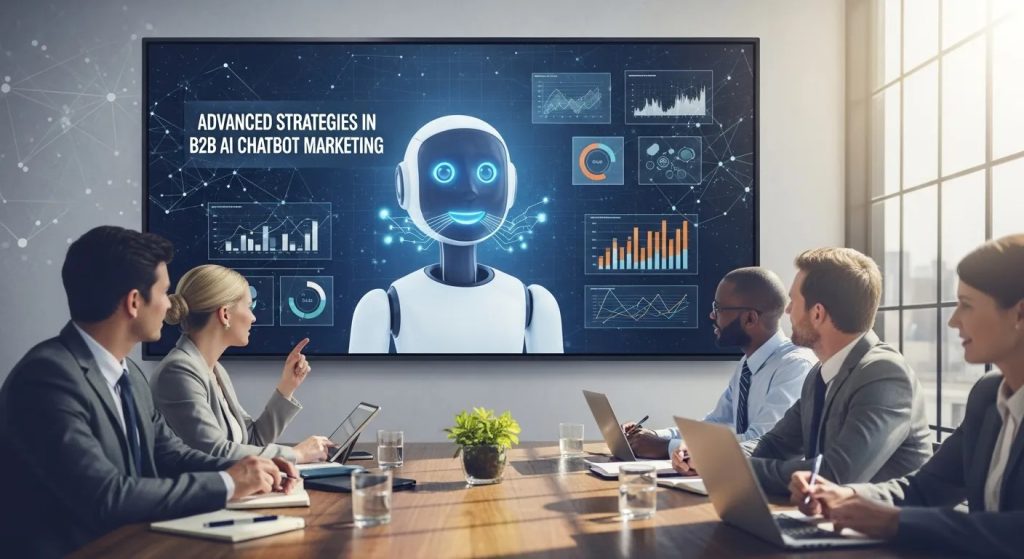
Advanced Strategies in B2B Chatbot Marketing
Multi-Channel Engagement
B2B Chatbot Marketing is no longer limited to a single website widget. Today, businesses deploy AI-powered Messenger Bots across multiple channels including LinkedIn, Slack, Microsoft Teams, and proprietary platforms. By interacting with prospects wherever they are, companies increase touchpoints, visibility, and engagement. Multi-channel B2B Chatbot Marketing ensures that leads receive timely responses even if they switch platforms mid-journey.
Integration across channels also supports behavioral tracking. By monitoring how prospects interact on different platforms, chatbots can refine conversation flows and improve personalized recommendations. This is particularly effective when nurturing large enterprise clients with complex requirements.
Scenario-Based Conversational Flows
Advanced B2B Chatbot Marketing emphasizes scenario-based conversation flows. These flows anticipate user needs based on context, industry, or company size. For example, a chatbot may handle a SaaS software inquiry differently than a manufacturing equipment inquiry.
Scenario-based flows also allow the integration of case studies, product demos, or onboarding videos directly into the conversation. By using contextually relevant content, B2B Chatbot Marketing keeps prospects engaged and informed without overwhelming them.
This strategy significantly improves lead conversion rates by ensuring conversations feel relevant and dynamic rather than scripted.
AI-Driven Insights and Predictive Analysis
Modern B2B Chatbot Marketing platforms use AI to not just respond, but predict user intent. By analyzing historical interactions, chatbots can anticipate questions before they are asked, recommend relevant solutions, and even forecast the probability of lead conversion.
For instance, using Machine Learning Languages, chatbots can score leads automatically, identifying which prospects are most likely to convert. This predictive capability allows sales teams to prioritize high-value leads efficiently. AI-driven insights also help marketers optimize messaging, improve engagement timing, and refine content for maximum impact.
Integration with AR Hologram Technology and AR Intelligence
Some cutting-edge B2B Chatbot Marketing systems integrate AR Hologram Technology and AR Intelligence to enhance the user experience. Imagine a client in a construction firm asking about new machinery, and the chatbot providing an interactive 3D hologram demo of the equipment.
This combination of conversational AI and AR creates immersive experiences that set businesses apart. While still emerging, early adopters have reported improved engagement and faster decision cycles. AR integration also allows companies to demonstrate products remotely, reducing the need for costly in-person demos.
Such futuristic features strengthen the brand’s image as innovative and tech-savvy.
Automated Nurturing for Long Sales Cycles
Unlike B2C interactions that often conclude in a single session, B2B sales cycles are long and involve multiple stakeholders. B2B Chatbot Marketing addresses this challenge by creating automated nurturing sequences that provide value throughout the decision-making process.
Chatbots can automatically send follow-up content like whitepapers, webinars, or reports based on user interactions. By tracking engagement, B2B Chatbot Marketing adapts content delivery, ensuring that prospects remain engaged and informed over weeks or even months.
Case Study Example
Consider a mid-sized SaaS company using B2B Chatbot Marketing integrated with their CRM. Within the first three months, the company automated lead qualification and follow-ups across LinkedIn and website chat.
Results:
- 40% increase in qualified leads
- 25% faster scheduling of demos
- 15% increase in conversion rate
This demonstrates that B2B Chatbot Marketing is not just theoretical—it delivers measurable business outcomes when strategically implemented.
Sample Chatbot Conversation Flow for Lead Qualification
| Step | Bot Message | Prospect Response | Bot Action |
|---|---|---|---|
| 1 | “Hello! Are you looking for software solutions for your team?” | Yes / No | Directs to relevant product demo |
| 2 | “Can you tell me the size of your company?” | 1-50 / 51-200 / 200+ | Tailors content based on company size |
| 3 | “What is your primary goal with this solution?” | Options | Recommends relevant resources or case studies |
| 4 | “Would you like to schedule a demo with our expert?” | Yes / No | Collects contact info or sends follow-up email |
This kind of structured interaction is a core component of effective B2B Chatbot Marketing.
Leveraging Content for Engagement
B2B Chatbot Marketing is most effective when paired with high-quality content. Chatbots can deliver blog articles, whitepapers, eBooks, and videos directly within the conversation.
By strategically incorporating these resources, businesses establish thought leadership while nurturing leads. For example, if a prospect asks about best practices in digital transformation, the chatbot can provide a recent industry report. This increases perceived value and enhances engagement.
Human + AI Collaboration

Even with sophisticated automation, human oversight remains essential. B2B Chatbot Marketing platforms often escalate complex queries to human agents seamlessly.
This hybrid approach ensures that the chatbot handles routine queries efficiently, while human experts manage nuanced or strategic conversations. The result is faster response times, better customer satisfaction, and improved lead quality.
Optimizing B2B Chatbot Marketing for Maximum Impact
To achieve maximum ROI, businesses must continuously optimize their B2B Chatbot Marketing strategies. This includes analyzing conversation analytics, refining scenario-based flows, and personalizing interactions based on prospect behavior. Incorporating AI-powered Messenger Bots ensures seamless communication across multiple channels, while integrating with CRM systems allows accurate lead tracking. Emerging technologies, such as AR Hologram Technology and AR Intelligence, provide innovative engagement opportunities that differentiate brands. By monitoring performance, testing messages, and iterating workflows, organizations can enhance response rates, increase qualified leads, and maintain meaningful, human-like engagement throughout the entire B2B sales journey.
Conclusion
B2B Chatbot Marketing is reshaping modern business communication by combining intelligent AI, personalized engagement, and automation. By leveraging Machine Learning Languages and AI-powered Messenger Bots, companies can capture leads, qualify prospects, and maintain meaningful dialogue across multiple channels. Integration with emerging technologies like AR Hologram Technology and AR Intelligence further enhances user experience and positions brands as innovative leaders. Automated nurturing, scenario-based flows, and predictive analytics ensure long-term engagement and optimized conversions. Ultimately, B2B Chatbot Marketing drives measurable business outcomes, reduces operational costs, and strengthens relationships, making it an indispensable tool for sustainable growth in competitive B2B markets.
Frequently Asked Questions (FAQ)
What is B2B Chatbot Marketing?
It’s the use of AI-powered chatbots to engage, qualify, and nurture business prospects through automated, intelligent conversations.
How does B2B Chatbot Marketing help lead generation?
Chatbots capture visitor data, qualify leads, and automate follow-ups, ensuring high-quality prospects reach the sales team efficiently.
Can chatbots integrate with existing business tools?
Yes, B2B Chatbot Marketing platforms connect with CRM, email, and analytics systems to maintain seamless workflows and data continuity.
What technologies support B2B Chatbot Marketing?
Key technologies include AI, Machine Learning Languages, natural language processing, AI-powered Messenger Bots, and emerging tools like AR Hologram Technology.
Is human oversight still necessary?
Yes, complex or strategic queries are escalated to human agents while chatbots handle routine interactions, ensuring optimal efficiency and accuracy.