
Bot data privacy ensures user trust and regulatory compliance across all chatbot interactions. From e-commerce chatbots to multilingual and sales bots, secure practices like encryption, consent, and data minimization safeguard information while enhancing user experience and engagement.
Bot Data Privacy Is Crucial in the Age of AI Chatbots
In the digital age, the proliferation of AI-driven solutions has transformed the way businesses engage with customers. Among these innovations, AI chatbots have become indispensable tools for online interaction, offering everything from instant support to personalized shopping experiences. However, as their usage increases, concerns around bot data privacy have grown significantly. Ensuring that user data remains secure while interacting with these automated systems is no longer optional—it is a necessity for businesses aiming to maintain trust and compliance in the online ecosystem.
The Rise of AI Chatbots in E-commerce
E-commerce platforms have embraced AI chatbots to streamline customer interactions, automate repetitive tasks, and drive sales efficiently. AI chatbots in e-commerce serve a variety of purposes, from recommending products based on browsing history to assisting in checkout processes. These bots collect data to offer tailored experiences, which makes privacy management critical. Without strong bot data privacy measures, sensitive customer information such as purchase history, payment details, and personal preferences could be at risk, potentially undermining consumer trust.
A significant challenge lies in balancing functionality with security. While AI chatbots need access to user data to perform effectively, businesses must ensure compliance with privacy regulations like GDPR and CCPA. Failure to protect this data can result in penalties, reputational damage, and loss of consumer confidence.
Understanding Bot Data Privacy
Bot data privacy refers to the practices and policies implemented to protect users’ personal information when interacting with automated systems. This encompasses data collection, storage, processing, and sharing. A robust privacy framework ensures that sensitive data such as names, email addresses, purchase behaviors, and chat histories remain confidential and are only used for legitimate purposes.
A growing number of businesses now integrate privacy protocols directly into chatbot architecture. Techniques such as end-to-end encryption, anonymization of user data, and secure API communication have become standard practices. By implementing these measures, companies can mitigate risks while still leveraging the full capabilities of AI chatbots.
Key Elements of Effective Bot Data Privacy:
- Data Minimization – Collect only the information necessary for the chatbot to function effectively.
- User Consent – Clearly inform users about the data being collected and obtain explicit consent.
- Secure Storage – Encrypt data both in transit and at rest to prevent unauthorized access.
- Transparent Policies – Provide clear privacy policies that outline data usage, sharing practices, and retention periods.
- Regular Audits – Conduct routine audits to identify vulnerabilities and improve security protocols.
By adopting these strategies, organizations not only comply with legal standards but also reinforce user trust, which is critical in a competitive online environment.
E-commerce Chatbots and Privacy Challenges
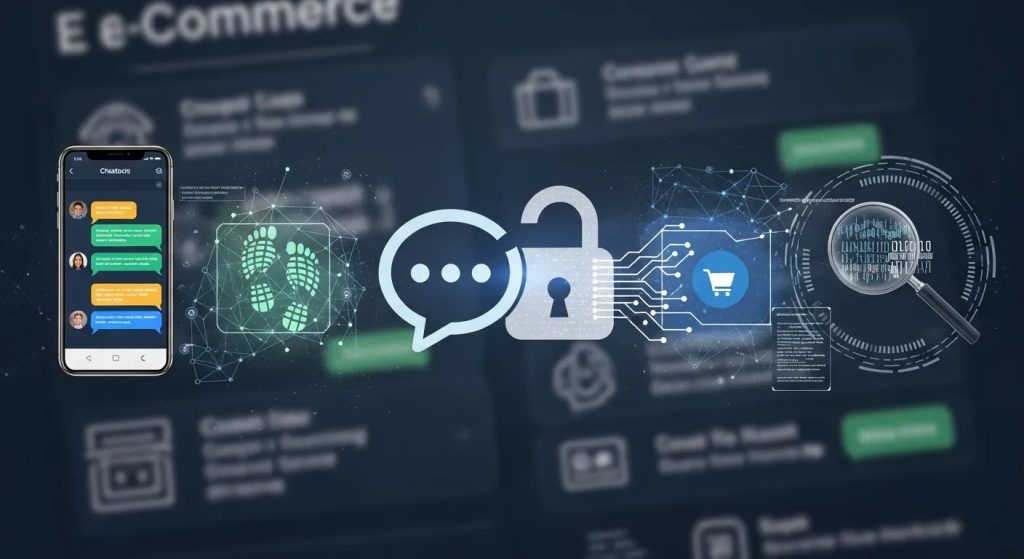
The adoption of e-commerce chatbots has brought convenience and efficiency to online shopping, but it has also raised unique privacy concerns. Chatbots often gather data in real time, including browsing habits, product preferences, and location information. This information is crucial for personalized marketing campaigns, but it also makes it a potential target for cyberattacks.
A major concern is the risk of data leaks through third-party integrations. Many chatbots connect with external platforms for payment processing, inventory management, and customer relationship management. Without proper safeguards, these integrations can become entry points for hackers. Therefore, businesses must ensure that each connection adheres to strict privacy and security standards, reinforcing the concept of bot data privacy at every level.
Furthermore, AI chatbots in multilingual environments must handle data securely across different regions. Privacy regulations vary by jurisdiction, which makes it essential for AI multilingual bots to implement adaptable privacy protocols that respect local laws while maintaining global security standards.
AI Multilingual Bots and Global Data Privacy
The increasing demand for global outreach has led to the development of AI multilingual bots capable of conversing in multiple languages. While this expands market reach, it also complicates privacy management. Data transmitted across borders may fall under diverse regulatory frameworks, including GDPR in Europe, LGPD in Brazil, and other regional privacy laws.
For AI multilingual bots, the key is to adopt a privacy-by-design approach, ensuring that data handling practices are consistent and compliant in every market. This involves:
- Securely storing multilingual conversation logs.
- Using anonymized data for analytics.
- Implementing geo-specific encryption standards.
- Ensuring consent forms are translated accurately for all supported languages.
When handled properly, these bots can deliver exceptional customer experiences without compromising on bot data privacy.
The Role of AI Sales Bots in Data Management
AI sales bots are designed to optimize the sales funnel by interacting with potential leads, answering queries, and providing personalized product recommendations. These bots rely heavily on customer data to operate effectively. Therefore, integrating bot data privacy principles is vital to avoid misuse of sensitive information.
Effective AI sales bots are programmed to:
- Limit data collection to only relevant sales interactions.
- Encrypt sensitive information such as financial details.
- Regularly purge outdated data to reduce exposure risks.
- Provide users with easy options to manage or delete their data.
In doing so, businesses can enhance customer engagement while maintaining robust privacy protections.
Chatbots and Data Privacy Compliance
Maintaining chatbots and data privacy compliance is a multi-layered process involving technology, policy, and user awareness. Businesses need to implement comprehensive strategies that cover:
- Legal Compliance – Adhering to regional privacy laws like GDPR, CCPA, and others.
- Technological Safeguards – Using encryption, secure authentication, and audit trails.
- User Communication – Clearly explaining data usage and rights to end-users.
- Incident Response – Preparing for data breaches with a transparent response plan.
By taking a proactive approach, organizations can safeguard user information while leveraging the advantages of chatbot automation.
Privacy & Security in Web Chatbots
Web-based chatbots introduce additional layers of complexity when it comes to privacy and security. Unlike app-based bots, web chatbots interact directly with users’ browsers, potentially exposing data to session hijacking or cross-site scripting attacks. To maintain privacy & security in web chatbots, companies must implement measures such as:
- HTTPS encryption for all web traffic.
- Regular vulnerability scanning and penetration testing.
- Limiting data retention periods.
- Implementing strong authentication mechanisms.
Such measures help ensure that user interactions remain confidential and that sensitive information is not inadvertently exposed.
Key Challenges in Bot Data Privacy for Modern Businesses
As businesses increasingly deploy AI chatbots, bot data privacy has become a central concern. Collecting user information allows chatbots to provide personalized experiences, from recommending products to answering queries in real time. Yet, every piece of data collected introduces potential risks, making privacy management a non-negotiable aspect of chatbot deployment.
One of the primary challenges is ensuring that sensitive data—such as payment information, login credentials, and personal preferences—is securely stored. Businesses that fail to prioritize bot data privacy risk data breaches, which can lead to financial loss, legal penalties, and reputational damage. For companies operating globally, the complexity multiplies as they must comply with multiple privacy regulations across different regions.
How AI Chatbots in E-commerce Handle Sensitive Data

The rise of AI chatbots in e-commerce has transformed online shopping, offering instant assistance and 24/7 support. These bots rely on collecting user data to tailor product recommendations and improve the shopping experience. However, each interaction presents an opportunity for data exposure if proper bot data privacy measures are not implemented.
For instance, a bot might record a customer’s browsing history to suggest relevant products. Without strict privacy controls, this information could be misused by third-party vendors or compromised through security vulnerabilities. Implementing bot data privacy safeguards such as encrypted communication channels and limited data retention policies ensures that customer trust is maintained.
E-commerce Chatbots and Their Privacy Protocols
E-commerce chatbots handle a wealth of personal information, from shipping addresses to payment details. To comply with bot data privacy standards, companies adopt several critical practices:
- Data Minimization: Collecting only the necessary information to fulfill customer requests.
- User Consent: Informing users clearly about what data is collected and obtaining explicit approval.
- Secure Storage: Encrypting sensitive data at rest and in transit.
- Access Controls: Limiting access to data only to authorized personnel or systems.
By integrating these measures, businesses can ensure that bot data privacy is maintained while still leveraging the efficiency and personalization capabilities of AI chatbots.
The Importance of AI Multilingual Bots in Global Privacy Compliance
Global businesses often deploy AI multilingual bots to communicate with users in multiple languages. While this increases accessibility, it also introduces additional privacy challenges. Each conversation may be subject to different regional privacy laws, requiring adaptive bot data privacy protocols.
For example, a European user interacting with a multilingual bot falls under GDPR regulations, which mandate strict consent and data handling requirements. Ensuring consistent bot data privacy across various languages and jurisdictions protects both the user and the organization from compliance issues.
AI Sales Bots and Privacy Considerations
AI sales bots are designed to guide prospects through the sales funnel, often requiring access to sensitive user data like purchase history and contact information. Prioritizing bot data privacy is critical to prevent misuse of this information. Businesses can implement strategies such as:
- Encrypting all communication between the bot and users.
- Storing only essential data for the shortest necessary period.
- Providing users with easy options to manage or delete their data.
These measures reinforce user confidence and ensure that AI sales bots operate within ethical and legal boundaries.
Securing Web Chatbots: Privacy & Security in Practice
Web-based chatbots interact directly through browsers, increasing exposure to potential attacks. Maintaining privacy & security in web chatbots involves rigorous protocols to ensure that bot data privacy is preserved. Key strategies include:
- Using HTTPS to secure all interactions.
- Regularly updating and patching software to prevent vulnerabilities.
- Conducting penetration tests to identify security gaps.
- Limiting data retention and access based on role-based controls.
By adopting these practices, organizations can safeguard user data while providing seamless chatbot experiences.
Best Practices for Maintaining Bot Data Privacy
Ensuring bot data privacy is not just a technical requirement—it is a strategic necessity. Businesses that prioritize user data protection can foster trust, increase engagement, and avoid regulatory penalties. Here are essential best practices for maintaining bot data privacy across various platforms:
Implement End-to-End Encryption

Encryption is a cornerstone of bot data privacy. By securing messages between the chatbot and the user, sensitive information such as personal details, payment credentials, and interaction histories remain protected from unauthorized access. Companies deploying AI chatbots in e-commerce often integrate encryption protocols to ensure secure communication channels, reducing the risk of data breaches.
Limit Data Collection
Adhering to the principle of data minimization is critical for bot data privacy. Chatbots should collect only the information necessary to perform their function. For example, an e-commerce chatbot designed to provide product recommendations does not need to store full credit card details it only requires purchase preferences or browsing history. This approach reduces the volume of sensitive data stored, mitigating potential exposure.
Regular Data Audits
Routine audits are vital to maintaining bot data privacy. Organizations should regularly examine which data is collected, how it is stored, and who has access. This practice ensures compliance with global privacy regulations and strengthens the security of AI multilingual bots, which must handle user data across different regions with varying legal requirements.
Transparent Privacy Policies
Users need to trust that their interactions with chatbots are safe. Clear, accessible privacy policies reinforce bot data privacy by informing users how their data will be used, stored, and shared. For AI sales bots, transparency about data usage builds credibility and encourages users to engage confidently.
Secure Third-Party Integrations
Many chatbots rely on third-party services, such as payment processors, analytics tools, or CRM systems. Ensuring bot data privacy extends to these integrations is crucial. Companies must vet third-party vendors, implement secure APIs, and monitor data flows to prevent leaks.
Implementing Bot Data Privacy in E-commerce
| Company | Chatbot Type | Privacy Measures | Outcome |
|---|---|---|---|
| RetailX | AI Chatbot for product recommendations | End-to-end encryption, data minimization, GDPR compliance | Zero breaches in 3 years; 20% increase in repeat customers |
| ShopEase | AI Sales Bots | Secure payment integrations, anonymized user data | Improved trust; reduced abandoned carts by 15% |
| GlobalMart | AI Multilingual Bots | Regional data compliance, consent forms in multiple languages | High engagement across markets; full GDPR and CCPA compliance |
This table highlights how diverse chatbot types can maintain robust bot data privacy while enhancing user experience.
Emerging Technologies Supporting Bot Data Privacy
Advances in AI and cloud technologies have introduced new ways to strengthen bot data privacy:
- Federated Learning: AI models can learn from user data without centralizing sensitive information, preserving privacy while improving performance.
- Differential Privacy: Adds controlled “noise” to datasets to prevent identification of individual users while allowing aggregate analysis.
- Secure Cloud Storage: Cloud platforms now offer encrypted storage, role-based access controls, and real-time monitoring to safeguard chatbot data.
These innovations allow businesses to scale their chatbots without compromising bot data privacy.
Human Factors and Privacy Awareness

While technology is crucial, bot data privacy also depends on human behavior. Employees managing chatbots must be trained on data handling protocols, recognize phishing attempts, and adhere to access restrictions. By combining technical safeguards with human vigilance, organizations can reduce internal risks and strengthen trust with users.
Enhancing User Trust Through Bot Data Privacy
Maintaining bot data privacy is essential for building trust between businesses and their users. When chatbots collect data responsibly, customers feel confident sharing personal information, leading to more meaningful interactions. Implementing secure storage, clear consent mechanisms, and encrypted communications ensures that sensitive details remain protected. Businesses using AI chatbots in e-commerce or AI sales bots can benefit from higher engagement and loyalty by prioritizing privacy. Additionally, privacy & security in web chatbots reinforces credibility, showing users that their information is valued and safe. A strong focus on bot data privacy ultimately drives sustainable growth and user satisfaction.
Leveraging AI Sales Bots Without Compromising Privacy
AI sales bots are powerful tools for engaging potential customers and driving conversions. However, maintaining bot data privacy is essential to protect sensitive user information such as contact details and purchase history. Businesses can achieve this by implementing encryption, limiting data collection, and ensuring transparent consent processes. When properly secured, these bots enhance the customer experience without risking personal data. Integrating privacy & security in web chatbots further strengthens trust, while AI multilingual bots can expand reach globally while respecting local privacy regulations. Prioritizing bot data privacy ensures ethical, secure, and effective sales interactions.
Conclusion
In today’s digital era, bot data privacy is crucial for businesses leveraging AI chatbots across platforms. Protecting user information ensures compliance with global regulations while building trust and loyalty. By implementing encryption, data minimization, transparent consent, and secure integrations, organizations can safeguard sensitive customer details effectively. Whether deploying AI chatbots in e-commerce, AI sales bots, or AI multilingual bots, privacy-first design strengthens credibility and reduces risks. Additionally, maintaining privacy & security in web chatbots fosters positive user experiences. Prioritizing bot data privacy is not just a legal requirement it’s a strategic advantage that drives engagement, retention, and sustainable growth.
Frequently Asked Questions (FAQ)
What is bot data privacy?
Bot data privacy refers to the practices and technologies used to protect user information collected by chatbots.
Why is bot data privacy important for businesses?
It ensures compliance with laws, prevents breaches, and builds user trust.
How do AI chatbots maintain privacy?
Through encryption, secure storage, data minimization, consent management, and regular audits.
Can bot data privacy work for multilingual bots?
Yes, by implementing region-specific privacy protocols and translation-compliant consent forms.
What are common risks if bot data privacy is ignored?
Risks include data breaches, legal penalties, reputational damage, and loss of customer trust.