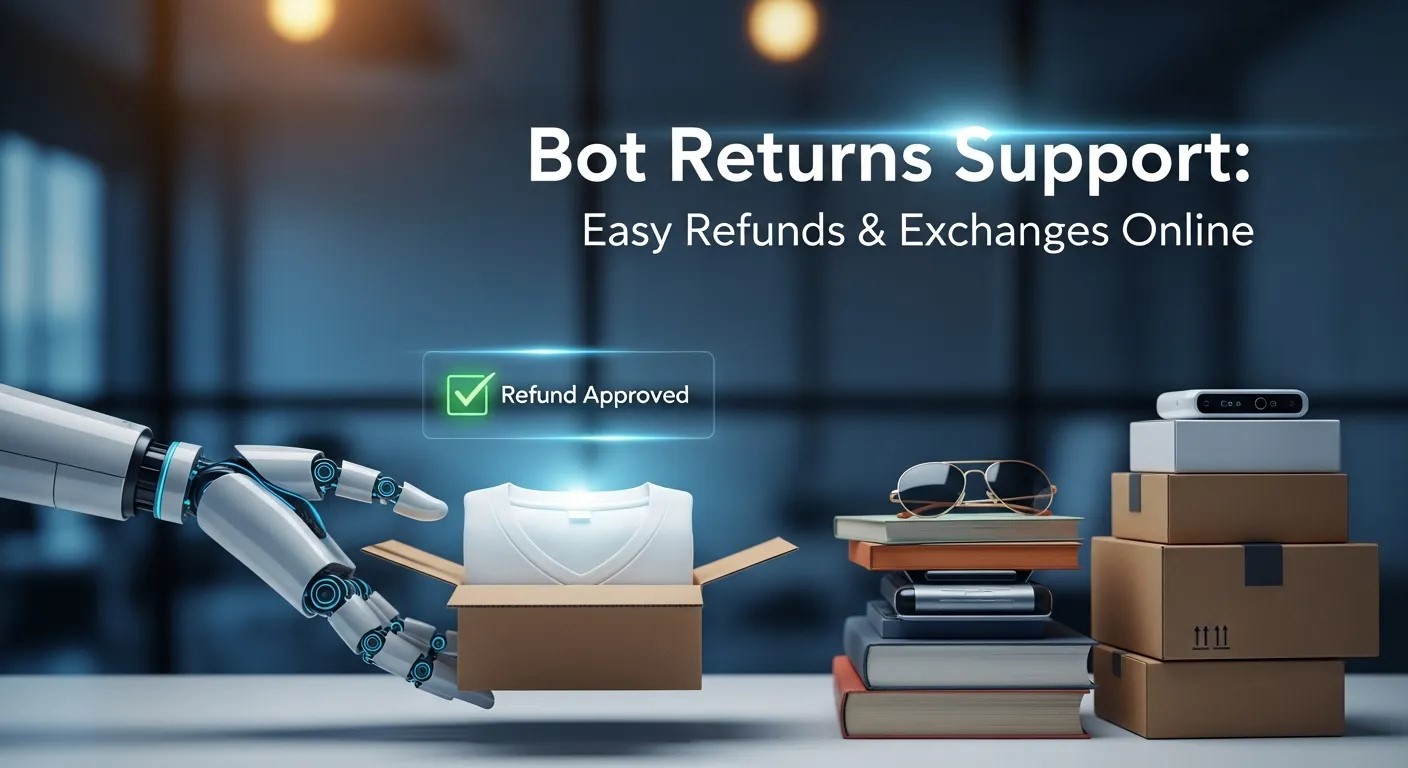
Bot Returns Support automates returns, exchanges, and refunds efficiently. With AI-driven chatbots, AR tools, and predictive analytics, businesses can enhance customer experience, reduce operational costs, and maintain loyalty while improving transparency and operational insights.
Understanding Bot Returns Support: Revolutionizing Customer Experience
In today’s fast-paced e-commerce environment, Bot Returns Support has become a game-changer for businesses seeking efficiency and customer satisfaction. Online shoppers increasingly expect smooth, hassle-free experiences when it comes to returns, exchanges, and refunds. Traditional customer service teams often struggle to meet these demands due to high volumes of requests and limited operational hours. Here, automated solutions powered by advanced AI are stepping in to bridge the gap. By implementing intelligent Bot Returns Support, companies can streamline their returns processes while maintaining high levels of customer engagement and loyalty.
Why Businesses Need Bot Returns Support
Managing returns and refunds has always been a critical yet resource-intensive aspect of e-commerce. Incorrect handling of returns can lead to negative reviews, diminished customer trust, and lost revenue. Bot Returns Support addresses these challenges by offering immediate, accurate responses to customer queries about refunds, exchanges, and product replacements. Unlike traditional support channels, AI-powered bots work 24/7, ensuring that customers can initiate and track their return requests anytime, from anywhere. This flexibility not only improves the overall shopping experience but also reduces operational costs for businesses.
Integrating B2B Chatbot Marketing strategies with returns support can further enhance customer retention. For example, businesses selling wholesale products or managing complex B2B transactions benefit from AI-driven bots that handle return policies efficiently, provide personalized assistance, and even generate automated notifications about refund statuses. This level of automation ensures that customers feel valued while freeing up human agents for more strategic tasks.
Key Features of Effective Bot Returns Support
An effective Bot Returns Support system typically includes several crucial features:
- Automated Return Initiation: Customers can start a return process directly through the bot interface without waiting for human intervention.
- Real-Time Refund Tracking: AI bots provide continuous updates about the status of returns, exchanges, and refunds.
- Smart Product Identification: Bots can scan product details, verify eligibility, and even suggest alternative solutions to avoid unnecessary returns.
- Multi-Channel Accessibility: Whether through e-commerce platforms, social media, or mobile apps, AI bots ensure consistent support across all channels.
By embedding E-commerce Chatbots within online stores, businesses can manage high volumes of return requests efficiently. These chatbots are designed to understand customer intent, guide them through step-by-step processes, and prevent errors that could delay refunds. In addition, integrating AI into return workflows reduces the likelihood of fraudulent requests and ensures compliance with company policies.
The Role of AI-Powered Sales Bots in Returns
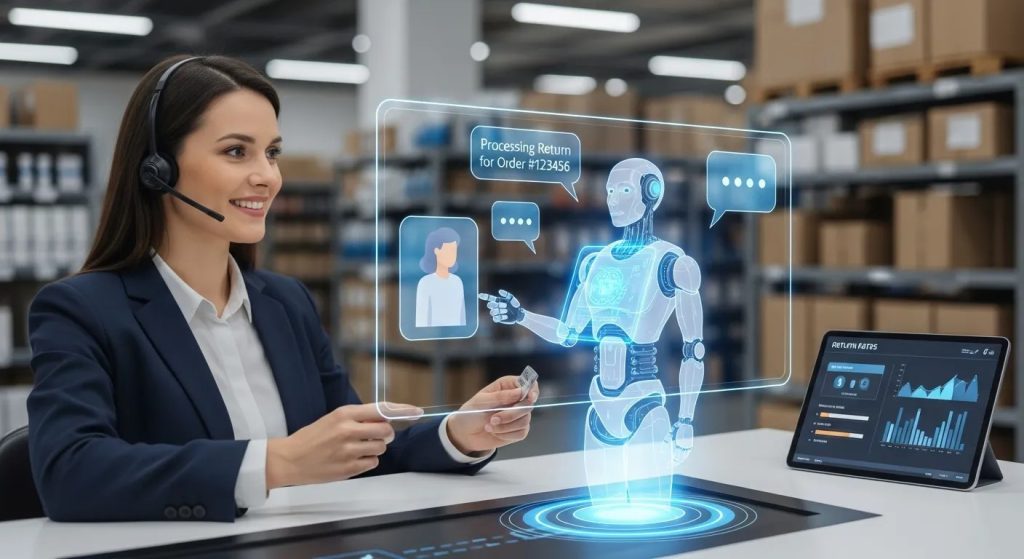
While many people associate AI bots with sales, AI-Powered Sales Bots also play a vital role in post-purchase support. These bots can cross-reference past purchase data, suggest relevant products, and manage return requests intelligently. For example, if a customer requests a return for a seasonal product, the bot can automatically offer alternatives, discounts, or exchanges, turning a potentially negative experience into an opportunity for engagement and upselling.
The integration of AI into returns also benefits the internal operations of businesses. Data collected by Bot Returns Support can be analyzed to identify common reasons for returns, product defects, or customer dissatisfaction trends. This insight enables companies to make informed decisions about inventory, product design, and marketing strategies.
Enhancing Customer Experience with Personalized Support
One of the most significant advantages of Bot Returns Support is its ability to offer personalized assistance. Modern AI systems utilize machine learning algorithms to understand individual customer behavior, purchase history, and preferences. By tailoring responses and solutions, businesses can ensure that each return interaction feels customized rather than generic. Personalized returns support not only improves customer satisfaction but also increases the likelihood of repeat purchases.
Incorporating B2B and B2C Chatbot solutions further extends the value of automated returns management. These chatbots are capable of handling diverse customer profiles, from individual shoppers to large business clients. By customizing communication based on customer type, businesses can enhance engagement and build long-term trust.
Integration with AR and Advanced Technologies
Emerging technologies such as AR Retail and AR Intelligence are enhancing the way customers interact with returns processes. For instance, AR tools allow customers to visualize product placement, verify product conditions, or simulate usage before initiating a return. When combined with Bot Returns Support, AR technologies provide a more immersive, accurate, and satisfying experience. Customers can feel confident in their decisions, reducing unnecessary returns and improving overall operational efficiency.
As the digital landscape evolves, companies that adopt AI-driven solutions for returns management gain a competitive edge. By leveraging Bot Returns Support, businesses not only streamline their operations but also meet the growing expectations of tech-savvy consumers who value speed, convenience, and transparency.
Implementing Bot Returns Support: Step-by-Step Strategies
Deploying Bot Returns Support successfully requires careful planning and integration. Businesses must consider existing systems, customer needs, and operational workflows to ensure the AI solution complements their processes rather than complicates them. Here’s a strategic approach for implementation:
1. Assessing Your Returns Workflow
The first step involves mapping out the current returns process. Identify bottlenecks, recurring customer complaints, and areas where delays occur. Understanding the existing pain points allows AI bots to target these challenges effectively. By integrating E-commerce Chatbots, companies can automate repetitive tasks such as generating return labels, validating product eligibility, and confirming refund timelines.
2. Selecting the Right AI Technology
Choosing an AI solution tailored to your business is crucial. AI-Powered Sales Bots with natural language processing (NLP) capabilities are ideal for understanding customer queries, even when phrased in unconventional ways. These bots can handle multiple conversations simultaneously, reducing response times and ensuring consistent service. Businesses can also integrate AR tools to provide visual confirmation of product conditions before processing returns.
3. Multi-Channel Integration
Modern customers engage across multiple platforms—websites, mobile apps, and social media. Implementing B2B and B2C Chatbot solutions ensures that Bot Returns Support is accessible wherever customers interact. This multi-channel approach not only improves response times but also reinforces brand reliability and professionalism.
4. Personalized Customer Interaction
A key differentiator of advanced Bot Returns Support is the ability to offer personalized solutions. By analyzing purchase history, preferences, and customer behavior, bots can provide tailored guidance on returns, exchanges, or refunds. Personalized interaction increases customer satisfaction and strengthens loyalty, converting routine return processes into positive brand experiences.
5. Continuous Monitoring and Optimization
AI systems learn and improve over time. Monitoring bot performance, analyzing customer feedback, and tracking return trends allow businesses to optimize their systems continuously. For instance, identifying frequently returned products through Bot Returns Support data can inform product improvements or adjustments in marketing campaigns. This proactive approach ensures that AI remains a strategic asset rather than just an operational tool.
Operational Benefits of Bot Returns Support
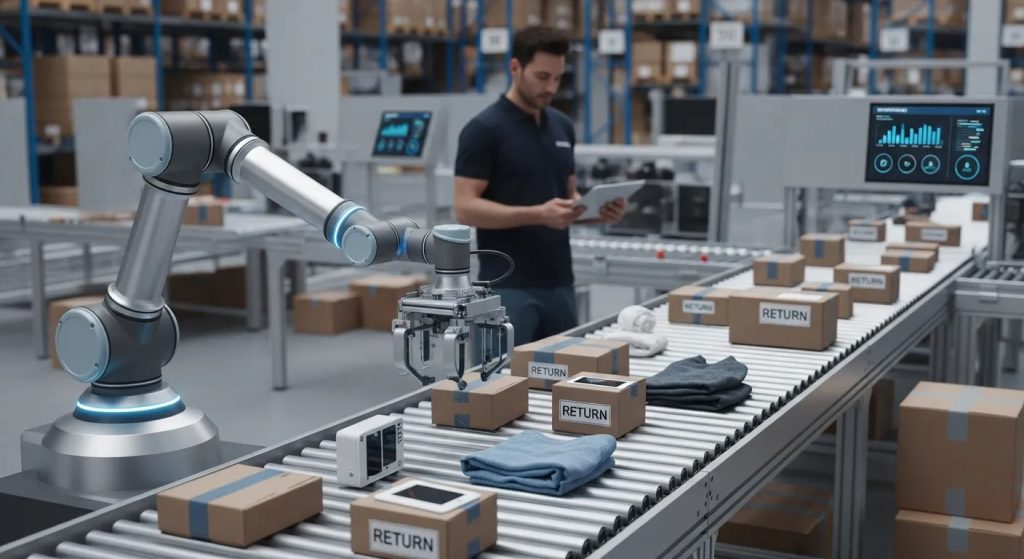
Implementing automated returns management yields multiple benefits for businesses, both operationally and financially.
1. Efficiency and Cost Reduction
Processing returns manually can be labor-intensive and prone to errors. Bot Returns Support automates repetitive tasks such as refund initiation, product verification, and status updates. This reduces the workload on human agents, cuts operational costs, and minimizes the risk of errors that can lead to customer dissatisfaction.
2. 24/7 Availability
Unlike traditional support teams limited by office hours, AI bots operate around the clock. Customers can initiate returns or check refund statuses anytime, improving convenience and trust. Integrating B2B Chatbot Marketing with AI bots ensures that even business clients managing large orders receive timely support without waiting for human intervention.
3. Data-Driven Insights
Every interaction with a Bot Returns Support system generates valuable data. Businesses can track return reasons, product issues, and customer behavior trends. This data can inform product design, inventory management, and future marketing strategies. Combining these insights with AR technologies, such as AR Retail visualization, allows companies to minimize returns proactively by helping customers make better-informed purchasing decisions.
4. Enhanced Customer Satisfaction
Speed, accuracy, and personalization directly contribute to customer satisfaction. Customers who experience seamless returns processes are more likely to remain loyal and recommend the brand. AI bots enhance this experience without appearing intrusive or robotic, maintaining a natural, conversational tone.
Real-World Applications of Bot Returns Support
Several industries have successfully implemented Bot Returns Support to improve operational efficiency and customer experience:
- E-commerce: Online stores leverage bots to manage product returns, exchange requests, and refund processing. E-commerce Chatbots guide customers through self-service options, reducing wait times and support costs.
- B2B Platforms: Wholesale suppliers and distributors utilize B2B and B2C Chatbot systems to handle large-scale order returns, provide shipment tracking, and communicate policy updates.
- Retail with AR Integration: Retail brands experimenting with AR Intelligence and AR Retail use bots to help customers visualize products and confirm return eligibility visually, reducing unnecessary returns.
Challenges and Solutions in Bot Returns Support
While Bot Returns Support offers significant benefits, businesses may encounter challenges during implementation.
- Integration Complexity: Merging AI bots with existing systems can be complex. Partnering with vendors experienced in AI-Powered Sales Bots ensures smooth integration.
- Customer Adoption: Some customers may prefer human interaction. Offering a hybrid approach, where bots handle routine tasks and escalate complex issues to agents, ensures satisfaction.
- Maintaining Accuracy: Returns processes require precise validation. AI bots must be trained on up-to-date policies and product information to avoid errors.
By addressing these challenges proactively, companies can maximize the effectiveness of Bot Returns Support while maintaining operational reliability and customer trust.
Advanced Features of Bot Returns Support
As businesses scale, Bot Returns Support evolves beyond simple refund or exchange management. Modern AI systems incorporate advanced functionalities that not only automate returns but also enhance decision-making, improve accuracy, and foster customer loyalty.
1. Predictive Returns Management
Using machine learning algorithms, Bot Returns Support can predict which products are likely to be returned. By analyzing historical purchase data, return rates, and customer behavior, businesses can proactively address potential issues. For example, if a specific item has a high return rate, AI bots can send reminders about product usage, provide detailed guides, or suggest alternative products. Predictive insights minimize unnecessary returns and improve overall operational efficiency.
2. Automated Refund Reconciliation
Handling financial aspects of returns can be complex. AI-Powered Sales Bots streamline refund reconciliation by automatically updating payment systems, sending notifications to customers, and tracking refund statuses. This eliminates manual errors, accelerates processing times, and ensures transparency in all transactions.
3. Sentiment Analysis and Customer Feedback
Modern bots can analyze customer messages for sentiment, identifying frustration, confusion, or dissatisfaction. Bot Returns Support uses this insight to escalate issues to human agents when necessary, while still resolving routine requests automatically. Integrating this with B2B and B2C Chatbot solutions allows companies to manage both individual consumers and business clients efficiently, ensuring a consistent support experience across different user types.
4. Integration with AR and Interactive Tools
Augmented Reality (AR) technologies are transforming how customers interact with products post-purchase. Through AR Retail applications, customers can visually inspect items, confirm conditions, or simulate usage before initiating returns. AR Intelligence allows bots to guide users through interactive return processes, reducing errors and unnecessary exchanges. For instance, a furniture retailer can use AR to let customers check dimensions and fit, avoiding returns caused by misjudged size or placement.
How Businesses Leverage Bot Returns Support
E-Commerce Giants
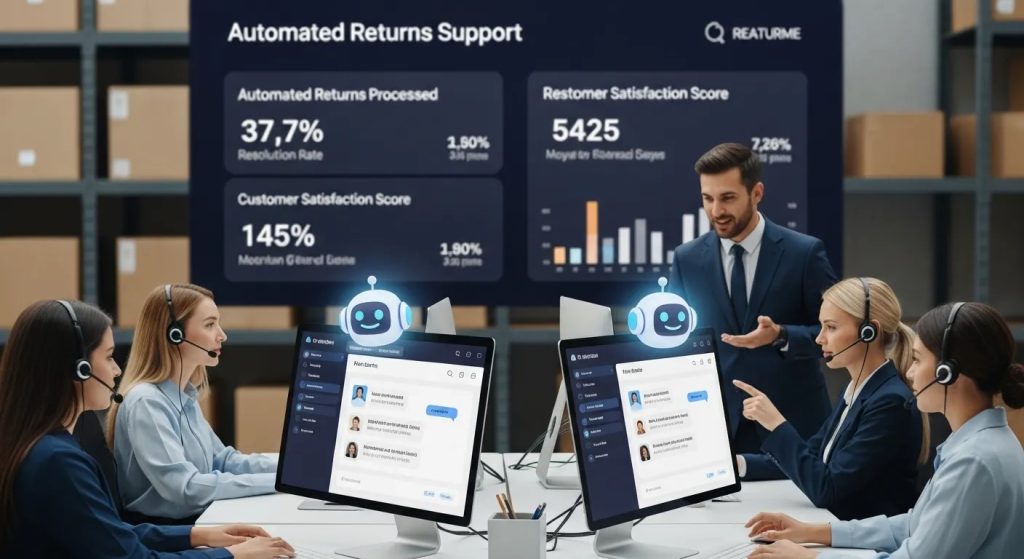
Leading e-commerce platforms have integrated E-commerce Chatbots to manage returns efficiently. By automating refund initiation and shipment tracking, these companies reduce support response times from hours to mere minutes. Customers receive real-time updates and guidance without needing to contact human agents, resulting in improved satisfaction and repeat purchases.
B2B Platforms
Suppliers handling bulk orders have implemented B2B Chatbot Marketing strategies alongside returns bots. These systems handle large-scale returns, notify clients about policy compliance, and even suggest alternative products. Businesses report significant reductions in operational costs and improved client retention after integrating automated returns support.
Retail with AR Integration
Retailers experimenting with AR have successfully combined Bot Returns Support with AR visualization tools. Customers can virtually inspect clothing items, electronics, or home décor before initiating returns. This combination of AI and AR has led to a measurable decrease in return rates and higher customer confidence in purchasing decisions.
Future Trends in Bot Returns Support
As AI and AR technologies continue to advance, Bot Returns Support is expected to become even more intelligent and proactive. Key trends include:
- Hyper-Personalization: Bots will leverage customer purchase history, preferences, and browsing behavior to offer tailored return solutions and alternative suggestions.
- Voice-Activated Returns: Integration with voice assistants will allow customers to initiate returns or check refund statuses through simple voice commands.
- Blockchain-Enabled Refund Tracking: Distributed ledger technology can make returns and refund processes fully transparent, secure, and tamper-proof.
- Omnichannel Returns Experience: Bots will seamlessly manage returns across websites, mobile apps, social media, and even in-store kiosks, ensuring a consistent and smooth experience.
By adopting these innovations, businesses can transform returns from a costly, tedious process into a strategic advantage, improving customer loyalty, operational efficiency, and overall profitability.
Measuring the Impact of Bot Returns Support
Businesses implementing Bot Returns Support can track several key performance indicators (KPIs) to measure effectiveness:
- Return Processing Time: Reduced time from request initiation to completion.
- Customer Satisfaction Scores: Improvement in post-return feedback and loyalty metrics.
- Operational Cost Savings: Reduction in manual labor required for returns management.
- Return Rate Trends: Identification of products with frequent returns and proactive mitigation strategies.
Collecting and analyzing this data helps companies continuously refine their bots, ensuring both operational efficiency and a superior customer experience.
Enhancing Operational Efficiency with Bot Returns Support
Implementing Bot Returns Support transforms traditional returns management by automating repetitive tasks like refund processing, exchange approvals, and status tracking. Businesses benefit from 24/7 customer service without adding human resources, reducing operational costs while maintaining accuracy. Integrating E-commerce Chatbots and AI-Powered Sales Bots ensures seamless communication across platforms, while B2B and B2C Chatbot solutions handle both individual consumers and business clients efficiently. By leveraging AR technologies such as AR Retail and AR Intelligence, companies can minimize unnecessary returns and provide customers with interactive, transparent experiences, fostering loyalty and long-term satisfaction.
Conclusion
Bot Returns Support is transforming how businesses manage refunds, exchanges, and product returns. By leveraging AI-powered automation, predictive analytics, and AR-enhanced tools, companies can streamline operations, reduce costs, and deliver faster, personalized service. Integrating E-commerce Chatbots, AI-Powered Sales Bots, and B2B and B2C Chatbot solutions ensures seamless support across multiple channels, enhancing customer satisfaction and loyalty. Advanced features like sentiment analysis, predictive returns, and interactive AR visualization empower businesses to anticipate issues, prevent unnecessary returns, and make data-driven decisions. Adopting these technologies positions companies to thrive in a competitive, customer-focused digital marketplace.
Frequently Asked Questions (FAQ)
Can bots handle all types of product returns?
Yes, AI bots can manage most standard returns, exchanges, and refunds, with escalation to human agents for complex cases.
How does Bot Returns Support improve customer satisfaction?
By providing instant, personalized, and accurate assistance 24/7, reducing delays, and offering seamless self-service options.
Are AR tools necessary for returns support?
Not mandatory, but AR enhances the process by letting customers visually inspect products, reducing unnecessary returns.
Can B2B and B2C bots work together?
Yes, modern AI systems can manage diverse client types simultaneously, maintaining consistent support and communication.
How do businesses measure the effectiveness of Bot Returns Support?
Through KPIs like return processing time, customer satisfaction, cost reduction, and return trend analysis for strategic improvements.