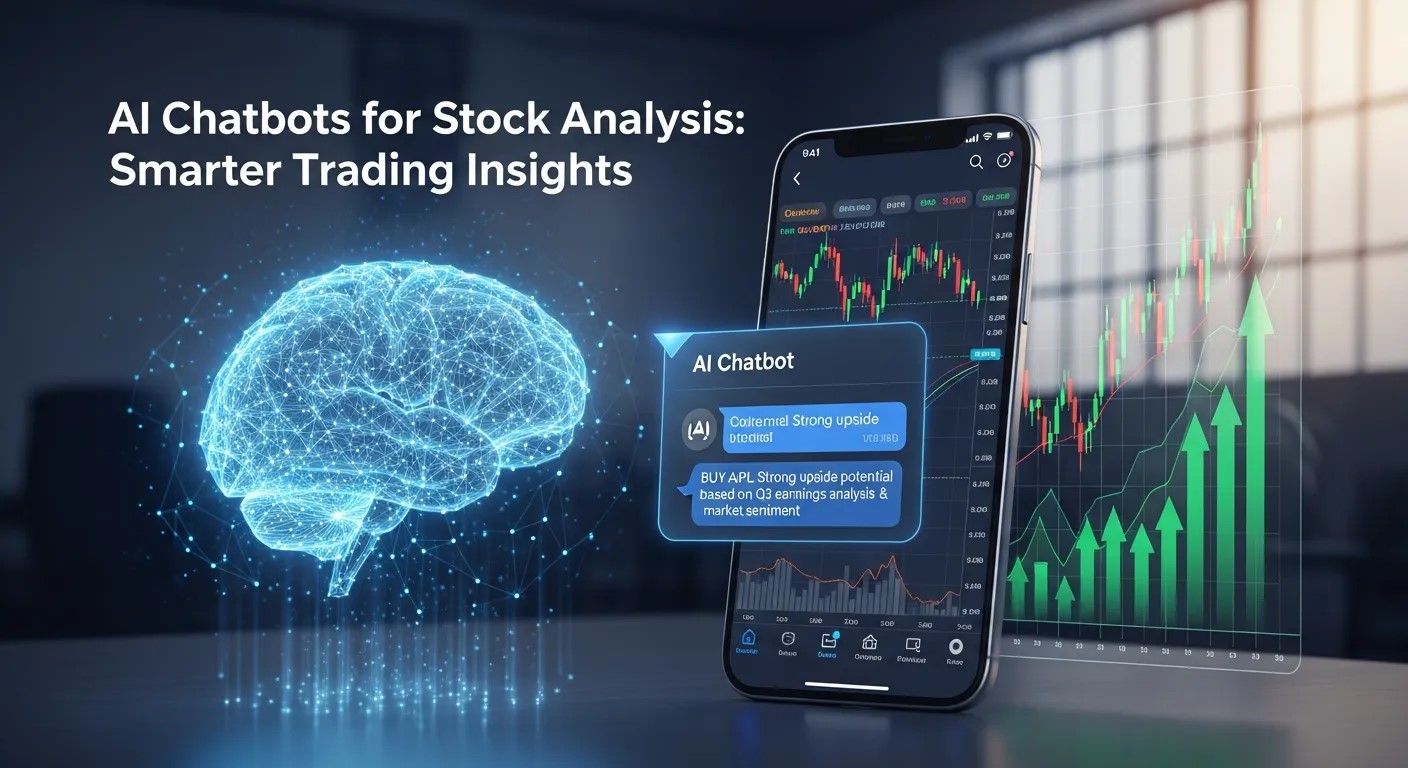
AI chatbots for stock analysis provide real-time insights, predictive analytics, and risk management tools. By integrating deep learning, AR technologies, and accessibility features, these intelligent chatbots empower traders to make smarter, faster, and data-driven investment decisions globally.
AI Chatbots for Stock Analysis: Smarter Trading Insights
The world of stock trading has always been fast-paced and complex, requiring investors to process vast amounts of information in real-time. Today, technology has transformed the way traders make decisions, and among the most revolutionary tools are AI chatbots for stock analysis. These intelligent systems leverage artificial intelligence and machine learning to provide real-time market insights, detect patterns, and even predict potential price movements, making them indispensable for both novice and experienced investors.
Unlike traditional tools that rely on manual analysis or static charts, AI chatbots for stock analysis offer dynamic support. They can process massive datasets from multiple markets simultaneously, identifying trends that human analysts might overlook. This capability allows traders to make smarter decisions without being overwhelmed by the sheer volume of market data.
Understanding AI Chatbots in the Stock Market
At their core, AI chatbots for stock analysis are designed to simulate human-like reasoning while analyzing financial data. By using natural language processing, these chatbots can answer user queries, provide recommendations, and even generate reports that summarize market conditions. For instance, an investor can ask a chatbot, “Which technology stocks are likely to outperform this quarter?” and receive a data-driven response backed by historical trends and predictive analytics.
The incorporation of deep learning chatbots has further enhanced the accuracy of stock predictions. Unlike basic AI models, deep learning chatbots can identify intricate patterns within complex datasets. This means that investors benefit from insights that consider multiple variables simultaneously, such as historical prices, trading volumes, macroeconomic indicators, and even global events that could influence market sentiment.
Furthermore, AI chatbots for accessibility ensure that these advanced tools are usable by a broader audience. Traders who might struggle with complex analytical platforms can now access intuitive chatbot interfaces that translate raw data into actionable insights. This democratization of financial intelligence is reshaping the stock trading landscape, enabling more people to participate in the market confidently.
The Role of Multilingual Chatbots

Globalization has made the stock market a truly international arena. Traders from different countries need information in languages they understand, and this is where multilingual chatbots become invaluable. By providing real-time analysis in multiple languages, these chatbots remove barriers and allow investors worldwide to access the same high-quality insights. A trader in Tokyo, for example, can receive instant market analysis in Japanese, while a counterpart in Paris gets the same insights in French.
This functionality not only improves usability but also enhances decision-making speed. In markets where seconds can translate to significant gains or losses, having instant access to clear information in one’s preferred language is a competitive advantage.
AI Chatbots and Emergency Response in Stock Trading
While stock markets may not seem like a field where emergencies occur, sudden market shocks can create scenarios that require immediate attention. Emergency response chatbots play a critical role in such situations. They can monitor market conditions continuously and alert traders when anomalies or unexpected movements occur. By providing instant notifications and suggested actions, these chatbots help mitigate risks and prevent significant financial losses.
This proactive approach contrasts sharply with traditional trading platforms that rely heavily on human monitoring. With AI-driven emergency response mechanisms, traders can act swiftly, capitalizing on opportunities or avoiding pitfalls without delay.
AR and Quantum Computing in Financial AI
The integration of advanced technologies like AR quantum computing and AR autonomous agents is pushing the capabilities of AI chatbots for stock analysis even further. Augmented Reality (AR) can visualize complex stock market data in 3D, enabling traders to “see” market trends and correlations more intuitively. When combined with quantum computing, these AR visualizations can process vast datasets almost instantaneously, delivering insights that would be impossible with traditional computing.
AR autonomous agents take this a step further by acting on data autonomously. These agents can execute trades based on predefined strategies while continuously learning from market movements. The synergy between AI chatbots, AR technology, and quantum computing is not just futuristic—it’s happening today, transforming trading floors into highly automated, intelligent ecosystems.
How AI Chatbots Enhance Decision-Making
One of the most significant advantages of AI chatbots for stock analysis is their ability to enhance decision-making through predictive analytics. These chatbots don’t just report what has happened; they forecast what could happen next. By analyzing historical patterns, sentiment data from news and social media, and technical indicators, AI chatbots provide a probabilistic outlook for stock movements.
Investors can use these insights to create more robust trading strategies. For example, a trader might adjust portfolio allocations based on a chatbot’s forecast of volatility in a particular sector. By integrating AI insights into investment strategies, traders reduce reliance on intuition and improve the precision of their decisions.
AI Chatbots for Stock Analysis: Smarter Trading Insights
The stock market is a dynamic and fast-moving environment, where information is key to making profitable decisions. Today, AI chatbots for stock analysis have emerged as essential tools for investors. These advanced systems analyze real-time market data, detect trends, and even predict stock movements, offering traders insights that were once impossible to obtain manually. By integrating AI chatbots for stock analysis into their workflow, investors can respond faster to market changes and make data-driven decisions with confidence.
Unlike traditional platforms that require hours of manual analysis, AI chatbots for stock analysis process vast datasets instantly. These chatbots can monitor multiple markets at once, track historical patterns, and generate actionable recommendations, saving traders both time and effort. Whether it’s evaluating portfolio performance or analyzing emerging stocks, AI chatbots for stock analysis provide clarity in a world of information overload.
Understanding AI Chatbots in the Stock Market

At their core, AI chatbots for stock analysis use natural language processing and machine learning algorithms to deliver meaningful insights. Investors can interact with these chatbots by asking questions such as, “Which tech stocks are likely to rise this quarter?” or “What is the market sentiment for energy stocks?” In response, the chatbot leverages complex algorithms to provide clear, accurate, and timely analysis.
The integration of deep learning chatbots enhances the intelligence of these systems even further. These chatbots can recognize complex patterns in financial data that go beyond simple correlations, allowing traders to anticipate market shifts with higher accuracy. By combining historical stock performance, market volatility, and economic indicators, AI chatbots for stock analysis help investors create strategies that minimize risk and maximize returns.
Moreover, AI chatbots for accessibility ensure that these tools are available to a wide range of users. Whether a trader is new to the market or has years of experience, these chatbots simplify the complexity of stock analysis. With intuitive interfaces, anyone can interpret stock data efficiently, turning complex market insights into actionable investment decisions through AI chatbots for stock analysis.
The Role of Multilingual Chatbots
Global markets demand communication in multiple languages, and multilingual chatbots have become critical in bridging this gap. By delivering analysis in various languages, these chatbots enable investors worldwide to access information without delays. For instance, a trader in Brazil can receive market updates in Portuguese, while a counterpart in Germany reads the same insights in German. Integrating AI chatbots for stock analysis with multilingual capabilities ensures global accessibility and rapid decision-making across international markets.
AI Chatbots in Emergency Response
Unexpected market fluctuations can pose significant challenges. Here, emergency response chatbots play a vital role. By continuously monitoring market conditions, these chatbots can alert investors to sudden anomalies or high-risk situations. For example, if a key stock drops sharply, the chatbot provides actionable guidance instantly. Using AI chatbots for stock analysis, traders are better equipped to respond to crises and safeguard their investments.
Advanced Technologies: AR and Quantum Computing
The evolution of AI chatbots for stock analysis is further accelerated by innovations like AR quantum computing and AR autonomous agents. Augmented Reality allows investors to visualize complex market data in immersive 3D formats, while quantum computing enables the rapid processing of enormous datasets. These advancements allow AI chatbots for stock analysis to offer more precise predictions and sophisticated simulations than ever before.
AR autonomous agents complement this process by acting on market data autonomously. These agents can execute trades based on AI insights while continuously learning from market trends. The combination of AI chatbots for stock analysis, AR visualization, and autonomous agents is transforming the trading environment, making it faster, smarter, and more data-driven.
Enhancing Decision-Making with AI Chatbots
A key benefit of AI chatbots for stock analysis is their ability to improve decision-making through predictive insights. These chatbots forecast market trends using historical data, social sentiment, and technical indicators. Traders can rely on these predictions to adjust portfolios, manage risks, and capitalize on opportunities. By integrating AI chatbots for stock analysis into investment strategies, investors gain an edge over competitors relying solely on intuition or traditional analysis methods.
Whether it’s tracking intraday price movements or analyzing long-term market trends, AI chatbots for stock analysis provide consistent, reliable support. With AI-driven insights, investors no longer need to rely solely on guesswork. Instead, they can make informed choices that align with their financial goals.
Real-World Applications of AI Chatbots for Stock Analysis
The practical applications of AI chatbots for stock analysis span multiple dimensions of modern trading. For individual investors, these chatbots can track portfolio performance, recommend rebalancing strategies, and alert users to market shifts in real-time. For institutional traders, AI chatbots for stock analysis offer enhanced analytics capabilities, integrating massive datasets to support complex strategies like algorithmic trading.
For example, a hedge fund might use deep learning chatbots to analyze historical market cycles, identifying patterns that indicate potential stock surges or declines. By embedding these chatbots into trading workflows, firms can gain actionable insights faster than traditional methods. Similarly, retail investors benefit from AI chatbots for accessibility, allowing them to understand intricate stock trends without needing years of financial expertise.
Comparative Advantage Over Traditional Analysis

Traditional stock analysis often relies on manual data collection and human interpretation, which can be slow and prone to error. In contrast, AI chatbots for stock analysis continuously monitor multiple indicators, process data instantly, and generate insights with remarkable accuracy. These chatbots reduce human bias, provide data-driven recommendations, and adapt to changing market conditions in real-time.
By leveraging multilingual chatbots, firms can ensure global teams access the same high-quality insights regardless of language barriers. This capability is particularly valuable for multinational investment firms that require rapid, consistent communication across regions. AI chatbots for stock analysis become a central hub for decision-making, streamlining operations and improving overall efficiency.
Predictive Analytics and Market Sentiment
A critical feature of AI chatbots for stock analysis is predictive analytics. By analyzing historical data, current market conditions, and even social media sentiment, these chatbots can forecast potential stock movements. For instance, sudden changes in news sentiment about a major company can trigger predictive alerts, enabling traders to act before the broader market reacts.
Integrating emergency response chatbots enhances this capability further. These specialized chatbots detect anomalies or extreme volatility, providing immediate recommendations to minimize risk. Together, AI chatbots for stock analysis and emergency response tools create a proactive trading environment, empowering investors to make smarter decisions under pressure.
Integration with Trading Platforms
Modern trading platforms increasingly integrate AI chatbots for stock analysis to provide users with seamless analytical support. Whether embedded in web dashboards, mobile apps, or brokerage software, these chatbots deliver instant insights, reducing the need to switch between multiple tools.
Advanced integrations leverage AR quantum computing, which allows traders to visualize complex correlations in real-time and test multiple scenarios instantly. Similarly, AR autonomous agents can execute trades autonomously based on predefined strategies informed by AI insights, bridging the gap between analysis and action. This tight integration ensures that AI chatbots for stock analysis don’t just provide recommendations—they become actionable tools within the trading ecosystem.
Risk Management and Strategic Planning
Effective risk management is vital in stock trading. AI chatbots for stock analysis support this by continuously assessing market volatility, evaluating portfolio exposure, and recommending hedging strategies. Traders can set custom thresholds, and the chatbot will notify them of potential risks before they escalate.
Furthermore, integrating deep learning chatbots allows for advanced scenario planning. Investors can simulate different market conditions, testing strategies without risking capital. By combining predictive insights, emergency alerts, and advanced analytics, AI chatbots for stock analysis provide a comprehensive framework for strategic planning.
Enhancing User Experience Through Accessibility
The financial world can be intimidating, especially for new investors. Here, AI chatbots for accessibility play a crucial role. They simplify complex analytics into user-friendly insights, offer step-by-step guidance, and answer real-time questions. By incorporating accessible AI tools, investors gain confidence and make informed decisions faster.
Moreover, with multilingual chatbots, accessibility extends beyond technical understanding to linguistic convenience. Investors worldwide can interact with AI chatbots for stock analysis in their preferred language, ensuring clarity, reducing errors, and improving the overall user experience.
The Future of AI Chatbots in Stock Trading
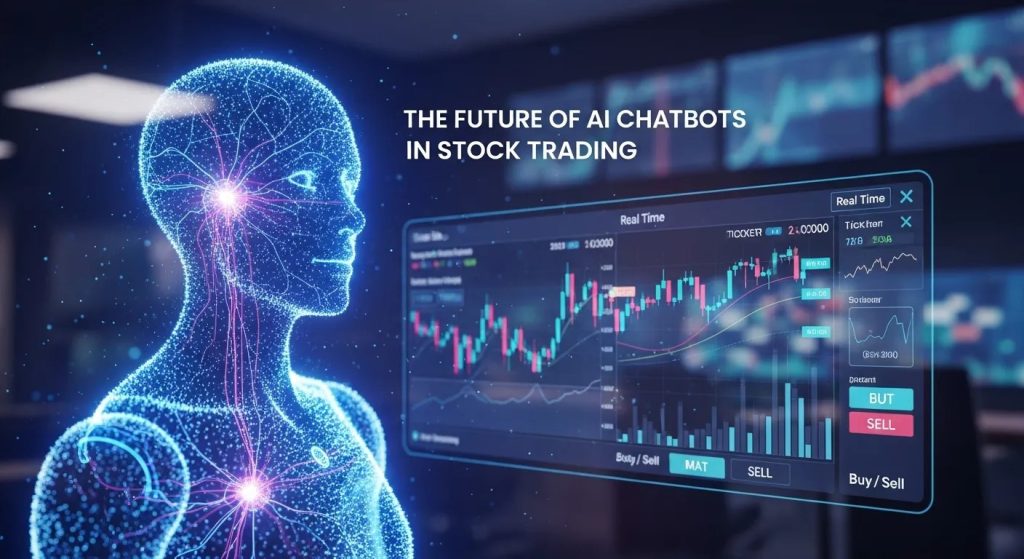
Looking ahead, the future of AI chatbots for stock analysis is promising. The integration of AR quantum computing and AR autonomous agents will create highly automated trading environments, where AI handles both analysis and execution seamlessly. Investors will have access to hyper-accurate forecasts, predictive simulations, and autonomous trading strategies all driven by intelligent chatbots.
Furthermore, as AI models continue to evolve, deep learning chatbots will become even more sophisticated, identifying subtle market patterns that elude human analysts. Emergency response chatbots will ensure rapid intervention during volatile events, while accessibility and multilingual features will make advanced trading tools available to a broader audience than ever before.
Conclusion
In today’s fast-paced financial markets, AI chatbots for stock analysis have become indispensable tools for investors seeking smarter, faster, and more accurate insights. By combining predictive analytics, real-time monitoring, and advanced technologies like deep learning chatbots, AR quantum computing, and AR autonomous agents, these chatbots provide a competitive edge in both decision-making and risk management.
Accessibility and user-friendliness are also critical advantages. With AI chatbots for accessibility and multilingual chatbots, investors of all experience levels and regions can navigate complex market data confidently. Additionally, the integration of emergency response chatbots ensures that traders can act quickly during volatile market events, minimizing potential losses.
Frequently Asked Questions
What are AI chatbots for stock analysis?
AI chatbots for stock analysis are intelligent tools that use artificial intelligence and machine learning to analyze market data, provide real-time insights, and assist traders in making data-driven investment decisions.
How do AI chatbots improve trading decisions?
By processing large datasets, monitoring trends, and offering predictive analytics, AI chatbots for stock analysis reduce human error and bias. They help traders anticipate market movements, optimize portfolios, and manage risk effectively.
Can beginners use AI chatbots for stock analysis?
Yes. Thanks to AI chatbots for accessibility, these tools are user-friendly and simplify complex financial data. Beginners can interact with chatbots to receive actionable insights without needing advanced trading knowledge.
Do AI chatbots support multiple languages?
Absolutely. Multilingual chatbots allow investors worldwide to access insights in their preferred language, ensuring accurate interpretation of market data and faster decision-making.
How do emergency response chatbots help in trading?
Emergency response chatbots monitor sudden market changes or anomalies and provide immediate alerts. When integrated with AI chatbots for stock analysis, they enable proactive actions to minimize financial risk during volatile events.
What role does deep learning play in AI chatbots?
Deep learning chatbots analyze complex patterns in historical and real-time data, improving the predictive accuracy of AI chatbots for stock analysis and helping traders anticipate potential stock movements.
How are AR quantum computing and AR autonomous agents used with chatbots?
AR quantum computing enables rapid data processing and immersive visualization of market trends. AR autonomous agents can execute trades automatically based on insights from AI chatbots for stock analysis, streamlining decision-making and strategy execution.
Are AI chatbots better than traditional stock analysis methods?
While traditional analysis relies on human interpretation, AI chatbots for stock analysis provide faster, more accurate, and data-driven insights. They reduce manual effort, minimize bias, and support informed trading strategies.