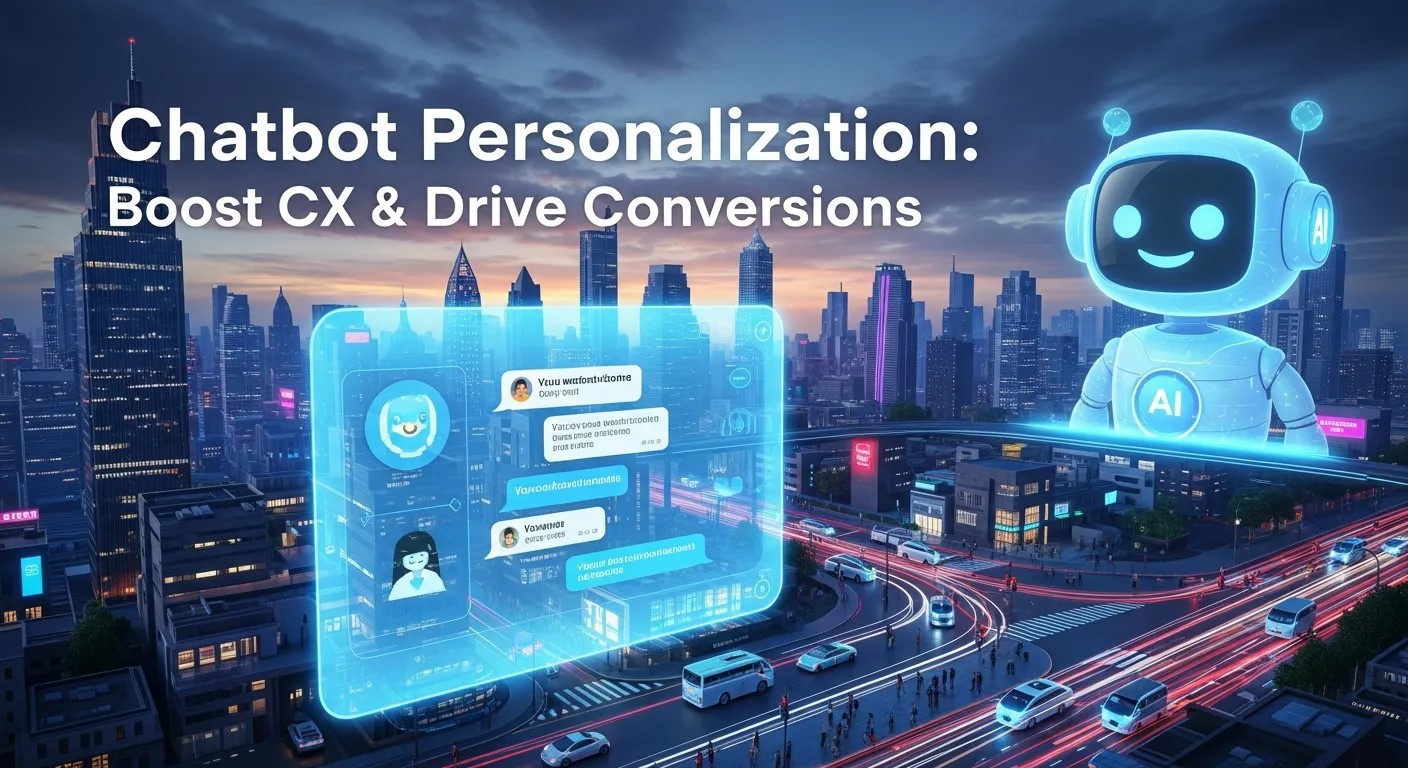
Chatbot Personalization enhances customer experience, engagement, and conversions. Leveraging AI, NLP, and AR technologies enables businesses to deliver tailored, context-aware interactions while improving efficiency, trust, and ROI across global markets and diverse customer segments.
Introduction to Chatbot Personalization
In the evolving digital landscape, businesses are increasingly relying on Chatbot Personalization to enhance customer engagement and deliver experiences that feel tailored to each individual. By leveraging advanced algorithms, AI, and user data, these chatbots can analyze preferences, interaction history, and behavior patterns to provide highly relevant responses. The days of generic automated messaging are fading; today’s customers expect interactions that reflect their unique needs and context.
One of the core advantages of Automated Chatbot Marketing lies in its ability to reach customers at the right time with personalized messages. By integrating personalization into chat interfaces, brands can recommend products, answer queries, and guide users along the purchase journey with far greater accuracy. Companies that adopt this approach often see improved conversion rates and stronger customer loyalty, as users feel understood and valued in every interaction.
The application of AI-NLP Chatbot Translation further expands the capabilities of personalized chatbots. Businesses operating across borders can deliver localized experiences without hiring extensive support teams. These AI-driven systems detect user intent in multiple languages, ensuring clarity and precision in communication. The combination of Chatbot Personalization with multilingual support empowers brands to serve global audiences while maintaining a consistent level of quality in each conversation.
In addition to marketing and translation, AI Chatbots in Market Research are providing valuable insights into customer behavior. Personalized interactions allow chatbots to gather data subtly, understanding trends, preferences, and pain points. This information not only optimizes the chatbot’s responses but also informs broader business strategies, from product development to marketing campaigns. Organizations that embrace this dual functionality often gain a competitive edge by being both reactive and proactive in their customer engagement.
Another critical aspect of Chatbot Marketing for Profit is trust. Transparent AI Chatbots enhance credibility by providing clear, reliable, and accurate responses. Users are more likely to engage and convert when they feel the chatbot is trustworthy and capable of addressing their needs. Integrating transparency with personalization creates an experience that feels genuinely human, even though the interaction is powered by AI.
Emerging technologies like Neural Networks in AR and Industrial AR Applications are beginning to intersect with chatbots, adding an additional layer of innovation. For example, AR-enabled interfaces combined with personalized chatbot responses can guide users through complex processes or product demonstrations, creating an immersive, informative, and highly customized experience. Such integrations highlight the future potential of Chatbot Personalization, bridging AI, AR, and data-driven insights to elevate the way businesses interact with customers.
Key Benefits of Chatbot Personalization
| Benefit | Description | Example Use Case |
|---|---|---|
| Enhanced Customer Experience | Tailored responses increase satisfaction | E-commerce platforms delivering product suggestions |
| Increased Conversion Rates | Personalized guidance drives sales | SaaS onboarding and upsell messages |
| Operational Efficiency | Automates routine queries and reduces human workload | Customer support in banking or IT services |
| Market Insights | Collects data to improve future interactions | Feedback collection and trend analysis |
By combining these advantages, businesses can provide experiences that are not only efficient but also engaging and highly relevant. Chatbot Personalization is no longer a luxury; it is an essential strategy for organizations looking to thrive in an increasingly competitive, customer-driven marketplace.
Effective Strategies for Chatbot Personalization
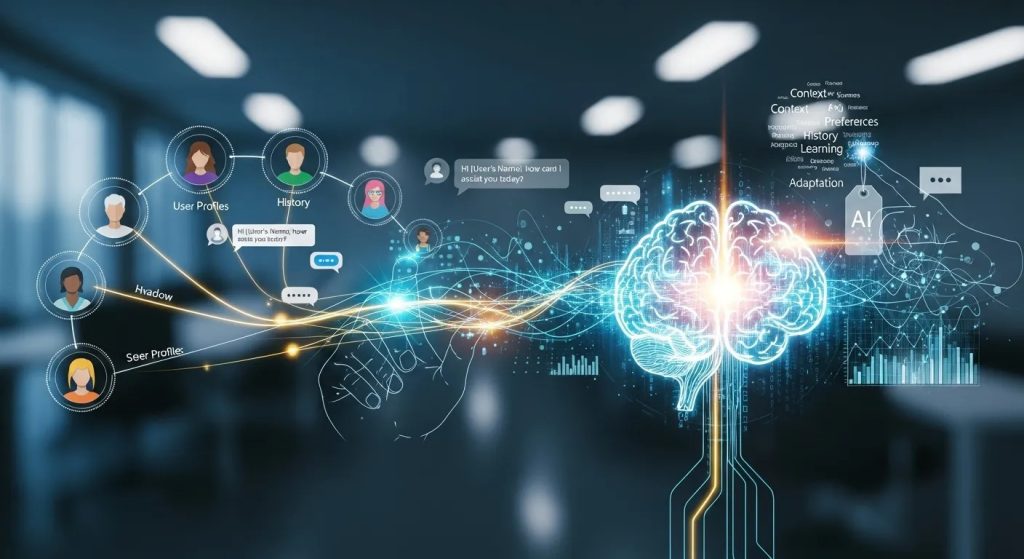
Implementing Chatbot Personalization requires a thoughtful strategy that balances automation with genuine human-like interaction. One key approach is leveraging Automated Chatbot Marketing to segment users based on behavior, demographics, and preferences. By analyzing click patterns, browsing history, and prior interactions, chatbots can deliver contextually relevant messages that increase engagement. For instance, e-commerce platforms can automatically suggest complementary products or provide targeted promotions, making each conversation feel uniquely tailored.
Another critical component is AI-NLP Chatbot Translation, which allows chatbots to understand and respond in multiple languages. Businesses serving international audiences benefit from this technology, as it ensures accurate communication without relying on manual translation. The integration of NLP enables chatbots to recognize slang, idioms, and local expressions, creating a more natural and relatable interaction. Combining Chatbot Personalization with multilingual capabilities not only broadens reach but also strengthens customer trust and satisfaction.
In market research, AI Chatbots in Market Research provide invaluable insights by capturing customer sentiment and behavior during conversations. Personalized chatbots can ask subtle, context-aware questions that reveal user preferences and pain points. This data can then inform marketing campaigns, product improvements, and service offerings. By aligning personalization with research, businesses create a feedback loop that continuously enhances customer experiences while driving more informed decision-making.
To maximize revenue, companies are exploring Chatbot Marketing for Profit. Personalized chatbots can deliver targeted upsells, cross-sells, or subscription recommendations at the optimal moment in the customer journey. The key is subtlety; the chatbot must appear helpful, not pushy. Integrating Chatbot Personalization into these strategies ensures that offers are relevant, timely, and tailored to the individual, boosting conversion rates and overall profitability.
Technological innovation is also expanding the capabilities of personalized chatbots. Transparent AI Chatbots emphasize clarity and accountability, showing users why certain suggestions are made and maintaining a trustworthy interaction. Additionally, the intersection of Neural Networks in AR with chatbots is opening new avenues for immersive experiences. For example, an AR interface can guide a customer through a product demonstration while a personalized chatbot explains features, answers questions, and provides contextual recommendations. Similarly, Industrial AR Applications can incorporate chatbots to assist technicians with step-by-step guidance, reducing errors and increasing efficiency.
Tools and Platforms for Implementing Chatbot Personalization
| Tool/Platform | Key Features | Best Use Case |
|---|---|---|
| Dialogflow | NLP, multi-language support, integration with CRM | Customer support for SaaS |
| ManyChat | Automated messaging, segmentation, marketing campaigns | E-commerce promotions |
| IBM Watson Assistant | AI-driven personalization, transparent reporting | Enterprise-level customer support |
| Rasa | Open-source, customizable AI chatbots | Market research and surveys |
Using these tools, businesses can combine analytics, automation, and personalization to deliver exceptional user experiences. By strategically implementing Chatbot Personalization, companies create interactions that are relevant, efficient, and emotionally resonant, ultimately fostering stronger relationships with customers.
Real-World Applications of Chatbot Personalization
The power of Chatbot Personalization is most evident when examining how businesses apply it across different industries. Retail brands, for instance, are leveraging Automated Chatbot Marketing to create dynamic shopping experiences. A user browsing an online store may receive personalized product suggestions, promotional offers, or reminders about items left in their cart. By analyzing past purchases and browsing behavior, chatbots provide interactions that feel human-like, helping brands improve engagement and conversion rates.
Global companies benefit immensely from AI-NLP Chatbot Translation capabilities. For businesses with international audiences, language barriers often hinder effective customer service. Personalized chatbots that understand multiple languages can respond instantly to inquiries, process transactions, and provide support without human intervention. Combining this with Chatbot Personalization ensures that customers not only receive accurate answers but also enjoy a contextualized experience that reflects their preferences and prior interactions.
In addition to commerce, AI Chatbots in Market Research offer businesses a unique opportunity to understand customer behavior more deeply. Personalized chatbots can gather feedback, conduct surveys, and analyze sentiment in real-time, providing actionable insights without interrupting the user experience. For example, a tech company launching a new app might use personalized chatbots to identify common pain points or desired features, enabling the development team to prioritize enhancements that resonate most with users.
Marketing-focused organizations are exploring Chatbot Marketing for Profit strategies, where personalized bots drive revenue by delivering context-aware offers. Unlike generic push notifications or email blasts, these chatbots provide individualized recommendations based on a user’s history, preferences, and engagement patterns. Businesses report higher conversion rates, increased average order values, and stronger brand loyalty when personalization is applied intelligently.
Transparency and trust are also critical in adoption. Transparent AI Chatbots provide users with clear explanations for recommendations, helping customers feel confident in their interactions. When users understand why certain suggestions or actions are presented, they are more likely to engage and convert. This approach complements Chatbot Personalization, creating experiences that are both trustworthy and individually relevant.
The integration of Neural Networks in AR is creating new horizons for personalized customer experiences. Imagine a customer exploring a virtual showroom where a personalized chatbot provides real-time guidance, answers questions, and highlights products based on prior preferences. Similarly, Industrial AR Applications benefit from personalization in training and maintenance scenarios. Chatbots can assist technicians step-by-step, providing instructions tailored to the specific machinery, user skill level, and previous interactions.
Measuring ROI with Chatbot Personalization
| Metric | How Personalization Helps | Example |
|---|---|---|
| Conversion Rate | Suggests relevant products/services | E-commerce upsells |
| Customer Retention | Personalized support increases satisfaction | SaaS subscription renewals |
| Average Response Time | AI-driven responses reduce wait times | Banking support chat |
| Cost Efficiency | Automation reduces human workload | IT service desks |
By monitoring these key metrics, businesses can quantify the value of Chatbot Personalization and make informed decisions about optimizing strategies and scaling solutions.
Best Practices for Implementing Chatbot Personalization

To maximize the effectiveness of Chatbot Personalization, businesses must adopt structured strategies that balance automation with user-centered design. One of the primary best practices is segmenting users based on behavior, preferences, and demographic data. By analyzing past interactions, browsing history, and purchase patterns, personalized chatbots can deliver responses that feel genuinely tailored to the individual. This ensures that each conversation aligns with the user’s expectations and drives engagement.
Integrating Automated Chatbot Marketing with these personalized strategies enhances both marketing efficiency and relevance. For example, an online retailer can automatically recommend complementary products during the checkout process or follow up with timely promotional offers. These small yet targeted interactions, powered by Chatbot Personalization, create a sense of individualized attention that encourages conversions and builds loyalty.
Leveraging AI-NLP Chatbot Translation is another critical best practice, especially for companies operating across multiple regions. Multilingual support allows chatbots to communicate in the customer’s preferred language, providing clarity and improving overall satisfaction. Coupled with personalization, translation ensures that recommendations, offers, and support messages are not only accurate but contextually relevant, enhancing the customer experience on a global scale.
Businesses can also use AI Chatbots in Market Research to refine their personalization strategies. By collecting and analyzing user feedback during interactions, chatbots can identify trends, preferences, and pain points. This data helps marketers tailor campaigns, product recommendations, and customer journeys more effectively. For instance, a software company might discover recurring questions about a feature and proactively address them through personalized chatbot guidance.
To drive profitability, Chatbot Marketing for Profit strategies must focus on timely, relevant, and actionable messaging. Personalized chatbots can detect the optimal moment to suggest upsells, cross-sells, or subscription options, maximizing revenue while maintaining a positive user experience. When implemented strategically, these interactions feel natural rather than intrusive, increasing conversion rates without alienating customers.
Transparency is equally important. Transparent AI Chatbots foster trust by clearly explaining the reasoning behind recommendations or actions. Users who understand why certain options are presented are more likely to engage confidently and return for future interactions. Pairing transparency with Chatbot Personalization ensures a balance between automation and user trust, creating a more human-like interaction.
Finally, innovation through Neural Networks in AR and Industrial AR Applications can elevate personalized experiences even further. For example, in a manufacturing environment, a personalized chatbot integrated with AR can provide step-by-step instructions tailored to a technician’s skill level, prior experience, and the specific machinery being serviced. Similarly, retail environments can use AR-assisted chatbots to offer immersive, personalized product demonstrations, enhancing engagement and customer satisfaction.
Implementation Tips
| Tip | Description | Benefit |
|---|---|---|
| Start Small | Begin with core interactions before expanding | Easier monitoring and optimization |
| Leverage Analytics | Track behavior and responses to improve personalization | More relevant suggestions |
| Prioritize Multilingual Support | Ensure AI-NLP Chatbot Translation is accurate | Expanded global reach |
| Maintain Transparency | Explain chatbot recommendations | Builds trust and engagement |
| Continuously Test | A/B test scripts and flows for effectiveness | Optimized conversion and CX |
By following these best practices, businesses can ensure that Chatbot Personalization is not only effective but scalable and adaptable to evolving customer needs.
Advanced Techniques for Chatbot Personalization
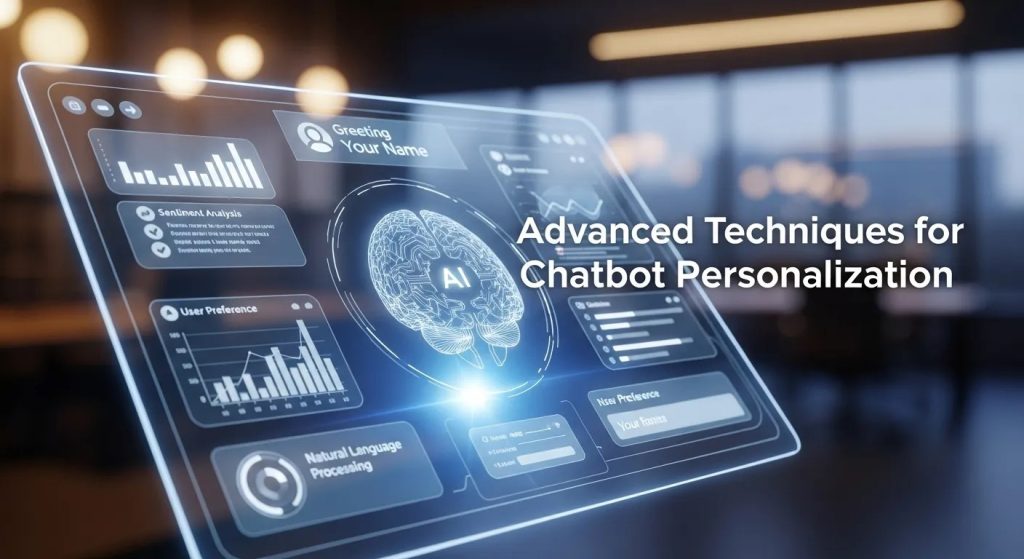
As businesses seek to refine customer engagement, Chatbot Personalization is evolving beyond basic segmentation and rule-based automation. One advanced technique involves leveraging behavioral analytics to predict user needs. By analyzing click patterns, browsing history, and interaction timing, personalized chatbots can anticipate questions and provide proactive suggestions. For instance, a travel company’s chatbot can recommend destinations or services based on a user’s previous searches, seasonal trends, and preferences, making the experience feel predictive rather than reactive.
The integration of Automated Chatbot Marketing further enhances these capabilities. Advanced personalization enables chatbots to adjust messaging based on the customer lifecycle stage, from awareness to purchase. Marketing automation can trigger context-sensitive messages, delivering promotions or helpful tips exactly when the user is most receptive. The result is a seamless interaction that feels both timely and relevant, reinforcing the effectiveness of Chatbot Personalization in driving conversions.
Personalization can also be enhanced through AI Chatbots in Market Research, where chatbots collect and analyze large datasets from real-time interactions. These insights inform dynamic personalization strategies, allowing businesses to refine recommendations and support responses. For example, an e-commerce chatbot may learn that a specific demographic prefers eco-friendly products and adjust messaging accordingly, increasing the likelihood of a positive conversion.
Revenue-focused organizations utilize Chatbot Marketing for Profit by integrating predictive analytics. Personalized chatbots can identify upsell and cross-sell opportunities during conversations, presenting offers in a subtle and relevant manner. By aligning personalization with purchase intent, businesses not only improve conversion rates but also maximize customer lifetime value.
Transparency remains a cornerstone of trust. Transparent AI Chatbots provide explanations for their suggestions, ensuring users understand the reasoning behind recommendations. When combined with Chatbot Personalization, this approach fosters confidence, encouraging users to engage more deeply and repeatedly.
Looking ahead, technologies like Neural Networks in AR and Industrial AR Applications are poised to redefine personalization further. Imagine a customer using an AR interface to explore a new product line while a personalized chatbot provides interactive guidance, answers questions, and adapts responses based on previous interactions. In industrial settings, technicians can receive real-time, personalized instructions over AR, with chatbots adjusting guidance based on skill level, task complexity, and historical performance. Such innovations illustrate the transformative potential of Chatbot Personalization, bridging AI, AR, and data-driven insights to elevate the user experience.
Future Trends in Chatbot Personalization
| Trend | Description | Impact |
|---|---|---|
| Predictive Personalization | AI predicts user needs before they ask | Increases engagement and conversions |
| Multilingual AI Expansion | Advanced AI-NLP Chatbot Translation | Expands global market reach |
| AR Integration | Neural Networks in AR + personalized bots | Immersive, interactive experiences |
| Data-Driven Insights | AI Chatbots in Market Research | Continuous improvement of personalization |
| Profit Optimization | Chatbot Marketing for Profit with AI analytics | Maximizes ROI and customer value |
By adopting these advanced techniques, businesses can ensure that Chatbot Personalization remains relevant, impactful, and ahead of competitors in an increasingly customer-centric digital environment.
Conclusion
Chatbot Personalization has become an essential strategy for businesses seeking to enhance customer experience, boost engagement, and drive conversions. By leveraging advanced technologies such as Automated Chatbot Marketing, AI-NLP Chatbot Translation, and Neural Networks in AR, companies can deliver context-aware, timely, and relevant interactions. Personalized chatbots not only improve operational efficiency but also foster trust through transparency and human-like communication. As industries adopt these AI-driven solutions, combining data insights, predictive analytics, and AR integration ensures that interactions remain engaging, immersive, and impactful, positioning businesses for long-term success in a competitive, customer-focused digital landscape.
Frequently Asked Questions
What is Chatbot Personalization?
Chatbot Personalization refers to tailoring chatbot interactions based on user behavior, preferences, and context to create a more relevant and engaging experience.
How does AI-NLP Chatbot Translation help?
It allows chatbots to understand and respond in multiple languages, ensuring accurate and context-aware communication for global users.
Can Chatbot Personalization improve conversion rates?
Yes, personalized chatbots provide timely suggestions, recommendations, and support, which increases engagement and drives higher conversions.
Are Transparent AI Chatbots necessary?
Transparency builds trust by explaining recommendations, making users more confident in interacting with the chatbot.
How is AR integrated with personalized chatbots?
AR can create immersive experiences where chatbots provide interactive guidance and real-time personalized instructions, enhancing user engagement.
What industries benefit most from Chatbot Personalization?
Retail, e-commerce, SaaS, banking, healthcare, and industrial sectors all benefit by improving CX, efficiency, and ROI through personalized interactions.