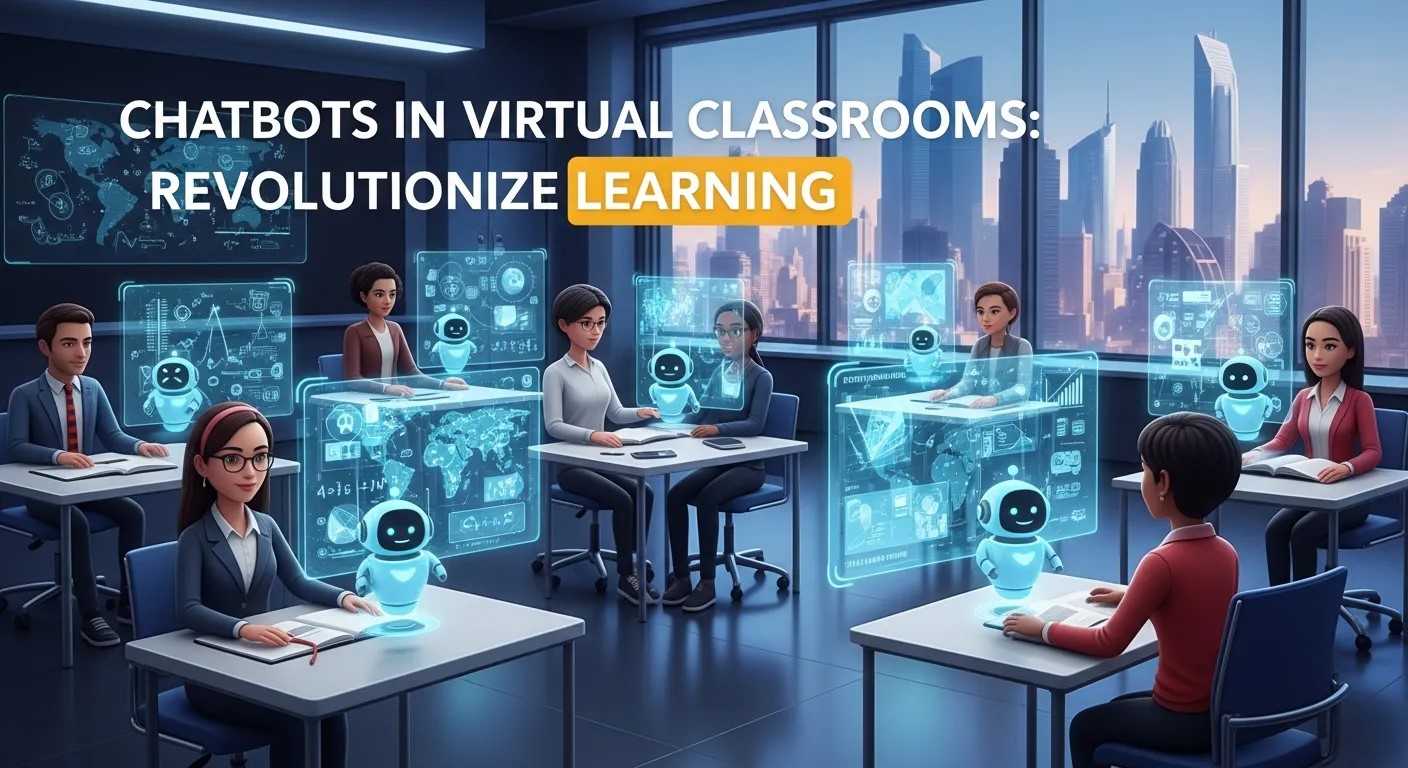
Chatbots in Virtual Classrooms enhance learning by providing personalized guidance, instant feedback, and interactive experiences. Integrating AI technologies improves engagement, accessibility, and collaboration, empowering students and supporting teachers for a more efficient, inclusive, and modern educational environment.
The Rise of Chatbots in Virtual Classrooms
The integration of technology into education has transformed traditional learning environments. Among the most revolutionary tools are chatbots, which have begun to redefine the way students interact with educational content. Chatbots in Virtual Classrooms are no longer just a futuristic concept they are actively enhancing engagement, accessibility, and personalized learning. These AI-driven assistants respond instantly to student queries, provide feedback, and facilitate interactive lessons, allowing educators to focus on more complex aspects of teaching.
In today’s fast-paced digital age, students expect a seamless, responsive, and adaptive learning experience. Here, Chatbots in Virtual Classrooms serve as a bridge between conventional pedagogy and modern technological capabilities, offering learners a tailored educational journey that aligns with their individual pace and learning style.
The use of chatbots is not limited to answering questions. They can guide students through structured exercises, monitor progress, and even suggest resources for deeper exploration. This mirrors broader trends in AI Conversational Commerce, where personalization and interactivity drive engagement and satisfaction, highlighting the natural appeal of AI-driven solutions in contexts beyond traditional business.
How Chatbots Enhance Engagement and Interaction
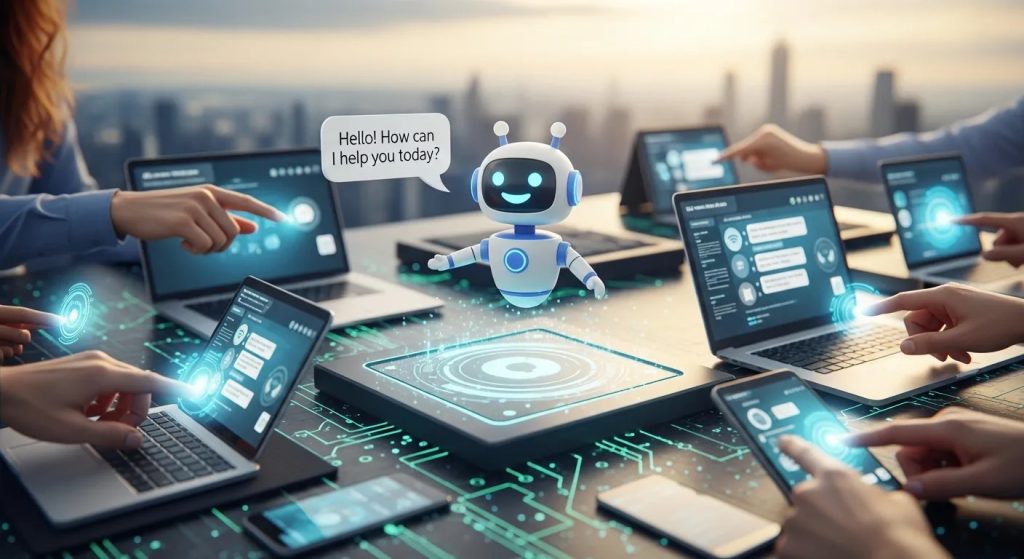
A major challenge in virtual education is keeping students engaged. Passive video lectures or static learning materials often lead to reduced attention spans and lower retention rates. By incorporating Chatbots in Virtual Classrooms, educators can transform these passive experiences into dynamic interactions.
Chatbots can simulate real-life scenarios, prompting students to think critically and respond to challenges in real time. This approach is similar to applications seen in AI vs Human in Market Research, where AI-driven insights complement human intuition to make decision-making more interactive and efficient. In classrooms, chatbots allow a comparable blend of automation and human-like responsiveness, fostering deeper cognitive engagement among learners.
Key Benefits of Chatbot Integration
| Benefit | Description | Example Use Case |
|---|---|---|
| Instant Feedback | Students receive immediate responses to queries | Math problem solutions, essay suggestions |
| Personalized Learning | Adjusts content based on student performance | Adaptive quizzes and reading materials |
| Gamification | Encourages participation through interactive challenges | Vocabulary games or coding exercises |
| Accessibility | Supports students with disabilities or language barriers | Text-to-speech and multilingual capabilities |
By incorporating these capabilities, Chatbots in Virtual Classrooms do more than automate routine tasks they create an environment where learning feels engaging, responsive, and supportive.
Personalized Learning and Adaptive Education
One of the standout advantages of Chatbots in Virtual Classrooms is their ability to provide personalized learning pathways. Using data from student interactions, chatbots can adapt lessons to target specific weaknesses or advance students who are ready for more complex topics. This mirrors innovations in AI Chatbots for Stock Analysis, where AI systems analyze individual patterns to provide tailored recommendations and predictive insights.
Adaptive learning is particularly effective for diverse classrooms, where students may have vastly different skill levels and learning preferences. For instance, a student struggling with algebra can receive extra exercises and explanations, while another may be challenged with enrichment activities. This individualized attention would be nearly impossible for a single teacher to provide in large virtual classrooms, making chatbots a practical solution for scalable education.
The Role of AI in Driving Classroom Efficiency
Chatbots in Virtual Classrooms are part of a broader ecosystem of AI-driven educational tools. AI not only enhances interaction but also improves administrative efficiency, automates grading, and monitors student progress over time. This seamless integration of AI mirrors trends in AR Quantum Computing, where complex systems operate in harmony with user interactions to create adaptive, highly responsive environments.
The efficiency gains extend to educators as well. By delegating routine queries and administrative tasks to chatbots, teachers can dedicate more time to lesson planning, mentorship, and higher-order teaching activities. This shift reduces burnout and increases overall instructional quality, while students benefit from immediate guidance and ongoing support.
Integrating Advanced Technologies with Chatbots
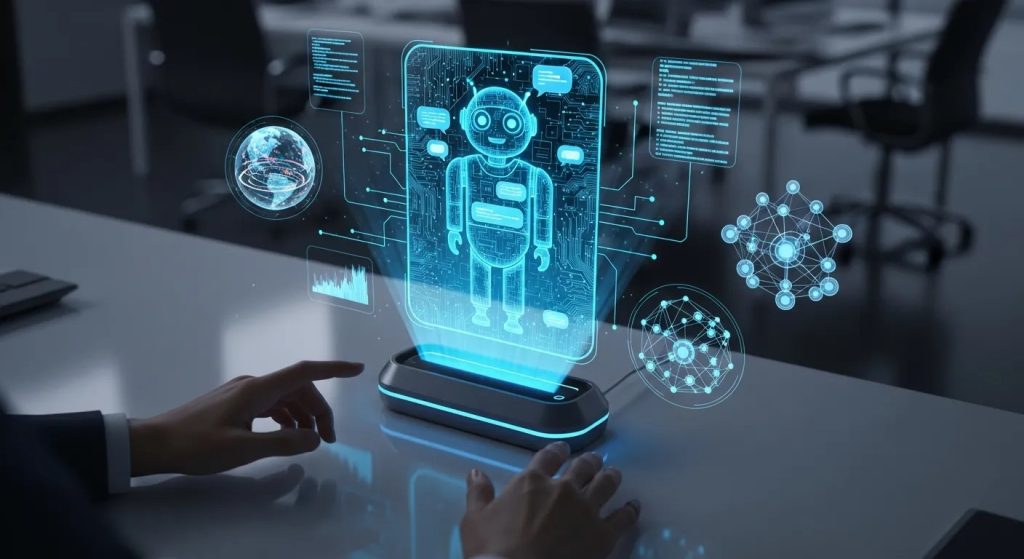
Beyond traditional chatbot functionalities, virtual classrooms are increasingly experimenting with immersive technologies. By combining Chatbots in Virtual Classrooms with AR Autonomous Agents, educators can create interactive, three-dimensional learning experiences. Students can explore virtual laboratories, historical sites, or scientific simulations while receiving real-time guidance from AI-driven agents.
Such integrations make abstract concepts tangible, improve retention, and foster experiential learning. For example, a biology class might allow students to dissect a virtual frog under the supervision of a chatbot that explains each step, ensuring clarity and engagement simultaneously.
Practical Implementation
Consider a mid-sized online university implementing Chatbots in Virtual Classrooms for a large introductory course. The chatbot serves as a first line of interaction, answering FAQs, guiding students through assignments, and providing additional resources. Over a semester, the university observed:
- 35% reduction in routine queries sent to instructors
- 25% increase in assignment completion rates
- Enhanced student satisfaction, particularly among learners needing additional support
Interestingly, these outcomes echo findings in AI Conversational Commerce, where engagement metrics significantly improve when AI systems interact intelligently with users, subtly guiding behavior without direct human intervention.
Advanced Use Cases of Chatbots in Virtual Classrooms
Chatbots in Virtual Classrooms are proving to be versatile tools that go beyond answering questions and grading assignments. Their adaptability allows them to support diverse subjects, from STEM to humanities, enhancing student engagement and comprehension.
STEM Education
In science, technology, engineering, and mathematics courses, chatbots can simulate experiments, guide problem-solving steps, and offer instant clarifications. For example, during a physics lesson, a student struggling with projectile motion can interact with a chatbot that explains formulas, visualizes trajectories, and suggests practice problems tailored to the student’s progress.
Similarly, lessons in computer science can leverage AI Chatbots for Stock Analysis-style algorithms for predictive modeling exercises, teaching students practical applications of AI and data analytics while reinforcing conceptual understanding. By introducing these interactive experiences, Chatbots in Virtual Classrooms allow learners to experiment safely and learn through trial-and-error without fear of real-world consequences.
Humanities and Social Sciences
In literature, history, and social sciences, chatbots serve as discussion facilitators. Students can ask nuanced questions about historical events, literary themes, or social theories and receive thoughtful, context-aware responses. For instance, a chatbot might guide students through an analysis of a classic novel, helping them understand symbolism, character development, and thematic depth.
This approach echoes trends seen in AI vs Human in Market Research, where human intuition is complemented by AI-generated insights, resulting in richer interpretations and actionable understanding. By blending AI-driven guidance with critical thinking exercises, chatbots foster deeper comprehension and analytical skills in humanities education.
Gamification and Interactive Learning
Gamification is a powerful strategy to keep learners engaged, and Chatbots in Virtual Classrooms excel in this area. By incorporating quizzes, challenges, and reward systems, chatbots turn routine learning activities into interactive experiences.
For example:
- A language-learning chatbot can track vocabulary progress and challenge students with timed word-matching games.
- A mathematics chatbot can create competitive problem-solving exercises, awarding badges for milestones.
- Science chatbots can host virtual lab challenges where students complete experiments in a game-like format.
These methods mirror AI Conversational Commerce principles, where interactive, engaging interfaces drive user retention and satisfaction. The psychology behind gamified chatbots leverages intrinsic motivation, making learning feel rewarding and enjoyable.
Supporting Accessibility and Inclusive Learning
Another critical advantage of Chatbots in Virtual Classrooms is their ability to support inclusive education. Students with disabilities, learning differences, or language barriers benefit immensely from AI-driven virtual assistance. Chatbots can provide:
- Text-to-speech and speech-to-text support for visually or hearing-impaired students
- Multilingual explanations for non-native speakers
- Adaptive pacing for learners who require additional time or reinforcement
By addressing these accessibility needs, chatbots make virtual education equitable, ensuring that all students can participate fully and meaningfully. This accessibility is similar in principle to the adaptive capabilities found in AR Quantum Computing, where complex systems are tailored to user needs for maximum engagement and efficiency.
Integrating Data Analytics and Performance Tracking

Chatbots in Virtual Classrooms don’t just teach they gather data. Every interaction provides insights into student behavior, comprehension, and engagement patterns. Teachers can analyze this data to identify areas where students struggle, adjust lesson plans, and implement targeted interventions.
For instance, a virtual classroom using chatbots may notice that a majority of students fail a specific quiz question. The system can alert the teacher to revisit that topic or provide additional resources. This proactive, data-driven approach mirrors practices in AI Chatbots for Stock Analysis, where patterns in user behavior guide predictive recommendations and strategic decisions.
Collaborative Learning and Peer Interaction
Although chatbots automate many tasks, they also facilitate collaboration. By coordinating group activities, moderating discussion boards, and providing prompts for peer review, chatbots foster social learning in virtual environments.
For example:
- In project-based courses, chatbots can assign tasks based on student strengths and track progress.
- In writing-intensive classes, chatbots can guide peer feedback sessions, ensuring constructive and timely reviews.
By enhancing collaboration, Chatbots in Virtual Classrooms combine AI efficiency with human creativity, offering an enriched learning experience that encourages teamwork and communication skills.
Integration with Emerging Technologies
Beyond standard virtual classrooms, chatbots are increasingly paired with emerging technologies like augmented and virtual reality. The synergy between Chatbots in Virtual Classrooms and AR Autonomous Agents creates immersive learning environments where students can interact with simulations, explore 3D models, or navigate historical recreations while receiving real-time guidance from AI.
For example:
- A biology class can explore cellular structures in 3D, guided by a chatbot that explains each component.
- An architecture course can simulate building designs, with chatbots providing instant feedback on structural calculations.
These integrations not only make learning interactive but also develop students’ spatial reasoning and problem-solving skills in ways that traditional teaching methods cannot achieve.
Addressing Challenges and Ensuring Ethical Use
While the advantages of Chatbots in Virtual Classrooms are clear, it is essential to consider challenges and ethical concerns. Data privacy, algorithmic bias, and over-reliance on AI are key considerations. Educators must ensure that:
- Student data is securely stored and used responsibly
- AI responses are monitored for accuracy and inclusivity
- Chatbots complement human teaching rather than replace critical human judgment
By addressing these challenges proactively, schools can harness the full potential of chatbots while maintaining ethical and pedagogical integrity.
Future Trends in Chatbots for Virtual Classrooms
The landscape of digital education continues to evolve, and Chatbots in Virtual Classrooms are at the forefront of this transformation. Advances in AI, natural language processing, and adaptive learning systems are pushing these tools beyond simple Q&A functionalities to become integral components of the educational ecosystem.
One emerging trend is the integration of predictive learning analytics. By analyzing student interactions, chatbots can anticipate learning gaps before they occur and suggest tailored interventions. For example, a student repeatedly struggling with a math concept might be automatically offered supplementary exercises or interactive tutorials. In this way, Chatbots in Virtual Classrooms function not only as reactive tools but as proactive learning assistants.
Another important trend is the fusion of chatbots with AR Quantum Computing technologies. By combining AI-driven guidance with immersive simulations, students can interact with complex concepts in real time. Virtual laboratories, historical site recreations, and interactive physics simulations become more intuitive, while the chatbot guides and explains every step. This integration exemplifies how Chatbots in Virtual Classrooms are evolving into fully adaptive educational companions.
Cross-Industry Lessons: AI in Action
Educational chatbots are not developing in isolation. Lessons from other AI-driven industries provide valuable insights into maximizing their effectiveness. In AI Conversational Commerce, for instance, personalized engagement strategies keep customers interacting with platforms longer. Similarly, Chatbots in Virtual Classrooms can be designed to maintain student engagement over extended periods by using personalized learning paths, timely nudges, and interactive exercises.
In financial sectors, AI Chatbots for Stock Analysis leverage data patterns to provide actionable insights. Translating this into education, chatbots can analyze student behavior and provide recommendations for study schedules, content review, and resource utilization. By silently applying predictive analytics, Chatbots in Virtual Classrooms become intelligent mentors rather than passive tools.
Meanwhile, research practices like AI vs Human in Market Research show the value of combining human judgment with AI insights. In classrooms, this translates into teachers and chatbots collaborating teachers focus on mentorship and critical thinking facilitation, while chatbots handle repetitive tasks and immediate guidance. Such synergy enhances both learning efficiency and educational quality.
Strategies for Implementing Chatbots in Virtual Classrooms
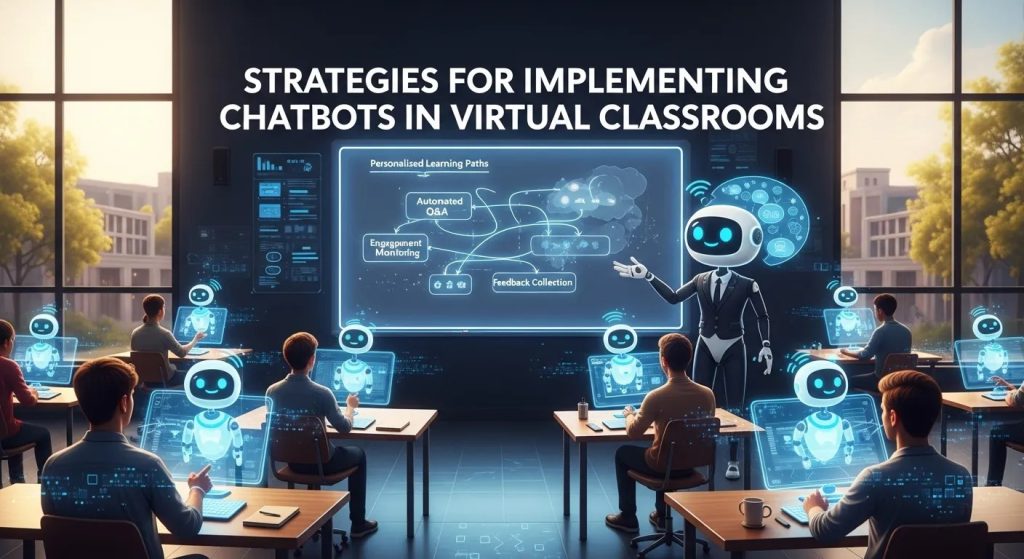
Successful integration of Chatbots in Virtual Classrooms requires careful planning and execution. Here are some proven strategies:
1. Define Learning Objectives
Clearly outline the goals for chatbot integration. Are they meant to provide instant Q&A support, track student progress, facilitate group projects, or all of the above? Understanding objectives ensures that the chatbot design aligns with educational outcomes.
2. Ensure Seamless Integration
The chatbot should integrate naturally with existing virtual classroom platforms, learning management systems, and digital resources. Avoid creating standalone tools that disrupt workflow. The smoother the integration, the more likely students and teachers will adopt the technology.
3. Prioritize Personalization
Leveraging adaptive learning is key. Chatbots in Virtual Classrooms should be able to adjust lesson difficulty, suggest resources, and provide exercises based on individual performance. Personalization drives engagement and retention.
4. Focus on Accessibility
Incorporate multilingual support, text-to-speech, and accessibility features for differently-abled students. By making virtual classrooms inclusive, chatbots can reach a wider audience and enhance learning outcomes for all students.
5. Monitor and Refine
Use interaction data to continuously improve chatbot performance. Monitor which types of queries are most common, where students struggle, and how responses can be optimized. Similar to AR Autonomous Agents, iterative refinement ensures that chatbots remain adaptive, effective, and relevant.
Enhancing Collaboration with Chatbots
Beyond individual learning, Chatbots in Virtual Classrooms play a significant role in fostering collaboration. They can coordinate group activities, moderate discussions, and guide peer-review sessions. For example, during a collaborative history project, a chatbot can assign roles, track group progress, and provide additional resources, ensuring equitable participation.
Furthermore, chatbots can act as a bridge between students and educators. By flagging students who may need extra help or identifying trends in class performance, Chatbots in Virtual Classrooms enable teachers to intervene proactively, improving overall learning outcomes.
Real-World Implementation Examples
Several institutions have successfully deployed Chatbots in Virtual Classrooms to enhance learning:
University of Online Learning integrated chatbots to assist in large-scale introductory courses, resulting in a 30% reduction in student inquiries to instructors.
Global Virtual Academy combined chatbots with immersive simulations, allowing students to explore virtual science labs under guided AI supervision.
STEM Learning Hub utilized chatbots to provide personalized exercises for coding and robotics courses, improving assignment completion rates by 25%.
These cases demonstrate that when implemented thoughtfully, Chatbots in Virtual Classrooms can improve engagement, retention, and academic success while also reducing the workload for educators.
Balancing AI and Human Interaction
Even as Chatbots in Virtual Classrooms become more sophisticated, human guidance remains essential. Teachers play a critical role in facilitating critical thinking, providing mentorship, and creating a supportive learning environment. Chatbots complement rather than replace educators, allowing humans and AI to collaborate for optimal educational outcomes.
The balance mirrors lessons from AI vs Human in Market Research, where AI handles data-driven tasks and humans provide insight, strategy, and empathy. In classrooms, this ensures that students benefit from the efficiency of AI while still receiving the nuanced guidance only human educators can provide.
Conclusion
Chatbots in Virtual Classrooms are transforming education by making learning interactive, personalized, and accessible. They provide instant feedback, adapt to student needs, and support collaboration across subjects. By integrating AI technologies like AR Autonomous Agents and drawing insights from areas such as AI Conversational Commerce and AI Chatbots for Stock Analysis, chatbots complement human teaching while enhancing engagement. As schools adopt these tools, students benefit from a more dynamic and efficient learning environment. Chatbots in Virtual Classrooms are shaping the future of education, offering scalable, inclusive, and innovative solutions for modern learners.
Frequently Asked Questions
What are Chatbots in Virtual Classrooms?
They are AI-driven assistants that help students by answering questions, providing guidance, and personalizing learning in online education platforms.
How do chatbots improve student engagement?
Chatbots make lessons interactive through quizzes, instant feedback, and adaptive learning paths, keeping students motivated and involved.
Can chatbots support different subjects?
Yes, from STEM courses to humanities, chatbots provide tailored explanations, resources, and exercises to suit diverse learning needs.
Are chatbots a replacement for teachers?
No, they complement human educators by handling routine tasks, allowing teachers to focus on mentorship and critical thinking.
How do chatbots enhance accessibility?
They provide multilingual support, text-to-speech features, and adaptive pacing, ensuring inclusive learning for all students.