Machine learning is no longer just a buzzword in the tech industry; it’s reshaping how businesses operate, how products are built, and even how decisions are made across industries. Whether you’re an aspiring data scientist, a software developer looking to upskill, or simply curious about what machine learning entails, learning this cutting-edge technology is more accessible than ever.
The best part? You don’t need a massive budget or a background in computer science to get started. There are countless free resources available online to help you grasp the fundamentals of machine learning and even progress to an advanced level.
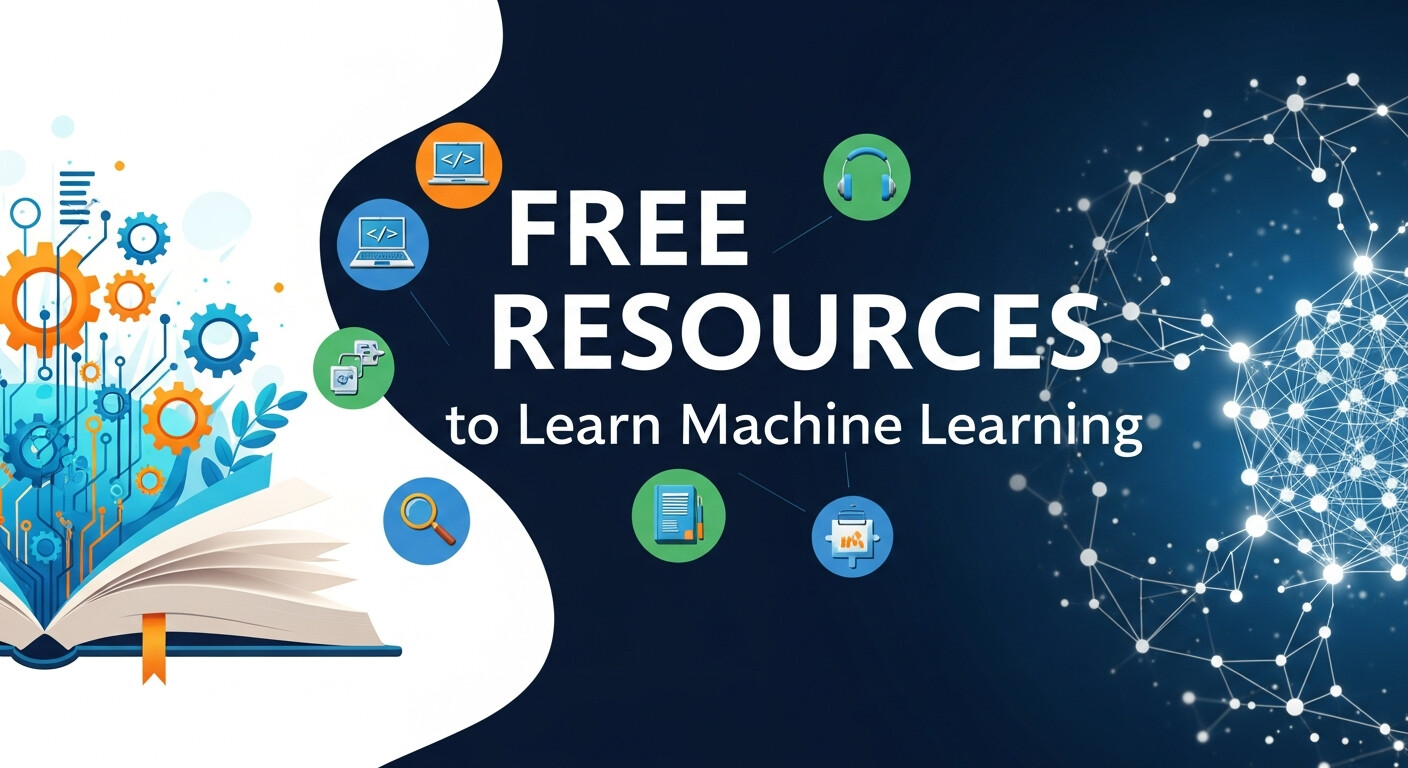
This guide will walk you through some of the best free resources for learning machine learning, whether you prefer courses, books, or hands-on practice.
What is Machine Learning
Before we get into the resources, it’s important to understand what machine learning really is. Simply put, machine learning is a subset of artificial intelligence that allows computers to learn from data without explicit programming. Instead of being manually coded for every single task, machine learning models analyze data, identify patterns, and make predictions or decisions.
Applications of machine learning span voice assistants, recommendation systems, fraud detection, and even autonomous vehicles. This technology is at the forefront of innovation in many fields, making it a highly valuable area to master. Read more about this topic: Best Free Resources to Learn Machine Learning
Why Learn Machine Learning

Why should you invest your time in learning machine learning? Here are some compelling reasons:
- Career Opportunities: Machine learning skills are in demand across industries, from tech and finance to healthcare and e-commerce.
- Problem-Solving Skills: Learning machine learning teaches you to analyze problems, work with data, and develop algorithmic solutions.
- Accessibility: With free, high-quality resources available online, anyone with an internet connection can learn machine learning at their own pace.
- Future-Proofing Your Skill Set: As industries lean more into automation and AI, expertise in machine learning will be a currency for career growth.
Now that we’ve established the why, it’s time to explore the how. Below are the best free resources available today to kickstart or advance your machine learning education.
Building a Strong Foundation Before Advanced Learning

Before diving into complex machine learning models, it’s important to build a solid foundation. Understanding basic concepts like data types, supervised vs. unsupervised learning, and model evaluation helps you progress faster later. Many beginners rush into advanced algorithms without fully grasping fundamentals, which often leads to confusion and frustration. Start by learning Python basics, simple statistics, and how data flows through a machine learning pipeline. A strong foundation allows you to understand why an algorithm works, not just how to run it. This approach improves problem-solving skills and prepares you to adapt as technologies evolve, making your learning journey smoother and more effective.
Importance of Hands-On Projects in Machine Learning
Theory alone is not enough to master machine learning. Hands-on projects play a crucial role in transforming knowledge into real skills. Working with real datasets helps you understand data cleaning, feature selection, model tuning, and performance evaluation. Projects also expose you to real-world challenges such as missing data, imbalanced classes, and noisy inputs. Even small projects like predicting house prices or analyzing customer behavior can significantly improve your confidence. Over time, these projects become valuable portfolio pieces that showcase your abilities to employers or clients. Practical experience reinforces learning and bridges the gap between academic knowledge and real-world application.
How Consistency Impacts Machine Learning Learning Curves
Machine learning is a marathon, not a sprint. Consistent practice is more important than long, irregular study sessions. Spending even 30–60 minutes daily reviewing concepts, writing code, or experimenting with models can lead to steady improvement. Consistency helps reinforce learning, reduce forgetfulness, and build problem-solving intuition. Many learners quit because they try to absorb too much information at once. Breaking topics into smaller goals—such as learning one algorithm per week—makes the process manageable. Over time, consistent effort compounds into deep understanding and practical expertise, making machine learning less intimidating and more rewarding.
Understanding Real-World Use Cases of Machine Learning
Learning machine learning becomes more meaningful when you understand how it’s applied in real-world scenarios. Businesses use machine learning for customer recommendations, demand forecasting, fraud detection, and personalized marketing. In healthcare, it assists in disease prediction and medical imaging. Finance relies on machine learning for risk analysis and automated trading. Understanding these use cases helps you connect theory to practice and choose a specialization aligned with your interests. It also helps you design projects that solve realistic problems. When learning is purpose-driven, motivation stays high and progress becomes more focused.
Common Mistakes Beginners Make in Machine Learning
Many beginners struggle in machine learning due to avoidable mistakes. One common issue is jumping straight into advanced models without understanding data preprocessing. Another is relying too heavily on libraries without knowing how algorithms work internally. Some learners also ignore evaluation metrics and assume higher accuracy always means better performance. Overfitting, lack of validation, and poor documentation are frequent pitfalls. Recognizing these mistakes early saves time and frustration. By focusing on fundamentals, experimenting carefully, and reviewing results critically, learners can avoid these traps and build stronger, more reliable machine learning models.
How Community Learning Accelerates Progress
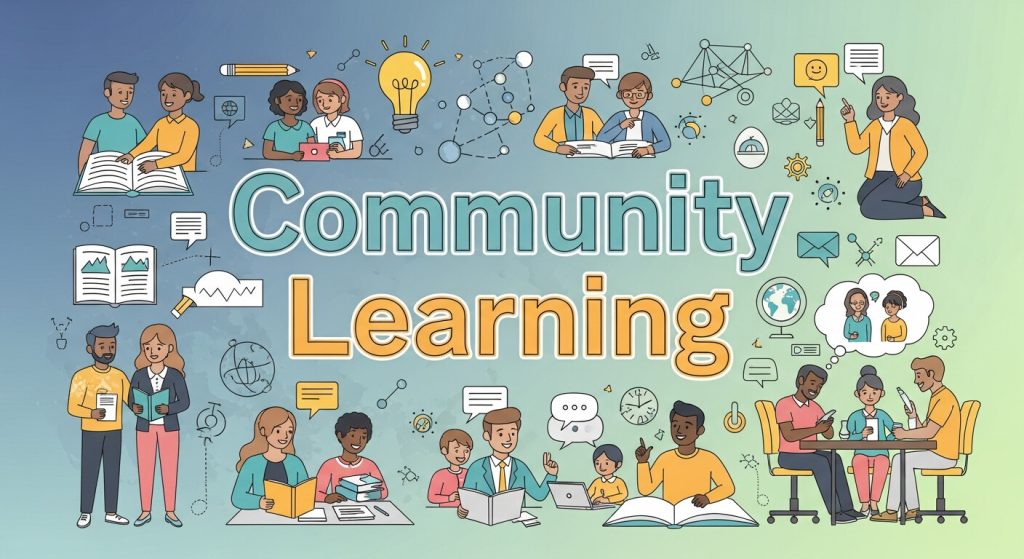
Learning machine learning doesn’t have to be a solo journey. Engaging with online communities, forums, and discussion groups can dramatically accelerate progress. Platforms like GitHub, Kaggle, and technical forums allow learners to share ideas, ask questions, and learn from others’ solutions. Community feedback helps identify mistakes and exposes you to different approaches. Reading others’ code and explanations improves understanding and coding style. Being part of a learning community also boosts motivation and accountability. When challenges feel overwhelming, community support can keep you moving forward instead of giving up.
Preparing for a Long-Term Career in Machine Learning
Machine learning is constantly evolving, so long-term success requires adaptability and continuous learning. Beyond mastering algorithms, focus on skills like data storytelling, ethical AI practices, and model deployment. Staying updated with new tools and research ensures relevance in the job market. Building a strong portfolio, contributing to open-source projects, and practicing real-world problem solving help establish credibility. Machine learning careers reward curiosity, patience, and persistence. By developing both technical and analytical thinking skills, you position yourself for sustainable growth and meaningful impact in the AI-driven future.
Free Online Courses
1. Machine Learning by Stanford University (Coursera)
Offered by Stanford University and taught by Andrew Ng, this course is one of the most popular and highly recommended resources for beginners. It covers the fundamental concepts of machine learning, including linear regression, neural networks, and unsupervised learning.
What makes it stand out:
- Beginner-friendly with a focus on real-world applications.
- Includes practical coding assignments in Octave or MATLAB.
Access the course here: Stanford’s Machine Learning Course on Coursera
2. Google’s Machine Learning Crash Course
Google’s crash course is tailor-made for those starting out with machine learning. This resource combines short lessons with practical coding exercises and case studies.
What makes it stand out:
- Hands-on TensorFlow tutorials directly from industry leaders.
- Ideal for developers looking to integrate machine learning into real-world projects.
Access the course here: Google ML Crash Course
3. Fast.ai’s Practical Deep Learning for Coders
If you’re particularly interested in deep learning, Fast.ai offers an invaluable course meant for programmers. It focuses on hands-on coding rather than the theoretical backbone of machine learning, making it ideal for those eager to get started with neural networks.
What makes it stand out:
- No advanced math prerequisites.
- Starts with real-world deep learning applications before exploring the theory.
Free Books
1. “Deep Learning” by Ian Goodfellow
While this book dives into the technical details of deep learning, it’s often recommended for learners looking to truly understand the mechanics behind machine learning algorithms.
What makes it stand out:
- Comprehensive, covering both theory and application.
- Available for free online via MIT Press.
2. “Pattern Recognition and Machine Learning” by Christopher Bishop
This classic machine learning book is a great resource for those who prefer a mathematical approach to understanding algorithms and models.
What makes it stand out:
- Covers topics like Bayesian networks and kernel methods in depth.
- Aimed at intermediate learners familiar with statistics and linear algebra.
Hands-On Tutorials and Coding Platforms
1. Kaggle
Kaggle is a data science platform that offers free datasets, community-contributed notebooks, and guided projects to help you practice machine learning in real-world settings.
What makes it stand out:
- Beginner-friendly tutorials on Python and data analysis.
- Opportunity to compete in machine learning competitions to solve real business challenges.
2. Google Colab
Google Colab is an online Python notebook environment that allows you to write and execute code in Python while leveraging Google’s computational power.
What makes it stand out:
- Free GPU support for training machine learning models.
- No installation required; runs entirely in your browser.
3. Hugging Face’s Tutorials
Hugging Face is known for its state-of-the-art natural language processing (NLP) models. Their tutorials offer guidance for implementing machine learning models with a focus on NLP use cases.
What makes it stand out:
- User-friendly transformers library.
- Great for anyone interested in applying AI to text, like chatbots or language models.
Podcasts and Blogs
1. Machine Learning Mastery
This blog delivers concise, structured tutorials that guide you through the steps of building machine learning models, one concept at a time.
What makes it stand out:
- Designed for practitioners.
- Hands-on tutorials on Python, TensorFlow, and more.
2. The TWIML AI Podcast
If you want to stay updated on the latest advancements, consider tuning into the “This Week in Machine Learning & AI” podcast. You’ll hear from top minds in the field on cutting-edge projects and trends.
What makes it stand out:
- Regular episodes with industry experts.
- Topics range from beginner concepts to advanced research.
Start Machine Learning Today
There’s no doubt that machine learning is a skill of the future. With free resources like courses, books, coding platforms, and podcasts, you have everything you need to get started today.
Still not sure where to begin? Start small. Take Google’s Machine Learning Crash Course, practice on Kaggle, or explore a few tutorials on Hugging Face. The key is consistency and perseverance.
Happy learning, and here’s to building the next generation of AI-driven solutions!
Frequently Asked Questions (FAQ)
1. Can I really learn machine learning for free?
Yes, absolutely. Many top universities, tech companies, and experts offer free machine learning resources, including courses, books, tutorials, and coding platforms. With dedication and consistent practice, you can gain strong foundational and even advanced skills without spending money.
2. Do I need a programming background to learn machine learning?
A basic understanding of programming is helpful, but it’s not mandatory at the start. Many beginner-friendly courses introduce Python alongside machine learning concepts. Over time, learning Python will significantly improve your ability to build and understand machine learning models.
3. How long does it take to learn machine learning?
The timeline depends on your goals and consistency. Learning the basics can take a few weeks to a couple of months. Becoming proficient and job-ready may take several months of practice, projects, and hands-on experience.
4. What math is required for machine learning?
Basic knowledge of linear algebra, probability, and statistics is useful. However, many beginner resources explain concepts intuitively, allowing you to learn math gradually as you progress rather than all at once.
5. Which programming language is best for machine learning?
Python is the most popular language for machine learning due to its simplicity and extensive libraries like NumPy, pandas, scikit-learn, TensorFlow, and PyTorch. Most free learning resources also use Python.
6. Are free machine learning courses as good as paid ones?
Many free courses are created by leading universities and companies, making them just as high-quality as paid programs. The key difference is usually certification or mentorship, not the learning content itself.
7. How can I practice machine learning after learning the basics?
Hands-on practice is essential. Platforms like Kaggle and Google Colab allow you to work on real datasets, build models, and participate in challenges. Personal projects also help reinforce learning and build a strong portfolio.
8. Is machine learning hard to learn?
Machine learning can feel challenging at first, but it becomes manageable with the right resources and steady practice. Breaking concepts into small steps and focusing on practical implementation makes the learning process much smoother.
9. What are the career opportunities after learning machine learning?
Machine learning skills open doors to roles such as data scientist, machine learning engineer, AI researcher, software developer, and analytics specialist across industries like tech, healthcare, finance, and e-commerce.
10. What should I learn after machine learning basics?
After mastering the basics, you can explore deep learning, natural language processing (NLP), computer vision, MLOps, or apply machine learning to real-world business problems through projects and internships.