Chatbots are revolutionizing how businesses interact with their customers. Whether it’s answering simple questions, assisting with purchases, or offering support, chatbots provide instant, efficient communication. However, not all chatbots are created equal. Two main types dominate the landscape today – hybrid chatbots and AI chatbots.
Understanding Hybrid and AI Chatbots
What is a Hybrid Chatbot?
Hybrid chatbots blend the capabilities of rule-based chatbots and AI. Rule-based components rely on a predefined set of scripts and commands, while the AI portion adds a layer of learning and adaptability.
For example, a hybrid chatbot might use set scripts for FAQs but escalate to AI-driven responses or human intervention when the user query becomes more complex. This mix of structure and flexibility makes both user-friendly and versatile.
What is an AI Chatbot?
AI chatbots are fully powered by artificial intelligence and machine learning (ML) technologies. These chatbots rely on natural language processing (NLP) to understand user input and generate dynamic, human-like responses.
AI chatbots continually improve their understanding through interaction and apply predictive analytics to refine conversations over time. Unlike hybrid chatbots, they don’t operate on fixed rules alone; their strength lies in adapting to new contexts as they emerge.
Hybrid Chatbot vs AI Chatbot: Which One Fits Your Business?
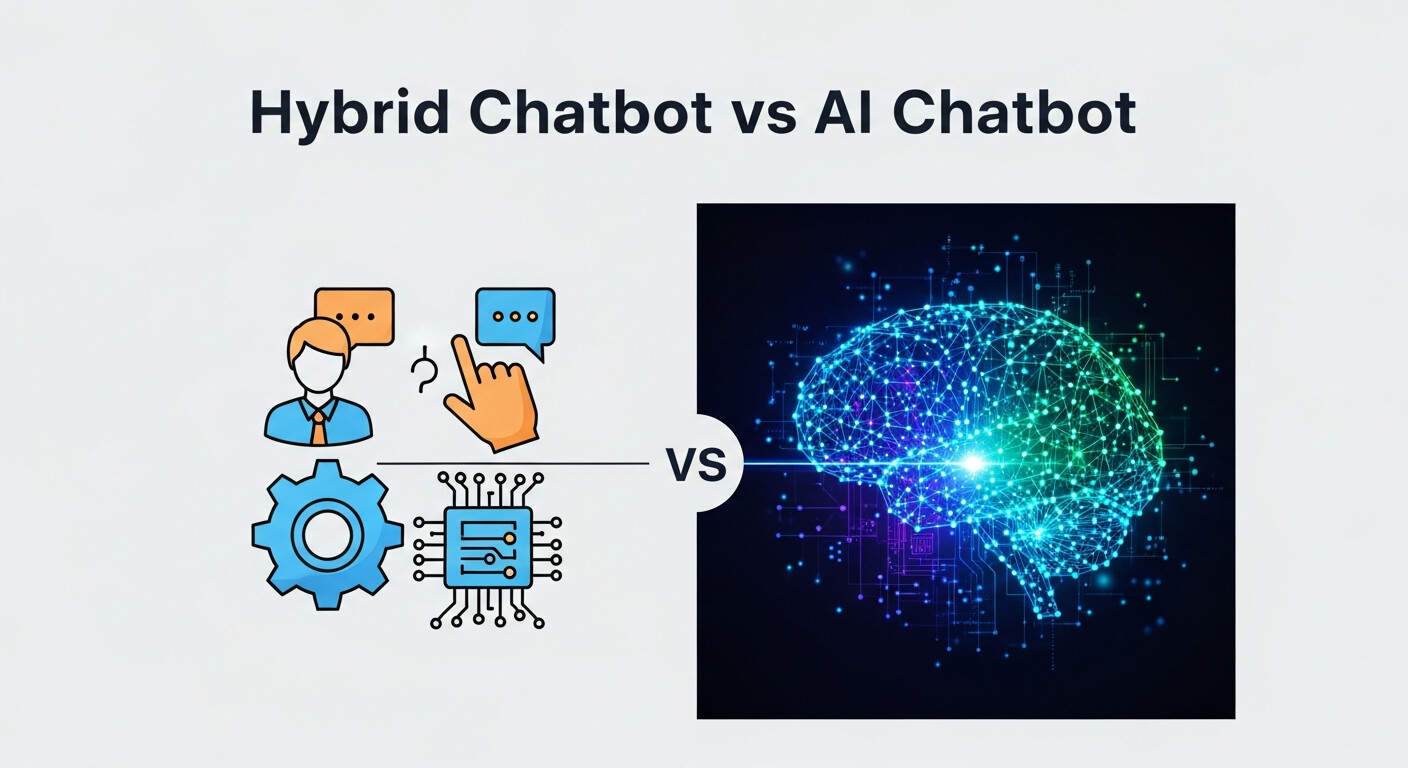
Hybrid chatbots combine rule-based logic with limited AI, offering structured yet flexible conversations. AI chatbots rely entirely on machine learning and NLP to deliver intelligent, personalized interactions at scale. Choosing between them depends on your budget, conversation complexity, and long-term growth goals.
The Role of Emotion AI Chatbot Marketing in Customer Engagement
Emotion AI chatbot marketing focuses on understanding user emotions through text, tone, and behavior patterns. By detecting sentiment such as frustration, excitement, or confusion, chatbots can respond more empathetically and appropriately. This emotional awareness helps businesses deliver human-like interactions that feel supportive rather than robotic. For example, if a customer sounds upset, the chatbot can slow its responses, apologize, or escalate to a human agent. This approach builds trust, improves satisfaction, and reduces churn. Emotion-driven conversations also help brands personalize offers and messages based on user mood, leading to stronger emotional connections and higher conversion rates across customer touchpoints.
How Facebook Chatbots Drive Real-Time Customer Interaction
Facebook chatbots enable businesses to communicate with customers directly inside Messenger, where users already spend significant time. These chatbots can answer queries instantly, send order updates, share promotions, and guide users through purchases without leaving the platform. Because Facebook chatbots integrate seamlessly with ads and business pages, they shorten the customer journey and reduce friction. Businesses can automate responses while still maintaining a conversational tone that feels personal. Additionally, Messenger chatbots support rich media such as images, videos, and quick replies, making interactions more engaging. This makes Facebook an effective channel for lead generation, support, and ongoing customer engagement.
Why Chatbot Personalization Strategies Matter More Than Ever
Chatbot personalization strategies focus on tailoring conversations based on user data such as behavior, preferences, location, and past interactions. Instead of generic replies, personalized chatbots deliver relevant suggestions, timely reminders, and customized support. This creates a smoother and more meaningful user experience. Personalization also increases conversion rates because users feel understood rather than marketed to. For example, an e-commerce chatbot can recommend products based on browsing history, while a service chatbot can remember previous issues. As customer expectations rise, personalization is no longer optional—it’s essential for building loyalty and long-term engagement.
Using Emotion AI to Improve Customer Support Experiences
Emotion AI adds a powerful layer to chatbot-driven customer support by recognizing emotional cues in user messages. When a chatbot understands whether a customer is stressed, angry, or satisfied, it can adjust its responses accordingly. This reduces frustration and improves resolution time. Emotion-aware chatbots can prioritize urgent or negative interactions, ensuring faster escalation when needed. They also help businesses analyze emotional trends across conversations, identifying pain points in products or services. Over time, this insight enables smarter support workflows and better training for both bots and human agents, resulting in more empathetic and effective customer service experiences.
Facebook Chatbots as a Tool for Lead Generation and Sales
Facebook chatbots are highly effective for capturing leads and driving sales through conversational marketing. Instead of redirecting users to forms or websites, chatbots can ask qualifying questions directly within Messenger. This conversational flow feels natural and less intrusive, increasing completion rates. Businesses can also automate follow-ups, send personalized offers, and nurture leads over time. Integration with Facebook Ads allows users to click an ad and instantly start a chatbot conversation, reducing drop-off. This makes Facebook chatbots a powerful sales tool, especially for small and medium-sized businesses looking to scale without increasing support costs.
Advanced Chatbot Personalization Across Multiple Channels
Modern chatbot personalization strategies extend beyond a single platform. Businesses now aim to deliver consistent, personalized experiences across websites, apps, email, and social media. A chatbot can recognize returning users regardless of channel and continue conversations seamlessly. This omnichannel personalization ensures customers don’t have to repeat themselves, improving satisfaction. Data collected from multiple touchpoints allows chatbots to refine recommendations and messaging further. When personalization is unified across channels, brands appear more professional, attentive, and trustworthy, which directly impacts customer retention and lifetime value.
Key Differences Between Hybrid and AI Chatbots
While both hybrid and AI chatbots aim to enhance communication, they differ in functionality, complexity, and use cases. Below, we outline the main distinctions:
1. Conversational Capability
- Hybrid Chatbot: Limited to predefined responses combined with AI features. It can escalate complex inquiries to human agents or an AI system when necessary, but its rule-based portion remains restricted in scope.
- AI Chatbot: Offers advanced conversational skills. AI chatbots understand context, intent, and even sentiment, enabling more natural and sophisticated dialogue with users.
2. Learning and Adaptation
- Hybrid Chatbot: Offers minimal to moderate learning capabilities, depending on the sophistication of its AI component. It’s less dynamic than a fully AI-driven chatbot.
- AI Chatbot: Continuously learns from user interactions. For instance, if users frequently ask a specific question, the AI chatbot can adapt and improve its response without manual updates.
3. Complexity and Maintenance
- Hybrid Chatbot: Easier to maintain as its rule-based elements are structured and predictable. Adding new rules or FAQs is straightforward, but the AI layer may require updates as user needs evolve.
- AI Chatbot: Requires more complex maintenance due to its reliance on algorithms, training data, and performance monitoring. However, AI chatbots reduce repetitive tasks once fully deployed and trained.
4. Cost
- Hybrid Chatbot: Typically less expensive to develop and implement. Ideal for businesses with limited budgets or those seeking a simple solution for core customer interactions.
- AI Chatbot: Tends to be more costly upfront due to the advanced AI infrastructure required. However, the long-term benefits of scalability and data-driven insights often justify the cost for larger enterprises.
5. Use Cases
Hybrid Chatbot:
- Customer support with basic to moderately complex queries.
- Lead generation through scripted responses and rule-based interactions.
- E-commerce recommendations with predefined product scripts.
AI Chatbot:
- Complex customer service queries requiring contextual understanding.
- Multi-language support using NLP for diverse audiences.
- Personalized experiences leveraging customer data analytics.
Pros and Cons of Each Chatbot Type
Pros of Hybrid Chatbots
- Combines structure with adaptability for controlled yet flexible interactions.
- Lower setup costs make it accessible for smaller businesses.
- Escalation to human agents ensures better customer support when AI fails.
Cons of Hybrid Chatbots
- Limited ability to handle complex, evolving conversations.
- Maintenance of dual systems (rule-based and AI) may become cumbersome over time.
Pros of AI Chatbots
- Unmatched conversational ability, including context and sentiment detection.
- Scalable and capable of handling a high volume of queries simultaneously.
- Provides analytical insights to improve customer engagement strategies.
Cons of AI Chatbots
- High initial development costs and technical expertise required to implement.
- May struggle with niche or highly specific use cases without extensive training data.
When to Choose a Hybrid Chatbot
A hybrid chatbot may be ideal for your business if:
- You’re a small to medium-sized company looking for an affordable entry into chatbot solutions.
- Your use cases involve handling straightforward customer queries with occasional escalations to human agents.
- You want a manageable system that doesn’t require advanced development or training.
When to Choose an AI Chatbot
On the other hand, an AI chatbot is worth considering if:
- You run a larger enterprise with diverse customer interaction needs and high volumes of demand.
- Personalized interactions are a priority, such as targeted product recommendations or tailored customer support.
- You want a solution that grows smarter over time to provide continuous improvements to customer experiences.
How to Decide Which Chatbot to Deploy
Choosing between a hybrid and an AI chatbot ultimately boils down to understanding your business needs and resources. Here are some key questions to consider:
- What will the chatbot primarily be used for (e.g., product queries, lead generation, onboarding)?
- How complex are your typical customer interactions?
- What is your budget for chatbot implementation and maintenance?
- Does your team have the technical capacity or resources to manage an AI chatbot?
Boost Your Business with the Right Chatbot Solution
Whether you opt for a hybrid or an AI chatbot, integrating chatbot technology into your business offers numerous advantages. From enhanced customer support to increased efficiency, the right chatbot can elevate how you engage with customers and drive better outcomes.
If you’re ready to take the next step, start by evaluating your specific needs and considering how a hybrid or AI chatbot aligns with your goals. Regardless of which technology you choose, both present exciting opportunities to revolutionize the way you communicate with your audience.
The Future of Emotion AI and Intelligent Chatbot Marketing
The future of chatbot marketing lies in deeper emotional intelligence and smarter personalization. Emotion AI chatbot marketing will evolve to detect subtle emotional shifts and adapt in real time. Combined with predictive analytics, chatbots will anticipate user needs before they are explicitly stated. Social platforms like Facebook will continue enhancing chatbot capabilities, making conversations richer and more interactive. As businesses focus more on relationship-driven marketing, emotionally intelligent chatbots will play a central role in building trust, loyalty, and long-term engagement. Companies that adopt these technologies early will gain a significant competitive advantage.
Frequently Asked Questions (FAQ)
What is the main difference between a hybrid chatbot and an AI chatbot?
The main difference is how they operate. A hybrid chatbot combines rule-based scripts with limited AI, while an AI chatbot relies entirely on machine learning and natural language processing to generate dynamic responses.
Which is better: Hybrid Chatbot vs AI Chatbot?
There is no one-size-fits-all answer. A hybrid chatbot is better for businesses with simple, structured queries and limited budgets. An AI chatbot is better for complex conversations, personalization, and high-volume customer interactions.
Are hybrid chatbots suitable for small businesses?
Yes, hybrid chatbots are ideal for small and medium-sized businesses because they are cost-effective, easier to manage, and capable of handling common customer queries with optional human escalation.
Do AI chatbots require continuous training?
Yes, AI chatbots improve over time through continuous learning. They require monitoring, training data updates, and performance optimization to ensure accuracy and relevance.
Can hybrid chatbots understand natural language?
Hybrid chatbots can understand basic natural language if an AI layer is included, but their understanding is limited compared to fully AI-powered chatbots that analyze intent, context, and sentiment.
Which chatbot is more cost-effective in the long run?
Hybrid chatbots have lower upfront costs, but AI chatbots may be more cost-effective long term for large organizations due to automation, scalability, and reduced human support needs.
Can AI chatbots replace human customer support?
AI chatbots can handle a large percentage of customer interactions, but they work best alongside human agents for complex, sensitive, or highly specific issues.
What industries benefit most from AI chatbots?
Industries such as e-commerce, banking, healthcare, SaaS, and telecom benefit greatly from AI chatbots due to high interaction volumes and the need for personalized customer experiences.
How do I choose between a hybrid chatbot and an AI chatbot?
Evaluate your business size, budget, customer interaction complexity, and long-term goals. If you need structured automation, choose a hybrid chatbot. If you need intelligent, scalable conversations, choose an AI chatbot.
Can I upgrade from a hybrid chatbot to an AI chatbot later?
Yes, many businesses start with a hybrid chatbot and gradually upgrade to a fully AI-powered chatbot as their needs and resources grow.