AI Chatbots Development powered by Machine Learning enables intelligent, multilingual interactions, automates marketing, and enhances market research. Integrating AR and emerging technologies ensures adaptive, efficient, and customer-centric solutions that deliver measurable business impact.
Introduction to Machine Learning Languages for AI Chatbots Development
In the modern digital era, AI Chatbots Development has become a cornerstone for businesses aiming to enhance user interaction, streamline operations, and improve customer service. These intelligent virtual agents leverage Machine Learning to understand user queries, provide accurate responses, and continuously improve their conversational capabilities. By using advanced algorithms and language models, chatbots can deliver human-like experiences across multiple platforms, from websites to messaging applications.
As organizations increasingly adopt AI-driven solutions, understanding the best programming languages for AI Chatbots Development is essential. The choice of language influences the bot’s efficiency, scalability, and ability to integrate advanced features like natural language processing, multilingual support, and automated learning. Selecting the right language ensures that AI chatbots can handle complex interactions while adapting to user behavior over time.
The Role of Machine Learning in Chatbots
Machine Learning plays a critical role in the evolution of AI chatbots. Traditional rule-based systems are limited by pre-defined scripts, but Machine Learning enables chatbots to learn from interactions, identify patterns, and respond dynamically. By analyzing large datasets, these chatbots improve over time, offering more accurate and context-aware responses.
For businesses focusing on Automated Chatbot Marketing, machine learning allows chatbots to segment audiences, personalize messages, and deliver campaigns efficiently. Similarly, AI-NLP Chatbot Translation capabilities ensure that chatbots can communicate seamlessly across languages, breaking geographical and linguistic barriers for global brands.
In market research, AI Chatbots in Market Research help organizations gather customer feedback, analyze sentiment, and predict trends with minimal human intervention. Leveraging AI Chatbot Learning Resources, developers and businesses can continuously enhance their bots’ intelligence and functionality, ensuring they stay relevant in fast-paced digital markets.
Key Programming Languages for AI Chatbots Development
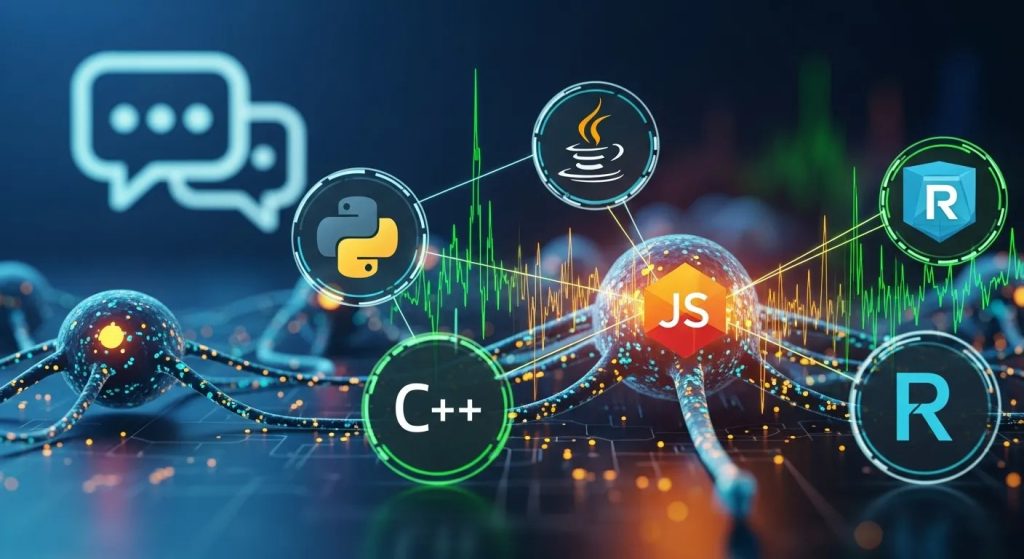
When it comes to programming languages, developers have a variety of options, each with unique advantages. Selecting the right language depends on the desired features, project scope, and integration requirements.
Python: The Go-To Language
Python is widely regarded as the top choice for AI Chatbots Development due to its simplicity, readability, and extensive library support. Frameworks like TensorFlow, PyTorch, and Keras allow developers to implement sophisticated machine learning models effortlessly. Python also supports natural language processing with libraries such as NLTK and spaCy, enabling chatbots to understand context, intent, and sentiment.
Python’s adaptability makes it ideal for Inclusive AR Design and interactive conversational interfaces. Developers can quickly prototype chatbots, integrate AI algorithms, and deploy solutions with minimal coding overhead. For businesses exploring Industrial AR Applications, Python’s ecosystem supports both AR simulations and AI integrations, making it a versatile choice for enterprise applications.
JavaScript: Real-Time Interactivity
JavaScript is essential for building chatbots that operate in real-time on websites and web applications. With Node.js, developers can create scalable, asynchronous chatbots that handle multiple conversations simultaneously. Its integration with front-end technologies ensures smooth user interfaces and interactive experiences.
By combining JavaScript with machine learning APIs, businesses can implement Automated Chatbot Marketing strategies efficiently. For example, chatbots can track user behavior on websites and send personalized messages, increasing engagement and conversion rates.
Java: Enterprise-Grade Solutions
Java remains a preferred choice for large-scale AI Chatbots Development, especially in enterprise environments. Its robust architecture, cross-platform support, and strong typing system provide reliability for mission-critical applications. Java is compatible with frameworks like Deeplearning4j, which allows developers to build advanced machine learning models for chatbots.
For companies leveraging AI Chatbots in Market Research, Java-based solutions can manage large datasets, perform real-time analytics, and ensure secure handling of sensitive customer information. The language’s stability and scalability make it a safe choice for long-term chatbot projects.
Other Languages to Consider
- C++: High-performance chatbot applications, especially those requiring intensive computations or low-latency responses.
- R: Statistical computing and data analysis for research-focused chatbot projects.
- Go: Efficient, concurrent systems suitable for scalable AI chatbots serving millions of users simultaneously.
Leveraging Machine Learning Frameworks
Building sophisticated AI Chatbots Development solutions requires more than just programming languages—it demands robust frameworks that simplify model creation, training, and deployment. Machine Learning frameworks such as TensorFlow, PyTorch, Keras, and Scikit-learn are widely used for chatbot development. These frameworks provide pre-built modules for natural language processing, sentiment analysis, and intent recognition, allowing developers to create bots that understand and respond effectively to human queries.
For example, AI-NLP Chatbot Translation is facilitated by these frameworks, enabling chatbots to support multiple languages and provide accurate responses globally. By incorporating multilingual datasets and training models, chatbots can communicate fluently with users from different regions, expanding the reach of businesses in the international market.
Tools to Accelerate AI Chatbots Development
In addition to frameworks, specialized tools can significantly enhance the speed and efficiency of chatbot development. Platforms like Dialogflow, Microsoft Bot Framework, and Rasa provide ready-made solutions for designing conversational flows, managing dialogue contexts, and integrating machine learning models. These tools enable developers to focus on advanced AI features rather than low-level coding, improving overall project efficiency.
For businesses investing in Automated Chatbot Marketing, these tools allow bots to interact intelligently with users, recommend products, and even handle transactions autonomously. They also support analytics features to monitor chatbot performance and user engagement, ensuring that marketing campaigns are optimized for maximum ROI.
Integrating AI Chatbots in Market Research

The capabilities of AI Chatbots in Market Research are vast. By deploying AI chatbots, organizations can conduct surveys, gather real-time customer feedback, and perform sentiment analysis without human intervention. This data, when combined with machine learning algorithms, helps businesses identify emerging trends, improve products, and refine marketing strategies.
Chatbots trained on large datasets using Machine Learning can predict customer preferences and respond proactively to queries, creating a seamless experience for users. Moreover, insights from chatbot interactions can guide Inclusive AR Design efforts, ensuring that digital products and interfaces meet diverse user needs.
AI Chatbot Learning Resources
For developers and organizations looking to enhance their AI Chatbots Development, a variety of learning resources are available. Online courses, tutorials, and documentation from leading frameworks provide practical guidance on implementing advanced machine learning models. Learning resources also cover topics such as chatbot optimization, multilingual support, and integration with emerging technologies like AR and IoT.
By leveraging AI Chatbot Learning Resources, teams can stay up-to-date with the latest advancements in Machine Learning and AI technologies, ensuring their chatbots remain competitive and capable of delivering exceptional user experiences.
Real-World Applications
Marketing and Customer Engagement
One of the most common applications of AI Chatbots Development is in customer engagement. By using chatbots for Chatbots for Marketing, businesses can personalize interactions, respond to inquiries 24/7, and automate repetitive tasks. Machine learning models enable chatbots to adapt their responses based on user behavior, enhancing the overall customer experience.
AR and AI Integration
Integrating AI chatbots with emerging technologies such as AR Quantum Computing and AR Autonomous Agents opens new horizons for interactive experiences. For instance, chatbots can guide users through augmented reality environments, provide real-time assistance in industrial applications, or enhance educational content with interactive elements. Machine learning models ensure that these chatbots adapt dynamically to user interactions, offering context-aware guidance.
Multilingual Support
Modern businesses often operate in diverse markets, requiring AI Multilanguage Support Bots to communicate with users in their preferred language. Machine learning algorithms help chatbots recognize and translate user inputs effectively, while frameworks like TensorFlow and PyTorch support advanced natural language processing models. By implementing AI-NLP Chatbot Translation, organizations can offer seamless multilingual experiences without manual intervention.
Comparative Analysis of Programming Languages for AI Chatbots Development
Choosing the right programming language is crucial for successful AI Chatbots Development. Different languages offer unique advantages depending on the project requirements, scalability needs, and integration possibilities. Below is a detailed comparison:
| Programming Language | Strengths | Weaknesses | Ideal Use Cases |
|---|---|---|---|
| Python | Simple syntax, extensive libraries (TensorFlow, PyTorch), strong NLP support | Slower execution for extremely high-performance needs | Machine learning models, multilingual bots, prototypes |
| Java | Enterprise-grade stability, cross-platform, scalable | Verbose code, steeper learning curve | Large-scale enterprise chatbots, market research bots |
| JavaScript | Real-time interactivity, Node.js scalability, front-end integration | Limited native ML libraries | Web-based AI chatbots, customer engagement bots |
| C++ | High-performance, low latency | Complex syntax, slower development | Intensive computation or gaming-related AI bots |
| Go | Efficient concurrency, scalable, lightweight | Smaller community for AI | High-traffic chatbot servers, industrial applications |
| R | Statistical computing, data analysis | Less versatile for deployment | Research-focused AI chatbots, analytics |
This table helps developers make informed choices based on project requirements, ensuring AI Chatbots Development is both effective and scalable.
Multilingual AI Chatbots
In today’s global market, businesses increasingly require AI Multilanguage Support Bots. These chatbots leverage Machine Learning to provide seamless communication across multiple languages. Using natural language processing, chatbots can detect user language preferences and respond accurately, creating a smooth and personalized user experience.
Implementing AI-NLP Chatbot Translation allows chatbots to interpret nuanced language contexts, including idioms, regional expressions, and technical terminology. This feature is particularly important for companies targeting international audiences, as it ensures clear communication without manual intervention.
Multilingual chatbots also enhance Transparent AI Chatbots experiences by maintaining consistent messaging across languages. Users feel confident interacting with a bot that understands their input, regardless of language barriers. This transparency improves trust and engagement, crucial for applications like customer support, market research, and automated marketing campaigns.
Industry-Specific Applications
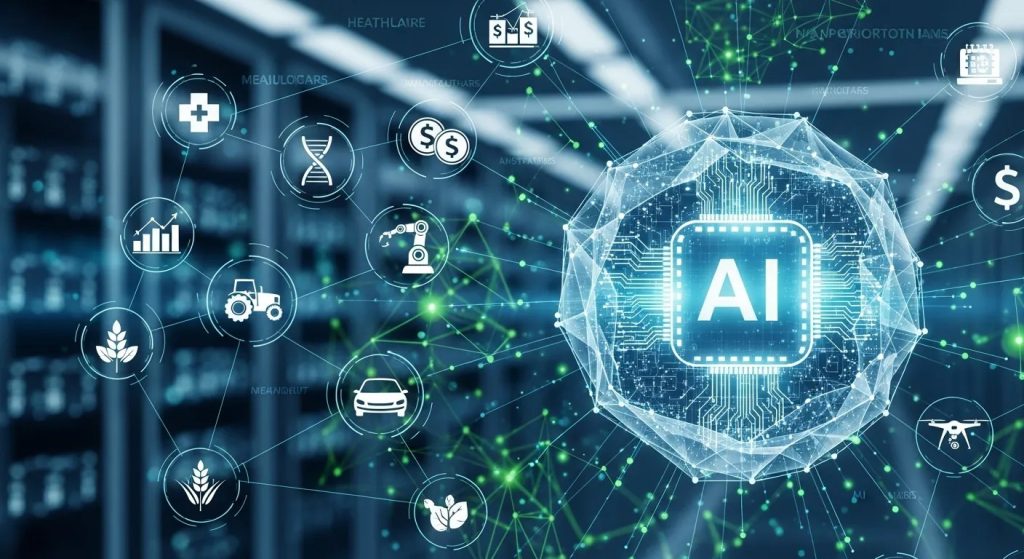
Marketing and Customer Support
For Chatbots for Marketing, AI chatbots can analyze user behavior, predict preferences, and deliver personalized content. Machine learning models optimize message timing, tone, and relevance, increasing engagement rates. AI chatbots also provide 24/7 support, reducing operational costs while maintaining a high-quality customer experience.
Augmented Reality and AI Integration
Integrating chatbots with AR technologies opens new interactive possibilities. AR Quantum Computing can enhance data processing and provide real-time insights to users, while AR Autonomous Agents can guide users through complex AR environments. Combining these technologies with AI chatbots ensures context-aware assistance, whether in education, industrial simulations, or immersive marketing experiences.
Market Research and Analytics
AI Chatbots in Market Research allow businesses to collect large volumes of data efficiently. Machine learning algorithms analyze user sentiment, identify trends, and generate actionable insights. This enables companies to make informed decisions while minimizing manual research efforts.
Learning and Development
For developers and organizations, AI Chatbot Learning Resources provide structured guidance on building intelligent, scalable, and adaptive chatbots. These resources cover topics from basic programming techniques to advanced machine learning models, ensuring continuous improvement in AI chatbot capabilities.
Neural Networks and Conversational AI
Modern AI Chatbots Development heavily relies on Machine Learning models, particularly neural networks, to deliver intelligent and context-aware responses. Deep learning architectures, including Recurrent Neural Networks (RNNs), Long Short-Term Memory (LSTM) networks, and Transformer models, form the backbone of conversational AI systems. These models analyze sequences of text inputs, understand context, and generate coherent and relevant replies.
By leveraging neural networks, developers can create AI Multilanguage Support Bots capable of understanding and responding in multiple languages without losing contextual meaning. This capability is crucial for global businesses that need to maintain consistent and natural communication across regions.
Conversational AI Techniques
Conversational AI uses advanced Machine Learning methods to enable chatbots to handle complex queries, follow conversational context, and adapt to user behavior. Key techniques include:
- Intent Recognition: Understanding what a user wants based on input.
- Entity Extraction: Identifying critical elements like dates, product names, or locations.
- Context Management: Maintaining the flow of conversation over multiple turns.
- Response Generation: Using neural networks to generate human-like replies.
Implementing these techniques ensures chatbots can perform advanced tasks, including Automated Chatbot Marketing, personalized customer support, and interactive user engagement.
AI Multilanguage Support Bots in Practice
Businesses implementing AI Multilanguage Support Bots can expand their reach without hiring multilingual teams. These bots use AI-NLP Chatbot Translation to understand user queries in different languages and provide accurate, context-aware responses. For example, e-commerce platforms can deploy chatbots to assist customers across multiple countries, improving satisfaction and reducing operational costs.
Moreover, Transparent AI Chatbots maintain trust by clearly communicating their capabilities and limitations. Users are more likely to engage when they understand how a chatbot processes information and manages personal data.
Integration with AR and Emerging Technologies

Emerging technologies like AR Quantum Computing and AR Autonomous Agents enhance AI chatbot capabilities. In industrial applications, AR-enabled chatbots can guide technicians through complex procedures, provide real-time analytics, and reduce human error. In inclusive AR design, chatbots can ensure accessibility for users with diverse needs, delivering information in multiple formats and languages.
For marketing and engagement, combining Chatbots for Marketing with AR allows interactive product demos, immersive brand experiences, and gamified promotions. Machine learning ensures chatbots adapt dynamically to user interactions, improving engagement metrics and conversion rates.
Real-World Case Studies
- E-Commerce Chatbots: Global retailers use AI chatbots to handle customer inquiries in multiple languages, offering product recommendations, shipping updates, and issue resolution. Machine learning models analyze purchase behavior to deliver personalized promotions.
- Healthcare Assistance: AI chatbots provide patients with medical information, appointment scheduling, and post-treatment follow-ups. AI Chatbot Learning Resources help developers train models to comply with regulations while ensuring accurate and empathetic responses.
- Market Research Bots: Companies deploy chatbots to gather consumer feedback, analyze sentiment, and identify emerging trends. By using AI Chatbots in Market Research, organizations can gain actionable insights without the need for extensive human resources.
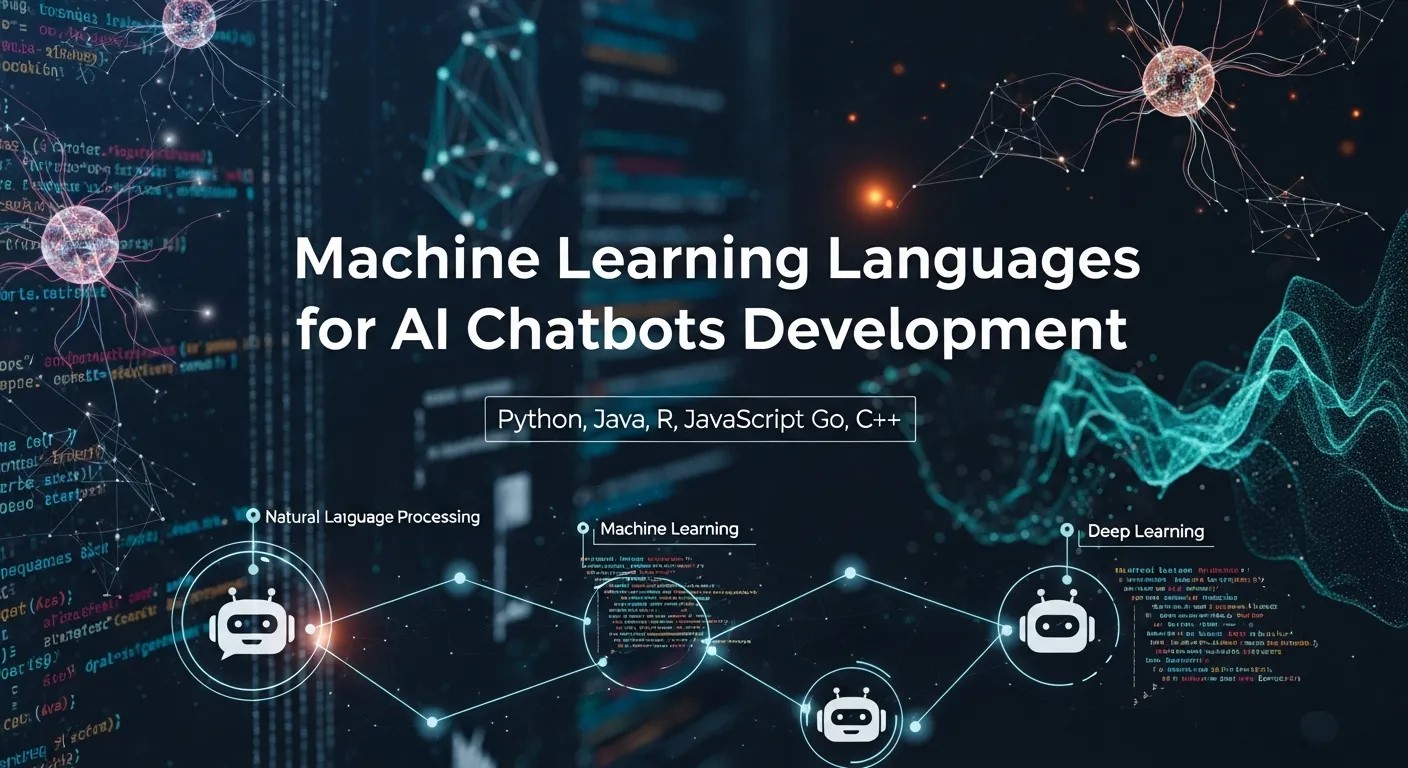
Machine Learning Languages for AI Chatbots Development
In today’s digital landscape, AI Chatbots Development powered by Machine Learning is transforming how businesses interact with customers. By leveraging AI Multilanguage Support Bots, organizations can deliver seamless, personalized experiences across languages and regions. Advanced programming languages, frameworks, and neural network architectures enable chatbots to perform complex tasks, from Automated Chatbot Marketing to AI-NLP Chatbot Translation and Market Research. Integrating emerging technologies like AR Quantum Computing and AR Autonomous Agents further enhances chatbot capabilities. Investing in intelligent, adaptable chatbots ensures companies stay competitive, improve customer satisfaction, and unlock the full potential of conversational AI.
Conclusion
The landscape of AI Chatbots Development is rapidly evolving, with Machine Learning driving smarter, more adaptable conversational agents. By using the right programming languages, frameworks, and neural network architectures, businesses can deploy AI Multilanguage Support Bots that operate seamlessly across regions and industries. These chatbots enhance customer engagement, automate marketing processes, support multilingual communication, and provide actionable insights through AI Chatbots in Market Research. Integration with emerging technologies like AR Quantum Computing and AR Autonomous Agents further expands capabilities. Investing in intelligent AI chatbots ensures competitive advantage, operational efficiency, and long-term growth in the digital era.
Frequently Asked Questions (FAQ)
What is the best programming language for AI chatbots?
Python is widely preferred due to its simplicity, rich machine learning libraries, and natural language processing capabilities, but Java and JavaScript are also effective depending on the use case.
How do AI chatbots use Machine Learning?
They learn from user interactions, identify patterns, and improve responses over time, enabling more natural and context-aware conversations.
Can AI chatbots support multiple languages?
Yes, AI Multilanguage Support Bots use AI-NLP Chatbot Translation to communicate across languages, providing seamless global user experiences.
How do chatbots enhance marketing?
Chatbots for Marketing automate customer engagement, personalize messages, and analyze user behavior, increasing conversion and retention rates.
Are AI chatbots useful for market research?
Absolutely. AI Chatbots in Market Research collect feedback, perform sentiment analysis, and generate actionable insights efficiently.
Can AI chatbots integrate with AR technologies?
Yes, integrating with AR Quantum Computing and AR Autonomous Agents enables interactive, immersive experiences for education, industrial applications, and marketing.