Chatbots are revolutionizing the way businesses interact with customers. From handling customer support inquiries to driving sales, these AI-driven solutions provide efficiency, scalability, and improved customer experiences. But as chatbot applications grow more complex, so does the need for more sophisticated architectures to support them. Enter hybrid chatbot architecture.
Combining the best of both rule-based systems and AI-driven technologies, hybrid chatbot architecture presents a powerful solution for building sophisticated, adaptable, and reliable conversational systems. This blog will walk you through the concept of architecture, its benefits, and practical applications.
By the end of this post, you’ll have a clear understanding of how hybrid chatbot systems work and how to leverage their functionality for your business needs.
What is Hybrid Chatbot Architecture?
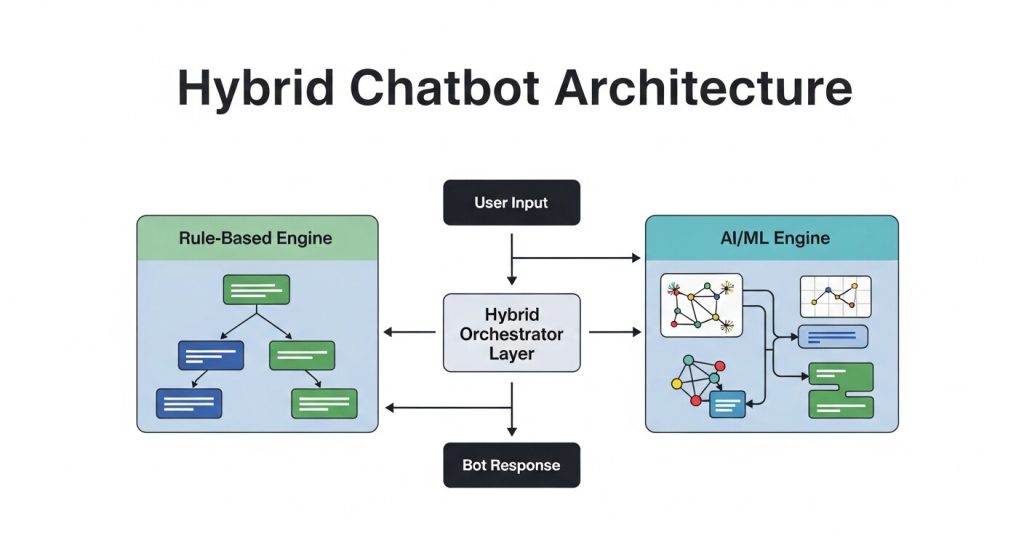
Hybrid chatbot architecture is a combination of the strengths of rule-based chatbots and AI-driven chatbots.
- Rule-based chatbots follow predefined scripts or rules to respond to user input. While simple and predictable, these bots may falter in understanding complex or unstructured queries.
- AI-driven chatbots, on the other hand, use natural language processing (NLP) and machine learning (ML) to respond more intelligently to user inquiries. These bots are more flexible but can sometimes lack precision, particularly in niche domains.
The hybrid approach merges these two frameworks, creating a chatbot system that is both highly intelligent and reliably accurate. Rule-based components handle straightforward tasks, while AI algorithms manage more complex or unpredictable interactions. This combination ensures a balanced chatbot experience that minimizes errors while maintaining conversational flexibility.
Benefits of Hybrid Chatbot Architecture
1. Higher Accuracy in Complex Interactions
One of the primary reasons to use hybrid chatbot architecture is its ability to manage diverse user intents. Rule-based functions ensure straightforward queries are managed with precision, while AI steps in to interpret ambiguous or layered inputs, boosting overall accuracy.
For instance, a hybrid chatbot for banking could process predictable tasks, like balance inquiries or password resets, using rule-based automation. Meanwhile, it could rely on NLP for nuanced conversations, such as explaining credit card rewards or investment options based on customer-specific contexts.
2. Scalability Across Business Functions
Hybrid chatbots can operate seamlessly across multiple departments, such as customer support, sales, and HR. By blending predefined responses for frequently asked questions with AI-driven workflows, businesses can scale their chatbot systems to address a wide range of customer and employee needs.
3. Improved Context Awareness
Rule-based systems can sometimes lack awareness of conversational context, leading to irrelevant or repetitive responses. Hybrid systems, with their AI components, can remember conversation history and maintain context to deliver fluid and engaging conversations.
For example, instead of repeatedly asking a user to rephrase a question, a hybrid chatbot can infer what the user truly wants through contextual cues.
4. Cost Efficiency
Maintaining separate AI and rule-based engines can be resource-intensive. A hybrid chatbot offers an integrated solution, balancing the cost of computational resources while still delivering high-quality, efficient responses.
5. Flexibility in Implementation
Hybrid systems enable businesses to customize chatbot workflows. Whether your focus is on automating administrative tasks, enhancing customer engagement, or increasing lead generation, hybrid chatbot architecture can be tailored to suit your goals.
Security and Data Privacy in Hybrid Chatbots
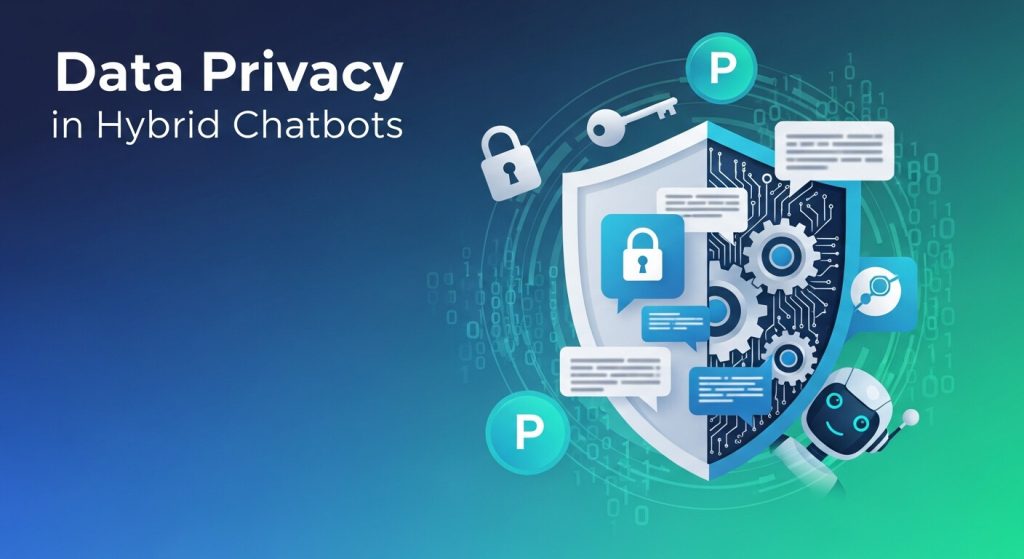
Security and data privacy are critical considerations when deploying hybrid chatbot architecture. Since chatbots often handle sensitive customer information—such as personal details, payment data, or medical records—strong security measures are essential. Hybrid chatbots can be designed with rule-based controls to enforce compliance requirements while AI components process conversational inputs securely. Encryption, secure APIs, and role-based access control help protect data throughout interactions. Additionally, hybrid systems can be configured to limit AI exposure to sensitive data, reducing risk. Compliance with regulations like GDPR, HIPAA, or SOC 2 further strengthens trust. By prioritizing security and privacy, businesses can deploy hybrid chatbots confidently while maintaining customer trust and regulatory compliance.
Hybrid Chatbots and Omnichannel Experience
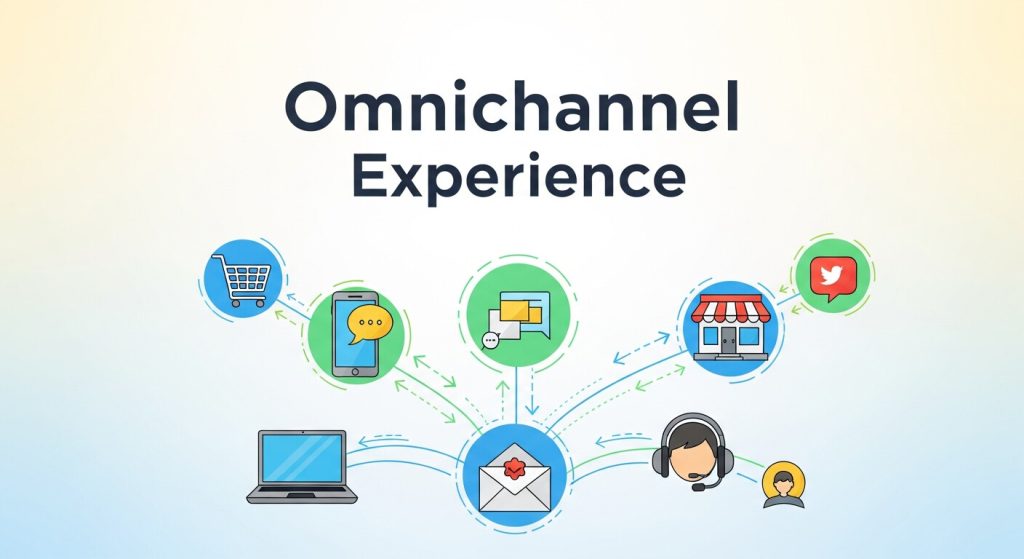
Hybrid chatbot architecture plays a key role in delivering a seamless omnichannel experience. Customers today interact with businesses across websites, mobile apps, social media platforms, and messaging tools. Hybrid chatbots can maintain consistent conversations across these channels by combining rule-based logic for standardized responses and AI-driven intelligence for personalized interactions. This ensures users receive accurate information regardless of the platform they use. Context preservation across channels also improves customer satisfaction, as users don’t need to repeat themselves. By integrating hybrid chatbots with omnichannel strategies, businesses can provide unified, responsive, and engaging experiences that strengthen brand loyalty and improve customer retention.
Human Handoff and Escalation Management
A major advantage of hybrid chatbot architecture is its ability to manage seamless human handoffs. While chatbots can handle most interactions, some situations require human intervention. Hybrid systems can use AI to detect frustration, complexity, or high-value interactions and escalate conversations to live agents automatically. Rule-based logic ensures escalation follows predefined business rules, such as priority routing or department assignment. This approach reduces customer frustration and ensures issues are resolved efficiently. Additionally, chat history and context are passed to human agents, eliminating the need for customers to repeat information. Effective escalation management improves service quality and balances automation with human expertise.
Analytics and Performance Monitoring

Analytics are essential for optimizing hybrid chatbot performance. Hybrid chatbot architecture allows businesses to track both rule-based efficiency and AI-driven conversational success. Metrics such as intent accuracy, resolution rate, fallback frequency, and customer satisfaction scores provide valuable insights. AI analytics help identify gaps in training data, while rule-based metrics highlight outdated or ineffective workflows. Continuous monitoring enables businesses to refine chatbot responses, improve intent recognition, and enhance user experience. Advanced analytics can also reveal customer behavior trends and common pain points. By leveraging data-driven insights, organizations can ensure their hybrid chatbots evolve continuously and deliver measurable business value.
Customization and Industry-Specific Use Cases
Hybrid chatbot architecture offers high customization, making it suitable for industry-specific applications. Businesses can design rule-based workflows tailored to regulatory requirements or operational processes while training AI models on domain-specific language. For example, financial institutions can enforce strict compliance rules, while healthcare providers can follow medical protocols. Retail, SaaS, and logistics companies can customize hybrid chatbots for order management, onboarding, or technical support. This flexibility ensures chatbots align closely with business objectives and industry standards. Customization also allows organizations to scale chatbot capabilities gradually, adding AI sophistication without disrupting existing workflows.
How Hybrid Chatbots Work
Hybrid chatbot architecture generally follows a multi-layered process:
1. Intent Recognition
When a user sends a message, the chatbot first analyzes the intent behind the query. Using natural language processing (NLP) models, AI components classify the user’s intent. For example, is the user asking about a product feature, requesting support, or just browsing?
2. Routing to Rule-Based or AI Engine
Once the intent is identified, the request is routed to either the rule-based engine or the AI engine:
- If the intent matches a specific, predefined rule (e.g., “What are your business hours?”), the chatbot provides an instant response using its rule-based component.
- If the intent requires deeper understanding (e.g., “Can you recommend a plan that saves me the most money?”), the system triggers the AI engine for a more dynamic response.
3. Dynamic Response Generation
The AI engine may leverage machine learning frameworks, training data, and contextual information to craft a personalized response. If applicable, rule-based instructions ensure the response adheres to business guidelines.
4. Feedback Loop for Continuous Learning
Most hybrid systems are built with feedback mechanisms. When users provide feedback on a response (e.g., thumbs up or thumbs down), this data is fed back into the hybrid chatbot system to refine its future responses.
Real-World Applications of Hybrid Chatbot Architecture
1. E-Commerce
Hybrid chatbots enhance online retail spaces by offering both instant FAQs and detailed conversational assistance:
- Simple Task (Rule-Based): Retrieving order status or tracking delivery.
- Complex Task (AI-Driven): Recommending products based on user preferences and behaviors.
2. Healthcare and Telemedicine
Hybrid chatbots in healthcare can play a dual role:
- Simple Task (Rule-Based): Scheduling appointments or sending medication reminders.
- Complex Task (AI-Driven): Advising patients on medications, based on analyzed symptoms or health history.
3. Enterprise IT
IT departments use hybrid bots to streamline internal operations:
- Simple Task (Rule-Based): Password resets or software installation guides.
- Complex Task (AI-Driven): Troubleshooting errors or diagnosing technical issues based on contextual analysis.
Steps to Implement Hybrid Chatbot Architecture in Your Business
1. Assess Use Cases
Start by identifying the specific functions you want your chatbot to fulfill. For example:
- What common questions can rule-based automation handle?
- Where do customers or employees require conversational AI?
2. Select Appropriate Tools
Choose technologies and platforms that support hybrid architectures. Popular options include:
- Dialogflow by Google
- Microsoft Bot Framework
- Rasa
3. Design User Flows
Map out conversation paths using flowcharts or specialized chatbot design tools. This step involves structuring both rule-based and AI-driven workflows.
4. Train AI Models
Prepare your AI component by feeding it domain-specific data. Focus on customizing NLP models for your industry to ensure accurate intent recognition.
5. Test and Optimize
Conduct regular testing across user interactions. Gather data to identify weaknesses in the chatbot’s response accuracy and retrain when necessary.
Hybrid Chatbots Are the Future
The future of conversational AI lies in hybrid chatbot architecture. By combining the efficiency of rule-based systems with the intelligence of AI, businesses can meet escalating customer demands and stay competitive in a rapidly evolving marketplace.
Hybrid chatbots are not just a trend; they are a scalable, reliable, and intelligent solution. Whether you’re running a retail business, managing IT services, or improving customer support, hybrid models enable you to achieve exceptional results.
If you’re considering building or deploying a chatbot for your organization, now is the time to explore hybrid architecture. Harness the power of this innovative approach and transform conversations into opportunities.
Frequently Asked Questions (FAQ)
1. What is a hybrid chatbot?
A hybrid chatbot is a conversational system that combines rule-based logic with AI-driven technologies such as NLP and machine learning. This approach allows the chatbot to handle both simple, predefined queries and complex, conversational interactions with higher accuracy and flexibility.
2. How is a hybrid chatbot different from a rule-based chatbot?
Rule-based chatbots rely only on predefined scripts and decision trees, which limits their ability to handle unexpected or complex queries. Hybrid chatbots enhance this structure by integrating AI, enabling them to understand context, intent, and natural language more effectively.
3. How is a hybrid chatbot different from a fully AI chatbot?
Fully AI chatbots rely heavily on machine learning and NLP, which can sometimes lead to inconsistent or inaccurate responses in structured scenarios. Hybrid chatbots balance AI intelligence with rule-based precision, ensuring reliability while maintaining conversational flexibility.
4. What businesses benefit most from hybrid chatbot architecture?
Industries such as e-commerce, healthcare, banking, SaaS, IT support, and customer service benefit greatly. Any business that needs both structured automation and intelligent conversation handling can leverage hybrid chatbots effectively.
5. Are hybrid chatbots expensive to implement?
Hybrid chatbots can be cost-effective in the long run. While initial setup may require investment in AI training and rule design, they reduce operational costs by automating support, minimizing human intervention, and scaling across multiple use cases efficiently.
6. Do hybrid chatbots require continuous training?
Yes. AI components require periodic training and optimization using real user data and feedback. This ensures better intent recognition, improved accuracy, and evolving conversational intelligence over time.
7. Can hybrid chatbots integrate with existing systems?
Absolutely. Hybrid chatbots can integrate with CRMs, ERP systems, databases, analytics platforms, and APIs, enabling seamless data exchange and personalized responses across business operations.
8. Is hybrid chatbot architecture suitable for small businesses?
Yes. Small businesses can start with a limited rule-based setup and gradually introduce AI components as needs grow. This phased approach allows scalability without overwhelming budgets or resources.
9. What platforms support hybrid chatbot development?
Popular platforms include Dialogflow, Microsoft Bot Framework, Rasa, IBM Watson Assistant, and Amazon Lex. These tools support both rule-based logic and AI-driven conversational flows.
10. Are hybrid chatbots the future of conversational AI?
Yes. Hybrid chatbot architecture represents the future because it combines accuracy, scalability, cost efficiency, and intelligence, making it adaptable to evolving customer expectations and complex business needs.