Automated Chatbot Marketing leverages AI to streamline customer interactions, boost sales, and expand global reach. By combining personalization, multilingual support, and emerging tech like AR, businesses enhance engagement, drive revenue, and optimize marketing efficiency.
Drive Revenue with Automated Chatbot Marketing
In the ever-evolving world of digital marketing, businesses are continuously seeking innovative ways to engage their customers, enhance conversion rates, and streamline communication. One of the most impactful strategies emerging today is Automated Chatbot Marketing. By leveraging intelligent systems, companies can offer instant responses, personalized interactions, and seamless user experiences that traditional marketing channels often struggle to achieve.
The power of Automated Chatbot Marketing lies not just in automation but in its ability to integrate with broader AI-driven systems. For example, AI Conversational Commerce is transforming how online stores interact with shoppers, enabling dynamic product recommendations, real-time support, and automated checkout processes. This synergy ensures that businesses can maintain engagement at every stage of the customer journey while freeing up human resources for more complex tasks.
How Automated Chatbot Marketing Works
At its core, Automated Chatbot Marketing combines natural language processing (NLP), machine learning, and decision-making algorithms to simulate human-like conversations. By understanding user queries, predicting intent, and delivering relevant content, these chatbots can perform a range of marketing tasks—from lead generation to nurturing potential buyers.
For instance, integrating AI-NLP Chatbot Translation allows businesses to communicate with customers across multiple languages without losing context or tone. This makes marketing campaigns scalable and inclusive, opening doors to international markets that were previously challenging to penetrate.
The first step in deploying Automated Chatbot Marketing is understanding your audience. Chatbot Marketing Research plays a critical role here, analyzing user behavior, preferences, and engagement patterns. Through this research, marketers can craft targeted conversational flows, optimize response strategies, and refine the chatbot’s decision-making process to maximize results.
Benefits of Automated Chatbot Marketing
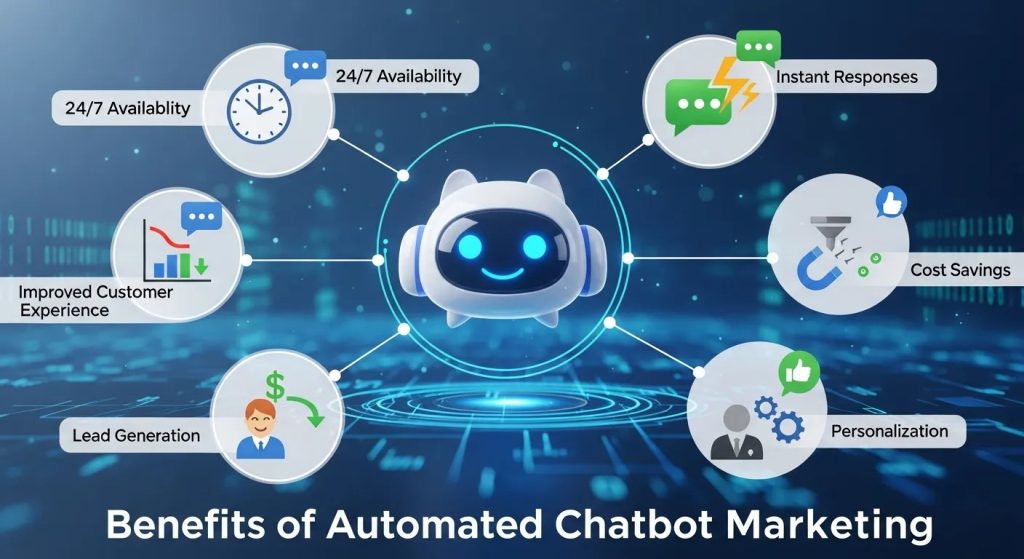
There are several key advantages to incorporating Automated Chatbot Marketing into your strategy:
- Instant Customer Support: Unlike traditional email or phone support, automated chatbots respond immediately, reducing friction and increasing satisfaction.
- Higher Conversion Rates: By providing timely recommendations and personalized offers, businesses can encourage users to complete purchases more efficiently.
- Cost Efficiency: Automating repetitive interactions allows companies to save on labor costs while maintaining high-quality customer engagement.
- Scalability: Chatbots can simultaneously handle thousands of interactions, which is impossible for a human team to achieve.
Additionally, the integration of Chatbot Marketing for Profit strategies ensures that these automated systems are not just tools for engagement but also revenue-generating assets. By aligning conversation flows with sales funnels and promotional campaigns, businesses can turn casual visitors into paying customers more effectively.
Technology Behind Automated Chatbot Marketing
Several cutting-edge technologies power Automated Chatbot Marketing. Natural language processing allows bots to comprehend user intent, while machine learning algorithms enable continuous improvement based on interactions. In addition, emerging technologies like Computer Vision in AR are beginning to complement chatbot functionalities, providing augmented reality experiences that elevate engagement and enrich customer journeys.
For example, imagine a retail brand using Computer Vision in AR to allow customers to visualize products in their homes via chatbot-guided interactions. The combination of AI-driven conversations and AR visualization can dramatically enhance user experience and drive higher purchase intent.
Real-World Applications
The applications of Automated Chatbot Marketing span multiple industries:
- E-commerce: Personalized product recommendations, instant support, abandoned cart recovery
- Healthcare: Appointment scheduling, patient education, follow-up reminders
- Travel & Hospitality: Booking assistance, real-time itinerary updates, local attraction guidance
- Finance: Account inquiries, fraud alerts, investment guidance
By incorporating AI Conversational Commerce, businesses can further refine these applications, creating not just responsive systems but proactive marketing engines. Chatbots can analyze past user behavior, predict future preferences, and engage customers with offers they are most likely to act upon.
Strategies to Maximize Automated Chatbot Marketing
Implementing Automated Chatbot Marketing successfully requires a strategic approach that balances technology, user experience, and business goals. Simply deploying a chatbot is not enough; marketers need to design conversations that feel intuitive, helpful, and tailored to each customer.
Personalization and Targeting
One of the most effective strategies in Automated Chatbot Marketing is personalization. By analyzing user behavior through Chatbot Marketing Research, businesses can craft dynamic conversation flows that respond differently based on previous interactions, preferences, or purchase history. For instance, returning visitors may receive targeted recommendations, while new users could be guided through onboarding or product discovery processes.
Integrating AI Conversational Commerce
Integrating AI Conversational Commerce into your chatbot framework allows brands to create automated yet highly intelligent interactions. This strategy ensures that users not only receive immediate responses but are also guided toward purchase decisions seamlessly. For example, an online store can use conversational prompts to suggest complementary products or limited-time deals, directly influencing the bottom line.
Global Reach with AI-NLP Chatbot Translation
Expanding your market globally is now more feasible than ever with AI-NLP Chatbot Translation. Automated chatbots can now communicate in multiple languages with accuracy and contextual understanding, eliminating language barriers. This capability is critical for companies seeking to implement Automated Chatbot Marketing across diverse regions, making campaigns both scalable and inclusive.
Profit-Driven Conversation Flows
Revenue generation is a core goal of Automated Chatbot Marketing. By implementing Chatbot Marketing for Profit strategies, chatbots can guide users through sales funnels efficiently. Automated follow-ups, upselling, and cross-selling suggestions, as well as timely promotions, can be embedded into conversations, ensuring every interaction has the potential to convert.
Leveraging Advanced Technologies
Modern Automated Chatbot Marketing is not limited to text-based interactions. Technologies like Computer Vision in AR are now being used to enhance chatbot experiences. Retailers, for example, can allow customers to visualize products in their environment through AR while conversing with the chatbot for guidance. This integration provides an immersive experience that traditional marketing cannot replicate, leading to higher engagement and satisfaction.
Metrics and Optimization
Tracking performance is essential for any marketing initiative. Metrics such as user engagement rates, conversion rates, and response times can be monitored to continuously optimize Automated Chatbot Marketing efforts. Data-driven insights allow marketers to refine conversation flows, improve targeting, and adjust automated campaigns for maximum effectiveness.
Designing Effective Chatbot Conversations
The success of Automated Chatbot Marketing heavily depends on the quality of interactions. Designing conversations that feel natural requires understanding user intent, maintaining a friendly tone, and anticipating customer needs.
Scripted vs. AI-Driven Conversations
There are two primary approaches to chatbot conversations: scripted and AI-driven. Scripted conversations follow predefined paths and are ideal for simple FAQs or specific workflows. In contrast, AI-driven chatbots analyze user inputs in real-time and generate adaptive responses. Combining both approaches allows businesses to maintain control over key interactions while providing flexibility for complex queries.
Enhancing Customer Experience
A key element of Automated Chatbot Marketing is the ability to enhance customer experience through timely and relevant interactions. For example, using AI Conversational Commerce, chatbots can proactively offer assistance, suggest popular products, or provide contextual support without waiting for user prompts. This proactive approach reduces friction and increases satisfaction.
Incorporating Multichannel Engagement
To maximize reach, chatbots can be deployed across multiple platforms such as websites, social media, and messaging apps. Integrating AI-NLP Chatbot Translation in these channels ensures consistent communication regardless of location or language. Multichannel engagement also allows for collecting more comprehensive data for Chatbot Marketing Research, which in turn improves future campaigns.
Advanced Implementation Techniques in Automated Chatbot Marketing
For businesses looking to fully leverage Automated Chatbot Marketing, implementing advanced strategies is key to maximizing ROI and user engagement. Beyond basic conversational flows, integrating data-driven insights, AI analytics, and emerging technologies can make chatbots a central part of your marketing ecosystem.
Behavioral Targeting
Behavioral targeting is one of the most powerful techniques in Automated Chatbot Marketing. By analyzing customer actions such as clicks, browsing patterns, and past purchases through Chatbot Marketing Research, chatbots can provide highly relevant suggestions. This personalization ensures that each user feels understood, fostering trust and increasing the likelihood of conversions.
Predictive Analytics
Incorporating predictive analytics allows Automated Chatbot Marketing to anticipate user needs before they even ask. For instance, chatbots can suggest products during seasonal sales based on prior purchase patterns or recommend services that align with the user’s interests. Combining this with AI Conversational Commerce enables chatbots to deliver timely, personalized recommendations that drive profit.
Integrating Augmented Reality
The integration of Computer Vision in AR is transforming the way chatbots interact with users. Retailers can now allow customers to visualize furniture in their living room or try on clothing virtually while conversing with the chatbot for guidance. This combination of AR and Automated Chatbot Marketing creates a more engaging and immersive shopping experience, which can significantly boost conversion rates.
Global Marketing with AI-NLP Chatbot Translation
Expanding globally requires overcoming language barriers, and AI-NLP Chatbot Translation makes this possible. With multilingual support, businesses can deploy Automated Chatbot Marketing across diverse regions, ensuring that every customer receives accurate and culturally relevant communication. This capability is especially valuable for e-commerce platforms and international service providers.
Profit-Focused Campaigns
To ensure Automated Chatbot Marketing drives tangible business results, campaigns must be aligned with revenue objectives. Utilizing Chatbot Marketing for Profit strategies, marketers can implement automated upsells, cross-sells, and limited-time offers within the conversation flow. For example, a chatbot could detect when a customer is interested in a product and suggest complementary items, creating additional revenue opportunities without human intervention.
Tools and Platforms for Automated Chatbot Marketing
Choosing the right tools and platforms is critical for successful Automated Chatbot Marketing. Modern chatbot platforms combine natural language processing, AI analytics, and integration capabilities to streamline implementation.
Popular Platforms
- Dialogflow: Provides robust NLP features and easy integration with multiple platforms.
- ManyChat: Focuses on social media and messenger automation.
- IBM Watson Assistant: Offers AI-driven insights and enterprise-grade customization.
These platforms allow marketers to integrate AI Conversational Commerce functionalities, enabling automated product recommendations, user segmentation, and personalized interactions.
Data Integration and CRM
Seamless integration with customer relationship management (CRM) systems is another essential element of Automated Chatbot Marketing. By connecting chatbots to CRM tools, businesses can track user interactions, segment audiences, and tailor communication for specific campaigns. This data-driven approach ensures that automated marketing efforts are continuously optimized.
Monitoring and Analytics
Effective Automated Chatbot Marketing relies on constant monitoring. Metrics such as engagement rates, drop-off points, and conversion rates provide actionable insights. By analyzing these metrics, marketers can refine conversation flows, update scripts, and enhance AI learning algorithms. This continuous improvement loop ensures that the chatbot evolves alongside user needs.
Common Challenges and How to Overcome Them
While Automated Chatbot Marketing offers significant advantages, businesses may encounter challenges during implementation.
- User Frustration: Poorly designed chatbots can lead to negative experiences. Conduct thorough Chatbot Marketing Research to understand customer needs.
- Language Accuracy: Misunderstandings in multilingual communication can occur. Implement AI-NLP Chatbot Translation for accurate, context-aware responses.
- Technology Integration: Integrating chatbots with existing systems can be complex. Choosing platforms with strong API support and CRM compatibility helps mitigate this risk.
By proactively addressing these challenges, businesses can maximize the benefits of Automated Chatbot Marketing while minimizing potential pitfalls.
Real-World Applications of Automated Chatbot Marketing

The effectiveness of Automated Chatbot Marketing is best understood through practical applications across industries. Organizations that implement these systems intelligently can streamline operations, increase engagement, and generate measurable revenue.
E-Commerce
In the e-commerce sector, Automated Chatbot Marketing helps guide customers from product discovery to purchase completion. Chatbots can suggest products, provide real-time support, and recover abandoned carts. By incorporating AI Conversational Commerce, businesses ensure that every interaction feels personal and relevant, increasing both customer satisfaction and sales.
Healthcare
Healthcare providers are also leveraging Automated Chatbot Marketing for appointment scheduling, patient reminders, and basic medical inquiries. Using AI-NLP Chatbot Translation, hospitals can communicate effectively with patients in multiple languages, ensuring accessibility and compliance while improving operational efficiency.
Travel and Hospitality
Travel companies use Automated Chatbot Marketing to provide travelers with itinerary assistance, booking confirmations, and local recommendations. Integrating Chatbot Marketing Research helps identify peak times, popular destinations, and user preferences, allowing chatbots to provide timely, contextual support that improves customer experiences.
Finance
Banks and fintech platforms implement Automated Chatbot Marketing to handle account inquiries, fraud alerts, and personalized investment suggestions. By applying Chatbot Marketing for Profit strategies, financial institutions can cross-sell products, promote services, and encourage higher engagement without overwhelming human support teams.
Multichannel Deployment Strategies
To fully harness Automated Chatbot Marketing, businesses must deploy chatbots across multiple channels. From websites and mobile apps to social media platforms and messaging apps, multichannel presence ensures broader reach and consistent engagement.
Social Media Integration
Chatbots on platforms like Facebook Messenger, WhatsApp, and Instagram can interact with users where they spend most of their time. Using AI-NLP Chatbot Translation, these bots can maintain accurate, multilingual communication across global audiences, providing seamless support and driving conversions.
Website Chatbots
Integrating Automated Chatbot Marketing into a website allows businesses to proactively engage visitors, provide product guidance, and answer questions instantly. Combined with AI Conversational Commerce, these chatbots can suggest products, promotions, or services dynamically, boosting overall revenue.
Mobile App Integration
Mobile apps provide an intimate channel for chatbot interactions. Chatbots can send push notifications, provide updates, and offer personalized promotions. By combining Automated Chatbot Marketing with real-time analytics, marketers can optimize user engagement based on behavioral patterns.
Emerging Trends in Automated Chatbot Marketing
The field of Automated Chatbot Marketing is rapidly evolving, driven by AI advancements and emerging technologies. Businesses that adopt these trends early can maintain a competitive edge.
Augmented Reality Integration
Computer Vision in AR is enabling chatbots to offer immersive experiences. For example, a furniture retailer can allow customers to visualize products in their homes while the chatbot guides them through customization options. This integration elevates the marketing experience and strengthens conversion rates.
Transparent AI Interactions
Consumers are increasingly aware of AI usage in marketing. Implementing Transparent AI Chatbots ensures that users understand they are interacting with a machine, promoting trust and ethical engagement. Transparent interactions reduce frustration and encourage more meaningful conversations.
Predictive AI Analytics
Predictive analytics empowers chatbots to anticipate user needs, suggest timely offers, and optimize sales funnels. By combining Automated Chatbot Marketing with predictive models, businesses can proactively guide users through personalized journeys, resulting in higher retention and profitability.
Multilingual AI Support
Global businesses are embracing AI Multilanguage Support Bots to reach diverse markets. These bots, enhanced with AI-NLP Chatbot Translation, can manage complex multilingual interactions without human intervention, ensuring accurate communication and a consistent brand experience worldwide.
Implementation Checklist
For businesses ready to adopt Automated Chatbot Marketing, the following checklist ensures successful deployment:
- Define marketing objectives and KPIs.
- Conduct Chatbot Marketing Research to understand target audiences.
- Choose the right chatbot platform and tools.
- Integrate AI Conversational Commerce for product recommendations and sales.
- Deploy AI-NLP Chatbot Translation for multilingual communication.
- Monitor user engagement and refine conversation flows continuously.
- Incorporate advanced features like Computer Vision in AR or predictive analytics.
- Ensure transparency with users through Transparent AI Chatbots practices.
This structured approach allows businesses to maximize ROI while providing seamless, personalized customer experiences.
Conclusion
Automated Chatbot Marketing has transformed the way businesses interact with customers, combining AI, natural language processing, and emerging technologies to deliver personalized, scalable, and revenue-driven experiences. By integrating tools like AI Conversational Commerce, AI-NLP Chatbot Translation, and even Computer Vision in AR, companies can streamline communication, enhance engagement, and drive sales efficiently. Strategic implementation, backed by Chatbot Marketing Research and profit-focused campaigns, ensures each interaction adds value while fostering trust. Businesses that embrace Automated Chatbot Marketing gain a competitive advantage, improving customer satisfaction and generating measurable results in an increasingly digital and global marketplace.
Frequently Asked Questions
What is Automated Chatbot Marketing?
Automated Chatbot Marketing uses AI-driven chatbots to interact with customers, provide support, and guide them through sales funnels efficiently.
How can it boost sales?
By delivering personalized recommendations, proactive engagement, and timely promotions through platforms enhanced with AI Conversational Commerce, chatbots increase conversion rates and customer satisfaction.
Can chatbots handle multiple languages?
Yes, through AI-NLP Chatbot Translation and AI Multilanguage Support Bots, chatbots can communicate accurately with international customers.
Which industries benefit the most?
E-commerce, healthcare, finance, travel, and hospitality all see significant improvements in efficiency, engagement, and revenue.
Are chatbots cost-effective?
Absolutely. Automating repetitive interactions reduces labor costs while maintaining high-quality customer engagement.