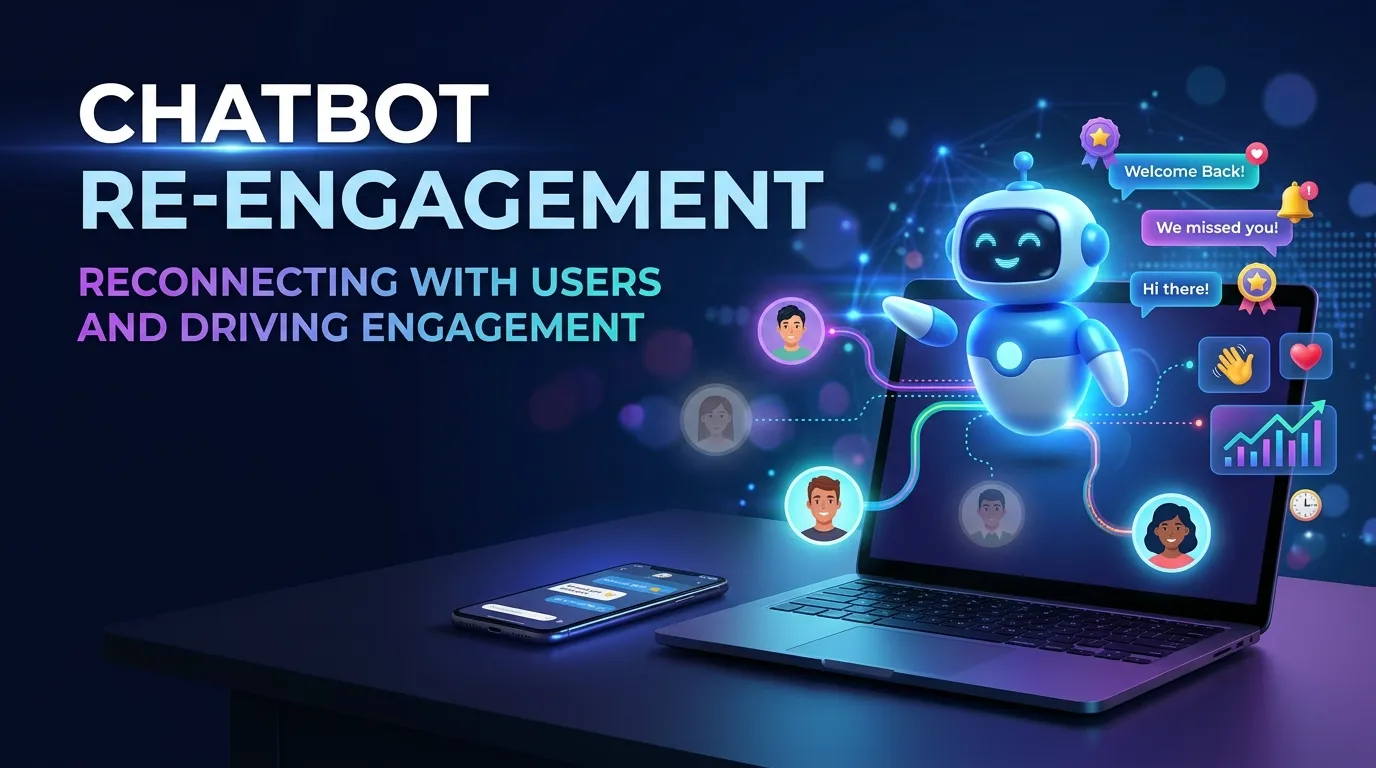
Chatbot re-engagement helps businesses reconnect with users who have stopped interacting with their chatbots, abandoned conversations, or shown reduced interest in a product or service. Through personalized messaging, automated follow-ups, behavior-based triggers, and thoughtful timing, businesses can encourage users to return without overwhelming them. A successful approach focuses on relevance, customer preferences, and meaningful conversations that support long-term engagement rather than simply increasing message volume.
A user might open a chatbot to ask about a product, explore a service, check an order, or find an answer to a specific question. The conversation may begin with strong interest, yet end before the user takes the next step. Someone might leave a product inquiry unanswered, abandon a booking process, or stop responding after receiving an initial recommendation. These moments do not always mean the user has lost interest. Sometimes they need more information, become distracted, or are not ready to make a decision.
Chatbot re-engagement gives businesses an opportunity to reconnect with these users through relevant, timely, and helpful conversations. Rather than treating every inactive user as a lost prospect, businesses can identify meaningful engagement opportunities and offer information that matches the user’s previous interaction.
The challenge is finding the right balance. Repeated messages can feel intrusive, while generic follow-ups may fail to provide a reason to return. Effective re-engagement depends on understanding why users disengage, recognizing their interests, and choosing an appropriate moment to continue the conversation.
When implemented thoughtfully, chatbot re-engagement can support lead nurturing, improve customer experiences, recover incomplete interactions, and strengthen retention. Its value comes not from sending more messages, but from making the next conversation worth having.
Why Users Stop Interacting With Chatbots
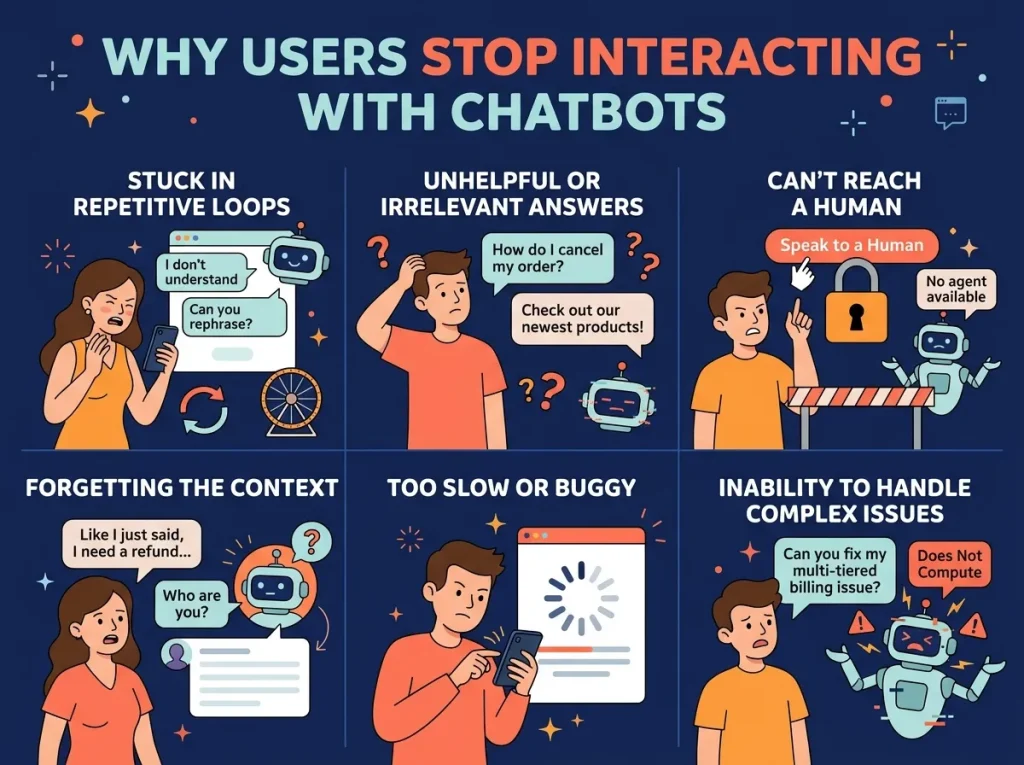
User inactivity can happen for several reasons, and the reason often determines whether another message will be helpful. A visitor may leave because the chatbot could not answer a question, requested too much information, or provided options that did not match the visitor’s needs. Others may simply be comparing alternatives or waiting until they have more time to continue.
Some users disengage because the conversation has reached a natural stopping point. Someone who asks about business hours may have received everything they need. Sending another message simply to restart that conversation could create frustration rather than additional engagement.
Businesses therefore need to distinguish between meaningful inactivity and normal completion. A conversation that ends after a successful support interaction is different from a conversation that stops halfway through a product comparison or appointment booking. Treating both situations identically can lead to irrelevant messaging.
Understanding these differences also helps organizations improve the chatbot itself. If users repeatedly leave at the same question, the problem may be the conversation design rather than a lack of follow-up messages. If users disengage after being asked to provide personal details, the chatbot may need to explain why that information is necessary or offer a simpler alternative.
A strong re-engagement approach considers the entire conversation history. It looks at what the user wanted, what information they received, and what may have prevented them from continuing. This context makes it easier to decide whether a follow-up is appropriate and what it should offer.
Moving Beyond Generic Follow-Up Messages
One of the most common weaknesses in chatbot marketing is sending the same message to every inactive user. A generic reminder may be easy to automate, but it rarely reflects the different reasons people interact with a business.
A visitor who explored pricing may need a clearer explanation of costs. Someone who asked about a product feature may benefit from additional information, while a user who abandoned an appointment request may simply need a convenient way to resume the process. These situations require different conversations.
Effective chatbot re-engagement strategies begin with relevance. A follow-up should connect naturally to the user’s previous interaction and offer a useful next step. It might summarize information already discussed, answer a common question, provide access to a relevant resource, or invite the user to continue where they stopped.
This approach also creates a more natural connection between chatbot conversations and broader marketing activities. Businesses can adapt their messaging to the complexity of the offer, the user’s level of interest, and the communication preferences associated with the interaction. The distinction between business and consumer audiences matters here, because their expectations and decision-making processes may differ. A thoughtful approach to B2B and B2C Chatbot Strategies can help businesses align re-engagement messages with the needs of different customer groups.
The purpose is not to pressure users into returning. It is to make returning useful, easy, and relevant to their original intent.
Personalization That Makes Conversations Feel Relevant
Personalization is most effective when it reflects genuine context rather than simply inserting a user’s name into a message. A chatbot may know which product a visitor explored, which question they asked, or which stage of a process they reached. Used appropriately, this information can help create a follow-up that feels connected to the user’s needs.
Personalized chatbot messages might refer to an unfinished inquiry, provide additional details about a previously discussed service, or offer a clear way to revisit a saved selection. The message should make the connection understandable without revealing unnecessary personal information or creating the impression that the business is monitoring every action.
The quality of personalization depends on the quality of the underlying data. If a chatbot uses an outdated product preference or incorrectly assumes that a user completed an action, the message can feel confusing. Businesses should rely on current, relevant information and avoid making claims about user behavior when the available data is uncertain.
Personalization should also account for different levels of familiarity. A first-time visitor may need a simple explanation, while a returning customer may prefer a direct route to support or account information. Recognizing these differences helps businesses avoid repeating information users already know.
There is also a creative opportunity to make chatbot conversations more engaging. Interactive questions, short narrative sequences, and useful content can give people a reason to participate rather than merely respond to a reminder. Approaches such as Interactive Storytelling with AI Chatbots demonstrate how conversational experiences can be structured around audience interests and ongoing interaction.
The strongest personalization feels helpful because it reduces effort. It gives users a more relevant starting point without making the conversation unnecessarily complicated.
Automated Follow-Ups That Respect User Intent
Automation allows businesses to reconnect with users without manually reviewing every incomplete conversation. However, the presence of an automation tool does not guarantee that a follow-up is appropriate. The quality of the result depends on the event that starts the message, the conditions that determine eligibility, and the information included in the communication.
Automated chatbot follow-ups can be useful when a user leaves a process unfinished, asks for information that requires a later response, or expresses interest in an offer but does not complete the next step. The automation should have a clear purpose and should stop when the reason for the follow-up no longer exists.
For example, if a visitor requests details about a service and then receives the information, a later message could offer assistance with an unanswered question. If the visitor has already booked a consultation, however, an earlier booking reminder should not continue as though the action remains incomplete. Keeping automation connected to current user status prevents contradictory communication.
Automation also needs sensible limits. A sequence should not continue indefinitely simply because a contact remains inactive. Businesses can define a reasonable number of attempts, stop messages after a response, and provide a straightforward way for users to decline further communication.
These processes work best when the chatbot is connected to relevant business systems. Customer relationship management platforms, booking tools, and marketing automation software can help synchronize activity and prevent duplicate or outdated messages. For more complex operations, the principles behind How AI Chatbot Development Automates Business Communication show how automated systems can support communication across business workflows.
Automation should preserve the convenience of a chatbot conversation. When a user returns, the system should recognize the relevant context where appropriate and offer a simple route to the next useful action.
Choosing the Right Moment to Reconnect
Timing influences how a follow-up is received. A message sent immediately after a user leaves may arrive before the person has had time to consider the information. A message sent much later may feel disconnected from the original interaction.
Re-engagement message timing should reflect the purpose of the conversation and the user’s likely decision process. A reminder connected to an incomplete booking may be useful relatively soon, while a complex business purchase may involve a longer evaluation period. There is no single delay that works for every audience or situation.
Businesses can use previous engagement data to identify patterns. If users tend to return to a particular process within a short period, a relevant reminder may help them continue. If a longer interval produces more meaningful responses, the business can adjust its approach accordingly. These patterns should be evaluated by audience and use case rather than applied universally.
Timing also involves frequency. Multiple reminders in a short period can make a chatbot feel persistent rather than helpful. A carefully limited sequence with meaningful intervals is usually more considerate than repeated messages triggered by every small action.
Time zones and communication preferences deserve attention as well. A message that is appropriate during a user’s normal waking hours may be inconvenient at another time. Businesses should account for available preferences and avoid unnecessary interruptions.
The most useful timing strategy is responsive rather than rigid. It adapts to the context of the interaction, respects user choices, and gives people enough space to decide whether they want to continue.
Using Behavioral Triggers to Identify Re-engagement Opportunities
A chatbot needs a reliable reason to initiate a follow-up. Without a clear trigger, businesses may send messages to people who have already completed their task or have little interest in continuing.
Chatbot follow-up triggers can be based on meaningful events, such as an unfinished form, an interrupted product inquiry, an unanswered question, or a requested update that becomes available. These events provide a stronger basis for re-engagement than inactivity alone because they reveal a specific opportunity to help.
The trigger should also include conditions that confirm whether the message is still relevant. If a user completes a purchase, cancels a booking, changes a preference, or opts out of marketing communications, the automation should respond appropriately. A message that ignores these changes can undermine trust.
Triggers should not be so sensitive that every pause creates another communication. People often take time to read, compare options, or decide what to ask next. A brief silence is not necessarily a sign of lost interest, and treating it as one may produce unnecessary messages.
Businesses can also use triggers to identify service-related opportunities rather than purely promotional ones. A user who encountered a problem may benefit from an invitation to return to the conversation with support. A person who requested an update may appreciate a notification when the requested information is ready, provided the notification is permitted and expected.
By linking triggers to meaningful intent, businesses can create more useful re-engagement experiences and reduce messages that serve only the sender’s marketing objectives.
Re-engaging Inactive Users Without Creating Message Fatigue
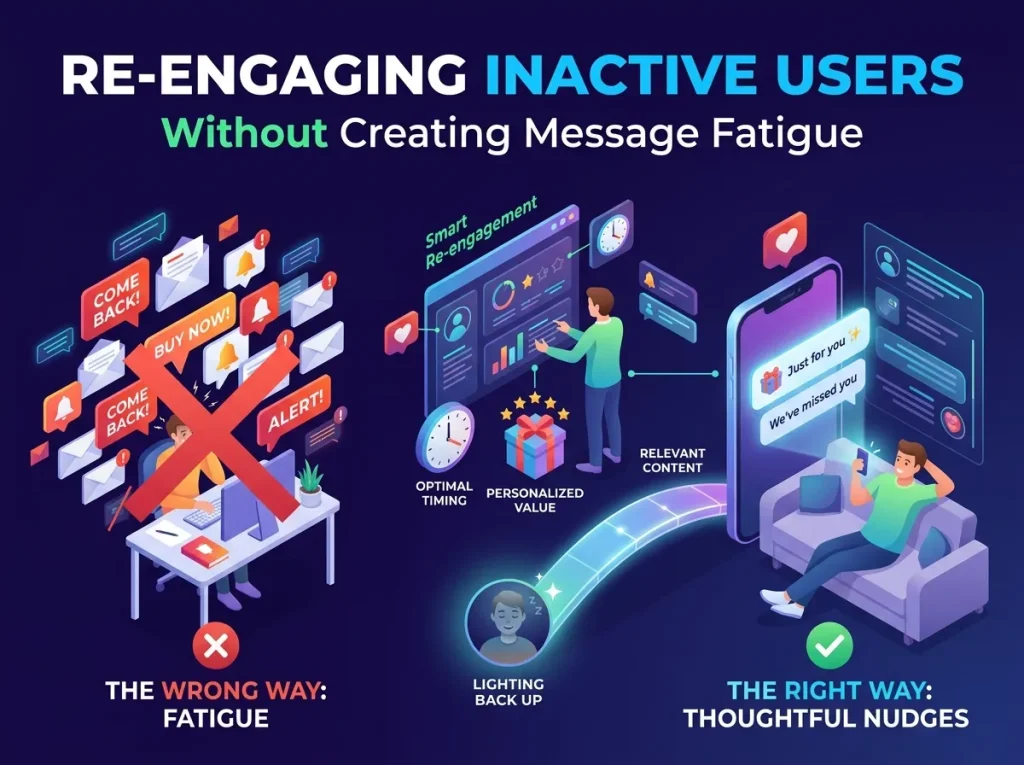
Inactive users are not a single audience. Some may have lost interest, others may be waiting for a better opportunity, and some may have completed their research without needing further assistance. A thoughtful approach recognizes these differences rather than repeatedly treating every inactive contact as a potential conversion.
Inactive user re-engagement should begin by considering the last meaningful interaction and the value of reconnecting. A user who explored several product options may respond to a useful comparison, while someone who asked a support question may need a resolution rather than a promotional offer.
Businesses should also recognize when not to send another message. If a user has explicitly opted out, repeatedly ignored several follow-ups, or shown no continuing interest, additional outreach may be inappropriate. Respecting those signals helps preserve the quality of the relationship.
Message fatigue can also develop when multiple business systems contact the same person independently. A chatbot may send a reminder while email automation delivers a similar message and a sales representative follows up separately. Coordinating communication across channels can reduce duplication and help users receive a more consistent experience.
For this reason, re-engagement should be connected to a broader communication strategy. Chatbot Marketing Notifications explores the role of timely notifications in maintaining engagement, and the same principle applies to re-engagement: notifications should have a clear purpose and deliver information that matters to the recipient.
A successful campaign does not need to bring every inactive user back. It needs to make worthwhile opportunities available while respecting the people who choose not to continue.
Measuring Chatbot Retention and Re-engagement Results
A chatbot re-engagement campaign should be evaluated by what happens after a message is delivered, not merely by how many messages the system sends. Delivery and response rates can provide useful early signals, but they do not necessarily demonstrate that the campaign is improving the customer experience or producing meaningful business outcomes.
Chatbot user retention can be assessed by examining whether users return to conversations, continue previously interrupted tasks, complete desired actions, or maintain engagement over time. The appropriate measure depends on the purpose of the chatbot. A support chatbot may focus on successful issue resolution and reduced repeated inquiries, while a sales chatbot may measure qualified conversations or completed bookings.
Businesses should distinguish between a response and a valuable outcome. A user might open a conversation out of curiosity without progressing toward a relevant action. Conversely, a small number of returning users may generate substantial value if they complete high-intent actions or receive the assistance they need.
Comparing different message versions can reveal which approaches perform better. Businesses may test different wording, timing, or follow-up offers, while changing one major variable at a time where practical. They should also compare results across meaningful audience segments, because a message that works for new visitors may perform differently for existing customers.
Longer-term analysis is important too. A campaign may generate immediate responses but reduce engagement later if messages feel repetitive. Monitoring opt-outs, negative feedback, unresolved conversations, and repeat engagement can help businesses understand the wider effects of their approach.
Reliable measurement also depends on accurate event tracking. Teams need consistent definitions for a returning user, a completed conversation, a qualified lead, and a successful outcome. Without these definitions, performance reports can be misleading.
When businesses combine behavioral data with qualitative feedback, they can identify not only which messages perform well, but why users respond to them. That understanding creates a stronger foundation for improving future re-engagement campaigns.
Building Re-engagement Into the Customer Experience
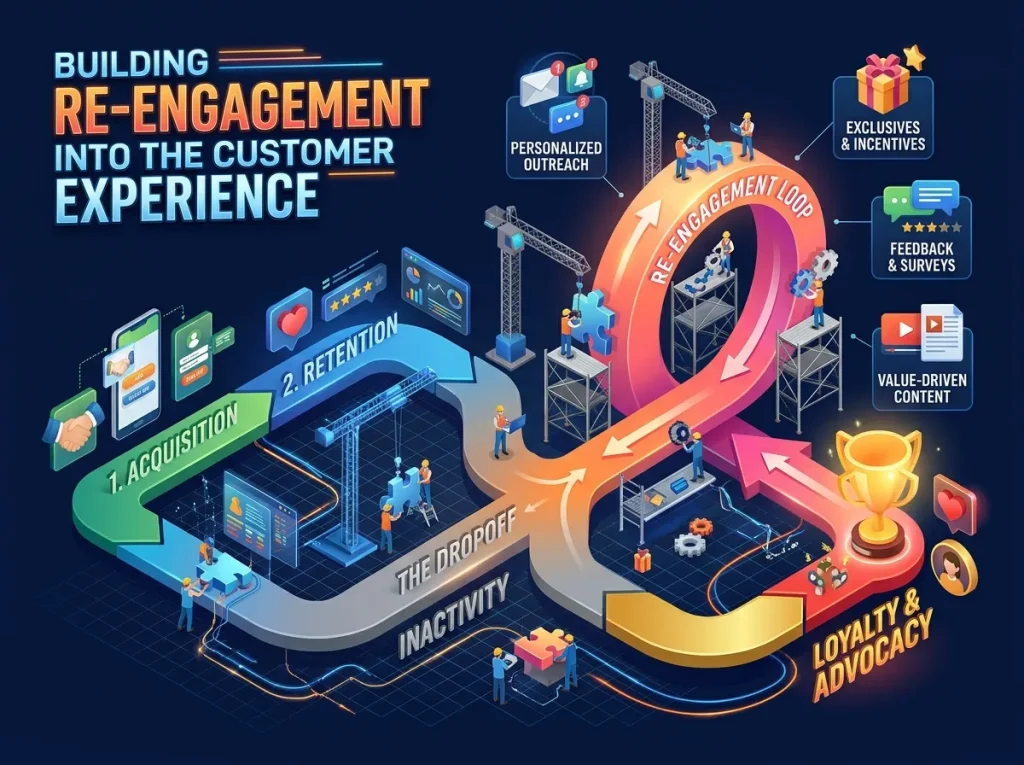
Re-engagement is most sustainable when it feels like a natural continuation of the customer journey. Rather than treating it as an isolated campaign, businesses can connect it with the conversations, support processes, and customer preferences that already shape their chatbot experience.
Customer re-engagement automation should maintain continuity between the original interaction and the follow-up. When a user returns, the chatbot should provide relevant context without forcing the person to repeat information unnecessarily. If the conversation requires a human representative, the handoff should preserve important details so that the user does not need to start over.
Businesses should also give users meaningful control over their experience. Clear options to continue, ask a question, change communication preferences, or end the interaction make the chatbot easier to use. When people understand what happens next, they can make decisions without feeling pressured.
Re-engagement can support retention messaging as well. Existing customers may need help discovering a feature, understanding a service, or resolving a problem after their initial purchase. Chatbot retention messaging can provide useful information at these moments, as long as it reflects the customer’s actual needs and does not become a stream of unrelated promotions.
This requires coordination between chatbot design, customer support, marketing, and data management. Each team should understand what information is available, which communications are appropriate, and how user preferences are maintained. Consistency across these functions helps prevent the chatbot from making promises that other systems cannot fulfill.
Ultimately, a chatbot should not attempt to restart every conversation. Its role is to make it easier for people to return when doing so offers real value. By prioritizing context, convenience, and respect, businesses can transform re-engagement from a repetitive marketing tactic into a useful part of the customer experience.
Conclusion
Chatbot re-engagement helps businesses reconnect with users who have paused their interactions, abandoned a process, or become less active. Its effectiveness depends on understanding user intent, choosing relevant follow-up messages, using appropriate triggers, and selecting timing that respects individual preferences.
Personalization and automation can make these conversations more useful, but they need reliable data, sensible limits, and clear rules for stopping messages when they are no longer appropriate. Measuring meaningful outcomes rather than message volume helps businesses understand whether their efforts are improving retention and customer experiences.
The strongest approach treats every follow-up as an opportunity to provide value. When businesses use chatbot re-engagement to answer questions, simplify unfinished tasks, and support genuine customer needs, they can encourage users to return while building trust over time.
Frequently Asked Questions
1. What is chatbot re-engagement?
Chatbot re-engagement is the process of reconnecting with users who have stopped interacting with a chatbot or left a conversation unfinished. It uses relevant follow-ups and conversational prompts to help users return when they have a reason to continue.
2. Why is chatbot re-engagement important?
It can help recover incomplete interactions, support lead nurturing, improve customer retention, and provide useful information to users who may still be interested in a product or service.
3. What are effective chatbot re-engagement strategies?
Effective strategies include personalized follow-ups, behavior-based triggers, useful reminders, relevant content recommendations, and communication sequences that respond to user activity and preferences.
4. How does chatbot personalization improve re-engagement?
Personalization connects a follow-up to a user’s previous questions, interests, or unfinished tasks. This makes the message more relevant and reduces the effort required to resume the conversation.
5. When should a chatbot send a re-engagement message?
Timing depends on the conversation and the action involved. A booking reminder may be useful relatively soon, while a complex purchasing decision may require more time. Businesses should test timing and avoid excessive reminders.
6. What triggers can start a chatbot follow-up?
Triggers may include an unfinished booking, an incomplete inquiry, a requested update, or a relevant action that indicates the user may benefit from further assistance. Triggers should account for completed tasks and communication preferences.
7. How can businesses re-engage inactive users without annoying them?
They should send relevant messages, limit follow-up frequency, coordinate communication across channels, respect opt-outs, and stop contacting users when there is no appropriate reason to continue.
8. How does chatbot re-engagement support customer retention?
It helps customers return to useful conversations, discover relevant information, complete unfinished tasks, and receive timely assistance. These experiences can strengthen relationships when they meet genuine customer needs.
9. How can businesses measure chatbot re-engagement success?
They can measure returning users, completed actions, qualified conversations, retention, and relevant conversion outcomes. Opt-outs, negative feedback, and repeated unresolved conversations should also be monitored.
10. What is the difference between chatbot re-engagement and chatbot retention?
Re-engagement focuses on bringing inactive users back into a conversation. Retention focuses on maintaining an ongoing relationship and continued use. Re-engagement can contribute to retention, but the two serve different purposes.