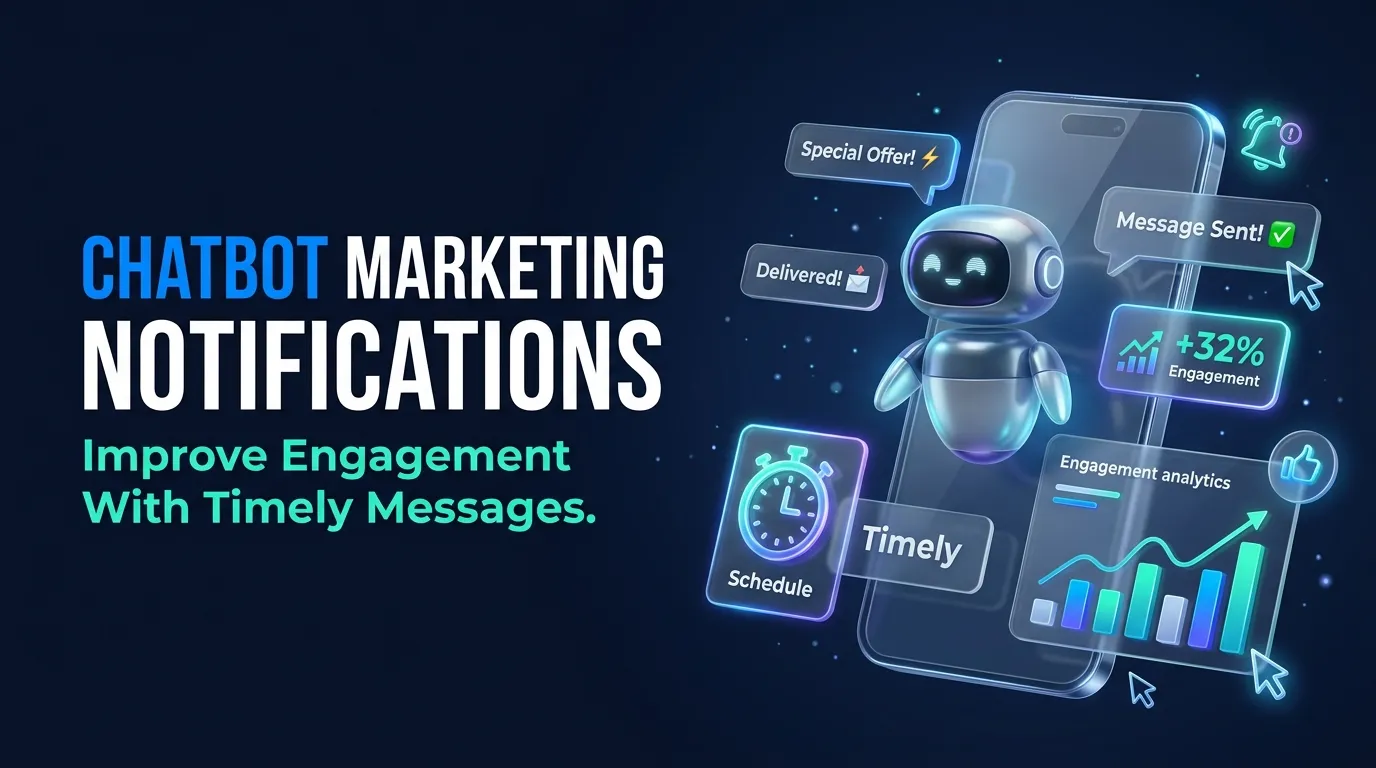
Chatbot Marketing Notifications help businesses send timely, personalized messages that improve engagement and conversions. Through automated alerts, relevant promotions, push notifications, and real-time communication, businesses can connect with customers effectively. Responsible personalization, clear consent, and regular performance analysis help strengthen customer relationships and improve chatbot marketing results.
Businesses increasingly use chatbots to communicate with customers, share relevant updates, promote products, and provide assistance throughout the buying journey. However, the value of these interactions depends on delivering the right information at the right moment. Chatbot Marketing Notifications help businesses send timely, relevant messages that encourage engagement without requiring every interaction to begin with a manual response from a team member.
These notifications may include product announcements, personalized offers, reminders, abandoned-cart messages, service updates, and follow-ups based on customer interactions. When they are designed around customer needs, they can make communication more convenient and help businesses maintain meaningful relationships with their audiences.
Poorly managed notifications can have the opposite effect. Repetitive alerts, irrelevant promotions, excessive messaging, and inconvenient timing may frustrate users and weaken trust. Businesses therefore need a balanced approach that combines automation, personalization, appropriate frequency, and clear communication.
Effective chatbot notifications are not simply messages sent at scale. They are part of a broader customer communication strategy that uses relevant information to deliver helpful interactions. With thoughtful planning and continuous evaluation, businesses can improve engagement, support conversions, and create a more consistent customer experience.
Understanding Chatbot Marketing Notifications
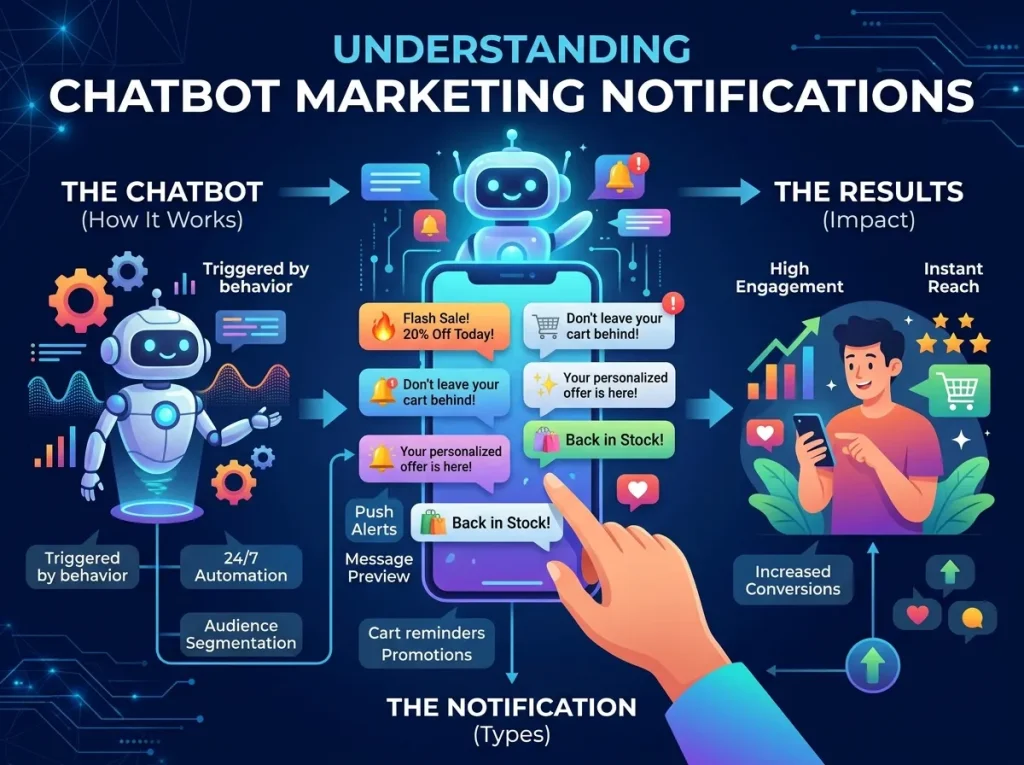
Chatbot Marketing Notifications are automated messages delivered through chatbot interfaces or supported messaging channels to inform, remind, engage, or encourage customers to take an action. These notifications may be triggered by a user’s behavior, a specific event, a scheduled campaign, or a change in customer status.
For example, a retail chatbot may notify a customer about a product they previously explored, while a service business may send a reminder about an upcoming appointment. A company promoting an online event might use chatbot messages to announce registration details, answer common questions, or remind interested users when registration is about to close.
The main advantage of these notifications is their ability to connect communication with context. Rather than sending the same message to everyone, businesses can use relevant customer interactions to determine which information may be useful. This approach helps make automated communication feel more connected to the customer’s needs.
Notifications can also support different stages of the customer journey. Early interactions may introduce a product or answer basic questions, while later messages may provide additional details, remind users about unfinished actions, or explain the next step in a purchase process. The message should match the customer’s current situation rather than assume that every interaction signals immediate buying intent.
Businesses must also distinguish marketing notifications from essential service communications. Promotional messages encourage discovery or purchases, while transactional updates provide information about an existing order, booking, or account activity. These communications may be subject to different consent and compliance requirements, so their purpose should be clearly identified.
Automated Chatbot Notifications and Consistent Communication
Automated Chatbot Notifications allow businesses to deliver messages based on predefined conditions without requiring staff to manually send every update. This can reduce repetitive work and help customers receive relevant information when it becomes useful.
Automation may be triggered by actions such as signing up for updates, browsing a product category, requesting information, beginning a checkout, or interacting with a particular chatbot feature. Businesses can also schedule messages around product launches, events, seasonal promotions, or other planned activities.
The quality of automation depends on the conditions that trigger each message. If every website visitor receives the same promotion regardless of their interests, the communication may feel generic. If a notification is triggered too frequently, customers may receive several messages that repeat the same information. Clear trigger rules help prevent these problems.
Automated messages should also account for changes in customer behavior. If a customer completes a purchase, a reminder encouraging them to buy the same item may no longer be appropriate. If someone has already registered for an event, the system should switch from registration prompts to useful event updates.
Well-designed automation creates consistency while allowing communication to adapt to the situation. It also gives marketing teams more time to improve message quality, review campaign performance, and focus on interactions that require human judgment.
Chatbot Promotional Alerts That Encourage Action
Chatbot Promotional Alerts inform customers about offers, new products, special events, limited-time promotions, and other opportunities relevant to their interests. Their effectiveness depends on communicating a clear benefit without overwhelming users or relying on exaggerated claims.
A useful promotional alert quickly explains why the information matters. A customer interested in a particular product category may appreciate an update about a relevant launch, while a returning shopper may be more interested in an offer related to previous purchases. A message that connects the promotion to an identifiable interest is more likely to feel useful than a broad announcement with no clear relevance.
Promotional alerts should also provide accurate information about prices, eligibility, expiration dates, and restrictions. If an offer is described as limited-time, the stated deadline should be genuine. Misleading urgency may generate short-term attention, but it can damage customer confidence and discourage future engagement.
The call to action should match the purpose of the message. Customers may be invited to explore a product, read further details, claim an eligible offer, or continue a purchase. Clear next steps reduce confusion and help users understand what will happen when they interact with the notification.
Businesses should consider promotional alerts as part of a broader campaign rather than isolated messages. Their content should complement website information, email communications, and other marketing activities so that customers receive a consistent explanation of the offer wherever they encounter it.
Marketing Bot Notification System and Campaign Coordination
A Marketing Bot Notification System brings together the rules, customer information, messaging templates, delivery channels, and performance records used to manage automated notifications. It helps businesses coordinate campaigns and maintain greater control over when messages are sent and who receives them.
A reliable system needs accurate audience data and clear trigger conditions. If contact records are outdated or customer preferences are not reflected in the system, notifications may be sent to the wrong audience or delivered after they are no longer relevant. Maintaining data quality is therefore an important part of notification management.
The system should also support clear visibility into message status. Marketing teams may need to know whether a notification was queued, delivered, opened where tracking is available, or followed by an interaction. These records help identify delivery problems and distinguish technical issues from weak message performance.
Integration with other marketing tools can improve coordination. For example, a chatbot may use information from a customer relationship management system to identify a lead’s status or prevent an existing customer from receiving an irrelevant acquisition offer. These integrations should be configured carefully so that data remains accurate and access is appropriately controlled.
The purpose of a notification system is not to maximize the number of messages sent. It is to help businesses deliver useful communication reliably, maintain consistent campaign rules, and manage customer interactions with less unnecessary effort.
Personalized Chatbot Messages and Customer Relevance
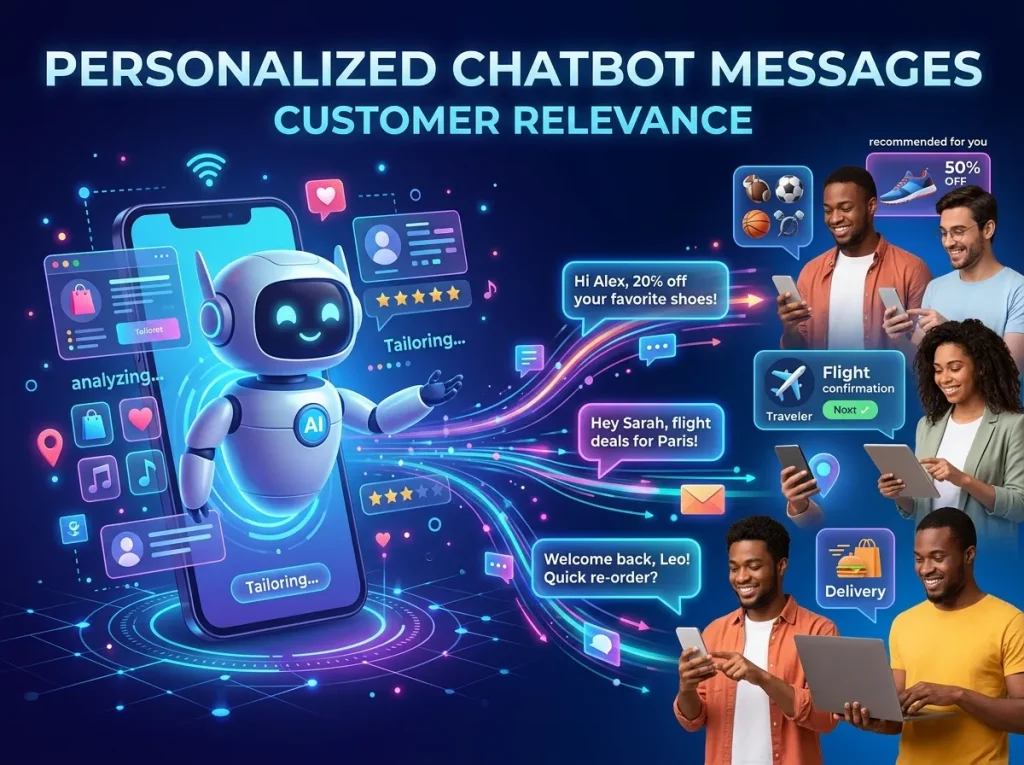
Personalized Chatbot Messages adapt communication to a customer’s interests, actions, preferences, or stage in the buying journey. Personalization can be simple, such as using a customer’s preferred language, or more contextual, such as sharing information related to a product category they have explored.
Relevant personalization helps reduce the gap between what a business wants to promote and what a customer actually wants to know. Someone exploring a service may benefit from a comparison or explanation, while a returning customer may prefer information about an upgrade, complementary product, or support resource.
Personalization should rely on reliable information rather than unsupported assumptions. A single page visit does not necessarily mean a customer is ready to purchase, and previous interest may no longer reflect their current needs. Messages should allow users to explore options without making them feel pressured into an immediate decision.
Customer preferences are equally important. Businesses should provide clear ways for users to manage marketing communications where appropriate, and they should respect opt-outs and channel-specific consent requirements. Personalized communication should improve relevance, not create the impression that a business is monitoring customers in an intrusive way.
A well-designed personalization strategy can make chatbot interactions feel more helpful and natural. When messages respond to genuine customer needs and provide a clear benefit, they are more likely to support sustained engagement than generic promotional messages sent indiscriminately.
Chatbot Push Notifications and Timely Delivery
Chatbot Push Notifications can alert users to relevant updates through supported notification channels, depending on the chatbot platform and the permissions a user has granted. These notifications may promote new content, remind customers about an unfinished task, announce an offer, or direct users back to an ongoing conversation.
Push notifications are particularly sensitive to timing because they appear outside the immediate conversation in some implementations. A message that arrives at an inconvenient moment can interrupt the user, while a timely reminder may help them complete an action they intended to finish.
The best delivery time depends on the audience, message purpose, time zone, channel, and customer preferences. A reminder about an upcoming appointment should be scheduled around the appointment, while a product promotion may be better delivered when the customer is likely to engage with that type of content. Businesses should use observed behavior and campaign testing instead of assuming that one time works for every audience.
Frequency is just as important as timing. Several notifications in a short period may lead users to mute the channel or disable notifications altogether. Frequency limits, campaign priorities, and suppression rules can prevent multiple systems from sending overlapping alerts.
Push notifications should provide enough context for users to understand their value. Short, descriptive messages with a clear destination are generally more useful than vague alerts that force users to open the conversation simply to discover what the notification concerns.
Automated Customer Engagement Alerts Across the Customer Journey
Automated Customer Engagement Alerts help businesses maintain communication as customers move from initial discovery toward consideration, purchase, and continued use. These alerts may introduce relevant resources, remind users about pending actions, share onboarding information, or invite feedback after an interaction.
The customer journey provides a useful context for deciding which messages are appropriate. A new visitor may need an introduction to a service, while someone who has already requested a demonstration may need scheduling information. After a purchase, the focus should shift toward useful support, setup assistance, or relevant follow-up rather than repeating acquisition messages.
Businesses can connect engagement alerts with their broader lead management process. For example, a chatbot may identify a visitor who asks about pricing or requests a consultation and pass the relevant details to a sales team. Bots for Lead Generation explores how chatbots can support lead capture and qualification, which can complement notification-based engagement when the transition from automated interaction to human follow-up is carefully managed.
The handoff between messages and human assistance should be clear. If a user asks a complex question or requests direct support, the system should provide an appropriate path to a representative rather than continuing to send generic automated alerts. This flexibility helps ensure that automation supports the relationship instead of becoming a barrier.
Engagement alerts are most valuable when they respond to a meaningful need. By focusing on the next useful interaction rather than sending messages simply to maintain activity, businesses can create a more helpful experience and reduce unnecessary communication.
Chatbot Notification Personalization and Audience Segmentation
Chatbot Notification Personalization uses audience characteristics and interaction history to make alerts more relevant to different customer groups. Segmentation may be based on expressed interests, purchase history, selected preferences, customer status, or engagement with particular products and services.
A business serving several customer groups may need different messages for each one. New customers might benefit from introductory information, existing customers may appreciate updates about features or services they already use, and high-intent prospects may need details that help them evaluate a purchase. Segment-based communication allows each group to receive information suited to its relationship with the business.
Segmentation should remain manageable and purposeful. Creating too many small groups can complicate campaign operations without delivering meaningful improvements. Businesses should prioritize differences that genuinely affect what customers need to know and use those distinctions to guide message content and timing.
Data accuracy is essential for effective personalization. Outdated purchase records or incorrect customer classifications can lead to irrelevant messages. Regular data reviews and simple rules for updating customer status help ensure that notifications remain appropriate as relationships change.
Personalization also benefits from customer control. Preference centers, clear opt-out options, and straightforward explanations of communication choices help users decide what they want to receive. Respecting these choices supports trust and helps businesses maintain a more engaged audience.
Conversational Marketing Alerts That Build Relationships
Conversational Marketing Alerts encourage customers to continue an interaction with a brand through a chatbot or supported messaging channel. Unlike a one-way promotional announcement, these alerts can invite a response, offer useful choices, or help a customer find the information they need.
For example, a message may invite a customer to explore product options, answer a question about a service, or view information relevant to a recent inquiry. The conversation should remain focused on the user’s likely needs and provide a straightforward path to additional help when required.
A natural conversational tone can make messages easier to understand, but it should not create misleading expectations. Customers should be able to recognize when they are interacting with an automated system and understand how to reach a human representative when needed. Clear communication is especially important when questions involve complicated service issues, account concerns, or decisions that require individual attention.
Conversational alerts can also support ongoing relationships after a purchase. A business might share a relevant setup resource, explain a useful feature, or invite feedback about a recent experience. These interactions can provide value beyond the initial sale while helping businesses understand customer questions and preferences.
The most effective conversational marketing focuses on usefulness rather than constant promotion. When customers can easily find relevant information and control the direction of the interaction, chatbot communication becomes a practical service rather than another source of unwanted marketing noise.
Chatbot Message Delivery Optimization and Performance
Chatbot Message Delivery Optimization focuses on improving the reliability, timing, relevance, and overall effectiveness of notifications. A message can be well written but still underperform if it reaches the wrong audience, arrives too frequently, or leads to a destination that does not match the promise of the alert.
Delivery performance should be evaluated alongside customer response. Depending on the platform, businesses may be able to review delivery rates, opens, clicks, chatbot replies, completed actions, conversions, opt-outs, and reports of unwanted messaging. Each metric offers a different perspective on how notifications perform.
Chatbot Engagement Analytics can help marketers assess interactions and understand which messages contribute to meaningful outcomes. Reviewing these results over time allows teams to identify whether problems arise from delivery, content, audience selection, timing, or the experience that follows a click.
Testing can improve performance when it focuses on clear questions. A business might compare two message openings, test different delivery windows, or examine whether a shorter call to action produces more completed interactions. Changes should be evaluated using suitable samples and meaningful outcomes rather than relying on a small number of responses.
Optimization should also consider negative signals. High opt-out rates, declining engagement, repeated user complaints, and frequent message dismissals may indicate that notifications are too intrusive or insufficiently relevant. These signals deserve attention even when a campaign generates clicks or short-term sales.
A balanced optimization process considers customer experience alongside commercial performance. The goal is to deliver the most useful message through an appropriate channel at a suitable time, not simply to increase notification volume.
Real-Time Marketing Notifications and Responsible Automation
Real-Time Marketing Notifications allow businesses to respond to customer actions or relevant events with minimal delay. A chatbot may acknowledge a new inquiry, confirm that a requested action was completed, or provide information connected to a product or service a customer is currently exploring.
Real-time communication can be valuable when timing directly affects usefulness. A response to a pricing question may help a customer continue evaluating a service, while an update about a completed booking can provide immediate reassurance. However, not every marketing message needs to be sent instantly. Promotional content may be more effective when delivered at a suitable time rather than immediately after every interaction.
Real-time systems depend on reliable event tracking, clear triggering rules, and appropriate safeguards. Duplicate events, delayed integrations, or incorrect customer records can result in repeated or contradictory notifications. Businesses should test these systems and ensure that users do not receive the same message multiple times because of a technical issue.
Responsible automation also requires attention to privacy and consent. Businesses should respect the permissions associated with each channel, provide suitable options for managing marketing messages, and avoid using sensitive or unnecessary personal information to trigger promotions. Applicable privacy and messaging regulations should guide how customer information is collected and used.
Bot-Based Marketing provides broader context for how bots can support marketing activities. Within that wider approach, real-time notifications work best when they complement useful conversations, accurate information, and customer-controlled communication.
Chatbot Marketing Notifications for Sustainable Engagement
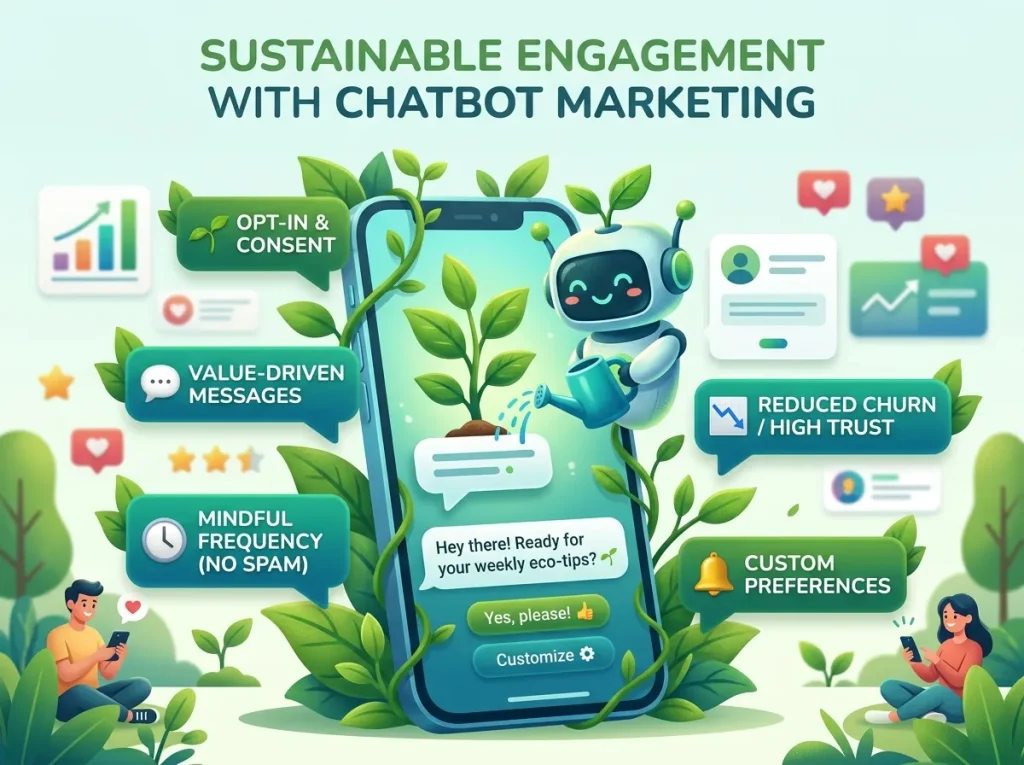
Effective Chatbot Marketing Notifications combine timely delivery, relevant content, thoughtful personalization, and reliable automation. They help businesses communicate important information, support customer decisions, and maintain engagement across different stages of the customer journey.
A well-managed notification strategy also depends on coordination between marketing tools, customer records, chatbot workflows, and human support teams. Chatbot Automation for Business Growth offers a related perspective on using automation to support business operations and customer interactions. When notification workflows are aligned with these broader processes, businesses can create a more consistent experience without relying on repetitive manual communication.
Long-term success comes from treating customer attention as something to respect. Businesses should send messages because they provide a relevant benefit, make it easy for customers to manage their preferences, and continually evaluate both positive engagement and signs of fatigue.
Ultimately, chatbot notifications are most effective when automation serves a clear communication purpose. By balancing business goals with customer needs, organizations can improve engagement, strengthen trust, and make their marketing communication more useful over time.
Frequently Asked Questions
1. What are Chatbot Marketing Notifications?
Chatbot Marketing Notifications are automated messages delivered through chatbot interfaces or supported messaging channels to share promotions, reminders, product updates, and relevant information. They help businesses maintain customer communication and encourage useful interactions throughout the customer journey.
2. How do Automated Chatbot Notifications work?
Automated Chatbot Notifications use predefined rules or customer actions to trigger messages. For example, a chatbot may send a follow-up after a product inquiry, provide an event reminder, or share information after a customer subscribes to updates.
3. What are Chatbot Promotional Alerts?
Chatbot Promotional Alerts are messages that inform customers about offers, product launches, discounts, events, or other marketing opportunities. Effective alerts communicate a clear benefit, provide accurate details, and include an appropriate next step.
4. How do Personalized Chatbot Messages improve engagement?
Personalized Chatbot Messages use relevant information, such as customer interests, previous interactions, or purchase history, to make communication more useful. When personalization is accurate and respectful, it can improve relevance and encourage customers to continue interacting with a business.
5. What are Chatbot Push Notifications used for?
Chatbot Push Notifications deliver alerts through supported notification channels, subject to platform capabilities and user permissions. They can announce relevant updates, remind customers about unfinished actions, promote suitable offers, or direct users to useful chatbot conversations.
6. What is a Marketing Bot Notification System?
A Marketing Bot Notification System manages the rules, audience information, message templates, delivery channels, and reporting used for automated notifications. It helps businesses coordinate campaigns, control message frequency, monitor delivery, and maintain consistent communication.
7. How can businesses personalize chatbot notifications?
Businesses can personalize notifications by grouping audiences according to relevant interests, customer status, expressed preferences, or previous interactions. They should use accurate information, respect communication preferences, and avoid sending messages based on unsupported assumptions.
8. What is Chatbot Message Delivery Optimization?
Chatbot Message Delivery Optimization improves how reliably and effectively notifications reach the intended audience. It involves evaluating timing, delivery performance, message relevance, frequency, user responses, and conversions to identify opportunities for improvement.
9. How do Real-Time Marketing Notifications benefit customers?
Real-Time Marketing Notifications provide relevant information when it may be most useful, such as following an inquiry or completing an action. They can reduce uncertainty and help customers continue their journey, provided the messages are accurate, timely, and not unnecessarily intrusive.
10. How can businesses measure the success of Chatbot Marketing Notifications?
Businesses can evaluate delivery rates, opens where available, clicks, replies, completed actions, conversions, opt-outs, and customer feedback. Reviewing both positive results and signs of message fatigue helps organizations improve campaign performance while protecting the customer experience.