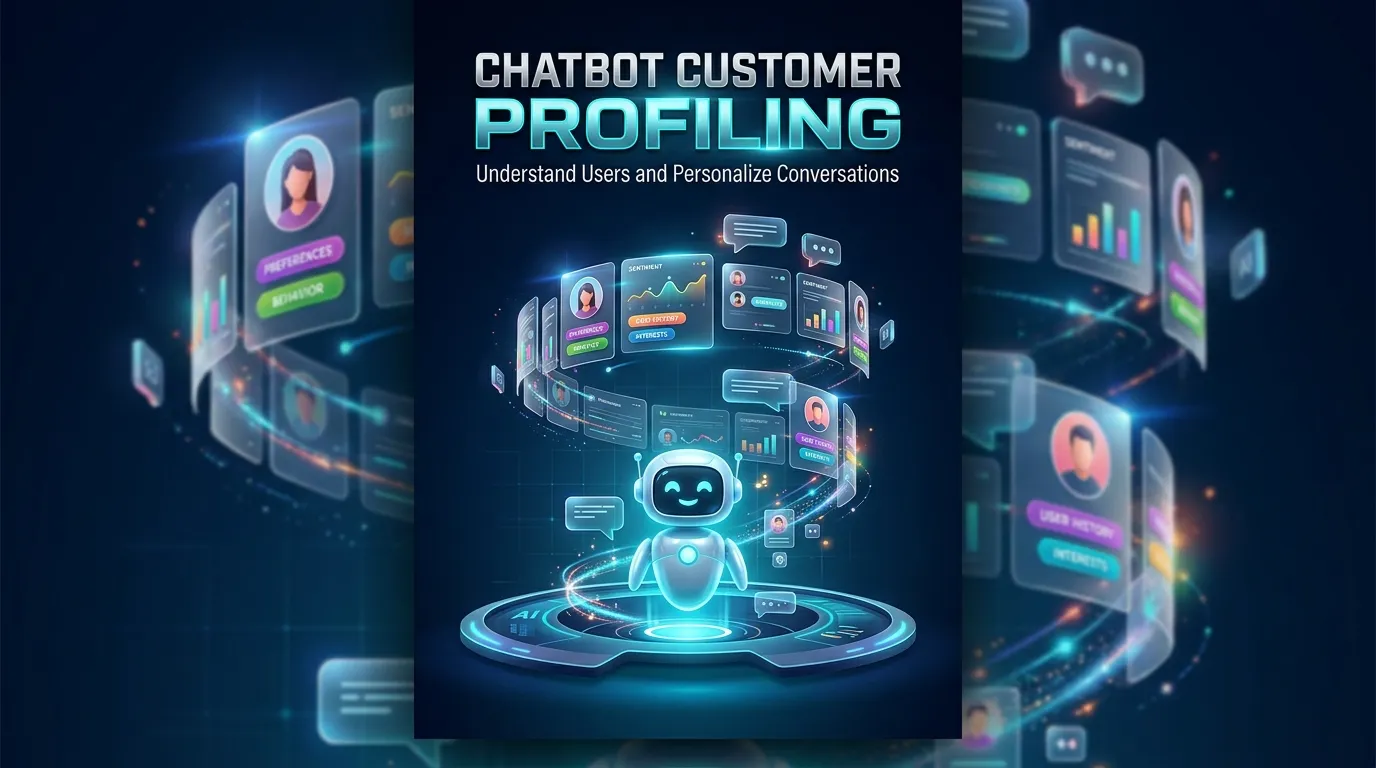
Chatbot Customer Profiling helps businesses understand user preferences, analyze conversational behavior, and create personalized chatbot experiences. By combining customer data collection, AI-powered analysis, audience segmentation, and preference tracking, organizations can provide more relevant responses, improve recommendations, and identify customer needs. Responsible profiling prioritizes transparency, data protection, accurate information, and customer control to build trust while improving chatbot performance.
Chatbot Customer Profiling helps businesses understand the people interacting with their chatbots by analyzing conversational patterns, customer preferences, behavioral signals, and relevant interaction data. Instead of delivering the same responses to every visitor, businesses can use customer profiles to create more relevant conversations, recommend suitable information, and improve the overall customer experience.
As chatbots become an important part of digital communication, understanding individual users is increasingly valuable. A chatbot may interact with prospective buyers, existing customers, returning visitors, or people who need technical support. Each group has different expectations, and customer profiling helps businesses recognize these differences so chatbot interactions can become more useful and personalized.
Understanding Chatbot Customer Profiling
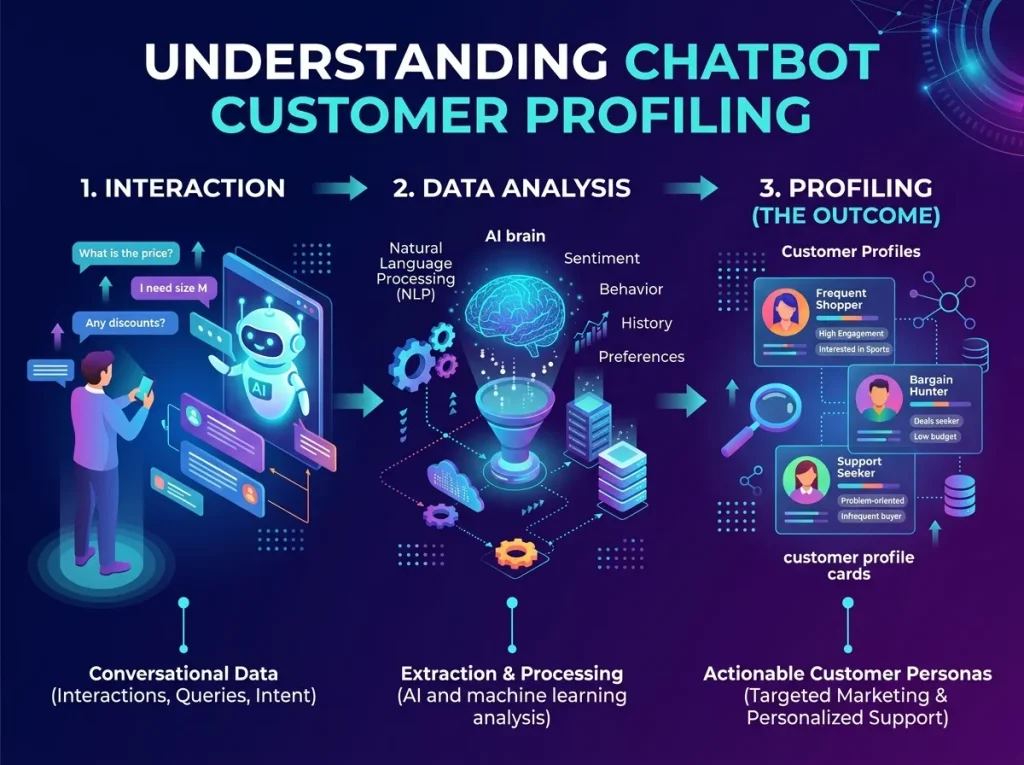
Chatbot customer profiling is the process of developing useful representations of chatbot users based on information gathered through conversations and other appropriately connected customer data sources. These profiles may include stated preferences, frequently asked questions, product interests, communication preferences, purchase intentions, and previous interactions when the information is available and the customer has permitted its use.
Unlike traditional customer profiling methods that often depend on forms, surveys, and manually collected information, chatbots can learn about customer needs through natural conversations. For example, a visitor asking about pricing, product compatibility, delivery options, and available plans may reveal interests that help a business provide more relevant information during the interaction.
Effective profiling does not require collecting every possible detail about a user. The objective is to identify information that supports a clear business purpose and improves the conversation. Businesses should prioritize relevant data, maintain transparency, and avoid collecting sensitive information that is unnecessary for the service being provided.
Why Customer Profiling Matters for Chatbots
A chatbot becomes more useful when it can recognize the context behind a customer’s questions. Without profiling, users may repeatedly explain their needs, receive generic recommendations, or navigate irrelevant information. A well-designed profiling process helps reduce these frustrations by allowing the chatbot to adapt its responses to the user’s stated goals and interaction history.
For businesses, these improvements can support customer satisfaction, lead qualification, product discovery, and customer support efficiency. A shopper looking for a particular product category can receive relevant product information, while a customer seeking assistance with an existing purchase can be directed toward the appropriate support resources.
Profiling also helps businesses identify broader patterns across conversations. When many users ask similar questions or express comparable preferences, organizations can use these insights to improve chatbot responses, identify gaps in their information resources, and understand which customer needs deserve more attention.
Chatbot User Profiling and Behavioral Insights
Chatbot User Profiling focuses on building a clearer understanding of individuals based on their interactions with a conversational system. Useful signals can include the topics users ask about, the options they select, the questions they repeat, and the type of assistance they request.
For example, a visitor who repeatedly asks about technical specifications may need detailed product information before making a decision. Another visitor who asks about delivery schedules and return policies may be evaluating the practical requirements of a purchase. These patterns can help a chatbot prioritize the information most relevant to each conversation without making unsupported assumptions about the customer’s identity or intentions.
Behavioral insights become more valuable when businesses evaluate them in context. A single question rarely provides enough evidence to establish a person’s preferences, while repeated interactions may reveal more consistent interests. Businesses should distinguish between what customers explicitly communicate and what a system merely infers from their behavior.
AI-Powered Customer Profiling for More Relevant Interactions
AI-Powered Customer Profiling can help businesses interpret conversational information at scale. Natural language processing and machine learning techniques can identify recurring topics, classify customer requests, recognize expressed preferences, and group similar interaction patterns. These capabilities allow chatbots to respond more intelligently than systems that rely exclusively on fixed keywords or decision trees.
For instance, an AI-enabled chatbot may recognize that several differently worded questions concern the same product feature. It can use this understanding to retrieve relevant information and maintain conversational context. When a customer has explicitly stated a preference, the chatbot may also use that information to tailor later recommendations, provided the system is designed to retain and reuse it appropriately.
AI should support customer understanding rather than replace careful judgment. Automated classifications can be incorrect, and a user’s intent can change during a conversation. Businesses should provide ways to correct inaccurate information, avoid treating predictions as confirmed facts, and monitor whether personalization produces useful outcomes.
Conversational Customer Data Analysis

Conversational Customer Data Analysis turns chatbot interactions into structured insights that businesses can use to improve customer experiences. Conversations may contain information about common concerns, product interests, preferred communication styles, unresolved issues, and frequently requested services. Analyzing these patterns can reveal what customers need and where existing support or marketing experiences fall short.
For example, repeated questions about a product’s compatibility may indicate that its product page needs clearer explanations. Frequent requests to speak with a human representative may reveal that a chatbot lacks the information or capabilities required to resolve certain issues. Rather than treating these conversations as isolated events, businesses can examine aggregated patterns to identify meaningful improvements.
Data analysis should follow appropriate privacy and retention practices. Businesses should collect only the information necessary for their stated purposes, restrict access to customer records, and establish clear policies for storing and deleting conversational data. Where possible, aggregated or de-identified information can support trend analysis without exposing individual customer details unnecessarily.
Customer Segmentation for Chatbots
Customer Segmentation for Chatbots involves grouping users according to relevant characteristics, needs, interests, or interaction patterns. These groups help businesses adjust chatbot conversations without creating a separate experience for every individual.
A business might distinguish between first-time visitors seeking general information, returning customers looking for assistance, prospective buyers comparing products, and existing clients requesting account-related support. Each group can receive a different conversational path based on the purpose of the interaction.
Segmentation can also reflect explicit preferences and product interests. A software company, for example, may direct users toward information for beginners, advanced users, or teams evaluating business features. A retailer may present relevant product categories based on a shopper’s stated requirements.
Segments should remain flexible rather than becoming permanent labels. Customers can have several interests, and their needs may change over time. Allowing the chatbot to update its understanding as conversations progress helps maintain relevance and reduces the risk of delivering outdated or inappropriate responses.
Creating Personalized Chatbot Experiences
Personalized Chatbot Experiences make conversations more relevant by adapting responses, recommendations, and navigation to a user’s current needs. Personalization may be as simple as remembering a preference stated earlier in the same conversation or as advanced as using authorized interaction history to provide context across multiple visits.
For example, a customer who has already explained a technical problem should not need to repeat the same details at every step. A chatbot that preserves the relevant conversation context can continue troubleshooting from the information already provided. Similarly, a shopper who specifies a budget and preferred product features can receive recommendations that reflect those requirements.
Businesses should ensure that personalization remains helpful and understandable. Excessive familiarity, unexplained recommendations, or the use of unexpected personal information can make users uncomfortable. Customers should have appropriate control over saved preferences, and the chatbot should offer a clear way to correct its understanding or request a more general experience.
Organizations improving automated support can also explore how AI Customer Service Bots help businesses respond to customer needs while supporting more consistent service experiences.
Chatbot Customer Data Collection and Consent
Chatbot Customer Data Collection provides the information needed to build meaningful profiles, but the process must be designed around relevance, transparency, and user trust. Data may come from information customers voluntarily provide, answers to specific questions, selected preferences, and authorized records from connected business systems.
The chatbot should explain why it needs particular information whenever that explanation is important to the interaction. If a customer requests help choosing a product, asking about intended use or preferred features may be reasonable. Requesting unrelated personal details would offer little value and could undermine confidence in the business.
Consent and data protection requirements vary by jurisdiction and context, so organizations should establish practices appropriate to the information they handle. This includes limiting access, protecting stored records, defining retention periods, and providing suitable options for customers to review or manage their information.
Businesses seeking to turn collected information into practical insights can learn more from Marketing Bot Data Collection, which explores the role of data in understanding customer interactions and supporting marketing decisions.
Customer Preference Tracking Across Conversations
Customer Preference Tracking helps chatbots maintain continuity by recording relevant preferences when the user has agreed to their retention and the system supports it. These preferences might include a preferred product category, desired language, communication format, or previously selected service option.
When a chatbot uses preferences appropriately, it can reduce repetitive questions and provide more consistent assistance. A user who has selected a particular service category may be able to return later and continue exploring related options. However, the system should avoid assuming that every previous choice remains valid indefinitely.
Preference tracking works best when customers can update or remove saved information. The chatbot should also distinguish between information supplied directly by the user and preferences inferred from behavior. This distinction helps prevent an uncertain prediction from becoming an inaccurate permanent profile.
Chatbot Audience Segmentation and Marketing Relevance
Chatbot Audience Segmentation allows marketing teams to understand groups of users based on their conversational needs and stated interests. When handled responsibly, these segments can support more relevant product information, educational content, service recommendations, and follow-up communications.
For example, users researching a solution may benefit from explanatory resources, while customers who already understand the product may prefer technical details or comparisons. A chatbot can recognize these different information needs and guide each group toward suitable resources without overwhelming users with unrelated promotions.
Segmentation can also help marketing teams identify questions that influence purchasing decisions. If many users ask about implementation, pricing, or compatibility, the business can create better supporting content and improve the information available through its chatbot. The result is a closer connection between customer conversations and the content used to answer their needs.
Conversational systems can also work alongside broader communication solutions. Businesses exploring a Conversational AI Chatbot can consider how natural language understanding, contextual responses, and customer interaction data contribute to more useful communication.
Using Customer Profiles to Improve Recommendations
Customer profile-based personalization can help chatbots narrow down information and recommendations according to the requirements a user communicates. Instead of presenting every available option, the system can prioritize products, services, or resources that align with a customer’s stated budget, interests, experience level, or intended use.
Consider a customer comparing software solutions for a small team. If the customer identifies team size, required integrations, and budget constraints, the chatbot can use those details to filter the available options. The recommendations become more relevant because they reflect explicit requirements rather than broad assumptions.
Recommendation quality depends on the accuracy and completeness of the information available. Businesses should make it possible for users to revise their requirements, explain why a recommendation was made when appropriate, and provide alternatives when the chatbot cannot confidently identify a suitable option.
Customer profiling can also support registration-based experiences, including webinars and online events. For example, a registration chatbot may ask prospective attendees about their professional interests or preferred session topics to help direct them toward relevant event information. A related resource, Webinar Registration Strategy, explores ways to attract attendees and improve the registration experience.
Measuring the Effectiveness of Chatbot Customer Profiling
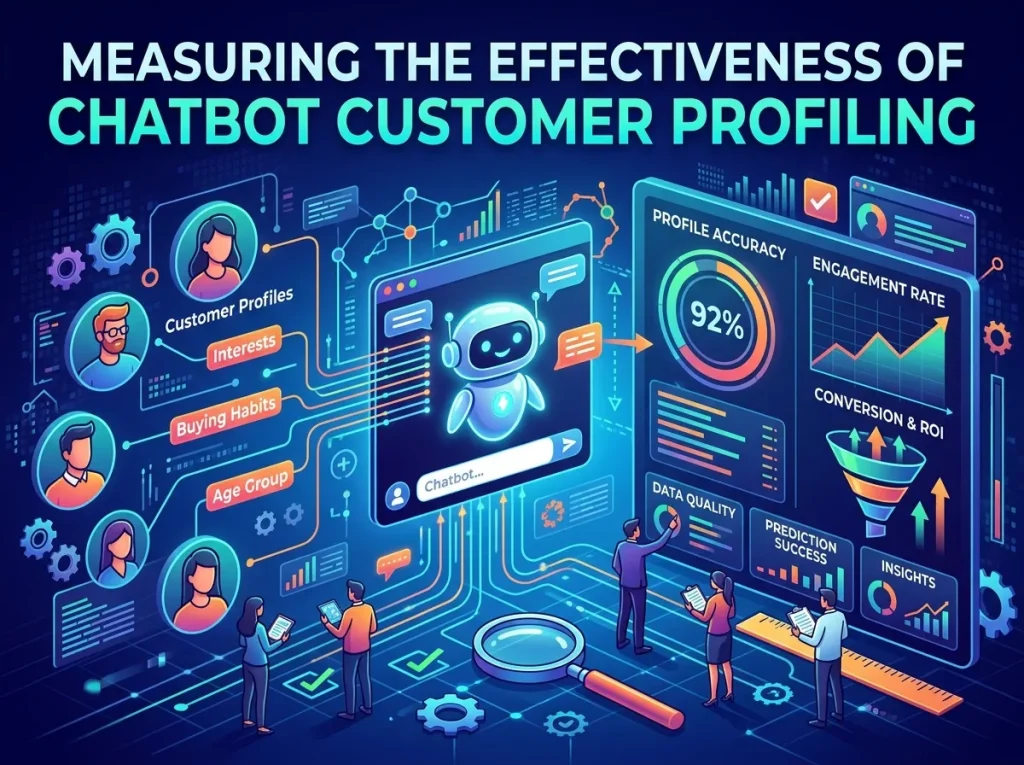
Businesses should evaluate customer profiling based on whether it improves the quality of interactions and supports meaningful outcomes. Useful measures may include customer satisfaction, task completion rates, successful issue resolution, recommendation relevance, conversation abandonment, and the frequency with which users need to repeat information.
These metrics should be interpreted together. A chatbot might increase engagement by asking more questions, but that does not necessarily mean the experience is better. If customers spend more time correcting their profiles or navigating unnecessary questions, additional interaction could indicate friction rather than success.
Organizations should also monitor errors in segmentation and personalization. Regular reviews can identify situations in which the chatbot makes inaccurate assumptions, recommends irrelevant resources, or fails to recognize changes in customer needs. Feedback from customers and support teams can help explain these results and guide improvements.
Testing different conversational approaches can further reveal which profiling questions provide genuine value. Businesses should favor short, relevant questions over lengthy forms and should avoid requesting information that does not improve the service. The strongest approach is one that balances useful customer understanding with a straightforward, respectful experience.
Building Trust Through Responsible Customer Profiling
Trust is essential to successful chatbot personalization. Customers are more likely to appreciate tailored interactions when they understand how information is used and feel confident that their details are handled appropriately. Businesses should communicate clearly about data practices, protect stored information, and avoid using customer profiles in ways that conflict with the expectations established during the interaction.
Responsible profiling also requires ongoing maintenance. Customer preferences may change, data can become outdated, and automated systems can misinterpret conversations. Giving users opportunities to correct their information and ensuring that human assistance remains available for complex cases helps businesses address these limitations.
Ultimately, chatbot customer profiling should make digital communication easier, not more intrusive. By combining relevant conversational data, thoughtful segmentation, useful personalization, and responsible data governance, businesses can create chatbot experiences that better reflect customer needs while maintaining transparency and trust.
Conclusion
Chatbot Customer Profiling enables businesses to understand customer interests, interpret conversational behavior, and deliver more relevant automated interactions. Through user profiling, preference tracking, audience segmentation, and conversational data analysis, organizations can improve recommendations, reduce repetitive questions, and identify opportunities to strengthen customer support and marketing communication.
The most effective profiling systems focus on useful information rather than excessive data collection. When businesses respect customer preferences, maintain accurate profiles, explain how information is used, and continually assess chatbot performance, they can build more personalized experiences without sacrificing privacy or trust.
10 FAQs About Chatbot Customer Profiling
1. What is chatbot customer profiling?
Chatbot customer profiling is the process of understanding chatbot users through relevant conversational data, stated preferences, interaction history, and other authorized information. It helps businesses recognize customer needs and provide more relevant responses, recommendations, and support.
2. How does AI improve chatbot customer profiling?
AI can analyze large volumes of conversations, identify recurring topics, classify customer requests, and recognize patterns in user preferences. These capabilities help chatbots interpret customer needs more effectively, although automated conclusions should be monitored for accuracy.
3. What information can a chatbot use to create customer profiles?
Depending on the purpose and applicable permissions, a chatbot may use stated interests, product preferences, selected options, frequently asked questions, and relevant previous interactions. Businesses should collect only information necessary for the intended service and handle it according to appropriate privacy requirements.
4. What is the difference between chatbot user profiling and customer segmentation?
Chatbot user profiling focuses on developing an understanding of an individual user’s relevant needs and preferences. Customer segmentation groups multiple users with similar characteristics or interests so businesses can provide appropriate conversational paths and content to each group.
5. How does customer profiling improve chatbot personalization?
Customer profiling helps chatbots adapt answers, recommendations, and conversational context to a user’s needs. For example, a chatbot may use a customer’s stated budget and product requirements to prioritize suitable options instead of presenting a generic list.
6. Why is customer preference tracking important for chatbots?
Customer preference tracking can reduce repetitive questions and create continuity across interactions. When customers have permitted relevant preferences to be retained, a chatbot can use them to provide more consistent assistance while allowing users to correct or update outdated information.
7. How can businesses protect privacy when profiling chatbot users?
Businesses can protect privacy by explaining data practices, collecting only necessary information, limiting access to customer records, securing stored data, setting retention policies, and providing appropriate ways to manage personal information. They should also follow the privacy and consent requirements that apply to their operations.
8. Can chatbot customer profiling support marketing activities?
Yes. Profiling can help marketing teams understand customer interests, identify common questions, and provide relevant educational content or product information. It can also support audience segmentation, provided that customer data is used transparently and in accordance with applicable permissions.
9. How can businesses measure the success of chatbot customer profiling?
Businesses can evaluate customer satisfaction, task completion, issue resolution, recommendation relevance, conversation abandonment, and repeated-question rates. Reviewing these measures alongside customer feedback helps determine whether profiling genuinely improves the experience.
10. What are the common challenges of chatbot customer profiling?
Common challenges include incomplete information, inaccurate AI interpretations, outdated preferences, excessive data collection, privacy concerns, and irrelevant personalization. Businesses can address these challenges through data minimization, regular testing, profile updates, transparent communication, and opportunities for users to correct inaccurate information.