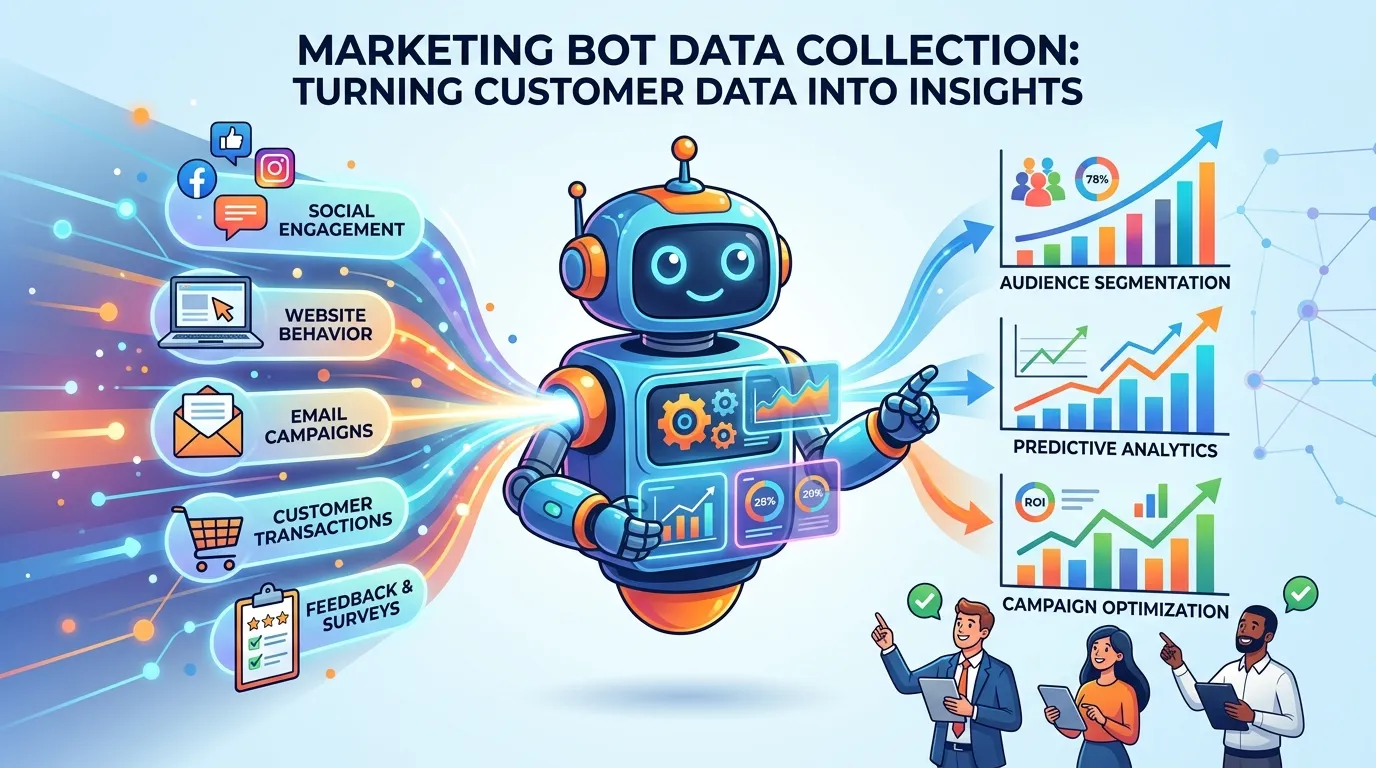
Marketing bot data collection allows businesses to gather useful customer information through automated conversations and digital interactions. From chatbot conversations and lead forms to behavioral signals and marketing automation, collected data can help businesses understand customer needs, personalize communication, improve campaigns, and identify opportunities for better engagement.
Modern marketing depends heavily on understanding customers. Businesses need to know what people are looking for, which products interest them, what questions they have, and what influences their decisions. Traditionally, collecting this information required forms, surveys, emails, phone calls, and manual interactions. Today, automated technologies are changing how businesses gather and organize customer information.
Marketing Bot Data Collection has become an important part of this shift. Marketing bots can interact with website visitors, answer questions, collect information, qualify leads, recommend content, and record useful interaction data. These automated conversations can provide businesses with valuable information while reducing the amount of manual work required from marketing teams.
The value of bot-based data collection goes beyond simply obtaining names and email addresses. Conversations can reveal customer interests, preferences, questions, purchase intent, content preferences, and potential concerns. When this information is handled responsibly and connected with other marketing systems, it can contribute to more relevant campaigns and stronger customer experiences.
At the same time, automated data collection creates important responsibilities. Businesses need to be transparent about what information they collect, why they collect it, and how it will be used. Effective marketing bot strategies therefore combine useful data gathering with appropriate privacy, security, and customer communication practices.
What Is Marketing Bot Data Collection?
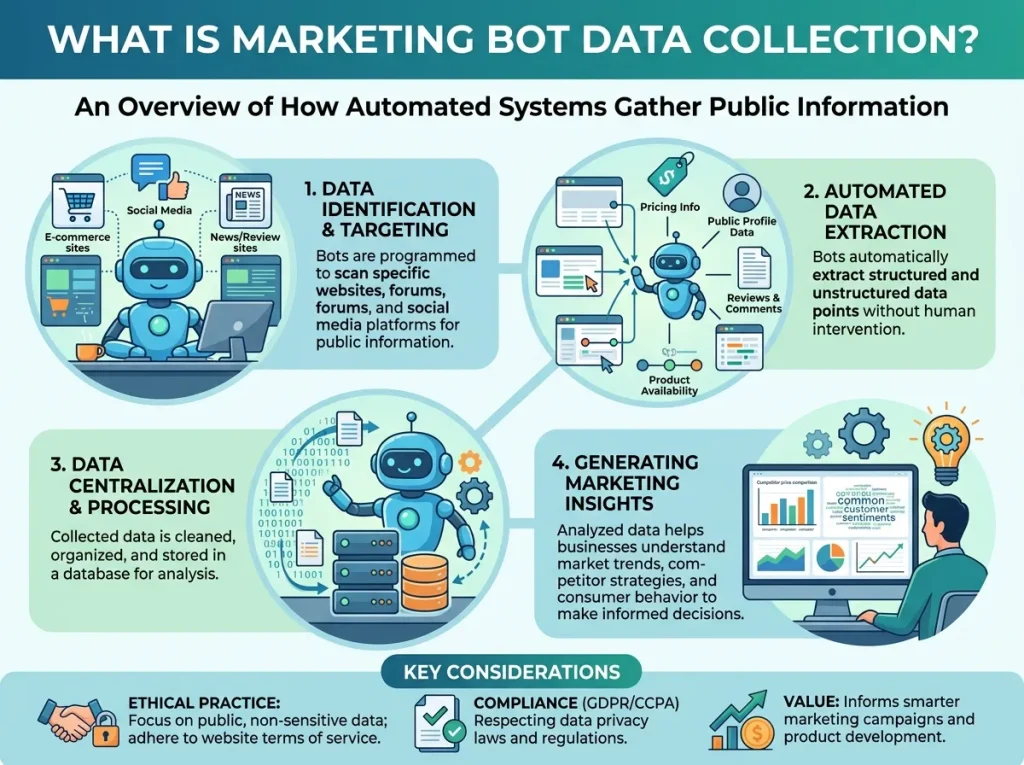
Marketing Bot Data Collection refers to the process of using automated software, chatbots, conversational systems, or AI-powered marketing bots to gather information from customers and prospects during digital interactions.
A marketing bot may collect basic information such as a person’s name, email address, company, or location. It can also gather interaction-based information, such as the products a visitor asks about, the content they request, the problems they describe, or the type of assistance they need.
The exact information collected depends on the purpose of the bot. A lead-generation chatbot may focus on qualification information, while a customer-support-oriented marketing bot may gather questions and product interests. A conversational shopping assistant may collect information related to product preferences.
This makes bots different from traditional static forms. Instead of presenting the same fields to every visitor, a conversational system can ask questions based on the interaction and potentially collect more contextual information.
The Growing Role of Marketing Bot Data Gathering
Marketing Bot Data Gathering gives businesses an opportunity to collect information during natural customer interactions. Visitors often provide useful signals simply by asking questions or explaining what they are trying to accomplish.
For example, a visitor searching for a particular service may ask a bot about pricing, availability, features, or implementation. Each interaction can provide information about what matters to that visitor.
When these interactions are analyzed collectively, marketing teams can identify recurring questions and common customer interests. This can influence website content, campaign messaging, product positioning, lead qualification, and customer communication.
The value of this data increases when it is connected to the broader marketing ecosystem. A bot can potentially contribute information to a CRM, marketing automation platform, analytics system, or customer database, depending on the technology being used.
This creates a more connected view of customer interactions rather than keeping conversational data isolated from the rest of the marketing process.
Chatbot Data Collection and Customer Conversations
Chatbot Data Collection focuses on information gathered through conversations between customers and automated chat systems. These interactions can provide both explicit and contextual information.
Explicit information is directly provided by the customer. A visitor may tell the chatbot their name, email address, company size, product preference, or reason for contacting the business.
Contextual information can come from the conversation itself. A visitor repeatedly asking about a particular feature may indicate strong interest in that feature, while questions about pricing may indicate a different stage of the decision process.
This makes conversational data particularly useful because it can contain information that would not necessarily appear in a traditional lead form.
However, businesses should avoid collecting information simply because technology makes it possible. Data collection should have a clear purpose and should respect applicable privacy requirements. Customers should have an appropriate understanding of what information is being requested and why.
Automated Data Collection in Marketing
Automated Data Collection in Marketing allows businesses to gather and organize information without requiring every interaction to be handled manually. This can be particularly useful for websites that receive visitors outside normal business hours.
A marketing bot can remain available continuously and interact with multiple visitors at the same time. While answering questions, it can collect relevant information and potentially identify visitors who may need follow-up from a human marketing or sales team.
Automation can also improve consistency. Human representatives may ask different questions depending on the conversation, while a well-designed bot can collect certain information in a consistent manner.
This consistency can make data easier to analyze. Marketing teams may be able to identify patterns across thousands of interactions rather than relying only on individual conversations.
Automated collection also supports faster responses. When customer information is captured and connected to the appropriate system, it may be possible to trigger follow-up actions, segment audiences, personalize content, or alert a sales representative.
Marketing Bot Customer Data
Marketing Bot Customer Data can include many different types of information depending on the bot’s purpose and configuration. Basic contact details are among the most common, but conversational data can provide much richer context.
A visitor may indicate what product they are interested in, what problem they are trying to solve, what type of information they want, or how soon they expect to make a decision. These signals can help marketers understand customer intent.
Behavioral information can also become useful. For example, a business may analyze which questions are frequently asked before visitors request a demonstration or submit a lead form.
However, customer data should be treated carefully. More data does not automatically mean better marketing. Collecting unnecessary information can increase privacy concerns, storage requirements, and security responsibilities without providing meaningful business value.
The most useful approach is to focus on relevant information that supports a legitimate marketing purpose and contributes to a better customer experience.
Bot-Based Data Collection Across the Customer Journey
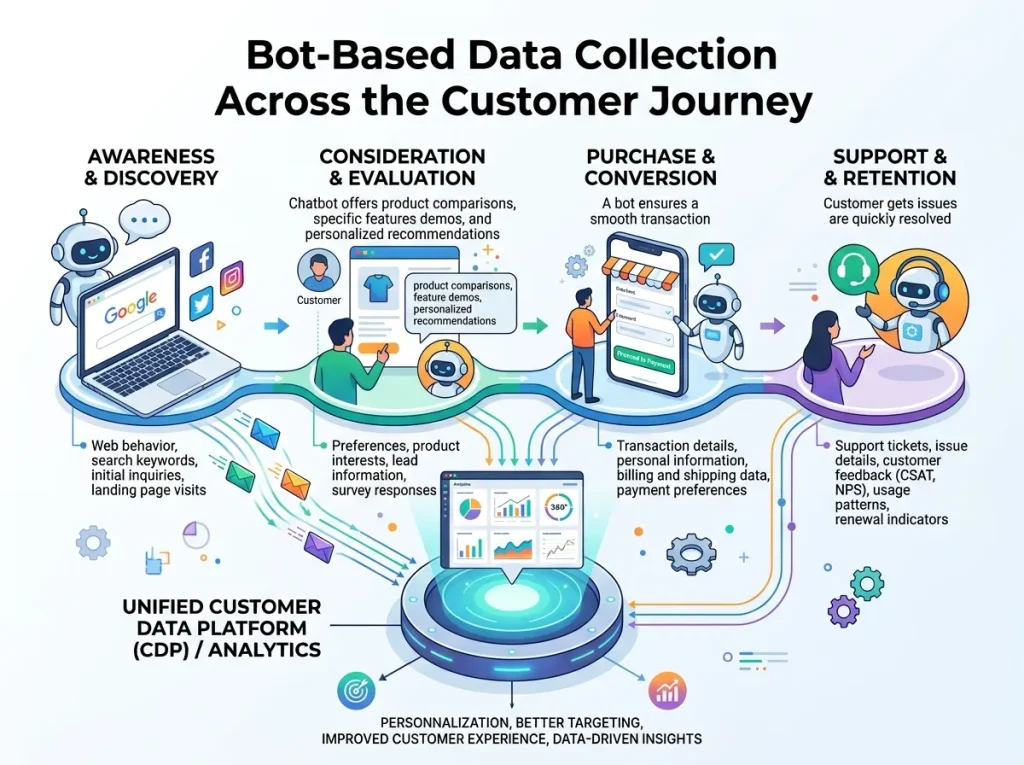
Bot-Based Data Collection can support multiple stages of the customer journey. At the awareness stage, a bot may help visitors discover educational content or understand a problem. During consideration, it may answer questions about products, features, pricing, or comparisons.
Later in the journey, a bot may collect information related to purchasing intent, implementation requirements, or service preferences.
This makes conversational systems useful beyond simple lead capture. They can become an interaction layer between the customer and the broader marketing system.
For example, a visitor who arrives through an organic search result might interact with a bot after reading an article. The conversation could reveal that the visitor is interested in a specific service. That information can potentially support more relevant follow-up or content recommendations.
The relationship between bots and inbound marketing is particularly relevant here. Resources such as Inbound Marketing Lead Generation explore how valuable interactions can support lead generation and broader inbound marketing activity.
AI Marketing Data Collection
AI Marketing Data Collection expands the capabilities of traditional automated systems by using artificial intelligence to interpret conversations and identify patterns.
AI-powered systems can process natural-language interactions and potentially identify themes, customer interests, frequently mentioned problems, and other signals. Instead of simply storing a conversation transcript, an AI system may help categorize or summarize information for marketing teams.
This can be useful when businesses handle large volumes of customer conversations. Manually reading thousands of conversations would require substantial time, while automated analysis can help identify recurring patterns more efficiently.
AI can also support personalization. If a system understands what a visitor is interested in, it may be able to provide more relevant recommendations or direct the visitor toward appropriate resources.
However, AI-generated interpretations should not automatically be treated as perfectly accurate. Context can be misunderstood, customer statements can be ambiguous, and automated systems can make classification errors. Human review remains valuable for important decisions and sensitive situations.
Customer Data Collection Bots and Personalization
Customer Data Collection Bots can contribute to personalized marketing by gathering information that helps businesses understand individual preferences.
Personalization can range from simple recommendations to more advanced experiences. A visitor interested in a particular product category may receive relevant resources, while a returning visitor may be directed toward information based on previous interactions, depending on the system and available data.
The quality of personalization depends heavily on the quality of the underlying information. Incorrect, outdated, or incomplete customer data can lead to irrelevant recommendations and frustrating experiences.
This is why data quality should be considered alongside data volume. A smaller amount of accurate, relevant information can be more useful than a large collection of poorly structured data.
Transparency also matters. Customers are more likely to trust automated experiences when businesses communicate clearly about how information is being used and provide appropriate choices where required.
Marketing Automation Data Gathering
Marketing Automation Data Gathering connects bot interactions with wider automated marketing processes. Instead of treating chatbot conversations as isolated events, businesses can integrate relevant information into their broader customer journey.
For example, information collected through a bot may help categorize a lead, trigger a follow-up email, recommend a resource, or notify a sales representative. The exact workflow depends on the organization’s technology and business objectives.
This integration can reduce manual data entry and help marketing teams respond more quickly to customer signals.
Marketing automation can also make it easier to analyze customer behavior across multiple channels. A person may discover a brand through search, interact with a chatbot, download content, open an email, and later request a sales conversation. Connecting these interactions can provide a more complete view of the customer journey.
The goal is not to automate every customer interaction. Automation should support useful experiences while leaving appropriate opportunities for human assistance.
Chatbot Customer Insights
One of the most valuable outcomes of bot interactions can be Chatbot Customer Insights. Individual conversations may appear small, but thousands of interactions can reveal meaningful patterns.
Customers may repeatedly ask questions that are not clearly answered on the website. They may express concerns about pricing, implementation, product features, delivery, compatibility, or other issues.
These patterns can inform marketing and content decisions. Frequently asked questions can become new website content. Repeated objections can influence messaging. Common product interests can help shape campaigns.
Chatbot conversations can therefore function as a source of customer research. They provide information directly from people who are actively interacting with a business.
Businesses can also use aggregated insights to understand changes in customer interests. If conversations increasingly shift toward a particular topic, that change may indicate an emerging demand or a gap in existing communication.
Marketing Bot Analytics
Marketing Bot Analytics focuses on measuring and interpreting how users interact with marketing bots and what those interactions contribute to business objectives.
Useful measurements can include conversation volume, engagement rate, completion rate, lead submissions, qualification outcomes, frequently asked questions, conversion activity, and handoffs to human representatives.
Analytics can also reveal where conversations break down. If many visitors leave the interaction after a particular question, the wording or timing of that question may need review.
Performance data should be interpreted according to the bot’s purpose. A customer-support bot may prioritize successful resolution, while a lead-generation bot may focus more heavily on qualified leads and conversions.
The combination of interaction data and marketing outcomes provides a more meaningful picture than simply counting how many conversations took place.
Data Privacy and Responsible Collection
Marketing bot data collection must be handled responsibly. Customers should have appropriate information about what data is being collected and how it will be used, especially when personal information is involved.
Businesses should consider applicable privacy laws and regulations for the markets in which they operate. Data minimization, appropriate security controls, retention practices, access management, and transparency can all be important considerations.
Sensitive information requires particular care. Businesses should avoid collecting sensitive information through a marketing bot unless there is a legitimate reason and appropriate safeguards are in place.
Privacy should not be treated as an obstacle to marketing. Responsible data practices can strengthen customer trust and create more sustainable relationships.
Marketing Bots Across Digital Experiences
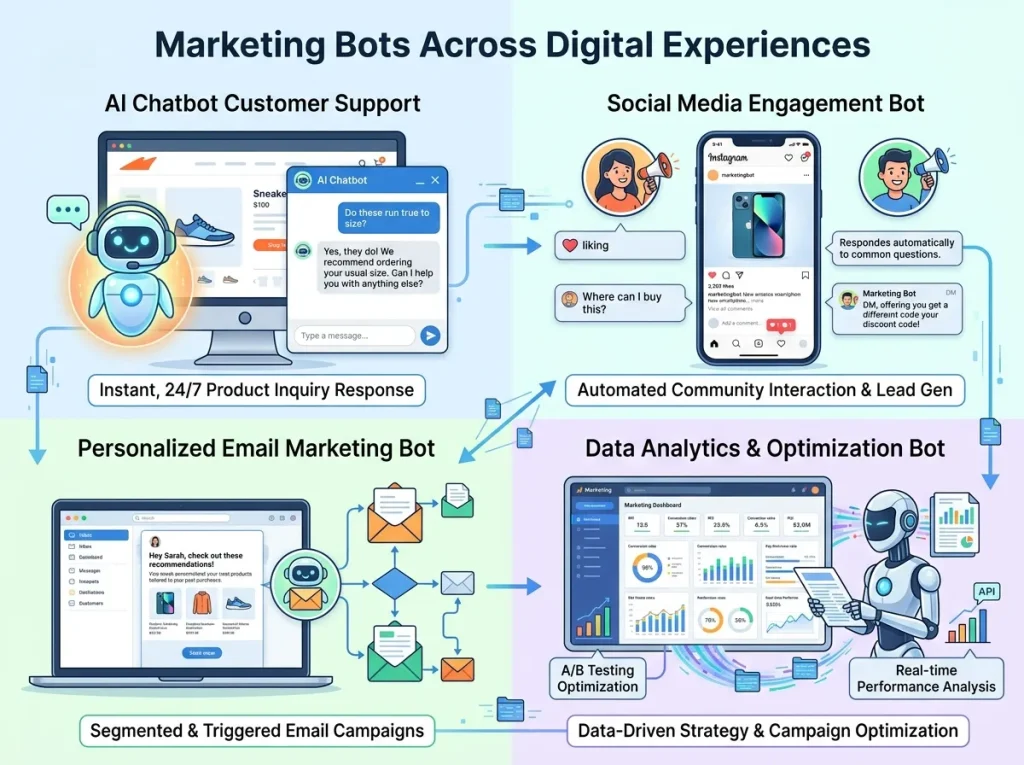
Marketing bots can operate in many digital environments. Websites are one of the most common locations, but conversational technology can also be integrated into campaigns, events, social experiences, and other digital channels.
For example, businesses organizing digital events can use conversational tools to help visitors find sessions, understand event information, or identify relevant resources. Technologies described in Virtual Event Technology show how digital experiences can combine technology and interaction to create more engaging environments.
Similarly, specialized marketing campaigns can use bots to answer questions and collect relevant information. In emerging areas such as NFT marketing, conversational technology can provide another way for audiences to interact with campaigns, as discussed in Chatbots in NFT Marketing.
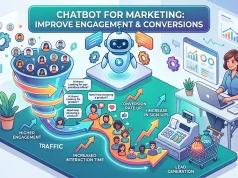
For broader marketing activity, Chatbot for Marketing highlights how conversational systems can support engagement and conversions while becoming part of a wider digital marketing strategy.
The Future of Marketing Bot Data Collection
The future of Marketing Bot Data Collection is likely to involve increasingly sophisticated conversational experiences. AI systems are becoming better at understanding natural language, interpreting context, and supporting personalized interactions.
As these technologies develop, businesses may gain more opportunities to understand customer needs in real time. Bots may become more closely connected with CRM systems, analytics platforms, marketing automation, customer service tools, and content systems.
However, greater capability also increases the importance of responsible data management. Businesses will need to balance personalization with privacy and automation with human oversight.
The most valuable marketing bot systems will not necessarily be those that collect the largest amount of information. They will be the systems that collect relevant information responsibly and turn it into useful customer experiences and meaningful business insights.
Final Thoughts
Marketing Bot Data Collection is becoming an important component of data-driven marketing. Automated conversations can gather contact information, customer preferences, behavioral signals, questions, and other insights that help businesses understand their audiences.
When connected with marketing automation, analytics, CRM systems, and content strategies, this information can support more relevant communication and more informed marketing decisions. At the same time, businesses need to pay close attention to transparency, privacy, security, and responsible data use.
The real value of marketing bots is not simply their ability to collect data. Their value comes from transforming customer interactions into useful insights while making the experience convenient and meaningful for the people involved.
Frequently Asked Questions
What is Marketing Bot Data Collection?
Marketing Bot Data Collection is the use of automated bots, chatbots, or AI-powered conversational systems to gather relevant information from customers and prospects during digital interactions.
What type of data can marketing bots collect?
Depending on their purpose, marketing bots can collect contact details, product interests, customer questions, preferences, lead qualification information, conversation data, and other relevant interaction signals.
How does chatbot data collection help marketers?
Chatbot data collection can help marketers understand customer needs, identify frequently asked questions, improve personalization, qualify leads, identify content opportunities, and understand customer behavior.
Is marketing bot data collection automated?
Much of the process can be automated. Bots can collect information during conversations and potentially send relevant data to CRM, analytics, or marketing automation systems without requiring manual data entry.
How does AI improve marketing data collection?
AI can help interpret natural-language conversations, identify patterns, categorize interactions, summarize conversations, and recognize customer interests. Human review may still be necessary for important or sensitive decisions.
What are customer data collection bots used for?
Customer data collection bots can be used for lead qualification, customer research, product recommendations, content discovery, campaign engagement, and collecting information that supports marketing and sales activities.
What is marketing bot analytics?
Marketing bot analytics involves measuring and analyzing bot interactions. Metrics can include conversation volume, engagement, completion rates, lead submissions, conversion activity, and human-agent handoffs.
Is data collected by marketing bots safe?
Safety depends on how the business collects, stores, processes, and protects the information. Businesses should follow applicable privacy requirements and use appropriate security and data-management practices.
Can chatbot data improve personalization?
Yes. Relevant information collected during conversations can help businesses understand customer interests and provide more relevant content, recommendations, or follow-up communication when appropriate.
Will marketing bots replace human marketers?
Marketing bots are generally better understood as tools that can automate certain interactions and support marketing teams. Human marketers remain important for strategy, creative decisions, relationship management, complex situations, and interpreting customer information in context.