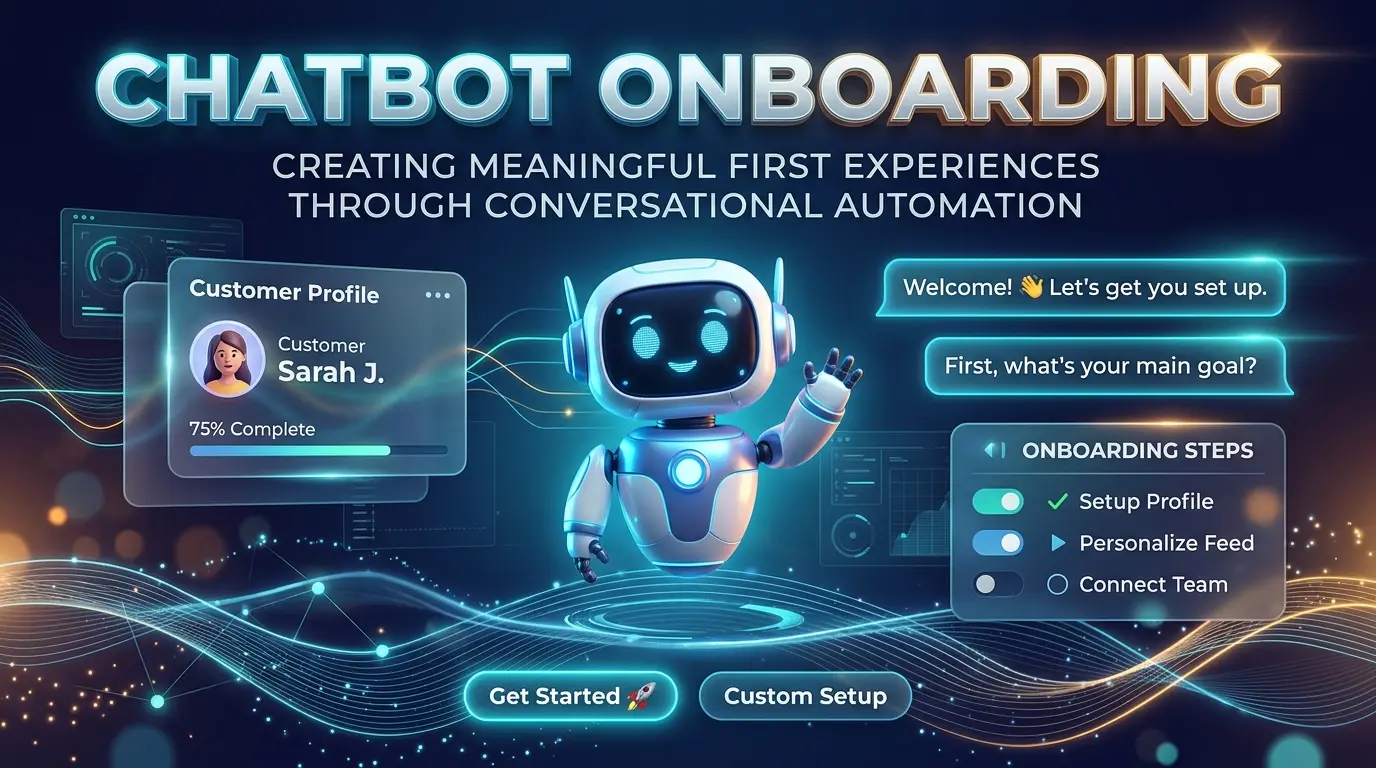
Chatbot onboarding introduces users to automated conversational systems and helps them understand how to interact with available features. Through welcome messages, conversational guidance, automated workflows, and personalized assistance, businesses can create smoother user experiences, encourage activation, and build stronger engagement from the first interaction.
The First Conversation Shapes the Entire Chatbot Experience
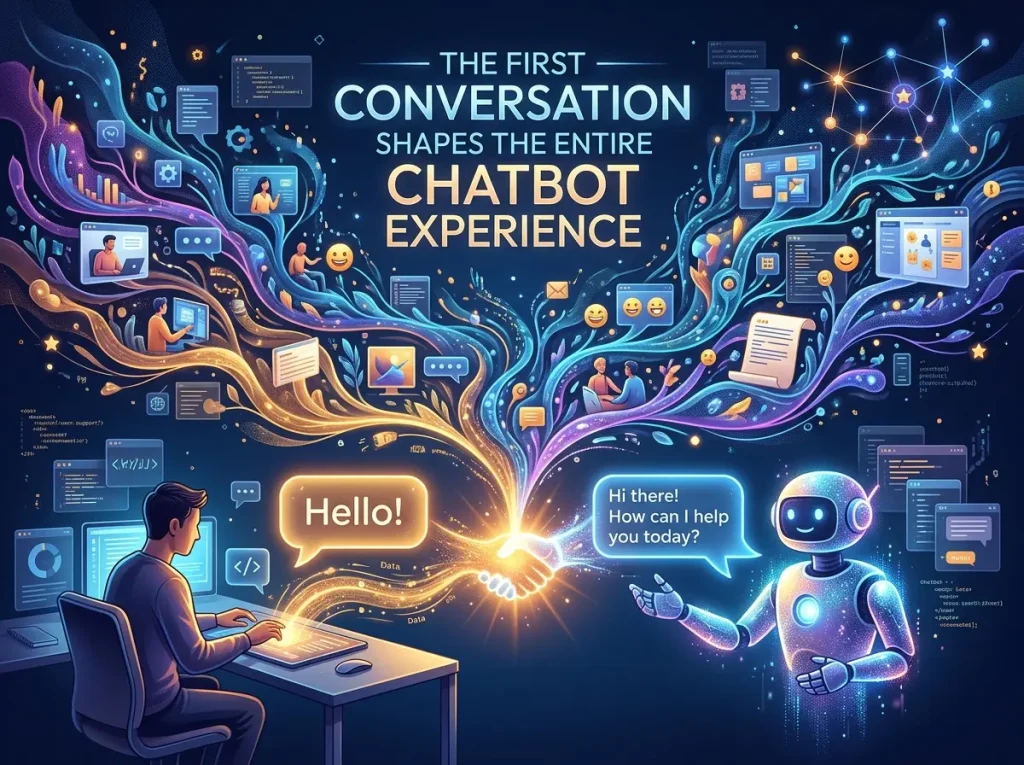
A chatbot may offer advanced automation, intelligent responses, and convenient customer support, but these features have limited value if users do not understand how to interact with them. The first conversation often determines whether someone continues exploring the chatbot or leaves without discovering its capabilities.
This is why Chatbot Onboarding plays an important role in conversational marketing and customer experience management. It introduces users to the chatbot, explains what they can accomplish, and creates a natural starting point for future interactions.
Unlike traditional software onboarding, chatbot onboarding happens through conversation. Users do not necessarily need to navigate several screens, read lengthy instructions, or explore complicated menus. Instead, they can receive information, ask questions, and discover features through a conversational interface.
A well-designed onboarding experience should feel like a helpful introduction rather than a technical demonstration. For example, a customer visiting an online store might encounter a chatbot that introduces product discovery, order assistance, and common support options. The user immediately understands what the chatbot can do and where to begin.
The objective is not to explain every available feature at once. It is to make the first interaction comfortable, useful, and easy to understand.
Why the Chatbot Setup Process Matters Before User Interaction
A successful onboarding experience begins long before the first welcome message appears. Behind every effective chatbot is a configuration process that connects its conversational capabilities with the business’s objectives and customer needs.
The Chatbot Setup Process involves establishing the chatbot’s purpose, defining its communication style, preparing response content, and configuring the functions users will access.
A chatbot designed for an ecommerce business may need product information, order tracking, return policies, and customer support connections. Meanwhile, a chatbot for a software company may focus on product demonstrations, account assistance, feature discovery, and technical questions.
These differences influence the structure of the onboarding experience.
The chatbot’s knowledge base also requires attention. If the system provides inaccurate information or cannot recognize common questions, users may lose confidence before completing the introduction.
Businesses should also consider conversational consistency. Welcome messages, automated responses, and escalation notifications should reflect the same communication style. A chatbot that begins with a friendly introduction but responds to later questions with confusing or overly technical language can create an inconsistent experience.
A carefully configured chatbot provides the foundation for a more reliable onboarding journey.
The Psychology Behind a Good Chatbot Welcome Message
The first message is often the user’s introduction to a chatbot’s personality and purpose. It should communicate value quickly while making the next interaction feel straightforward.
Chatbot Welcome Messages work best when they explain what the chatbot can help with instead of simply announcing that an automated assistant is available.
Consider the difference between a generic message such as “Hello, how can I help?” and a more informative introduction:
“Welcome! I can help you explore our services, find answers to common questions, and connect with our support team. What would you like to know?”
The second message provides context and introduces possible actions without overwhelming the visitor.
Personalization can make this experience more relevant. A chatbot on a pricing page might introduce subscription information, while one appearing on a customer support page could prioritize troubleshooting and account assistance.
However, welcome messages should not become lengthy promotional paragraphs. Users generally want to understand the available assistance before deciding whether to continue.
A conversational introduction should therefore establish three things naturally: the chatbot’s purpose, the value it provides, and the next available action.
Helping Users Discover Features Through Conversation
One of the advantages of conversational interfaces is their ability to introduce features gradually. Rather than presenting users with a complicated list of instructions, chatbots can reveal relevant options as conversations develop.
Conversational User Guidance makes the onboarding experience more interactive because information appears in response to the user’s interests and questions.
For example, someone interacting with a travel service chatbot might initially ask about available destinations. After answering that question, the chatbot could introduce additional capabilities such as travel dates, accommodation information, or booking assistance.
The user discovers these features through a relevant conversation instead of receiving an unrelated explanation of the entire platform.
This approach is particularly valuable when a chatbot serves different audience groups. New visitors may need basic explanations, while returning customers may already understand the available functions.
Conversational guidance can adapt to these differences by responding to user intent and previous interactions.
Businesses can also use intelligent conversational systems to recognize what users are trying to accomplish. The development of Marketing Bot Intent Detection highlights the importance of understanding customer intentions when designing more relevant automated interactions.
When a chatbot recognizes whether someone needs product information, technical assistance, or purchasing support, it can provide more useful guidance throughout onboarding.
Bot User Onboarding Across Different Business Environments
Not every chatbot serves the same audience, and the onboarding experience should reflect the environment in which the system operates.
Bot User Onboarding for an ecommerce platform may focus on helping shoppers discover products, understand delivery options, and receive order-related assistance. A chatbot used by a financial service provider may instead introduce account information, service availability, and secure support channels.
For SaaS businesses, onboarding often involves helping users understand product features and discover how the chatbot supports their daily activities. In this environment, the introduction may include feature explanations, account navigation, and assistance with common tasks.
The audience’s existing knowledge also matters. A first-time visitor may need simple language and clear explanations, while an experienced customer may prefer direct access to specific functions.
A single onboarding structure may therefore be unsuitable for every user.
Businesses can create different conversational entry points based on the page, campaign, customer segment, or previous interaction. These variations help make onboarding more relevant without requiring every user to follow an identical sequence.
The broader development of AI Chatbots demonstrates how conversational systems can support different business functions, from customer communication to automated service experiences.
As chatbot capabilities expand, onboarding becomes increasingly important because users need to understand not only how to start a conversation but also how to access the value behind the technology.
Chatbot User Training Without Complicating the Experience
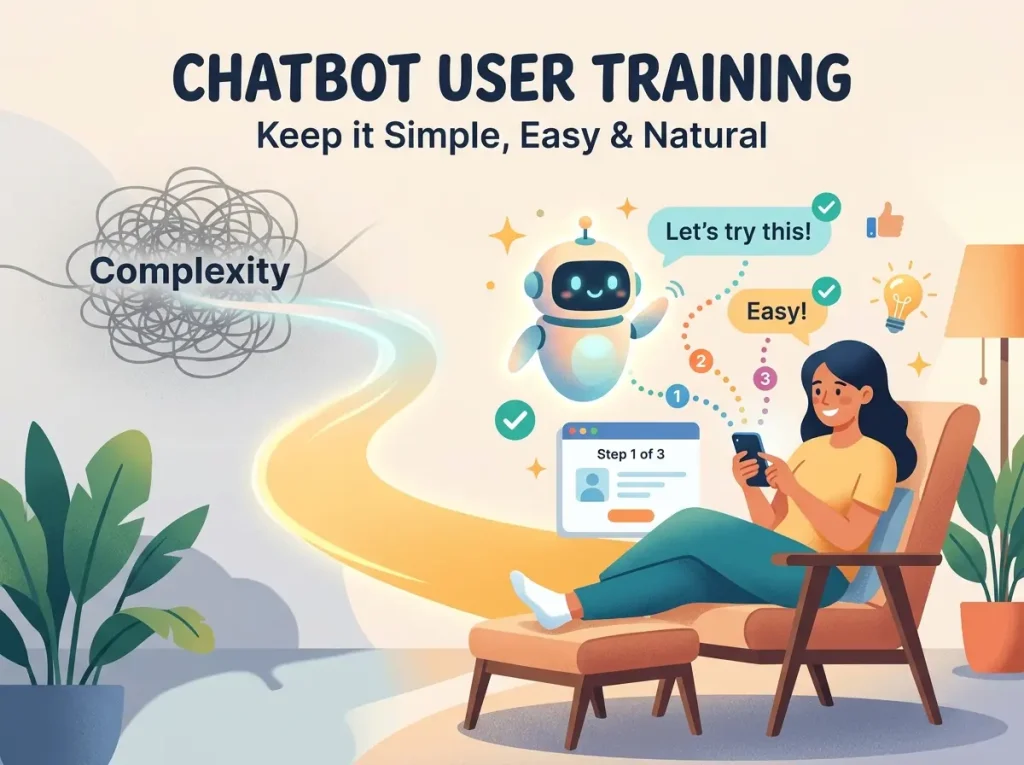
Users should not need extensive technical knowledge to communicate with a chatbot. However, they may still benefit from learning what the system understands, what types of questions they can ask, and when human assistance is available.
Chatbot User Training introduces these capabilities through simple explanations and practical interactions.
For example, a chatbot may demonstrate how to check an order, search for a product, or request technical support. These small demonstrations help users understand the available functions without requiring them to study a separate instruction manual.
Training can also address limitations. If a chatbot cannot process payments, make account changes, or provide specialized advice, users should understand those boundaries.
This prevents unrealistic expectations and reduces frustration when the system cannot complete a particular request.
Educational content can support this process as well. Businesses that provide AI Chatbot Learning Resources can help users develop a clearer understanding of conversational tools, their capabilities, and their practical applications.
The most effective training experience is usually progressive. Users receive essential information first and discover advanced functions when they become relevant.
This keeps onboarding accessible while allowing people to become more confident as they interact with the chatbot.
Automated Onboarding Flow and the Importance of Timing
An Automated Onboarding Flow organizes the sequence of interactions that introduces users to a chatbot. It determines when welcome messages appear, how users receive information, and what happens after particular actions.
The flow may begin with a welcome message, followed by an explanation of the chatbot’s main functions. Depending on the user’s response, the system can introduce a relevant feature, provide additional information, or direct the conversation toward a specific objective.
However, automation should not make every interaction feel predetermined.
A rigid flow that forces users through several unrelated questions can create unnecessary friction. A flexible system allows users to explore different options, ask unexpected questions, and return to the main conversation when needed.
Timing also influences the quality of onboarding. Sending too much information immediately may overwhelm users, while introducing important features too late can prevent them from discovering useful capabilities.
A balanced flow provides information when it becomes relevant.
For example, an ecommerce chatbot might introduce order tracking after a customer completes a purchase rather than presenting it during an initial product discovery conversation.
This connection between user behavior and automated communication makes onboarding more contextual and useful.
Chatbot Integration Setup and Connected Customer Experiences
A chatbot rarely operates independently of other business systems. Its usefulness often depends on how well it connects with websites, customer databases, marketing platforms, support tools, and other digital services.
Chatbot Integration Setup establishes these connections so that the chatbot can provide relevant information and support business processes.
For example, integration with a customer relationship management platform may allow a chatbot to access approved customer records and maintain conversation history. Connecting with a helpdesk system can support ticket creation and escalation when a question requires human attention.
Marketing integrations can also improve onboarding by helping businesses understand how users arrive at the chatbot and which campaigns influence their interactions.
However, integrations should be configured with appropriate permissions and data protection practices. Businesses must consider what information the chatbot can access, how conversation records are handled, and whether customer consent is required for particular activities.
A connected chatbot should also provide a consistent experience across communication channels. If a customer begins a conversation on a website and later contacts support through another channel, relevant information should remain available where the business’s systems and permissions allow it.
When integration is handled carefully, the chatbot becomes part of a broader customer experience rather than an isolated communication feature.
User Activation Messages That Encourage Meaningful Interaction
Completing an initial introduction does not necessarily mean a user has started receiving value from the chatbot. Activation occurs when users begin performing meaningful actions through the conversational interface.
User Activation Messages can encourage this transition by introducing a relevant task or feature at an appropriate moment.
For example, a newly registered user might receive a message explaining how the chatbot can help them explore product features. Another user who has asked about a service may receive a contextual suggestion to view available options or request additional information.
The effectiveness of these messages depends on relevance. Generic reminders repeated throughout a conversation can feel disruptive, particularly when the user has already completed the suggested action.
Activation messages should therefore reflect the user’s progress and previous interactions.
Businesses can also examine which messages lead to meaningful actions. If users frequently respond to feature demonstrations but ignore general promotional notifications, that information can help improve the onboarding experience.
The purpose is not to increase the number of messages sent. It is to help users recognize useful capabilities and begin interacting with them.
Building a Chatbot Welcome Sequence That Feels Natural
A Chatbot Welcome Sequence provides a connected introduction across the user’s first interactions rather than relying on one opening message.
The sequence may introduce the chatbot’s purpose, explain available assistance, and gradually highlight features based on the user’s responses.
For example, a customer service chatbot could begin by welcoming the visitor and presenting common support topics. If the user selects delivery assistance, the next response could explain available tracking options. If the user needs additional help, the chatbot can provide an appropriate route to human support.
The sequence should also recognize when a user already understands the system. Returning customers should not repeatedly receive lengthy introductory explanations that interrupt their intended tasks.
This makes user history and interaction context valuable elements of onboarding.
A natural welcome sequence also leaves room for unexpected questions. Users should be able to move beyond suggested responses and communicate in their own words whenever the chatbot supports that capability.
The result is a more flexible introduction that feels like an actual conversation instead of a series of mandatory promotional messages.
Automated User Assistance Beyond the Initial Introduction
The value of onboarding continues after users become familiar with a chatbot. As they explore different features, they may encounter new questions, unfamiliar functions, or situations that require additional explanation.
Automated User Assistance helps address these needs by providing relevant information during ongoing interactions.
For example, a user who cannot locate a particular feature may receive contextual instructions. Someone asking about an unfamiliar service option can receive a short explanation before deciding what to do next.
Automated assistance can also help identify situations where the chatbot should not continue independently. Complex account issues, sensitive requests, or complaints requiring human judgment may need escalation to an appropriate support representative.
This distinction is important because automation should improve accessibility rather than create barriers between customers and human assistance.
Businesses should also consider how onboarding connects with long-term engagement. A user who stops interacting may need a different experience from someone who has successfully adopted the chatbot.
Relevant Chatbot Customer Reactivation strategies can help businesses understand how inactive users may be re-engaged through useful communication and appropriate automated interactions.
By connecting onboarding with ongoing assistance, businesses can create a more complete conversational experience.
Measuring Whether Chatbot Onboarding Actually Works
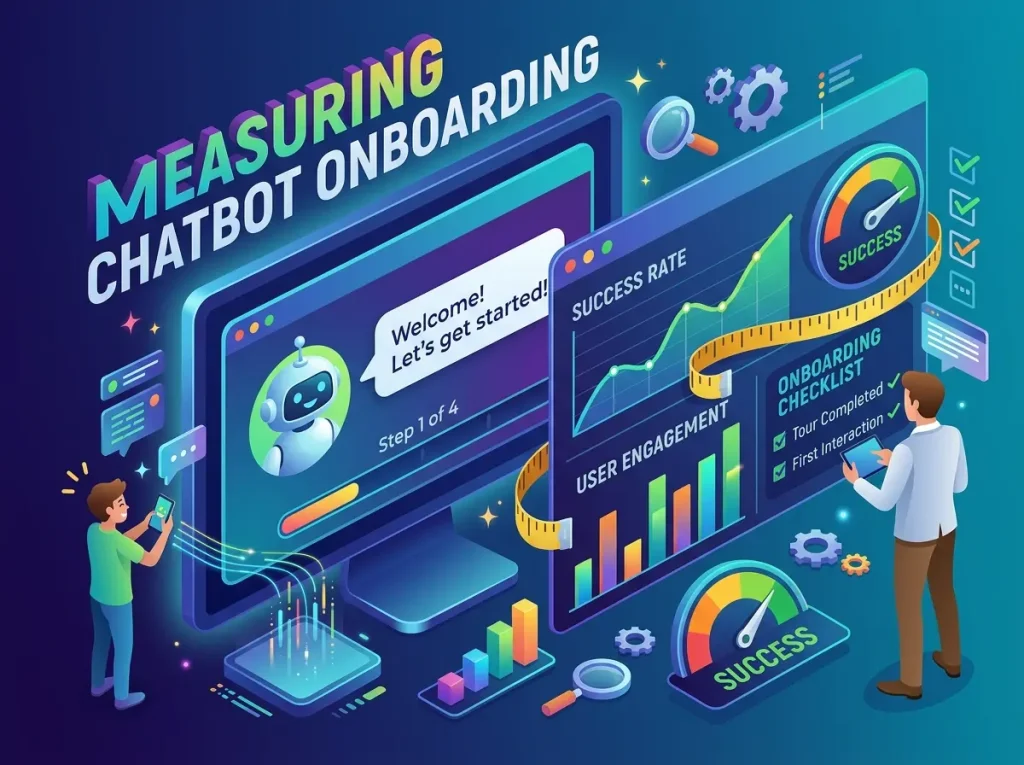
A chatbot may successfully welcome hundreds of users without helping many of them complete meaningful actions. This is why onboarding performance should be evaluated through user behavior rather than message delivery alone.
Several measurements can reveal how effectively users move through the introduction.
Welcome engagement indicates how frequently users respond to the initial message. Feature discovery shows whether users explore the chatbot’s available capabilities. Activation rates help measure how many users complete meaningful actions after onboarding.
Conversation completion rates can also reveal whether users reach their intended outcomes or leave before receiving assistance.
Another useful measurement is the rate of human escalation. A high escalation rate may indicate that the chatbot lacks relevant information or that certain tasks require additional support. However, escalation is not automatically a negative outcome because some customer needs are better handled by human representatives.
Businesses should also examine repeated questions and unsuccessful interactions. These patterns may reveal confusing instructions, missing knowledge base content, or integration problems.
User feedback adds another perspective. Short satisfaction questions can help identify whether the chatbot’s introduction feels clear, useful, and relevant.
The most meaningful assessment combines engagement, activation, successful task completion, and customer experience.
The Future of Chatbot Onboarding
As conversational technology develops, onboarding is becoming more adaptive and context-aware. Modern chatbots increasingly support natural language interactions, personalized recommendations, and automated assistance that responds to individual user needs.
These capabilities create opportunities for businesses to move beyond identical welcome sequences and develop more flexible experiences.
A chatbot may recognize whether someone is exploring a service, looking for technical information, or attempting to complete a particular task. Based on that context, it can introduce relevant features without presenting unnecessary information.
However, more advanced technology does not remove the need for clear communication. Users still need understandable explanations, reliable answers, and appropriate access to human assistance.
Privacy and transparency will also remain important. Businesses must ensure that personalization respects customer expectations and that automated systems communicate their capabilities honestly.
Ultimately, the future of chatbot onboarding will depend on how effectively businesses combine intelligent automation with simple, user-centered communication.
Conclusion: Turning First Conversations Into Lasting Engagement
A chatbot’s success is not determined only by its ability to answer questions. Its value also depends on whether users understand how to interact with it and can discover useful capabilities without unnecessary effort.
Chatbot Onboarding creates this foundation by connecting welcome messages, conversational guidance, automated workflows, user training, and ongoing assistance.
When these elements work together, users can move from their first conversation toward meaningful engagement with greater confidence. Businesses also benefit from more consistent interactions, improved feature discovery, and a clearer understanding of customer needs.
A successful onboarding experience should remain simple, relevant, and flexible. Rather than overwhelming users with information, it should introduce the right assistance at the right moment and make every interaction easier to navigate.
Frequently Asked Questions About Chatbot Onboarding
1. What is chatbot onboarding?
Chatbot onboarding is the process of introducing users to a chatbot and helping them understand its features, available assistance, and communication methods. It typically involves welcome messages, conversational guidance, and automated interactions.
2. Why is chatbot onboarding important?
Chatbot onboarding helps users understand how to interact with automated systems. A clear introduction can improve engagement, encourage feature discovery, reduce confusion, and help users receive value from the chatbot.
3. What should a chatbot welcome message include?
A chatbot welcome message should introduce the assistant, explain its primary purpose, and provide clear options for starting a conversation. It should be friendly, concise, and relevant to the user’s needs.
4. What is a chatbot setup process?
The chatbot setup process involves configuring the chatbot’s purpose, conversational behavior, knowledge base, integrations, response options, and automation features before making it available to users.
5. How does conversational user guidance improve onboarding?
Conversational user guidance introduces relevant information through interactive discussions. It helps users discover chatbot features gradually instead of requiring them to read lengthy instructions.
6. What is an automated onboarding flow?
An automated onboarding flow is a sequence of chatbot interactions designed to welcome users, introduce available features, provide assistance, and encourage meaningful actions through automated conversations.
7. How can businesses improve chatbot user activation?
Businesses can improve user activation by providing relevant welcome messages, demonstrating useful features, offering contextual suggestions, and reducing unnecessary steps during the first interactions.
8. Why is chatbot integration setup important?
Chatbot integration setup connects conversational systems with business platforms such as CRM software, helpdesk tools, websites, and marketing applications. These connections help provide more relevant and consistent assistance.
9. How can chatbot user training be made easier?
Chatbot user training can be simplified through short explanations, practical demonstrations, contextual instructions, and accessible learning resources. Users should receive information gradually as they explore different features.
10. How can businesses measure chatbot onboarding performance?
Businesses can measure chatbot onboarding through welcome engagement, activation rates, feature discovery, conversation completion, successful task resolution, customer feedback, and human escalation rates.