Marketing Bot Intent Detection helps businesses understand the purpose behind customer messages and deliver more relevant chatbot responses. By using AI-powered intent detection, customer behavior analysis, conversational intent classification, and buyer intent signals, businesses can personalize interactions, improve lead qualification, and identify opportunities for better engagement. Regular query analysis, responsible data practices, and effective automation help marketing bots provide accurate and customer-focused experiences.
Marketing bots have become an important part of modern customer communication, helping businesses answer questions, recommend products, qualify prospects, and guide visitors toward relevant solutions. However, simply responding to customer messages is not enough to create meaningful interactions. Businesses also need to understand what customers are trying to achieve when they start a conversation. This is where Marketing Bot Intent Detection becomes valuable.
Marketing Bot Intent Detection allows automated systems to identify the purpose behind a customer’s message and respond according to their needs. Instead of treating every question in the same way, a bot can distinguish between someone researching a product, comparing prices, requesting support, or preparing to make a purchase. This understanding makes conversations more relevant and helps businesses deliver better customer experiences.
By combining natural language processing, machine learning, and customer behavior data, marketing bots can recognize patterns in customer communication and identify useful intent signals. These insights help marketing teams personalize conversations, improve lead qualification, and connect customers with appropriate products or services. When implemented thoughtfully, intent detection can turn routine chatbot interactions into meaningful opportunities for engagement and business growth.
Understanding Marketing Bot Intent Detection
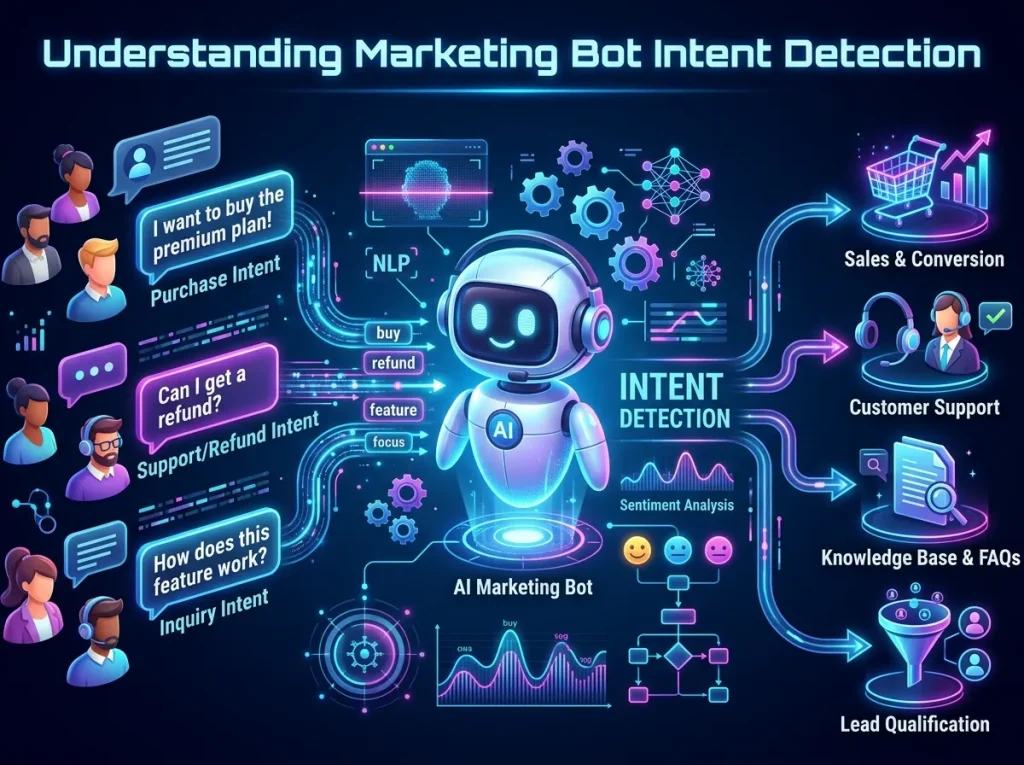
Marketing Bot Intent Detection is the process of identifying the purpose behind a message, question, or action performed by a user while interacting with a marketing bot. The system analyzes the words a person uses, the context of the conversation, and sometimes previous interactions to determine what the customer wants.
For example, a website visitor might ask, “How much does the premium plan cost?” Although the question appears straightforward, it can indicate that the visitor is evaluating a purchase. Another visitor might ask, “What features are included in the basic plan?” This question may suggest that the person is comparing available options before making a decision.
An effective bot uses these differences to deliver suitable responses. It might provide pricing details to the first visitor and explain product features to the second. If a customer asks about implementation or account setup, the bot can offer relevant information or connect the conversation with a support representative.
This process relies on accurate Marketing Bot User Intent Analysis, which helps businesses understand the reasons behind customer questions rather than simply matching messages with predefined answers. The result is a more responsive communication experience that supports customers throughout their decision-making journey.
How AI Improves Intent Recognition in Marketing Bots
Traditional chatbots often depend on fixed keywords and predefined conversation paths. These systems can handle simple questions, but they may struggle when users express the same need in different ways. A customer asking about pricing might write, “What will this cost?”, “Can I see your plans?” or “How much do I need to pay each month?” A rigid bot may interpret these messages differently even though the underlying intent is similar.
AI-Powered Intent Detection helps overcome this limitation by analyzing language patterns and identifying relationships between words, phrases, and conversational context. Instead of relying entirely on exact keyword matches, an AI-enabled bot can estimate the most likely purpose of a message.
Natural language processing helps the system interpret everyday language, including variations in phrasing and common conversational expressions. Machine learning can improve recognition by learning from appropriately labeled examples of previous interactions. Over time, these capabilities can help a marketing bot distinguish between product inquiries, purchase-related questions, support requests, appointment bookings, and other common intentions.
However, AI does not guarantee perfect interpretation. Ambiguous messages, unfamiliar expressions, and conversations with limited context can still create uncertainty. Businesses should therefore allow bots to ask clarifying questions when the user’s intention is unclear. This approach reduces irrelevant responses and helps customers reach the information they actually need.
The Role of Chatbot Intent Recognition in Customer Conversations
Chatbot Intent Recognition gives marketing bots the ability to organize customer messages according to their likely purpose. This makes it easier to provide useful answers and move conversations forward naturally.
A visitor who asks about product compatibility may need technical details before considering a purchase. Someone requesting a product demonstration may be closer to contacting the sales team. A customer asking about delivery policies may need reassurance before completing an order. Recognizing these differences helps a bot select an appropriate response instead of delivering the same promotional message to everyone.
Intent recognition also improves the continuity of a conversation. If a visitor initially asks about available services and later requests a consultation, the bot can use the conversation context to provide a relevant booking option. It does not need to restart the interaction or ask questions that the customer has already answered.
For businesses serving different types of customers, intent recognition can support distinct communication experiences. The needs of a business buyer may differ from those of an individual consumer, especially when product complexity, purchasing authority, and decision timelines vary. Businesses can explore these differences through B2B and B2C Chatbot Strategies for Business Growth, which discusses how chatbot communication can be adapted to different customer groups.
Customer Intent Tracking Across the Buying Journey
Customer needs can change as people move from discovering a business to evaluating its products and making a purchase. Customer Intent Tracking helps marketing teams understand these changes by examining the questions customers ask and the actions they take during chatbot conversations.
At the beginning of the buying journey, visitors may ask broad questions about a product category, industry problem, or available solution. These interactions can indicate early-stage research. As visitors learn more, their questions may become more specific, focusing on features, integrations, pricing, or comparisons. Later conversations might involve requesting a quotation, arranging a demonstration, or confirming purchasing details.
When marketing bots recognize these changing patterns, businesses can deliver information that matches the customer’s current needs. Someone researching possible solutions may benefit from educational resources, while a visitor comparing plans may prefer a concise feature comparison. A customer requesting a consultation should receive a clear way to contact the appropriate team.
Customer intent tracking should not depend on one message alone. A single question about pricing does not always mean that a person is ready to buy. Combining conversational signals with relevant interaction history can provide a more balanced understanding of customer interest. Businesses should also respect privacy requirements and use customer information transparently.
Marketing Bot Behavior Analysis and Intent Signals
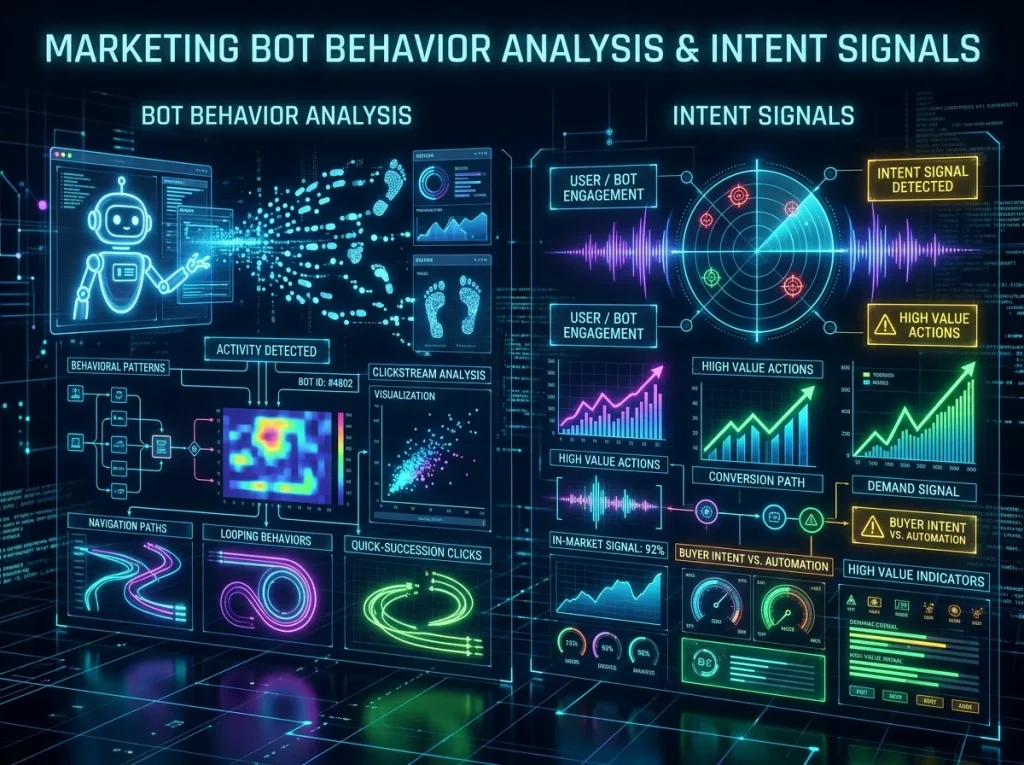
Customer messages are only one source of information that can help businesses understand intent. Marketing Bot Behavior Analysis examines how people interact with a bot, including which questions they ask, which options they select, how they respond to recommendations, and whether they continue or abandon a conversation.
For example, a visitor who repeatedly asks about product features and compares several plans may be evaluating different solutions. Another visitor who requests a discount and asks about payment methods may be considering a transaction. These actions can provide useful context when interpreted alongside the conversation itself.
Businesses can also examine where chatbot interactions occur. A visitor who opens a bot on a product page may have different immediate needs from someone who starts a conversation on a customer support page. The page context can help the bot prioritize suitable questions and responses.
Nevertheless, behavior should not be treated as definitive proof of intent. A person may revisit a page because they are researching for someone else, checking information, or completing an unrelated task. Marketing teams should combine multiple relevant signals and avoid making overly confident assumptions from isolated actions.
When used responsibly, behavior analysis helps businesses understand how customers explore their offerings and where conversations may need improvement. It also reveals recurring questions that can inform website content, product explanations, and future marketing communication.
Automated Customer Intent Identification for Better Lead Qualification
Marketing teams often receive inquiries from visitors with different levels of interest and readiness. Some are looking for general information, while others have a specific problem and want to evaluate a solution. Automated Customer Intent Identification helps businesses categorize these interactions so that the appropriate follow-up can take place.
A marketing bot can recognize when someone requests a product demonstration, asks about enterprise pricing, or wants to speak with a sales representative. Depending on the business’s qualification process, these signals may indicate that the visitor should be offered a consultation or connected with a sales team member.
Other conversations may be better suited to automated nurturing. A visitor who asks a broad introductory question might benefit from an educational article, a product overview, or an explanation of available services. Providing this information can build understanding without creating unnecessary pressure to purchase.
Intent detection can also help prevent leads from being overlooked. If a customer expresses a clear need but does not use a specific conversion phrase, a capable bot may still recognize the context and present a relevant next step.
For the best results, businesses should define what different intent categories mean and how each should influence follow-up. Sales teams can then receive more useful conversation summaries, while marketing teams can evaluate whether the bot is identifying relevant opportunities accurately. Human review remains important when a conversation involves complex requirements, uncertainty, or a high-value business decision.
Conversational Intent Classification and Personalization
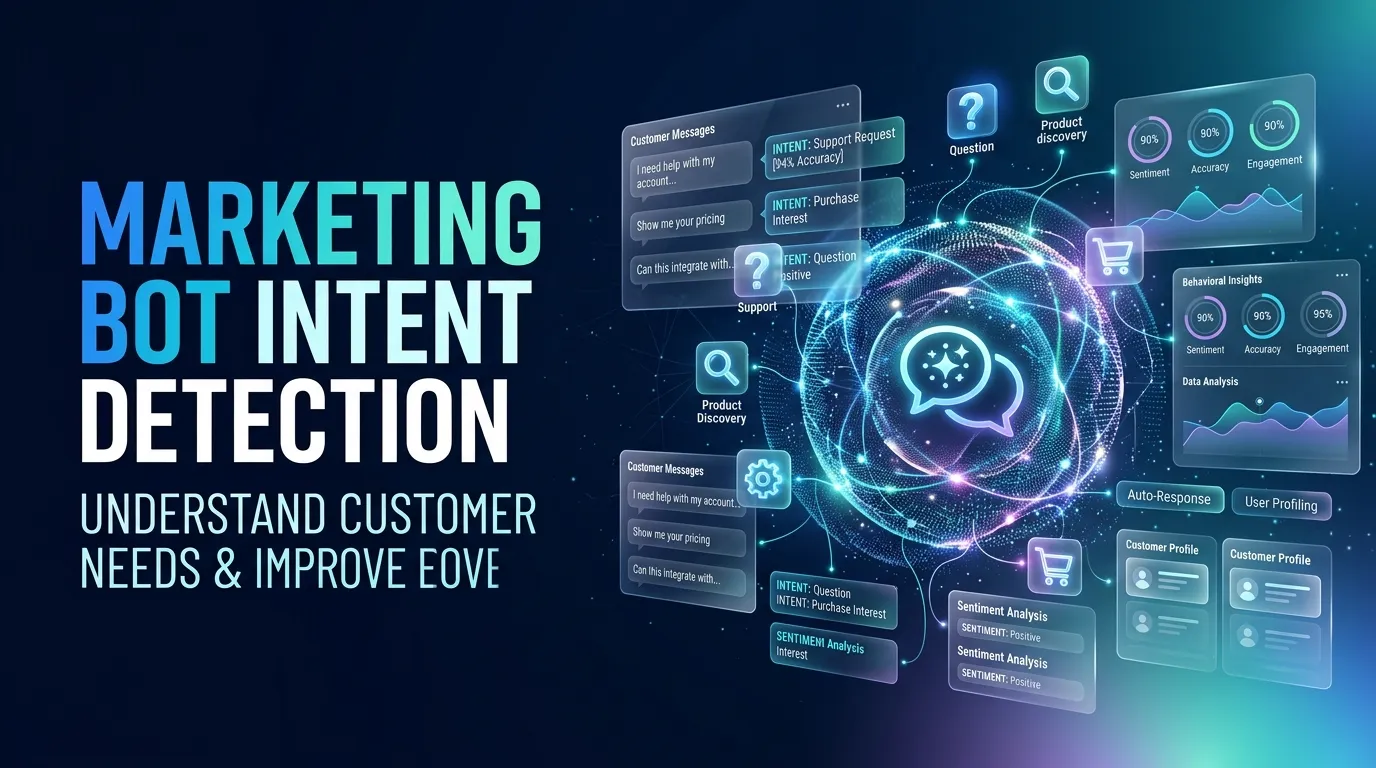
Conversational Intent Classification involves assigning customer messages to meaningful categories based on their purpose. Common categories may include product discovery, pricing inquiries, technical questions, appointment requests, order assistance, and requests to speak with a person.
These categories give a marketing bot a practical way to determine what should happen next in a conversation. When a message is classified as a product inquiry, the bot can provide relevant details. When the message indicates a need for support, it can direct the customer toward troubleshooting information or an appropriate representative.
Classification also supports intent-based personalization. Rather than delivering the same generic promotion to every visitor, a business can tailor its responses to the needs expressed during the conversation. A customer exploring a service may receive an explanation of its main benefits, while someone comparing plans may receive a relevant breakdown of features and costs.
Personalization becomes more useful when the bot considers the immediate context instead of relying only on a customer’s past activity. Customers should be able to correct misunderstandings, change topics, or request a human representative without difficulty.
Businesses can strengthen these interactions by considering when a message appears, not just what it says. The article on Chatbot Message Timing provides additional context on delivering chatbot messages at appropriate moments. Combining suitable timing with accurate intent classification can make conversations feel more relevant and less intrusive.
Buyer Intent Signals in Chatbots
Buyer Intent Signals in Chatbots are conversational clues that suggest a person may be evaluating, comparing, or preparing to purchase a product or service. These signals can include questions about pricing, product availability, service packages, implementation, contract terms, payment options, or demonstrations.
The strength of a signal depends on its context. Asking about a product’s price may simply be part of general research, while requesting a formal quotation after discussing specific requirements may indicate a more developed purchasing interest. A bot should therefore evaluate the overall conversation rather than assigning high intent based on a single keyword.
Marketing teams can use these signals to prioritize appropriate next steps. Visitors who show clear interest may be offered a consultation or product demonstration, while those who are still researching can receive educational information. This creates a more flexible experience that reflects different customer needs.
Buyer intent signals can also help identify friction in the buying process. If many visitors ask the same question about pricing conditions or product compatibility, the business may need to make that information clearer on its website. In this way, chatbot conversations become a source of insight into both customer demand and the effectiveness of existing marketing materials.
Marketing Bot Query Analysis and Continuous Improvement
Marketing Bot Query Analysis involves reviewing the questions customers submit to identify common themes, misunderstandings, and opportunities to improve automated conversations. It helps businesses determine whether their bots recognize customer intent correctly and provide useful responses.
For example, repeated questions about the difference between two services may indicate that the website needs a clearer comparison. Frequent requests to speak with a person may suggest that the bot is unable to resolve certain questions or that its automated responses feel too restrictive. A high number of repeated questions within one conversation may reveal gaps in the information being provided.
Marketing teams should review queries that receive incorrect classifications, uncertain responses, or no suitable answer. These examples can help improve the training data, refine intent categories, and create better clarification questions. They can also reveal when a human handoff should happen earlier.
Useful performance measures include intent classification accuracy, successful resolution rate, conversation completion rate, qualified leads generated, and customer feedback. Businesses should evaluate these measures together rather than relying on one metric. A bot may handle many conversations but still perform poorly if it misunderstands customer needs or sends visitors to irrelevant pages.
Consistent review helps keep intent detection aligned with changes in customer language, product offerings, and marketing objectives. It also gives teams a practical way to identify and address weaknesses before they affect a larger number of conversations.
Connecting Marketing Bot Intent Detection with Business Automation
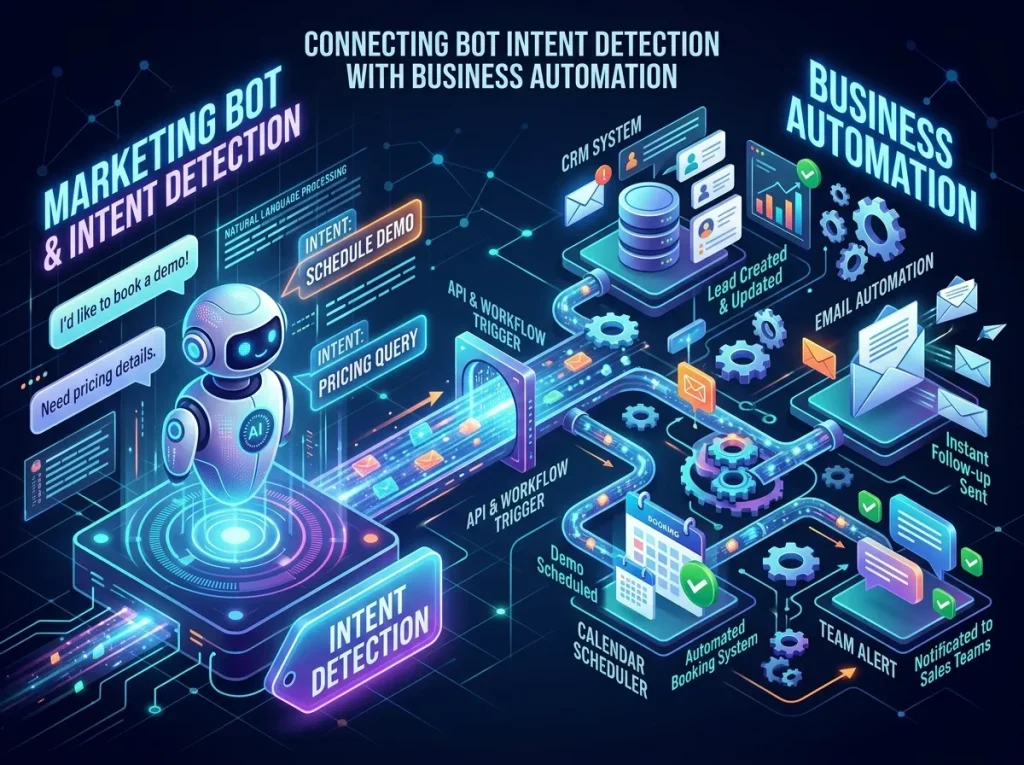
Intent detection becomes even more valuable when it works alongside wider business automation processes. Once a bot identifies the purpose of a message, it may trigger an appropriate action, such as displaying relevant information, collecting necessary details, updating a customer record, or routing a qualified inquiry to the right department.
For example, a visitor requesting a demonstration might be offered a scheduling option, while a customer asking about an existing order may be directed to order support. A request involving a complicated technical issue can be transferred to a qualified employee with a summary of the conversation, reducing the need for the customer to repeat everything.
These workflows connect customer conversations with broader operational processes. Businesses looking to understand this relationship can explore Chatbot Automation for Business Growth, which covers how automated chatbot interactions can support business operations.
Successful automation depends on clear rules and reliable integrations. If the bot cannot confidently identify an intent or complete the requested action, it should communicate its limitations and offer another route. This prevents the system from making unsupported promises or leaving customers without assistance.
Marketing teams should also establish consistent standards for how bots communicate, handle sensitive information, and transfer conversations. Marketing Bot Best Practices offers related context for creating effective and customer-focused bot interactions.
Privacy, Accuracy, and Trust in Intent Detection
Marketing Bot Intent Detection should improve the customer experience without compromising trust. Businesses need to consider what information they collect, why they collect it, how it is stored, and who can access it. Data collection should be proportionate to the purpose of the conversation and consistent with applicable privacy requirements.
Transparency is particularly important when conversational information is used for personalization or lead qualification. Customers should not feel that the bot is making unexplained assumptions about their needs. Clear responses, appropriate privacy notices, and accessible options for human assistance help establish trust.
Accuracy also requires ongoing attention. Intent categories should reflect real customer questions, and ambiguous messages should not be forced into an unsuitable category. When confidence is low, the bot can ask a brief follow-up question, present a small set of relevant choices, or transfer the conversation to a human representative.
Businesses should regularly evaluate whether the bot treats different customer requests consistently and whether its responses remain relevant as products and services change. By balancing automation with transparency and human oversight, companies can make intent detection a reliable part of their customer communication strategy.
Conclusion
Marketing Bot Intent Detection helps businesses understand why customers initiate conversations and what information they need next. Through AI-powered intent detection, chatbot intent recognition, customer intent tracking, and conversational intent classification, marketing bots can provide more relevant responses and support better lead qualification.
When these capabilities are combined with thoughtful personalization, query analysis, and well-designed automation, businesses can improve customer interactions while gaining useful insight into buyer behavior. The key is to treat intent detection as an ongoing process rather than a one-time setup. Regular evaluation, responsible data practices, and clear human handoff options help ensure that marketing bots remain accurate, helpful, and aligned with customer expectations.
Frequently Asked Questions
1. What is Marketing Bot Intent Detection?
Marketing Bot Intent Detection is the process of identifying the purpose behind customer messages and chatbot interactions. It helps a bot understand whether a visitor is looking for product information, comparing prices, requesting support, or showing interest in a purchase. This understanding allows the bot to provide more relevant responses.
2. How does AI-powered intent detection work?
AI-powered intent detection uses natural language processing, machine learning, and conversational context to interpret customer messages. It identifies language patterns and estimates the user’s likely goal. When the message is unclear, the bot can ask a follow-up question or offer a human handoff instead of providing an irrelevant answer.
3. Why is chatbot intent recognition important for marketing?
Chatbot intent recognition helps businesses respond to customers according to their actual needs. It can improve the relevance of product recommendations, direct qualified prospects toward sales teams, and help customers find useful information faster. It also provides insight into the questions and concerns that influence customer decisions.
4. What is customer intent tracking in marketing bots?
Customer intent tracking involves observing conversational signals and relevant interaction patterns to understand how a customer’s needs develop over time. A visitor may begin by researching a product and later ask about pricing or request a demonstration. Tracking these changes helps businesses provide suitable information at each stage.
5. What are common buyer intent signals in chatbots?
Common buyer intent signals include questions about pricing, product availability, service packages, implementation, payment options, quotations, and demonstrations. However, these signals do not always indicate an immediate intention to purchase. Businesses should interpret them in the context of the complete conversation and the customer’s stated needs.
6. How does conversational intent classification improve personalization?
Conversational intent classification organizes messages into categories such as product inquiries, support requests, pricing questions, and consultation requests. The bot can then select responses and next steps that match the customer’s purpose, making interactions more useful than generic messages sent to every visitor.
7. Can marketing bot intent detection improve lead qualification?
Yes. Intent detection can help identify visitors who request demonstrations, ask detailed product questions, or express specific business needs. Marketing teams can use these signals to determine suitable follow-up actions. Combining intent with relevant qualification criteria is more reliable than treating a single message as proof that a lead is ready to buy.
8. How can businesses measure marketing bot intent detection performance?
Businesses can assess intent classification accuracy, successful conversation resolution, completion rates, qualified leads, customer feedback, and the frequency of incorrect or uncertain responses. Reviewing these measures together helps identify whether the bot understands customers correctly and contributes to meaningful marketing outcomes.
9. What challenges can affect marketing bot intent detection?
Common challenges include ambiguous messages, unfamiliar wording, incomplete context, overlapping intent categories, and changes in customer behavior. Poor-quality training examples can also affect accuracy. Regularly reviewing real conversations, improving intent definitions, asking clarifying questions, and providing human support can help address these challenges.
10. How can businesses use marketing bot intent detection responsibly?
Businesses should collect only relevant information, communicate transparently about data use, protect customer records, and follow applicable privacy requirements. They should avoid making unsupported assumptions about customers and provide clear options for human assistance. Regular accuracy reviews and appropriate oversight help maintain trust while improving chatbot performance.