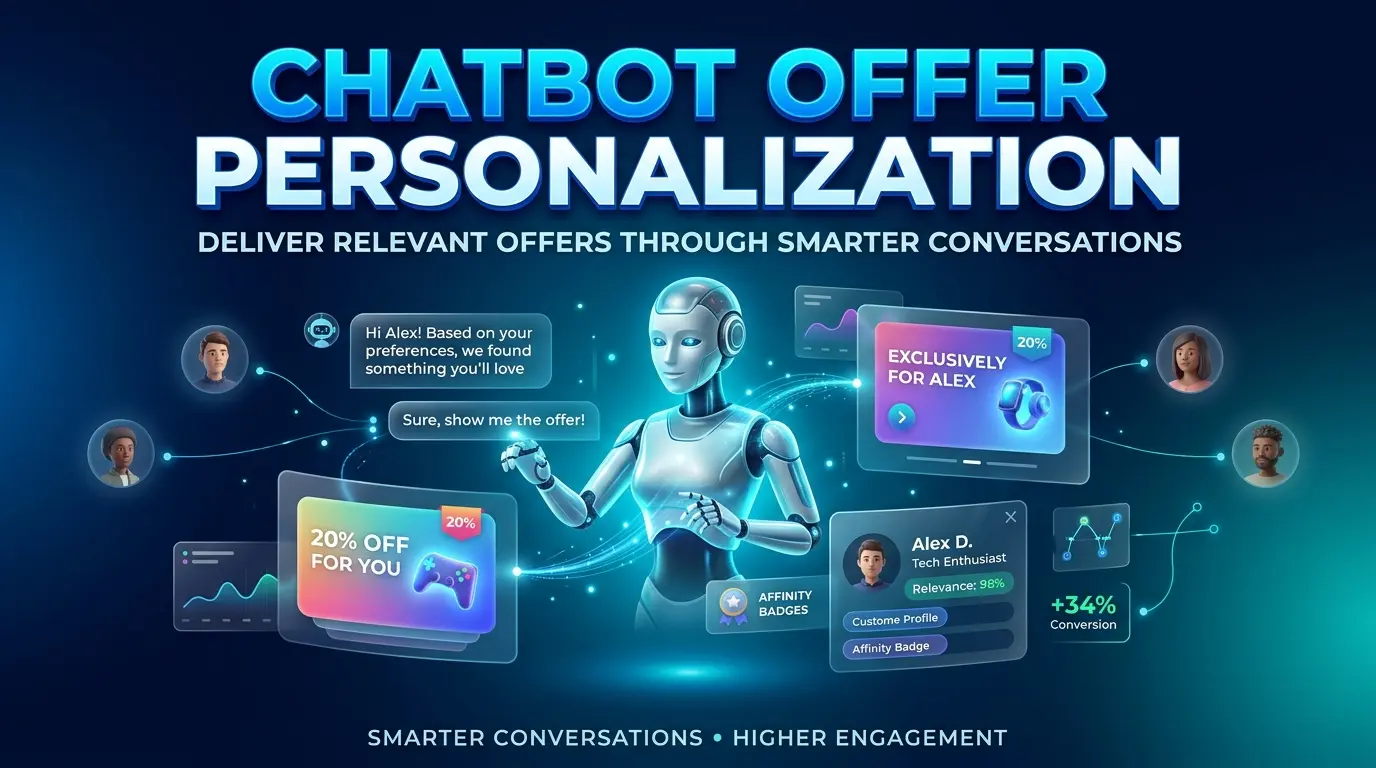
Chatbot Offer Personalization helps businesses deliver relevant promotions and product recommendations based on customer interests, preferences, and conversational context. Through AI-powered recommendations, customized messages, dynamic offers, and intent-based targeting, chatbots can improve product discovery and support customer engagement. When personalization is combined with accurate information, responsible data practices, and effective conversion experiences, it can strengthen customer relationships and contribute to better marketing results.
Chatbot Offer Personalization helps businesses make automated conversations more relevant by presenting products, services, promotions, and recommendations that reflect individual customer interests. Instead of showing every visitor the same offer, personalized chatbots use conversational context, browsing behavior, stated preferences, and previous interactions to deliver more meaningful suggestions. This approach can improve customer engagement, create smoother buying experiences, and help businesses turn chatbot conversations into valuable sales opportunities.
Why Generic Chatbot Offers Often Miss the Mark
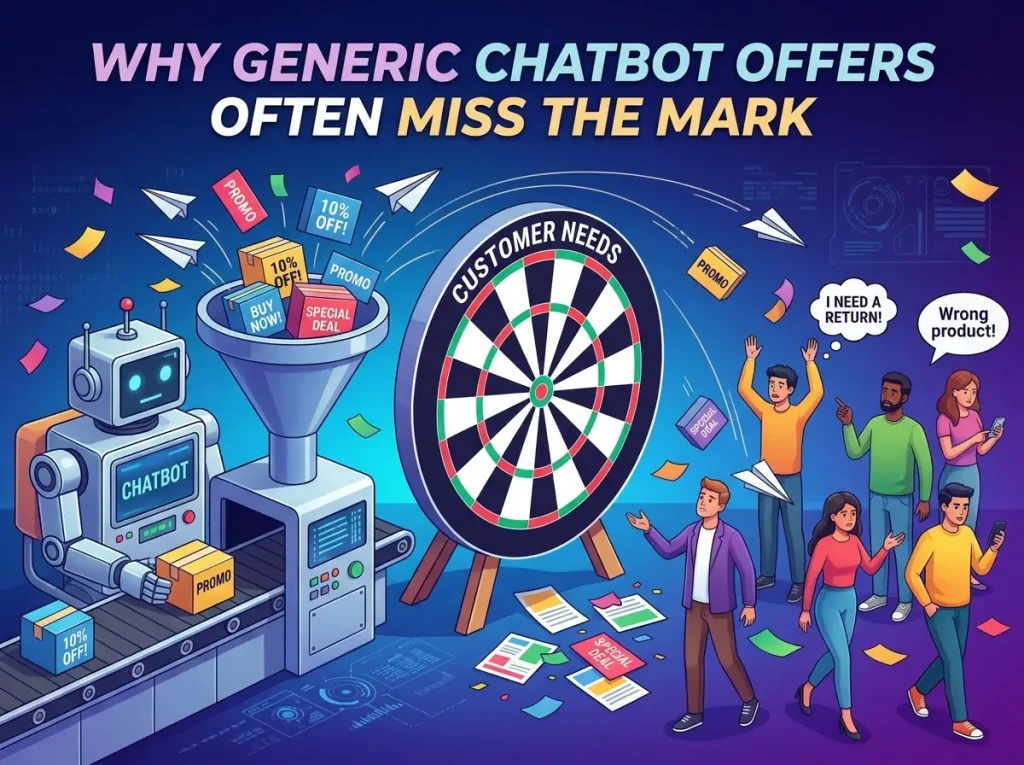
Imagine a customer visiting an online store to explore running shoes. A chatbot immediately displays a discount for kitchen appliances or promotes a product category the visitor has never explored. Even if the offer is attractive, it has little connection to the customer’s current needs. The conversation feels automated rather than helpful, and the visitor may ignore the recommendation or leave the website.
This is one of the main challenges with generic chatbot promotions. Businesses can use chatbots to communicate with large audiences, but sending identical messages to everyone does not necessarily create meaningful engagement. Customers have different interests, budgets, preferences, and purchasing intentions. An offer that appeals to one visitor may be irrelevant to another.
Chatbot Offer Personalization addresses this gap by adapting recommendations to the person participating in the conversation. A chatbot can ask what a visitor is looking for, recognize relevant product categories, and present offers that match the information available.
The purpose is not to make every interaction feel like a sales pitch. Instead, personalization should make the chatbot more useful by reducing unnecessary choices and helping customers discover relevant opportunities. When recommendations reflect genuine needs, promotional messages become a natural part of the conversation.
The Information Behind a Personalized Offer
Personalization depends on understanding customers, but businesses do not need to collect every possible detail to create a relevant experience. Even a small amount of useful information can improve the quality of chatbot recommendations.
A visitor’s responses provide one important source of context. When someone tells a chatbot that they are looking for an affordable subscription, a particular product type, or a service for a small business, the system can use that information to narrow its suggestions. These direct responses are especially valuable because they reflect what the customer has chosen to communicate.
Browsing behavior can provide additional signals. A visitor exploring a specific product category may be interested in related items, while repeated visits to a pricing page could indicate an interest in comparing available plans. Previous purchases and earlier chatbot conversations may also help businesses understand customer preferences when that information is available and appropriately managed.
However, customer behavior should not be treated as unquestionable evidence. Visiting a product page does not always mean someone intends to purchase that product. A person may simply be researching, comparing options, or gathering information for someone else. Effective personalization considers multiple signals instead of relying on a single action.
This is where Chatbot Interaction Design becomes important. A well-designed conversation gives customers natural opportunities to express their needs, while the chatbot uses their responses to make subsequent recommendations more relevant.
Personalized Chatbot Offers Should Begin With Customer Intent
A useful personalized offer starts with the reason someone is interacting with a chatbot. Customers may arrive with different objectives, and understanding those objectives helps determine what type of recommendation makes sense.
A first-time visitor might want a general explanation of available products or services. A returning customer may already know what they need and simply want to compare options. Someone who has encountered a technical problem may be looking for support rather than a promotional offer.
Treating all these situations in the same way creates unnecessary friction. A chatbot that immediately recommends premium products to someone asking about basic features may appear more interested in selling than helping.
Personalized Chatbot Offers should therefore reflect the visitor’s immediate intent. If someone asks about affordable options, the chatbot can prioritize products within an appropriate price range. If a customer is comparing subscription plans, it can explain relevant differences and identify a suitable offer. If a visitor needs technical assistance, resolving the problem should take priority over promotional messaging.
Intent can also change during a conversation. A visitor who begins by asking a general question may later express interest in purchasing. The chatbot should respond to that development instead of continuing with its original recommendation.
This flexibility makes the interaction feel more natural. Rather than following a fixed promotional script, the chatbot responds to the information shared by the customer and adjusts its suggestions accordingly.
AI Chatbot Personalization and More Relevant Recommendations
Artificial intelligence can expand the possibilities of chatbot personalization by helping systems interpret conversational information and recognize patterns in customer behavior. Traditional chatbots often rely on predefined rules, while AI-supported systems can process more varied questions and identify relationships between different pieces of information.
For example, a customer may describe a need without using the exact product category or technical terms found in a company’s catalog. An AI-powered chatbot can interpret the request and connect it with relevant products or services, depending on its capabilities and available data.
AI Chatbot Personalization can also support recommendation processes by considering product attributes, customer preferences, previous interactions, and contextual information. A visitor interested in beginner-level software may receive suggestions designed for simpler use, while an experienced user may be shown more advanced options.
The quality of these recommendations depends heavily on the information and logic behind the system. If product descriptions are incomplete or customer records are inaccurate, the chatbot may generate unsuitable suggestions. Businesses must therefore maintain reliable product information and regularly evaluate recommendation quality.
AI should also support, rather than replace, customer choice. A chatbot can explain why a product is being recommended, provide alternative options, and allow visitors to request different suggestions. Customers should remain in control of their decisions.
When implemented carefully, AI can make chatbot conversations more adaptive without sacrificing clarity or trust.
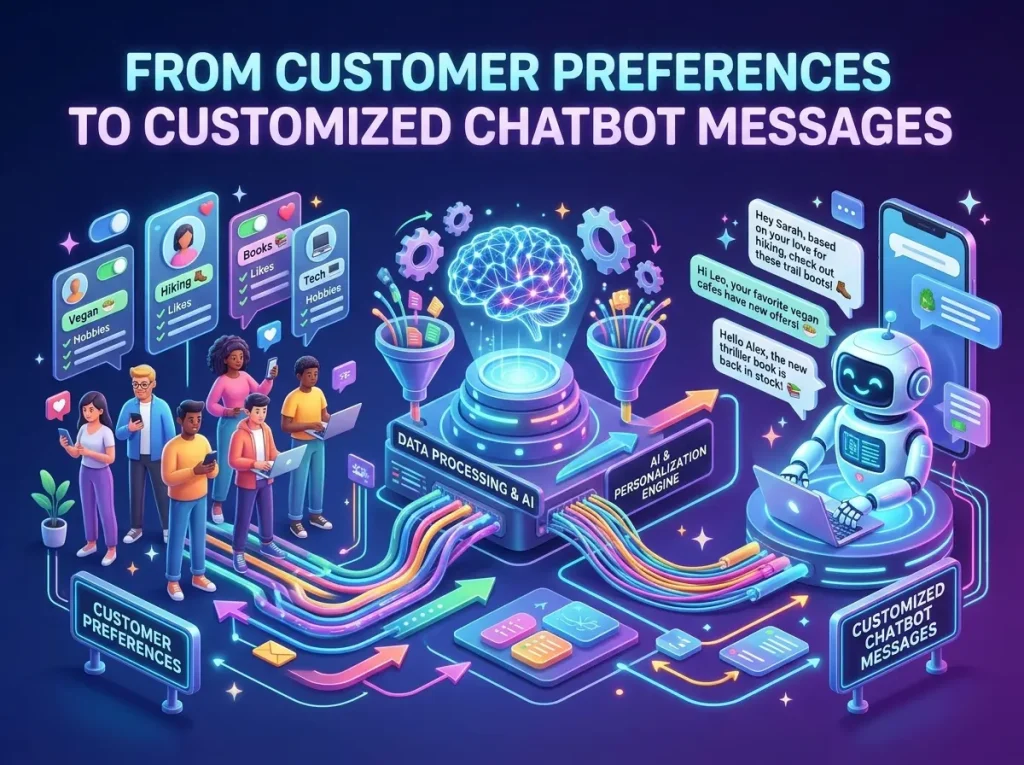
From Customer Preferences to Customized Chatbot Messages
The wording of an offer can influence how customers respond to it. Even when two visitors receive the same promotion, the way that promotion is introduced may affect whether it feels relevant.
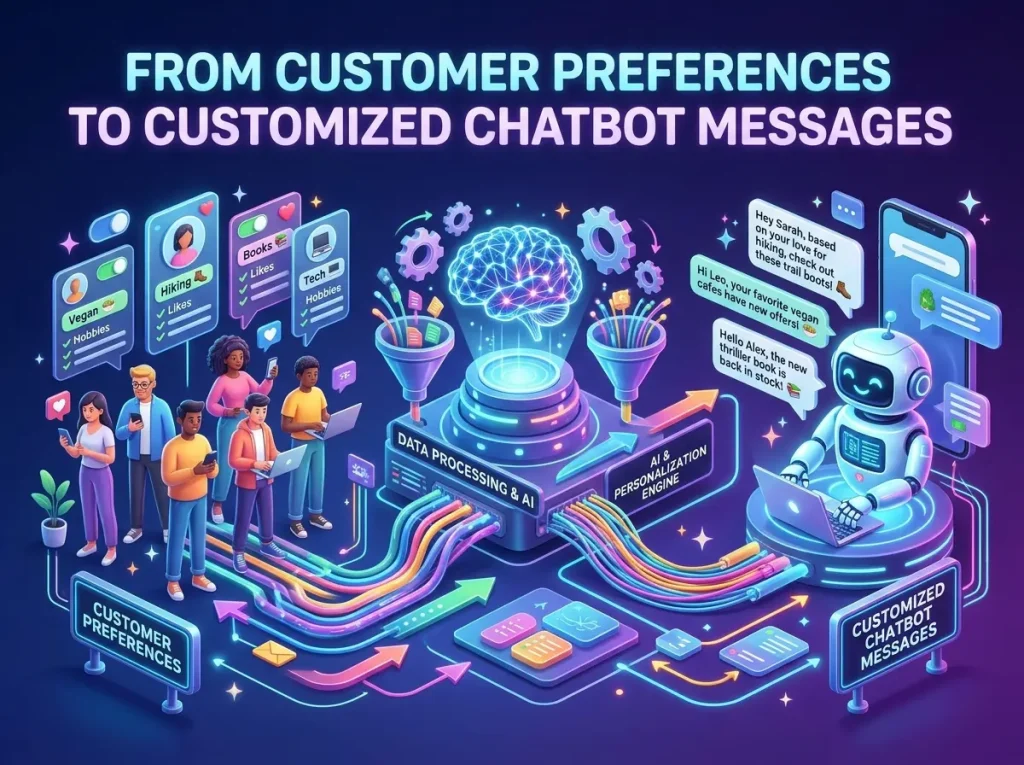
Customized Chatbot Messages allow businesses to adjust conversational language according to customer interests and interaction history. A visitor who has asked about product affordability may respond better to a message highlighting value, while someone comparing technical features may prefer an explanation of functionality.
For example, a general message might say, “Explore our available products and offers.” A more contextual version could say, “Looking for an affordable option? Here are a few products that match the budget range you mentioned.”
The second message is more useful because it connects the recommendation with something the visitor actually communicated.
Personalized language should remain natural and accurate. Overusing a customer’s name, referring to activity they did not knowingly share, or making assumptions about their circumstances can make the interaction uncomfortable. Personalization should demonstrate relevance, not create the impression that the business is monitoring every action.
Tone also matters. A chatbot serving professional customers may require clear and direct language, while a retail chatbot may use a more conversational style. The language should reflect the brand while remaining easy to understand.
The strongest customized messages explain the benefit of an offer and give customers a clear next step. They do not rely on exaggerated claims or unnecessary urgency to encourage a response.
How Chatbot Offer Recommendations Support Product Discovery
Large product catalogs can make online shopping difficult. Customers may know what they want to achieve without knowing which product or service is the best fit. A chatbot can simplify this experience by narrowing the available choices through conversation.
Chatbot Offer Recommendations become more valuable when they connect product information with customer requirements. A visitor shopping for a laptop might specify a budget, preferred screen size, and intended use. The chatbot can use those details to suggest suitable options rather than displaying an unrelated collection of products.
Personalized Product Suggestions can also introduce complementary products when there is a genuine connection. Someone purchasing a camera may appreciate recommendations for compatible accessories, while a customer selecting business software may want to explore related integrations or support services.
However, recommendations should not become an endless sequence of promotions. Too many suggestions can overwhelm visitors and make it difficult to identify the most suitable option. A smaller selection of relevant products, accompanied by clear explanations, is often more useful than a long list.
Businesses should also make it easy for customers to refine their preferences. If the first recommendation is too expensive or does not include a required feature, the visitor should be able to communicate that and receive an improved selection.
Product discovery becomes more effective when the chatbot acts as a helpful assistant rather than a digital advertisement.
Dynamic Chatbot Offers and the Right Moment to Present Them
The timing of a recommendation can be just as important as its content. A relevant discount presented during a useful part of the conversation may encourage further exploration, while the same offer displayed too early can interrupt the customer experience.
Dynamic Chatbot Offers allow businesses to adjust promotional content according to changing conversational context, customer actions, and campaign conditions. For instance, a visitor comparing subscription plans might receive information about a suitable package after asking about pricing. Someone exploring a product category may see a relevant bundle after expressing interest in related items.
The chatbot should recognize whether a customer is ready to consider an offer. If a visitor is still trying to understand basic product features, a detailed explanation may be more useful than a discount. If the customer has already identified a suitable product and asks about available promotions, presenting a relevant offer becomes more natural.
This makes timing an important part of conversational personalization. Businesses can explore the relationship between customer activity and promotional delivery through Chatbot Message Timing. The goal is to provide information when it supports the interaction rather than interrupting it.
Dynamic offers also require accurate campaign information. A chatbot should not display an expired discount, recommend an unavailable product, or promise a benefit that does not apply to the visitor. Incorrect promotions can damage customer confidence and create avoidable support problems.
A well-managed system keeps offers aligned with current inventory, eligibility conditions, and campaign rules.
Conversational Offer Targeting Without Making Customers Feel Pressured
Conversational Offer Targeting gives businesses an opportunity to connect promotions with the subjects customers discuss. Unlike a broad advertising message, a conversational offer can respond directly to a question or requirement.
For example, a visitor asking about business website services may receive information about a package that includes relevant features. Someone interested in improving email communication may be shown a service connected to that objective. The recommendation makes sense because it follows the direction of the conversation.
However, targeting must respect the customer’s comfort and expectations. A chatbot should not repeatedly push offers after a visitor declines them. It should also avoid presenting unrelated promotions simply because a marketing campaign is active.
Customer control is essential. Visitors should be able to ask for more information, compare alternatives, decline recommendations, or speak with a human representative when necessary.
Businesses should also be transparent about promotional content. If an offer is sponsored, limited by eligibility, or subject to specific conditions, the chatbot should explain those details clearly.
Good conversational targeting creates opportunities without forcing decisions. Customers should feel that the chatbot is helping them find an appropriate option, not attempting to manipulate their behavior.
Customer-Based Offer Personalization Across Different Industries
The practical value of personalization varies across industries because customers have different expectations and purchasing processes.
In ecommerce, chatbots can help visitors discover products based on category interests, budgets, sizes, and preferred features. A customer searching for home office equipment might receive suggestions for suitable desks, chairs, or accessories. These recommendations can make browsing easier while introducing relevant offers.
In software businesses, personalization may focus on business requirements, company size, technical needs, or subscription preferences. A chatbot can help visitors compare plans and identify features that match their intended use. It may also direct more complex inquiries to a sales specialist.
Financial and professional service businesses may use conversational systems to explain service categories and help visitors identify relevant information. In these environments, recommendations should be especially careful, transparent, and consistent with applicable industry requirements.
Travel businesses can personalize suggestions according to destination interests, travel dates, budget ranges, and accommodation preferences. A visitor exploring family travel options may receive different recommendations from someone looking for a short business trip.
These examples show why Customer-Based Offer Personalization should be built around the actual needs of each audience. A single recommendation strategy is unlikely to work equally well across different customer groups.
The business objective should remain consistent: make it easier for people to discover relevant options through a conversation that respects their preferences.
Improving Chatbot Conversion Optimization Through Relevance
Personalization can support conversion performance, but showing a customized offer does not automatically lead to a sale. Customers still need clear information, confidence in the product, and a straightforward way to take the next step.
A chatbot should explain the main benefit of a recommendation, provide accurate details, and answer relevant questions. If a visitor is comparing two products, the system should help clarify their differences rather than repeatedly promoting one option.
The path from recommendation to action should also be simple. Depending on the business, the next step might involve viewing a product page, checking availability, requesting a quote, booking a consultation, or completing a purchase.
This is where Chatbot Conversion Optimization connects closely with offer personalization. A relevant recommendation needs to be supported by an effective conversational experience and a clear conversion path.
Businesses can evaluate performance through several indicators, including recommendation engagement, offer clicks, completed purchases, qualified inquiries, and customer feedback. It is also useful to compare personalized offers with general recommendations to understand whether customization produces meaningful improvements.
Conversion measurement should consider the entire experience. A chatbot may generate more clicks while also creating confusion or increasing support requests. Looking beyond a single metric provides a more accurate understanding of performance.
Privacy, Trust, and Responsible Personalization
Personalized chatbot marketing relies on information about customers and their interactions. This makes privacy and responsible data handling essential parts of the experience.
Businesses should collect information that is relevant to the service they provide and explain how customer data will be used. They should avoid requesting unnecessary personal details simply to improve promotional targeting.
Customers should also have appropriate control over their information and communication preferences. Consent, data retention, access controls, and applicable privacy requirements should be considered when designing chatbot systems.
There is a difference between a chatbot remembering a preference that a customer voluntarily shared and making intrusive assumptions based on behavior. Even when personalization technology makes more detailed targeting possible, businesses should consider whether using particular information is necessary and appropriate.
Security is equally important. Customer information should be handled through suitable systems and access policies, especially when chatbot conversations involve account details, purchases, or other sensitive business information.
Trust develops when customers understand what is happening and feel comfortable participating. A personalized offer should make the experience easier, not raise concerns about how their information is being used.
Connecting Personalization With Broader Chatbot Automation
Offer personalization becomes more effective when it is connected with the wider customer communication process. A chatbot may introduce a relevant product, answer questions, collect an inquiry, and direct a qualified prospect to the appropriate business team.
These activities should work together rather than operate as separate marketing functions. If a customer expresses interest in a service but does not complete an inquiry, the chatbot may provide an appropriate next step during the conversation. If the visitor needs specialist assistance, the system should transfer the interaction with enough context to avoid making the customer repeat everything.
This relationship between personalized conversations and broader automation is explored through Chatbot Automation for Business Growth. Automation can help businesses manage repetitive interactions, organize inquiries, and support customer journeys while maintaining more consistent communication.
Still, automation should have clear boundaries. Complex questions, complaints, sensitive requests, and situations requiring human judgment should have an appropriate escalation path. A chatbot should not continue offering products when the customer needs assistance that it cannot provide.
The best systems combine automation with human support. Chatbots handle suitable routine interactions and recommendations, while employees remain available for situations that require deeper understanding or personal attention.
Making Every Recommendation More Meaningful
Chatbot Offer Personalization is most effective when it reflects a genuine understanding of customer needs. It brings together conversational context, customer preferences, relevant product information, and appropriate promotional timing to create a more useful experience.
Businesses do not need to make every interaction highly complex. A chatbot that asks clear questions, remembers relevant preferences appropriately, and presents a small number of suitable recommendations can already provide meaningful value.
As customer expectations continue to develop, businesses that focus on relevance and transparency will be better positioned to create stronger conversational experiences. The objective is not simply to show more offers. It is to make each recommendation more useful, each interaction more natural, and each customer decision easier to understand.
Frequently Asked Questions
1. What is Chatbot Offer Personalization?
Chatbot Offer Personalization is the process of adapting promotions, product recommendations, and service suggestions according to customer preferences, conversation history, and relevant behavioral information. It helps businesses make chatbot interactions more useful and relevant.
2. How does AI improve chatbot offer personalization?
AI can interpret customer questions, identify interests, recognize conversational context, and support more relevant recommendations. It can help chatbots respond to varied requests instead of relying entirely on fixed promotional messages.
3. What information is used for personalized chatbot offers?
Depending on the business and available permissions, chatbots may use customer responses, product interests, browsing activity, previous purchases, interaction history, and stated preferences. Businesses should collect only relevant information and handle it responsibly.
4. What are Personalized Chatbot Offers?
Personalized Chatbot Offers are promotions or recommendations selected according to an individual’s needs and interests. Examples include relevant product discounts, suitable subscription plans, customized bundles, and service recommendations.
5. How do chatbot recommendations improve product discovery?
Chatbot recommendations help customers narrow down available options by considering their requirements, budgets, and preferences. This can reduce unnecessary browsing and make it easier to identify suitable products or services.
6. What are Dynamic Chatbot Offers?
Dynamic Chatbot Offers are promotional suggestions that change according to customer interactions, conversational intent, campaign conditions, or available product information. They allow businesses to present more relevant offers as conversations develop.
7. Can chatbot personalization improve conversion rates?
It can support conversion improvements by making recommendations more relevant and helping customers find suitable options. However, results also depend on product quality, pricing, customer trust, conversation design, and the overall purchasing experience.
8. How can businesses personalize chatbot messages without being intrusive?
Businesses should use relevant information that customers understand and expect to be used. Messages should be natural, transparent, and helpful, while avoiding excessive personal references, unsupported assumptions, or repeated promotional pressure.
9. Is chatbot offer personalization suitable for small businesses?
Yes. Small businesses can use relatively simple chatbot features to ask about customer needs, present relevant services, recommend suitable products, and answer common questions. Personalization does not always require advanced AI technology.
10. How can businesses measure chatbot offer personalization performance?
Businesses can measure recommendation clicks, offer engagement, completed purchases, qualified inquiries, conversation completion, and customer feedback. Comparing personalized recommendations with general offers can also help identify whether personalization is creating meaningful improvements.