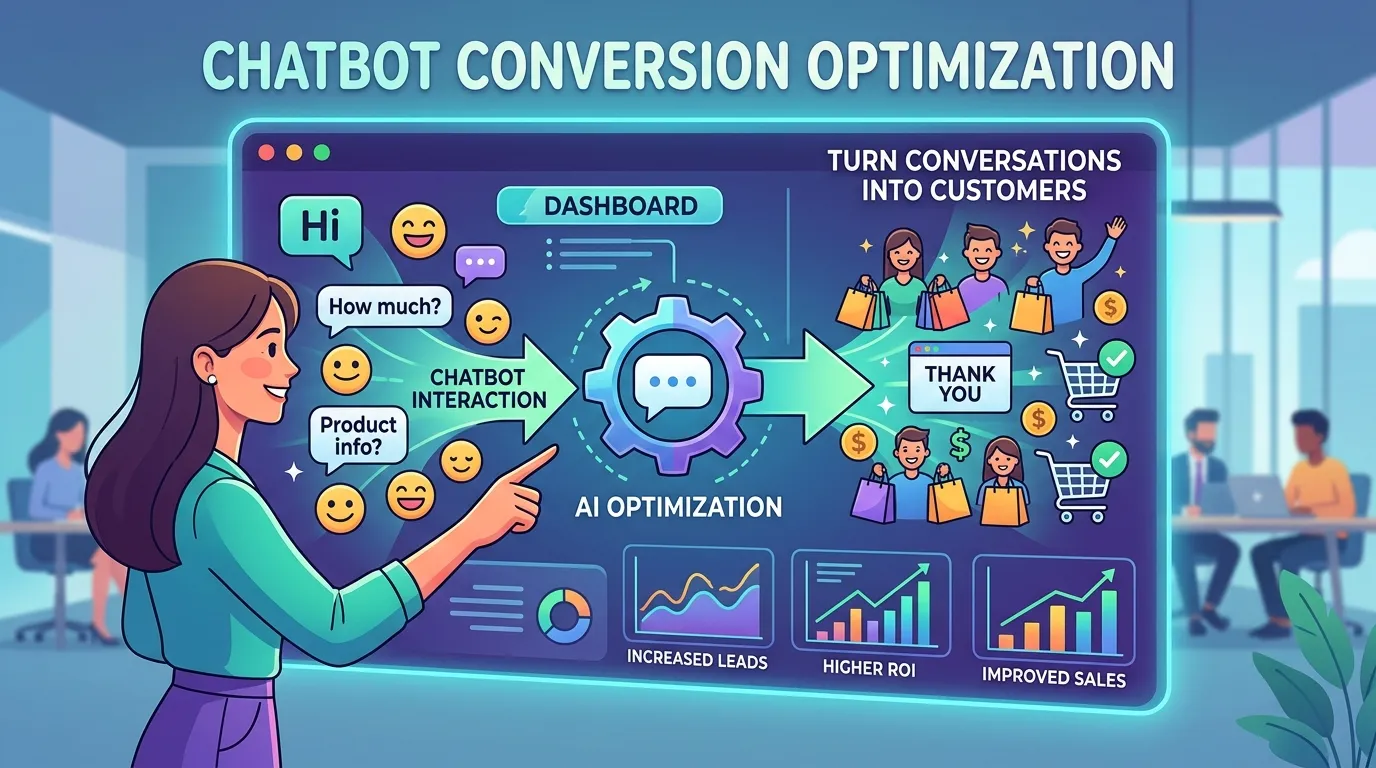
Chatbot conversion optimization helps businesses improve chatbot conversations to increase leads, sales, bookings, and other valuable actions. By using clear conversation flows, personalization, strong CTAs, and performance tracking, businesses can create better user experiences and improve conversions.
A poorly designed chatbot can frustrate visitors, provide irrelevant answers, or make it difficult for users to reach their goals. A well-optimized chatbot does the opposite. It creates a smooth conversation, understands user intent, provides useful information, and guides visitors toward the next step.
Businesses can improve chatbot performance by combining clear conversation flows, personalization, useful calls to action, relevant questions, and continuous performance analysis. When these elements work together, chatbots can become an important part of a broader conversion strategy.
What Is Chatbot Conversion Optimization?
Chatbot conversion optimization focuses on improving every part of a chatbot interaction that can influence a user’s decision to take action.
Traditional conversion optimization often focuses on landing pages, forms, buttons, and website layouts. Chatbots add another layer because visitors interact with a business through conversation.
A chatbot may greet a visitor, ask about their needs, recommend a solution, answer questions, collect contact information, and direct them toward a conversion opportunity.
The objective is not to force users into a sale. Instead, the chatbot should make it easier for visitors to find useful information and take the next logical step.
For example, a visitor looking for pricing information could receive a direct answer and then be offered an option to speak with a sales representative. Another visitor who is only researching a topic could receive educational information without being pressured to buy.
This user-focused approach makes the conversation more natural and can improve the overall customer experience.
Why Chatbot Conversion Optimization Matters
A website visitor may leave without converting because they cannot find an answer, do not understand a product, or are unsure about what to do next. A chatbot can address these problems in real time.
Effective chatbot conversion rate optimization reduces friction between the visitor’s question and the desired action. Instead of forcing visitors to navigate multiple pages, the chatbot can guide them directly.
Chatbots can also operate continuously, allowing businesses to engage visitors outside normal working hours. This can be especially useful for companies serving customers across different time zones.
Another benefit is that chatbot conversations can reveal valuable information about customer needs. Repeated questions can highlight gaps in website content, while common objections can provide insights for sales and marketing teams.
The goal is therefore not simply to increase the number of chatbot conversations. It is to create conversations that are useful and contribute to meaningful business outcomes.
Build a Clear Chatbot Conversion Strategy
A successful chatbot conversion strategy starts with a clear understanding of what the chatbot is expected to accomplish.
Some businesses may use chatbots primarily for lead generation. Others may focus on customer support, product recommendations, appointment booking, or direct sales.
The chatbot’s objectives should be connected to broader business goals.
For example, a B2B company may want its chatbot to identify qualified prospects and schedule sales calls. An ecommerce business may use a chatbot to recommend products and help customers complete purchases.
Once the objective is defined, the conversation can be designed around the actions users need to take.
The chatbot should have a clear purpose on each page where it appears. A product page chatbot might answer product questions, while a service page chatbot might help visitors request a consultation.
This context makes the interaction more relevant and reduces unnecessary questions.
Improve Conversational Conversion Optimization
Conversational conversion optimization focuses on making chatbot interactions feel useful, natural, and easy to follow.
One important principle is to keep questions simple. Visitors should understand what the chatbot is asking without having to interpret complicated language.
The chatbot should also avoid asking for too much information too early. Requesting a long list of details before providing any value can cause visitors to abandon the conversation.
Instead, the chatbot can gradually collect information as the conversation develops.
For example, it might first ask what the visitor needs help with. After identifying the user’s intent, it can provide relevant information and then ask for additional details if necessary.
Response options can also make conversations easier. Buttons such as “View Pricing,” “Talk to Sales,” “See Products,” or “Get a Demo” give users clear choices.
A conversational experience should always make the next step obvious.
Increase Chatbot Lead Conversion
Chatbot lead conversion becomes more effective when the chatbot focuses on helping users rather than immediately asking for contact information.
A visitor who is actively searching for a solution may be willing to provide their email address, phone number, company name, or other details. But the timing matters.
The chatbot should establish value before requesting sensitive or unnecessary information.
For example, a chatbot could first help a visitor identify the right service and then offer a personalized consultation. At that point, providing contact information has a clear purpose.
Lead qualification can also improve conversion quality. Instead of sending every chatbot conversation directly to the sales team, the chatbot can ask relevant qualifying questions.
These questions might identify the visitor’s business size, needs, budget range, timeline, or service requirements.
The information can then help sales teams prioritize promising opportunities.
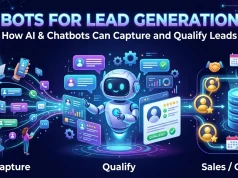
Businesses looking to strengthen this process can also explore bots for lead generation to understand how AI-powered chatbots can capture and qualify potential leads.
Use Effective Chatbot Optimization Techniques
Several chatbot optimization techniques can improve both engagement and conversions.
One of the most important is reducing unnecessary conversation steps. If users have to answer too many questions before reaching a useful result, they may abandon the interaction.
Another technique is using clear and specific calls to action. Instead of saying “Click here,” the chatbot can use action-oriented options such as “Book a Demo” or “Get Your Quote.”
Personalization is another valuable technique. A chatbot can use information about the visitor’s page, previous interactions, location, or selected preferences to make the conversation more relevant.
Businesses should also test different greetings, questions, CTAs, conversation lengths, and offers. Performance data can show which approaches produce better results.
Fallback messages are equally important. If the chatbot does not understand a question, it should provide useful alternatives instead of simply saying that it cannot help.
For example, it can offer common topics, connect the visitor with a human agent, or direct them to a relevant resource.
Create an AI Chatbot Conversion Strategy
An AI chatbot conversion strategy can take personalization and conversational guidance further by using AI to interpret user intent and respond dynamically.
Traditional rule-based chatbots usually follow predefined conversation paths. AI-powered systems can handle a wider range of questions and adapt responses based on context.
However, AI should not be treated as a replacement for strategy.
A chatbot can generate sophisticated responses, but the conversation still needs clear goals, appropriate boundaries, accurate information, and useful conversion paths.
Businesses should define which questions the AI chatbot can answer and when a conversation should be transferred to a human representative.
For complex sales questions or sensitive customer issues, human support may still be the best option.
The most effective approach combines automation with human assistance rather than attempting to automate every interaction.
Improve Chatbot User Engagement
Chatbot user engagement is closely connected to conversion performance. If visitors do not engage with the chatbot, there is little opportunity for conversion.
The opening message should explain why the chatbot is useful. Instead of a generic greeting, businesses can use contextual messages that relate to the page or visitor’s likely needs.
For example, a service page might use a message offering help with choosing the right service. A pricing page could offer assistance with plans or features.
Timing also matters. Showing the chatbot immediately may interrupt visitors before they understand the page. In other situations, proactive assistance may help users who appear to be struggling.
Businesses should test different triggers and placements to identify what works best for their audience.
Personalization can also increase engagement. A useful chatbot personalization strategy can help businesses create more relevant interactions based on user behavior and context.
Increase Chatbot Sales Conversion
Chatbot sales conversion depends on the chatbot’s ability to identify buying intent and guide users toward an appropriate action.
A chatbot can support sales by answering product questions, comparing options, explaining features, addressing common objections, and helping visitors request a demo or consultation.
For ecommerce businesses, chatbots can recommend products based on customer preferences. For service businesses, they can help determine which service best fits a visitor’s needs.
The chatbot should not overwhelm users with too many options. A small number of relevant choices can make decision-making easier.
When a visitor shows strong buying intent, the chatbot should make the conversion process simple. This might involve providing a purchase link, scheduling a meeting, requesting a quote, or connecting the visitor with a sales representative.
Apply Conversational Marketing Optimization
Conversational marketing optimization connects chatbot conversations with the wider marketing journey.
Instead of treating the chatbot as a standalone tool, businesses can integrate it with landing pages, email marketing, CRM systems, content marketing, and sales processes.
For example, a chatbot can recommend an educational article to a visitor who is still researching a problem. A more qualified visitor can be directed toward a product demonstration or sales consultation.
Chatbot data can also help marketers understand what customers care about. Frequently asked questions, objections, and product interests can influence future content and campaigns.
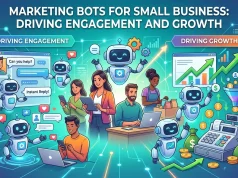
Small businesses can also benefit from this approach. Resources on marketing bots for small business can help explain how automated conversations can support engagement and growth without requiring a large marketing team.
Build an Effective Chatbot Conversion Funnel
A chatbot conversion funnel should guide visitors through a logical sequence rather than attempting to push every person directly toward a sale.
The first stage is engagement. The chatbot captures attention and offers useful assistance.
The next stage is discovery. The chatbot identifies the visitor’s needs through simple questions.
Then comes qualification or education. Depending on the visitor’s intent, the chatbot can provide information, recommend resources, or determine whether the visitor is ready for sales assistance.
The final stage is conversion. The user may book a meeting, submit a lead form, request a quote, start a trial, or complete a purchase.
After conversion, the chatbot can continue supporting the customer through onboarding, FAQs, product education, or customer service.
This funnel should remain flexible. Not every visitor should follow exactly the same path.
Measure Chatbot Conversion Performance
Optimization requires reliable measurement. Businesses should track chatbot performance from the first interaction through the final conversion.
Important metrics can include chatbot engagement rate, conversation completion rate, lead capture rate, qualified lead rate, appointment bookings, sales conversions, and abandonment rate.
Businesses should also examine where users leave the conversation.
For example, if many visitors abandon the chatbot after being asked for contact details, the information request may be too early or too demanding.
If visitors frequently ask questions that the chatbot cannot answer, its knowledge base may need improvement.
Conversion data should be analyzed alongside business outcomes. A chatbot that generates many leads but very few qualified opportunities may need better qualification questions.
The objective is to improve the quality and effectiveness of conversations, not simply increase the number of interactions.
Test and Improve the Chatbot
Chatbot optimization should be an ongoing process.
Businesses can conduct A/B tests on greetings, conversation flows, CTAs, offers, question order, and chatbot placement.
For example, one version might ask visitors what they need help with immediately, while another version might offer several topic choices first. Performance data can reveal which approach generates more qualified conversions. Businesses can also explore Harnessing AI Chatbots for Lead Generation to understand how AI-powered conversations can support lead generation and improve conversion opportunities.
Common Chatbot Conversion Mistakes
One common mistake is making the chatbot too aggressive. Constant sales messages can make visitors feel pressured.
Another issue is using overly complicated conversation flows. More questions do not necessarily mean better qualification.
Poorly designed fallback responses can also damage trust. When the chatbot does not understand a request, it should provide a useful alternative.
Businesses should also avoid hiding human support. Some visitors will always prefer to speak with a person, especially when their questions are complex.
Another mistake is failing to connect chatbot data with other marketing and sales systems. Valuable information can be lost if chatbot conversations are not integrated into the wider customer journey.
Final Thoughts
Chatbot conversion optimization is about creating conversations that help users move toward meaningful actions. The most effective chatbots do not simply automate messages. They understand user intent, reduce friction, provide useful information, and make the next step easier.
Businesses can improve results through chatbot conversion rate optimization, personalization, clear calls to action, effective lead qualification, relevant conversation flows, and continuous performance measurement.
Whether the objective is lead generation, sales, appointment booking, or customer engagement, a well-designed chatbot can become a valuable part of the conversion funnel.
The key is to focus on the user’s needs first. When conversations are useful, relevant, and easy to navigate, visitors are more likely to remain engaged and take the actions that matter to the business.
Frequently Asked Questions
1. What is chatbot conversion optimization?
Chatbot conversion optimization is the process of improving chatbot conversations so that more users complete desired actions such as submitting leads, booking appointments, requesting information, or making purchases.
2. How can chatbot conversion rate optimization improve results?
It can improve results by reducing friction, simplifying conversation flows, providing relevant answers, using stronger CTAs, personalizing interactions, and identifying where users abandon conversations.
3. What is a chatbot conversion strategy?
A chatbot conversion strategy defines how a chatbot will engage visitors, understand their needs, provide value, qualify prospects, and guide them toward a specific conversion action.
4. How can chatbots improve lead conversion?
Chatbots can improve lead conversion by answering questions instantly, identifying user intent, collecting relevant information, qualifying prospects, and directing high-intent visitors toward forms, consultations, or sales teams.
5. What are the best chatbot optimization techniques?
Useful techniques include simplifying conversation flows, improving CTAs, personalizing messages, reducing unnecessary questions, providing helpful fallback responses, testing different flows, and monitoring performance.
6. How does AI improve chatbot conversion?
AI can help chatbots understand natural language, identify user intent, personalize responses, handle a wider range of questions, and adapt conversations based on context.
7. How can chatbot user engagement be improved?
Businesses can improve engagement by using contextual greetings, relevant questions, simple response options, personalization, useful recommendations, and appropriate chatbot timing.
8. Can chatbots increase sales conversions?
Yes. Chatbots can support sales by answering product questions, recommending solutions, handling objections, qualifying prospects, and directing high-intent visitors toward purchases or sales representatives.
9. What is a chatbot conversion funnel?
A chatbot conversion funnel is the sequence of interactions that moves a visitor from initial engagement through discovery, qualification or education, and ultimately toward a desired conversion.
10. How should chatbot conversion performance be measured?
Businesses can measure engagement rate, conversation completion, lead capture, qualified leads, appointments, sales conversions, abandonment rate, and revenue generated from chatbot-assisted interactions.