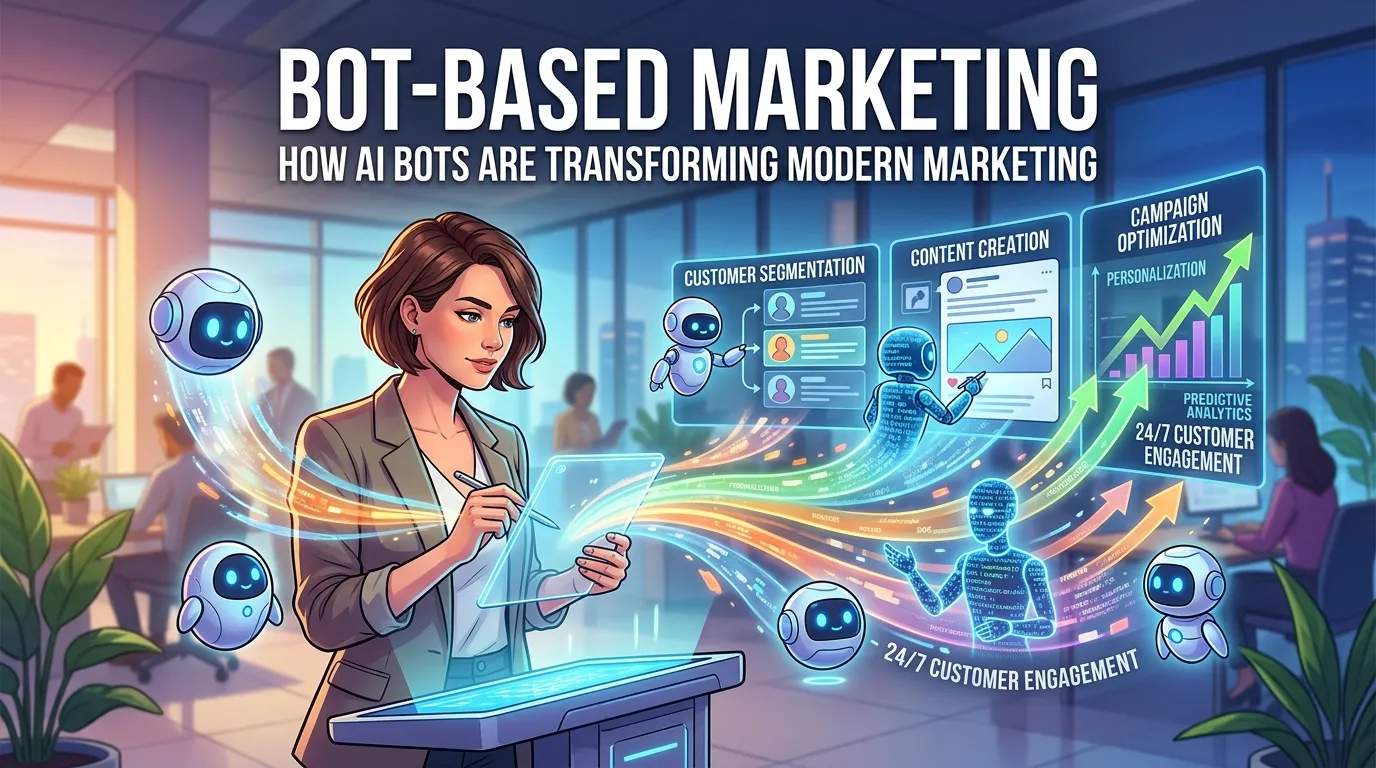
Bot-based marketing uses AI and automation to improve customer communication, generate leads, support marketing campaigns, and increase conversions. With AI chatbots, conversational marketing, automated engagement, and intelligent customer service, businesses can create faster and more personalized customer experiences while allowing human teams to focus on more complex interactions.
Bot-based marketing has become an increasingly important part of how businesses communicate with customers, generate leads, and support marketing campaigns. As consumers expect faster responses and more personalized interactions, businesses are turning to automated technologies to improve communication across websites, messaging platforms, social channels, and other digital touchpoints.
Unlike traditional marketing methods that rely heavily on scheduled emails, advertisements, and manual conversations, bot-based marketing allows businesses to interact with audiences in real time. Marketing bots can answer questions, recommend products, collect information, qualify prospects, and guide customers toward relevant actions without requiring a marketing or sales representative to respond to every interaction manually.
The growth of artificial intelligence has made these systems more capable. Modern bots can understand natural language, recognize customer intent, personalize conversations, and connect with business systems. When used correctly, they can become an important part of a company’s overall marketing strategy.
What Is Bot-Based Marketing?
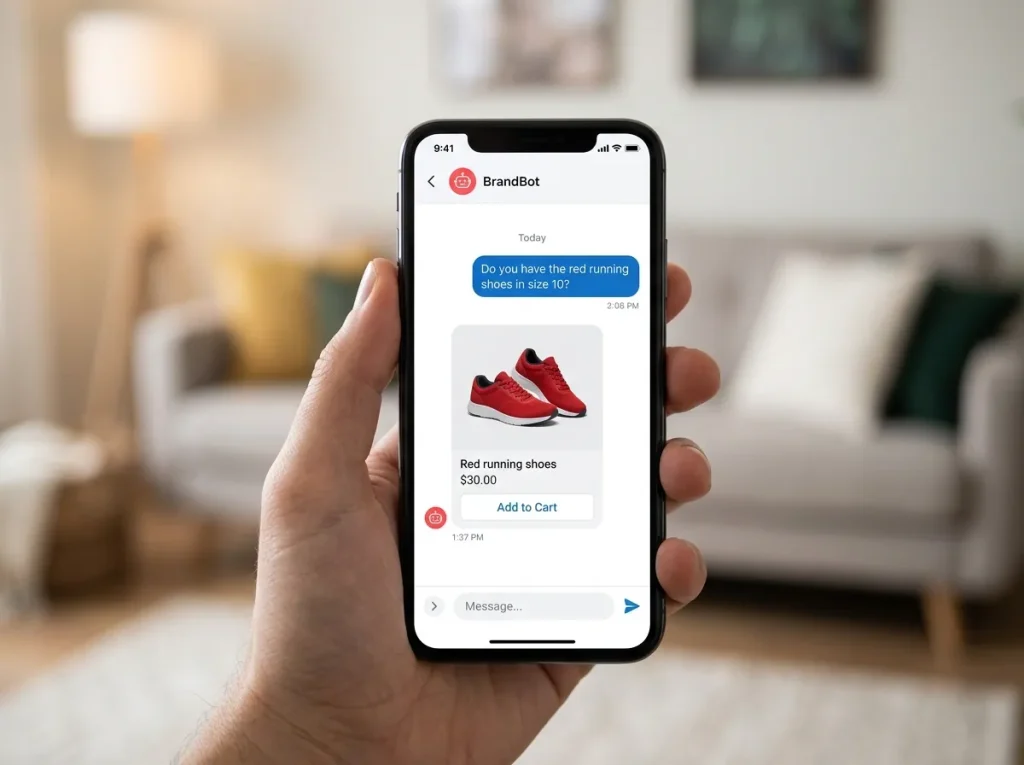
Bot-based marketing refers to the use of automated software programs, commonly called bots or chatbots, to support marketing communication and customer interactions. These bots can operate through websites, messaging applications, social media platforms, and other digital channels.
The purpose is not simply to automate conversations. Effective bot-based marketing uses automation to create useful interactions that move customers through different stages of the buying journey.
For example, a visitor may arrive on a website and have a question about a service. Instead of searching through multiple pages or waiting for a representative, the visitor can interact with a chatbot. The bot can provide an answer, recommend a relevant page, collect contact information, or direct the visitor toward a consultation or purchase.
This creates a connection between marketing, customer service, and sales. A well-designed bot can support customers while also helping businesses understand what their audiences need.
The Growth of AI Chatbot Marketing
AI chatbot marketing has developed significantly as artificial intelligence has become more accessible. Earlier chatbots often depended on predefined commands and simple decision trees. Users had to choose from specific options or type questions that matched expected phrases.
AI-powered systems can handle more natural conversations. They can interpret variations in language, identify intent, and provide responses that are more relevant to the context of the conversation. This development has made hyper-personalization at scale more achievable for businesses using AI-driven customer interactions.
This makes chatbots useful across different stages of the customer journey. A potential customer researching a product may receive educational information, while someone who is ready to make a purchase may be directed toward pricing or checkout.
The value of AI chatbot marketing comes from combining automation with relevance. Customers are more likely to engage with a bot when the interaction feels useful rather than repetitive or intrusive.
How Marketing Automation Bots Support Businesses
Marketing automation bots can perform repetitive communication tasks that would otherwise require significant human effort. They can welcome website visitors, answer common questions, distribute resources, collect contact information, and follow up with prospects.
This automation can help marketing teams focus on more strategic activities. Instead of manually responding to every basic inquiry, marketers can allow bots to handle routine interactions while employees concentrate on complex conversations and higher-value prospects.
Marketing bots can also work continuously. A website visitor may arrive outside normal business hours, but the bot can still provide information and collect a lead. This creates opportunities that might otherwise be missed.
However, automation should not mean removing the human element completely. Some questions require experience, empathy, judgment, or detailed knowledge. The most effective systems provide a smooth transition from automated interaction to human assistance when necessary.
Developing a Chatbot Marketing Strategy
A chatbot marketing strategy should begin with the customer rather than the technology. Businesses need to understand what customers are trying to accomplish and where a chatbot can genuinely make that process easier.
A bot placed on a website without a clear purpose may create little value. By contrast, a chatbot designed around specific customer needs can become an important part of the marketing experience.
For an online retailer, the bot might help shoppers find products. For a software company, it could answer questions about features and pricing. For a service business, it might qualify inquiries and schedule consultations.
The conversation should also feel natural. Excessive promotional messages can quickly make an automated interaction feel like advertising rather than assistance. Useful information, clear responses, and relevant recommendations generally create a stronger experience.
A chatbot marketing strategy can also evolve over time. Businesses can analyze conversations to identify frequently asked questions, common objections, popular products, and points where customers abandon the interaction. These insights can then be used to improve both the bot and the broader marketing strategy.
Automated Customer Engagement
Automated customer engagement allows businesses to maintain communication with audiences without requiring employees to manually manage every interaction.
A customer may interact with a brand several times before making a decision. They might visit a website, download a resource, ask a question, compare products, and return later. Bots can help maintain continuity across these interactions when they are connected to the appropriate customer data and marketing systems.
Personalization can make automated engagement more effective. Instead of providing the same message to every visitor, a bot can use available information to deliver more relevant content.
For example, a returning visitor who previously showed interest in a particular service may receive information related to that service. A new visitor may instead receive a general introduction to the company.
Automated customer engagement can therefore become more than simple question-and-answer communication. It can support relationship building by delivering timely and relevant interactions.
Conversational Marketing and Customer Relationships
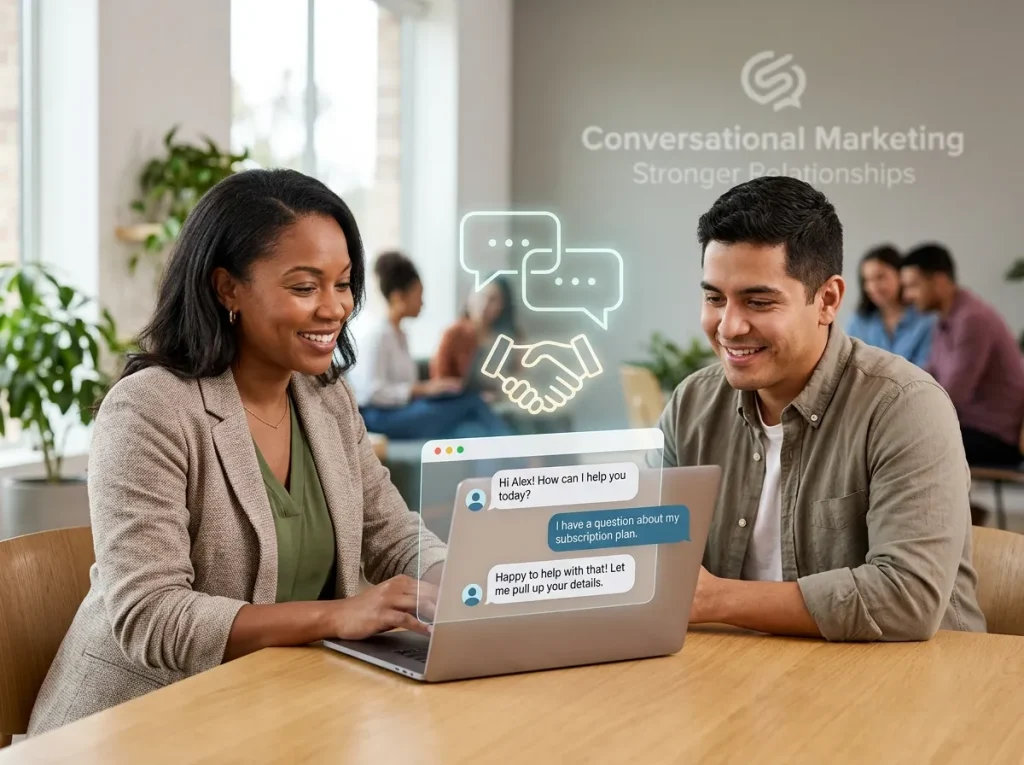
Conversational marketing focuses on creating direct, interactive communication between brands and customers. Rather than presenting information through one-way advertising alone, businesses can use conversations to understand customer needs and provide personalized responses.
Chatbots are particularly suitable for conversational marketing because they allow visitors to communicate with a brand immediately.
A conversation can begin with a simple question such as what the visitor is looking for. Based on the response, the bot can continue with relevant questions or recommendations.
This approach can reduce friction in the customer journey. Instead of forcing visitors to navigate complicated menus or complete lengthy forms, a conversation can guide them toward the information they need.
Conversational marketing also produces valuable customer insights. Questions and responses can reveal what customers care about, which problems they are trying to solve, and what information they need before making a decision.
AI-Powered Marketing Automation
AI-powered marketing automation combines artificial intelligence with automated marketing processes. This can allow businesses to deliver more personalized communication at scale.
AI can help analyze customer interactions, recognize patterns, classify leads, recommend content, and determine appropriate responses. When integrated with customer relationship management platforms and marketing automation systems, these capabilities can become part of a broader marketing workflow.
For example, a bot might collect information from a visitor and determine whether the person appears to be a high-value prospect. The system could then send the information to a sales team or trigger a relevant follow-up campaign. Businesses can track these activities to support maximizing ROI in chatbot marketing.
AI-powered marketing automation can also help businesses manage large volumes of interactions. As the number of visitors and customers increases, manually maintaining personalized communication becomes increasingly difficult.
Automation provides scalability, while AI can help make that automation more context-aware. In specialized industries, businesses can also develop solutions such as AI chatbots for health apps to support users through automated digital interactions.
Chatbot Lead Generation
Chatbot lead generation is one of the most valuable applications of bot-based marketing. Traditional lead forms can sometimes create friction because visitors have to stop browsing and complete several fields.
A conversational approach can make lead collection feel more natural. Instead of presenting a long form, the chatbot can ask questions one at a time.
For example, a business-to-business company might use a bot to ask about a visitor’s company size, industry, business challenge, and preferred service. The responses can help determine whether the visitor is a suitable prospect.
The bot can then collect contact details and provide the appropriate next step.
Chatbot lead generation can also help improve lead quality. Rather than simply collecting names and email addresses, businesses can gather information about the prospect’s needs and intent.
This information can make subsequent sales conversations more productive.
Automated Marketing Campaigns
Bots can work alongside automated marketing campaigns to create more interactive customer journeys. Instead of relying entirely on email sequences or advertising, businesses can add conversational interactions at important points.
A visitor who interacts with an advertisement might be directed to a chatbot that answers questions about the promoted product. Someone who downloads a marketing resource might later receive a bot-based message offering additional information.
Automated marketing campaigns can also respond to customer behavior. If someone repeatedly views a particular service, a chatbot may offer relevant information or invite the visitor to speak with a specialist.
The effectiveness of these campaigns depends heavily on timing and relevance. Automation should respond to meaningful customer behavior rather than interrupting users unnecessarily.
Customer Service Chatbots and Marketing
Customer service chatbots are often considered separate from marketing, but the two areas increasingly overlap.
Customers frequently ask service-related questions before making a purchase. They may want to know about pricing, delivery, product compatibility, returns, implementation, or technical requirements.
Providing quick answers can remove obstacles that prevent conversions. A customer who receives useful information immediately may be more confident about continuing with a purchase.
Customer service chatbots can also support existing customers after a purchase. They can provide information about orders, account issues, basic troubleshooting, and frequently requested services.
When customers receive a consistent experience before and after purchase, the chatbot becomes part of the broader customer relationship rather than simply a promotional tool.
Chatbot Conversion Optimization
Chatbot conversion optimization focuses on improving the ability of automated conversations to encourage meaningful customer actions.
A conversion does not always mean completing a purchase. Depending on the business, the desired action might be submitting an inquiry, scheduling a meeting, downloading a resource, signing up for a trial, requesting a quote, or contacting a representative.
The conversation should make that action easy. Too many questions or complicated interactions can cause visitors to leave.
Businesses can study chatbot analytics to understand where users stop responding, which questions create confusion, and which conversations result in successful outcomes. These insights can guide improvements.
Testing different opening messages, questions, calls to action, and conversation flows can also reveal which approaches produce better results.
The objective is not to pressure users into converting. It is to remove unnecessary friction and help interested visitors take the next appropriate step.
The Importance of Human Support
Despite advances in artificial intelligence, human support remains important. Customers may encounter complex situations that require understanding beyond what an automated system can provide.
Businesses should therefore design clear handoff processes. When a chatbot cannot answer a question confidently or when a customer requests human assistance, the conversation should move smoothly to a qualified representative.
Transparency is also important. Customers should understand when they are communicating with an automated system, particularly when the conversation involves important decisions or sensitive information.
A balanced approach allows bots to handle routine interactions while people manage situations that require deeper expertise.
Measuring the Success of Bot-Based Marketing
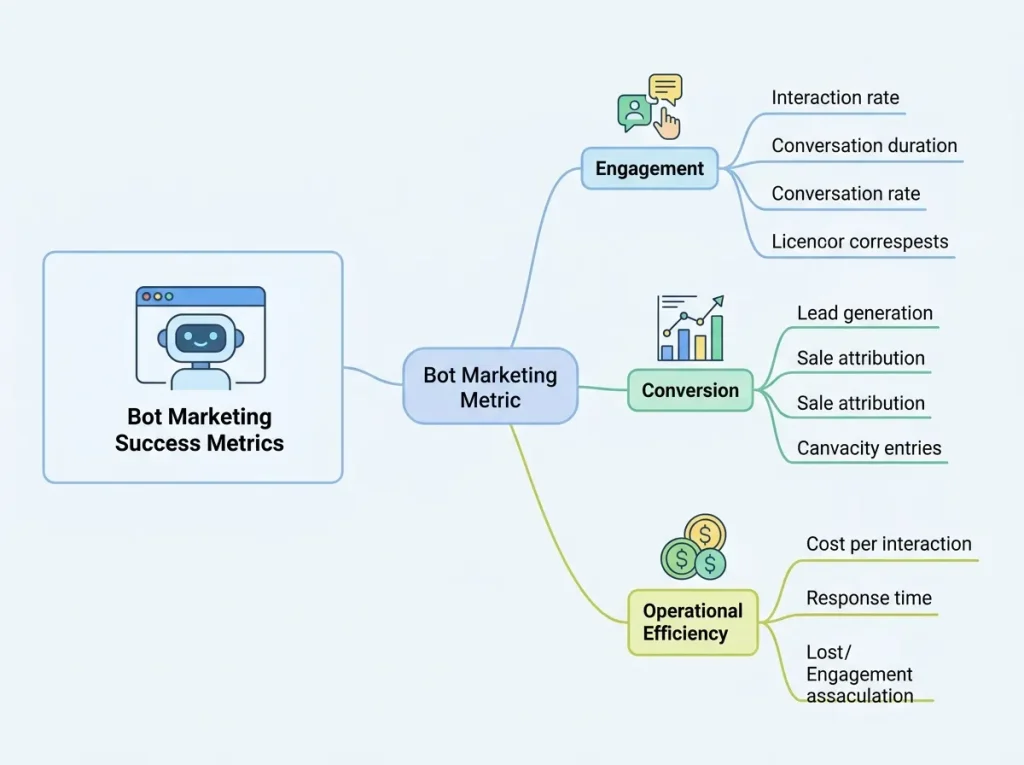
The success of bot-based marketing should be evaluated using metrics connected to business objectives. Engagement rate can indicate whether visitors are interacting with the chatbot, while conversation completion can show how effectively users move through the interaction.
Lead generation metrics can reveal how many qualified prospects are produced. Conversion rates can show whether chatbot interactions contribute to desired actions.
Businesses can also evaluate customer satisfaction, response time, escalation rates, and the number of inquiries successfully handled by automation.
The most useful measurements depend on the chatbot’s purpose. A customer service bot may prioritize resolution rate and satisfaction, while a lead-generation bot may focus more heavily on qualified leads and conversion performance.
The Future of Bot-Based Marketing
Bot-based marketing is likely to become increasingly integrated with broader digital marketing systems. As AI technology improves, bots will become better at understanding context, recognizing intent, and creating personalized interactions.
Businesses will also have more opportunities to connect conversational data with customer relationship management systems, analytics platforms, advertising tools, and marketing automation software. These connected systems can also support voice search lead generation by helping businesses capture and respond to potential customers through emerging search and communication channels.
However, the future of bot-based marketing will not simply be about creating more automated conversations. The most successful businesses will focus on creating better conversations.
Customers do not necessarily want to communicate with a bot. They want quick answers, useful information, convenient service, and relevant experiences. If technology can deliver those outcomes effectively, customers may not care whether the interaction is automated or human-assisted.
The strongest approach will therefore combine artificial intelligence, automation, customer data, and human expertise.
Conclusion
Bot-based marketing has evolved from simple automated messaging into a powerful component of modern digital marketing. AI chatbot marketing, conversational marketing, automated customer engagement, and AI-powered marketing automation can help businesses communicate with audiences more efficiently while creating personalized customer experiences.
Marketing automation bots can support lead generation, customer service, campaign engagement, and conversion optimization. At the same time, successful implementation requires more than simply installing a chatbot. Businesses need to understand customer needs, design useful conversations, provide human support when necessary, and continuously improve the experience using real interaction data.
When implemented thoughtfully, bot-based marketing can reduce friction, improve responsiveness, support marketing teams, and create more meaningful customer journeys. The goal is not to replace human communication but to make digital interactions faster, more relevant, and more useful for both businesses and their customers.
Frequently Asked Questions
What is bot-based marketing?
Bot-based marketing is the use of automated software and AI-powered bots to communicate with customers, support marketing campaigns, generate leads, answer questions, and guide users toward relevant actions.
How does AI chatbot marketing work?
AI chatbot marketing uses artificial intelligence to understand customer messages and provide relevant automated responses. Depending on its configuration, a chatbot can answer questions, recommend products, collect information, qualify leads, and connect customers with human representatives.
Can chatbots generate leads?
Yes. Chatbots can generate leads by engaging website visitors, asking qualifying questions, collecting contact information, and directing suitable prospects toward a sales representative, consultation, demo, or other conversion action.
Are marketing automation bots useful for small businesses?
Marketing automation bots can be useful for small businesses because they can handle repetitive customer interactions without requiring a large marketing or customer service team. They can provide responses outside normal business hours and help capture potential leads.
What is conversational marketing?
Conversational marketing is a marketing approach that uses direct, interactive communication to understand customer needs and provide relevant information. Chatbots and messaging platforms are commonly used to support conversational marketing.
Can chatbots replace customer service employees?
Chatbots can handle many routine questions, but they should not necessarily replace human customer service employees. Complex problems, complaints, sensitive situations, and specialized requests often require human judgment and empathy.
How can chatbots improve conversion rates?
Chatbots can improve conversion rates by answering questions quickly, reducing navigation friction, recommending relevant products or services, qualifying leads, and guiding interested visitors toward appropriate actions.
What are automated marketing campaigns?
Automated marketing campaigns use technology to deliver messages or trigger actions based on customer behavior, preferences, or predefined conditions. Chatbots can become part of these campaigns by adding interactive conversations.
What is AI-powered marketing automation?
AI-powered marketing automation combines artificial intelligence with automated marketing processes. It can help businesses personalize communication, analyze customer behavior, qualify leads, recommend content, and manage interactions at scale.
How do businesses measure chatbot marketing success?
Businesses can measure chatbot marketing through metrics such as engagement rate, lead generation, qualified leads, conversion rate, conversation completion, customer satisfaction, response time, and successful human handoffs.