In today’s digital landscape, brands are expected to deliver seamless, individualized experiences with every interaction. As customer expectations climb and competition intensifies this year (2026), manual tactics such as generic email blasts or static website banners fall short. Businesses require scalable personalization with AI chatbots to keep pace with evolving audience demands. By harnessing advanced machine learning, natural language processing, and real-time data integration, marketers can deploy intelligent agents that deliver one-to-one experiences at any scale. This article explores how organizations can architect, implement, measure, and refine AI-driven chatbots to foster engagement, increase conversions, and build enduring customer loyalty. Whether you are launching your first conversational interface or looking to elevate an existing solution, you will find actionable insights and best practices grounded in the latest research from institutions like MIT and standards outlined by NIST. Throughout this guide, the focus keyword “scalable personalization with AI chatbots” appears in context to reinforce relevance and search visibility. Let’s embark on a journey to transform your marketing approach and unlock the full potential of conversational AI in today’s marketplace.
Understanding Marketing Personalization at Scale
At its core, personalized marketing strives to present each individual with content or offers that resonate with their unique journey, preferences, and behaviors. When executed at scale, this practice becomes far more than simply dividing subscribers into broad segments—it transforms every customer touchpoint into a custom-tailored dialogue. However, reaching millions of users with one-to-one relevance demands robust technology and a strategic framework capable of managing diverse data streams, dynamic decision-making, and real-time execution. Without proper tools, manual processes become unwieldy, costly, and prone to errors.
Traditional methods like simple demographic splits or static rule-based workflows can provide a degree of relevance, but they break down rapidly as audience size and complexity grow. Marketing teams often find themselves writing hundreds of conditional statements to handle edge cases, adapting campaigns manually when user behaviors shift, or waiting weeks to analyze the impact of segmentation changes. These delays not only hinder responsiveness but also limit experimentation and innovation, creating a bottleneck that stifles growth.
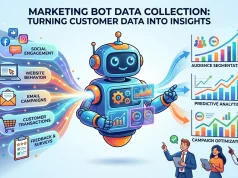
To overcome these limitations, organizations are turning to automation and artificial intelligence. By leveraging predictive models, clustering algorithms, and continuous learning techniques, marketers can automate personalization decisions based on attributes such as purchase history, browsing patterns, or engagement scores. Real-time orchestration platforms integrate data from CRM systems, e-commerce platforms, and analytics tools to ensure that every interaction reflects the most up-to-date context, removing manual handoffs and reducing latency.
One of the most effective ways to achieve scalable personalization with AI chatbots is to integrate conversational interfaces that adapt to each user’s intent and past behavior. These AI-driven agents can parse natural language inputs, access user profiles on the fly, and craft responses that feel human and tailored. Whether the user is seeking product recommendations, support guidance, or educational content, a well-designed chatbot can serve relevant information instantly and guide users along personalized pathways.
As you develop your strategy, focus on mapping key milestones in the customer lifecycle—awareness, consideration, purchase, and retention—and identify how a chatbot can deliver unique value at each stage. In the next section, we’ll explore why AI chatbots have emerged as transformational tools in marketing, and how their underlying technologies enable persistent, context-aware interactions on any channel.
The Role of AI Chatbots in Modern Marketing

AI chatbots have evolved far beyond scripted decision trees to become intelligent conversational engines. Leveraging advances in natural language understanding (NLU) and machine learning, these systems interpret user intents, handle ambiguous queries, and escalate complex cases to human agents when required. In today’s fast-paced environment, customers expect instant support and tailored recommendations around the clock, and chatbots deliver precisely that without inflating headcount or operational costs.
Key to this transformation is the integration of sophisticated language models that learn from every interaction. Over time, chatbots develop a richer understanding of user preferences, tone, and sentiment. According to research published by Stanford University, conversational AI that utilizes continuous feedback loops sees accuracy improvements of up to 30% within the first three months of deployment. This continuous learning cycle ensures that the bot’s responses remain relevant and aligned with evolving customer expectations.
Moreover, AI chatbots seamlessly integrate with existing marketing ecosystems—from CRM platforms to email marketing services—enabling unified data flows. When a user engages on a website, the chatbot can immediately retrieve their purchase history, loyalty tier, or recent support tickets, crafting responses that reflect a holistic view of the customer. This unified profile approach eradicates data silos and prevents customers from repeating themselves when they switch channels.
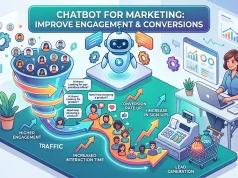
Another pivotal advantage is the bot’s ability to trigger personalized campaigns based on real-time behaviors. For example, if a visitor spends time browsing a new product line, the chatbot can deliver a tailored video demonstration, share user reviews, or offer a limited-time discount code. These dynamic interventions accelerate the buyer’s journey, drive higher conversion rates, and foster long-term loyalty by demonstrating genuine understanding of individual needs.
In summary, AI chatbots represent a game-changing shift in marketing personalization. They offer 24/7 availability, rapid adaptation to user inputs, deep integration with data platforms, and continuous refinement through analytics. In the next section, we will examine the technical features that underpin scalable and reliable chatbot deployments in further detail.
Essential Features for Scalable Chatbot Implementation
Building a chatbot that can handle thousands—or even millions—of conversations concurrently requires careful consideration of both functionality and infrastructure. Below are the core capabilities to prioritize when evaluating or designing your AI assistant.
1. Natural Language Understanding (NLU)
NLU engines are responsible for parsing user inputs into intents and entities. A robust NLU component can decipher varied linguistic styles, slang, and typos, ensuring accuracy in understanding user needs. When selecting an NLU provider, look for support in multiple languages, customizable domain-specific models, and rapid training capabilities.
2. Context Management
Contextual awareness allows the chatbot to retain information across interactions and sessions. This includes user preferences, past purchases, open support tickets, and ongoing promotions. Effective context management transforms disjointed exchanges into coherent, multi-turn dialogues that feel personalized and human.
3. Dynamic Content Insertion
Real-time personalization hinges on the ability to inject user-specific data—such as name, location, or order history—directly into responses. A flexible templating system with variable placeholders ensures that messages feel bespoke, boosting engagement and trust.
4. Omnichannel Connectivity
Users may interact via web chat, mobile apps, social media, or messaging platforms like WhatsApp. A centralized framework that synchronizes personalization rules and conversation history across channels is essential. This ensures seamless handoffs and a unified brand voice, no matter where the customer engages.
5. Analytics and Reporting
To drive continuous improvement, your chatbot solution must capture detailed metrics on conversations, drop-off points, conversion rates, and user sentiment. Integrated dashboards and exportable reports enable data-driven decision-making, helping marketers refine intents, update training data, and optimize dialogue flows.
By ensuring that these five capabilities are in place, organizations can launch chatbots that not only scale with growing demand but also deliver personalized experiences that drive measurable business outcomes. In the following section, we’ll discuss how to design and optimize those interactions to feel both natural and effective.
Designing and Optimizing Chatbot Interactions

Effective chatbot design places the user at the center of every decision. Mapping user journeys, scripting conversational flows, and refining tone are crucial steps in creating an experience that feels intuitive rather than forced.
Journey Mapping and Intent Identification
Begin by outlining the most common customer pathways, from initial discovery to post-purchase engagement. Identify key intents—such as product inquiry, order tracking, or support escalation—and develop sample utterances that reflect real user language. Engaging actual customers in this phase can provide invaluable insights into their preferred communication style.
Dialogue Flow Construction
When designing flows, balance between deterministic logic and AI-driven interpretation. Use conditional branches sparingly for critical decisions but rely on NLU models for intent recognition. Incorporate fallback responses that guide users back on track, and always offer an option to transfer to a live agent for complex or sensitive matters.
Personality and Tone Alignment
The chatbot’s voice should mirror your brand identity—whether that’s helpful and professional, friendly and casual, or innovative and bold. Create a style guide with sample phrases, preferred greetings, and response templates. Periodic user testing can validate that the personality resonates with different segments.
Feedback Loops and Iteration
Embed user feedback prompts—such as quick satisfaction buttons or brief surveys—directly within conversations. Analyze this feedback alongside conversation logs to identify misunderstanding patterns or drop-off triggers. Use these insights to update your NLU training data, refine intent definitions, and enhance response accuracy on a routine basis.
A/B Testing for Continuous Optimization
Run controlled experiments on message variants, greeting styles, and offer placements. By measuring engagement metrics and conversion rates for each version, marketers can determine which approaches resonate most strongly. Integrate winning variants into production and re-test periodically to adapt to shifting customer preferences.
By following a structured design process and committing to ongoing optimization, you’ll ensure your chatbot interactions remain engaging, on-brand, and highly effective. In the next section, we’ll turn our attention to the quantitative side: measuring impact and driving data-driven improvements.
Measuring Impact and Ensuring Continuous Improvement
To validate the success of your chatbot initiatives, it’s vital to establish a clear set of key performance indicators (KPIs) and feedback mechanisms. This measurement phase transforms guesswork into actionable insights.
Core Performance Metrics
- Engagement Rate: Percentage of site visitors or customers who begin a chatbot conversation.
- Conversion Rate: Portion of chatbot-assisted sessions that result in desired actions, such as purchases or form completions.
- Average Order Value (AOV): Comparison of order sizes between bot-assisted and non-bot-assisted interactions.
- Customer Satisfaction (CSAT) & NPS: Ratings gathered immediately after conversations to gauge user happiness and referral likelihood.
- Time to Resolution: Average duration from initial message to issue completion or escalation.
Revenue Attribution Models
Linking chatbot interactions to revenue outcomes requires multi-touch attribution. Employ analytics tools that can track a user’s journey across channels and identify the chatbot’s role in driving conversions. Tagging campaigns with unique identifiers and integrating with CRM platforms ensures accurate ROI calculations.
Data Collection and Pipeline Management
Clean, consistent data is the backbone of continuous improvement. Establish standardized schemas for storing conversation transcripts, user attributes, and performance metrics. Utilize middleware or integration platforms (iPaaS) to automate data flows between systems, reducing manual errors and ensuring real-time availability.
Regular Model Retraining
Plan quarterly or monthly retraining cycles for your NLU models. Incorporate new examples, edge-case utterances, and evolving language patterns drawn from fresh conversation logs. This proactive approach reduces misinterpretations and enhances intent classification accuracy over time.
Cross-Functional Governance
Maintaining a high-performing chatbot requires collaboration between marketing, operations, and development teams. Establish a governance committee that meets regularly to review metrics, prioritize feature requests, and align on upcoming campaigns. This cross-functional structure ensures agility and shared ownership of results.
By implementing rigorous measurement practices and fostering a culture of continuous iteration, organizations can maximize the impact of scalable personalization with AI chatbots and maintain a competitive edge in today’s dynamic marketplace.
FAQ
What is scalable personalization with AI chatbots?
Scalable personalization with AI chatbots refers to the ability to deliver one-to-one tailored interactions to a large audience by leveraging automation, machine learning, and real-time data integration. This approach ensures each user receives relevant content and support regardless of scale.
How do chatbots integrate with existing marketing platforms?
Modern AI chatbots connect seamlessly with CRM systems, email marketing tools, e-commerce platforms, and analytics services. This integration enables unified customer profiles, real-time data sharing, and automated triggers for personalized campaigns.
Which metrics should be monitored to measure chatbot success?
Key metrics include engagement rate, conversion rate, average order value (AOV), customer satisfaction (CSAT/NPS), and time to resolution. Tracking these KPIs helps assess performance, identify improvement areas, and calculate ROI.
How often should I retrain my chatbot’s NLU model?
It’s best to schedule retraining cycles at least quarterly, or monthly for high-volume deployments. Incorporating fresh conversation logs and edge-case examples keeps the model accurate and reduces misclassifications over time.
Conclusion
Achieving scalable personalization with AI chatbots is a journey that blends strategic planning, technical prowess, and ongoing optimization. By understanding the fundamentals of marketing personalization, embracing the power of AI-driven conversational agents, and prioritizing key features such as NLU, context management, and omnichannel integration, brands can deliver tailored experiences that resonate with each individual. Coupled with thoughtful dialogue design, rigorous measurement frameworks, and a culture of continuous improvement, chatbots become catalysts for higher engagement, stronger customer loyalty, and measurable business growth. As you move forward this year (2026), start with a focused pilot, iterate rapidly based on data-driven insights, and scale your solution across channels. The result will be a truly personalized marketing ecosystem that delights customers and drives enduring competitive advantage in today’s digital environment.