
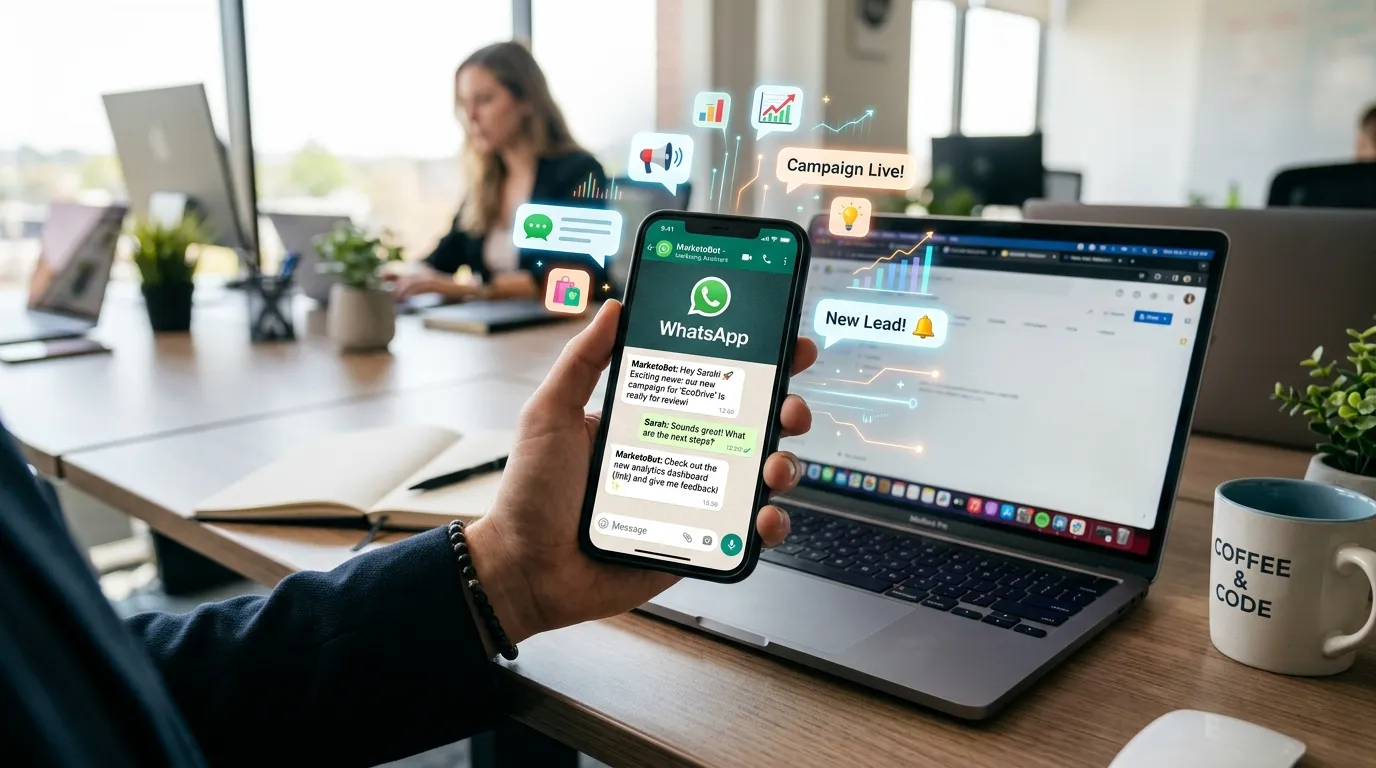
Are you struggling to manage high volumes of customer inquiries while maintaining personal connections? Implementing a WhatsApp Chatbot for business marketing offers a seamless solution. This technology allows brands to automate conversations, qualify leads instantly, and drive continuous sales through the world’s most popular messaging application.
This comprehensive guide breaks down exactly how automated messaging transforms digital strategy. You will discover actionable frameworks for building conversational flows, integrating backend systems, and measuring campaign success. By mastering these automated communication techniques, your brand will reduce operational costs, boost response times, and create highly personalized purchasing experiences that directly increase your overall revenue.
Understanding the Shift Toward Conversational Commerce
The digital landscape relies heavily on instant communication. Consumers no longer tolerate waiting days for an email response or sitting on hold with a call center. They expect immediate, accurate, and personalized interactions. Utilizing a WhatsApp Chatbot for business marketing directly addresses this consumer demand by placing your brand directly inside the user’s most trusted communication channel. This shift represents a massive evolution from traditional broadcast marketing to interactive, two-way conversations that build lasting brand loyalty.
When you integrate conversational commerce into your strategy, you move beyond static landing pages. You create dynamic environments where users can browse product catalogs, ask specific questions, and complete transactions within a single chat window. This frictionless experience drastically reduces cart abandonment rates. Instead of forcing users to navigate complex website architectures, the automated assistant guides them through the sales funnel naturally, replicating the experience of speaking with a knowledgeable in-store sales associate.
Furthermore, the scale provided by these systems is unparalleled. A human agent can only handle a few conversations simultaneously before quality degrades. An automated system can process tens of thousands of inquiries at the exact same moment without any drop in accuracy or tone consistency. This capability ensures that whether a customer messages you during peak holiday rushes or in the middle of the night, they receive the exact same high-quality brand experience.
Core Benefits of Automated Messaging Strategies

Deploying a WhatsApp Chatbot for business marketing unlocks numerous operational and financial advantages. The most immediate impact is the dramatic reduction in customer support costs. By automating routine inquiries—such as order tracking, return policies, and basic product troubleshooting—you free up your human agents to handle complex, high-value interactions. This division of labor optimizes your workforce and reduces employee burnout.
Another critical benefit is accelerated lead generation. Traditional lead capture forms suffer from low conversion rates because they interrupt the user experience. Conversely, an automated chat system collects user data conversationally. By asking a series of natural questions, the assistant gathers essential contact information, preferences, and purchase intent without feeling intrusive. This data seamlessly syncs with your CRM, allowing your sales team to follow up with highly qualified prospects.
Additionally, these systems excel at proactive engagement. Using approved message templates, businesses can send personalized notifications regarding restocked items, abandoned carts, or exclusive promotional offers. Because messaging apps boast open rates significantly higher than traditional email marketing, these proactive nudges generate substantial immediate revenue. The interactive nature of the platform means customers can click a button within the promotional message to purchase the item instantly.
- Dramatically reduces average response times from hours to mere seconds.
- Provides continuous, 24/7 global support across multiple time zones and languages.
- Increases overall conversion rates through highly personalized, frictionless checkout experiences.
Technical Foundations and API Integration
You cannot effectively deploy a WhatsApp Chatbot for business marketing without understanding the underlying technical infrastructure. The process begins with the WhatsApp Business API, a robust framework designed specifically for medium and large enterprises. Unlike the standard consumer app, the API connects directly to your backend systems, allowing for complex automation, data routing, and omnichannel synchronization. Setting this up requires partnering with an official Business Solution Provider (BSP) to ensure compliance with Meta’s strict technical standards.
Once you secure API access, you must establish secure webhooks. Webhooks act as the bridge between the messaging platform and your server. When a user sends a message, the webhook instantly transmits that data to your natural language processing (NLP) engine or dialogue management system. The system analyzes the user’s intent, extracts relevant entities, and formulates the appropriate response. This architecture ensures minimal latency, which is crucial for maintaining the illusion of a natural, real-time conversation.
Integrating your automated system with your existing tech stack maximizes its utility. Connecting the chat interface to your inventory management system allows the assistant to provide real-time stock updates. Linking it to your payment gateway enables secure, in-chat transactions. Furthermore, deep integration with platforms like Salesforce or HubSpot ensures that every customer interaction is logged accurately, providing your marketing team with a holistic view of the customer journey across all touchpoints.
Structuring High-Converting Dialogue Flows
The success of a WhatsApp Chatbot for business marketing relies entirely on the quality of its conversational design. You must map out logical, user-centric dialogue flows before writing a single line of code. Start by identifying the primary reasons customers contact your brand. Analyze historical support tickets and sales inquiries to pinpoint the most common questions and roadblocks. Use this data to design distinct conversational paths that guide users toward a specific resolution, whether that involves making a purchase, booking an appointment, or solving a technical issue.
Effective dialogue design embraces simplicity and clarity. Avoid using complex jargon or overly long paragraphs. Break information down into easily digestible chunks, utilizing rich media like images, videos, and interactive buttons to keep the user engaged. Buttons and quick replies are especially critical; they reduce friction by allowing users to navigate the conversation with a single tap rather than typing out full responses. This structured approach prevents the system from misunderstanding user inputs and keeps the interaction moving forward smoothly.
It is also vital to design elegant fallback mechanisms. No automated system is perfect, and users will inevitably ask questions the system cannot answer. When this occurs, the assistant must handle the failure gracefully. Instead of repeating a generic error message, the system should apologize, clarify what it can assist with, and offer a seamless handover to a human agent. This hybrid approach guarantees that the customer never feels trapped in a dead-end automated loop.
Advanced Personalization and Segmentation
To truly excel, your WhatsApp Chatbot for business marketing must deliver highly personalized experiences. Generic broadcast messages no longer resonate with modern consumers. By leveraging the data collected during previous interactions, the system can tailor its language, product recommendations, and promotional offers to the specific individual. This level of customization transforms a basic utility tool into a powerful engine for customer support automation and upselling.
Segmentation forms the foundation of personalization. Group your audience based on behavioral data, purchase history, and stated preferences. For example, you can create a specific segment for VIP customers who frequently purchase high-ticket items. The automated assistant can then greet these customers differently, offering them exclusive early access to new collections. Conversely, users who have abandoned their carts might receive a gentle reminder featuring a small discount code to incentivize completion.
Machine learning enhances this personalization even further. Over time, the system analyzes which conversational pathways yield the highest conversion rates for specific demographic groups. It can dynamically adjust its messaging style, testing different tones or call-to-action phrasing to optimize performance. By continuously refining its approach based on real-world data, the automated assistant becomes an increasingly effective salesperson tailored uniquely to your brand’s audience.
Comparison: Automated Messaging vs. Traditional Channels

Understanding where this technology fits into your broader omnichannel marketing strategy requires comparing it directly with traditional communication methods. Email marketing remains valuable for long-form content, but it suffers from low open rates and delayed responses. Phone support provides empathy but costs significantly more and forces customers to wait on hold.
|
Feature |
Automated Messaging App |
Traditional Email |
Call Center Support |
|---|---|---|---|
|
Average Open Rate |
85% – 98% |
15% – 25% |
N/A |
|
Response Time |
Instantaneous |
Hours to Days |
Varies (Wait times) |
|
Operational Cost |
Very Low (Post-setup) |
Low |
Very High |
|
Interactivity |
High (Buttons, Menus) |
Low (Static Links) |
Moderate (Voice only) |
|
24/7 Availability |
Yes |
Yes (But delayed replies) |
No (Unless outsourced) |
This comparison clearly illustrates why modern brands prioritize messaging automation. It combines the immediate, interactive nature of a phone call with the scalability and low cost of email marketing.
Measuring Success and Optimizing Performance
Deploying a WhatsApp Chatbot for business marketing is not a set-it-and-forget-it endeavor. You must continuously monitor its performance using robust analytics tools to ensure it delivers a strong return on investment. The metrics you track will depend on your specific business goals, but several key performance indicators (KPIs) apply universally. Start by measuring the containment rate—the percentage of conversations resolved entirely by the automated system without human intervention. A high containment rate indicates a highly efficient setup.
Next, focus on conversion metrics. Track how many users initiate a chat and successfully complete a desired action, such as purchasing a product or submitting a lead form. Analyze the drop-off points within your conversational flows. If a large percentage of users abandon the chat when asked for their shipping address, you may need to simplify that specific interaction or provide clearer instructions. For authoritative insights on tracking messaging metrics, review the guidelines published by Gartner.
Finally, gather qualitative feedback directly from the users. Implement a simple rating system at the end of every automated interaction, asking customers to rate their experience. Analyze the transcripts of conversations that received low ratings to identify patterns of frustration. This continuous feedback loop allows you to refine the natural language processing models, update dialogue flows, and ensure your automated assistant constantly improves its accuracy and helpfulness over time.
Common Mistakes to Avoid
When implementing a WhatsApp Chatbot for business marketing, many companies make critical errors that alienate their customer base. The most damaging mistake is attempting to deceive users into thinking they are speaking with a human. Always be transparent about the automated nature of the assistant. Users appreciate the speed of an automated system, but they resent being tricked. Clear disclosure sets appropriate expectations and builds trust.
Another severe misstep involves over-complicating the initial rollout. Many brands try to build an assistant that can answer every conceivable question from day one. This leads to bloated, confusing dialogue flows and a high failure rate. Instead, start small. Focus on automating the top five most frequent inquiries. Once those pathways function flawlessly, you can gradually expand the system’s capabilities based on actual user data.
Finally, failing to secure opt-ins before sending proactive messages will ruin your sender reputation. Strict anti-spam policies govern messaging platforms. You must obtain explicit permission from users before initiating a conversation.
- Never hide the option to speak with a human agent; make the escalation path obvious.
- Avoid sending overly frequent promotional blasts that train users to ignore your messages.
- Do not launch without rigorously testing the system across multiple devices and operating systems.
Pro Tips and Expert Insights
To maximize the impact of your WhatsApp Chatbot for business marketing, leverage rich media heavily. People process visual information significantly faster than text. Instead of describing a product, send a high-quality image or a short video demonstrating its use. Use interactive product catalogs that allow users to browse and add items to their cart without ever leaving the application. This visual approach creates a highly engaging, frictionless shopping experience.
Integrate your automated system with your existing advertising campaigns. You can run Click-to-WhatsApp ads on social media platforms. When a user clicks the ad, it immediately opens a conversation with your automated assistant, pre-populated with a specific message related to the ad. This strategy bridges the gap between awareness and action, capturing high-intent leads instantly and driving them directly into your automated sales funnel.
Maintain a consistent brand voice. Your automated assistant represents your company just as much as your website or human sales team. If your brand voice is playful and casual, ensure the dialogue flows reflect that tone, using appropriate emojis and friendly language. If you operate in a strict B2B environment, maintain a professional, concise tone. Consistency across all touchpoints reinforces brand identity and ensures a cohesive customer experience.
Ensuring Compliance and Data Privacy

Operating a WhatsApp Chatbot for business marketing requires strict adherence to global data privacy regulations. Because messaging apps collect sensitive customer information, including phone numbers, purchasing habits, and location data, you must implement robust security protocols. Ensure your backend infrastructure complies with frameworks like GDPR and CCPA. This involves providing clear privacy policies, obtaining explicit consent for data processing, and giving users an easy way to request the deletion of their personal information.
Furthermore, you must adhere strictly to Meta’s commerce policies. The platform prohibits the sale of certain items, including tobacco, adult products, and specific medical devices. Violating these policies will result in immediate suspension of your API access. Work closely with your legal team and your chosen Business Solution Provider to audit your conversational flows and product catalogs regularly, ensuring full compliance with all platform rules and international laws.
By prioritizing security and compliance, you protect your brand reputation and build long-term trust with your customers. Users are far more likely to engage with an automated system and complete purchases when they feel confident that their personal data is handled responsibly and securely.
Conclusion
Implementing a WhatsApp Chatbot for business marketing represents a fundamental shift in how you connect with your audience. By prioritizing conversational design, seamless integrations, and strict compliance, you build an automated engine that drives sustainable growth. Stop losing leads to slow response times. Embrace this technology, refine your dialogue flows, and watch your customer engagement metrics soar.
FAQs
1. How much technical knowledge is required to set this up?
You do not need to be a developer to create basic conversational flows. Many platform providers offer visual, drag-and-drop builders. However, connecting the system to your CRM or inventory databases typically requires some technical API integration expertise.
2. Can I use my existing business phone number?
Yes. You can migrate an existing landline or mobile number to the official API. However, once a number is tied to the enterprise API, it cannot be used on the standard consumer mobile application simultaneously.
3. How does the system handle complex questions it cannot answer?
Effective systems utilize a fallback protocol. When the natural language processor fails to understand an intent, it automatically routes the conversation, along with the full chat history, to a human support agent for immediate resolution.
4. Are there ongoing costs associated with messaging platforms?
Yes. Beyond the software subscription fees for your chatbot builder, Meta charges per-conversation fees based on whether the conversation is user-initiated (service) or business-initiated (marketing, utility, authentication).
5. Can I send promotional blasts to my entire contact list?
No. You can only send proactive promotional messages to users who have explicitly opted-in to receive them. Furthermore, all proactive messages must use pre-approved templates to prevent spam and ensure quality.
6. Does this technology work for B2B companies?
Absolutely. B2B companies utilize automated messaging for lead qualification, scheduling software demonstrations, answering technical compliance questions, and routing high-value prospects to the correct regional sales director.
7. How long does it take to build and launch a functional system?
A simple FAQ and lead routing system can be deployed in under two weeks. Complex systems integrated with payment gateways and custom CRMs typically require one to three months of development and rigorous testing.
8. What is the difference between a rule-based system and NLP?
Rule-based systems force users to navigate using pre-defined buttons and menus. NLP (Natural Language Processing) systems allow users to type open-ended questions, understanding the intent behind the words rather than relying on exact keyword matches.
9. Can the system process payments directly in the chat?
Yes. Through official integrations, businesses can connect their automated messaging flows to payment gateways, allowing customers to securely complete transactions without being redirected to an external web browser.
10. How do I get users to start talking to my automated assistant?
You can drive traffic to your automated system by adding a chat widget to your website, placing QR codes on physical packaging, or running specialized digital advertisements that open directly into a messaging conversation.





[…] For more information, see WhatsApp Chatbot for Business Marketing. […]