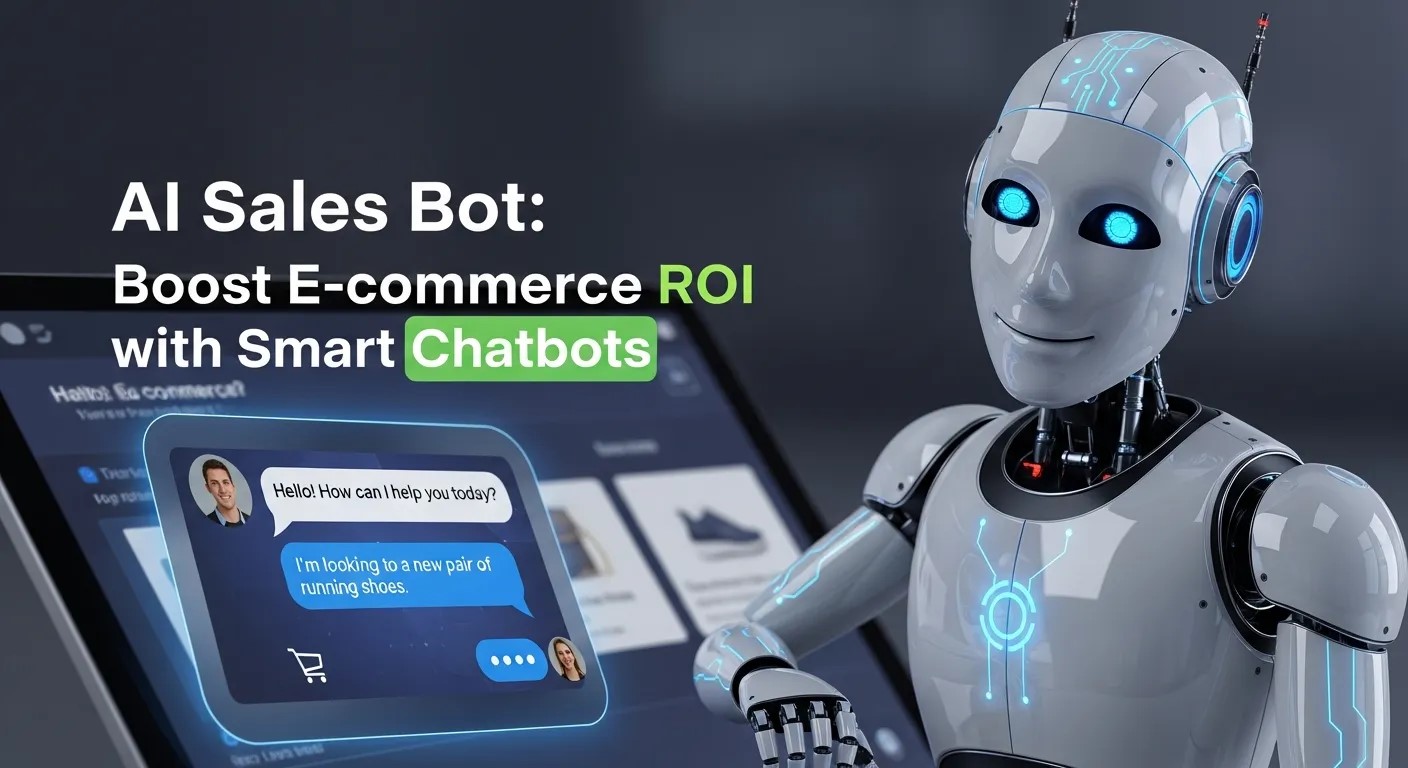
AI Sales Bots transform e-commerce and beyond by offering personalized engagement, actionable insights, and scalable support. From marketing to finance and education, these AI-driven chat systems improve efficiency, boost ROI, and enhance overall user experience.
Boost E-commerce ROI with Smart Chatbots
In today’s competitive e-commerce landscape, businesses are continuously seeking innovative ways to enhance customer engagement, streamline operations, and drive sales. One of the most transformative solutions emerging in recent years is the AI Sales Bot. By leveraging artificial intelligence, these intelligent chat systems can interact with customers in real time, offer personalized recommendations, and even predict purchasing behavior. For online retailers, the adoption of AI Sales Bots is not merely a trend it represents a strategic move to optimize ROI, reduce operational costs, and create a seamless shopping experience for users.
The journey of chatbots in e-commerce has been remarkable. Early bots were limited to simple automated responses, often frustrating customers who expected nuanced interactions. Today, AI Sales Bots integrate machine learning algorithms, natural language processing (NLP), and advanced analytics to provide intelligent responses, anticipate user needs, and deliver actionable insights. These capabilities allow businesses to maintain continuous engagement with their customers, offering assistance, recommendations, and promotions without the need for constant human intervention.
One of the core drivers behind this evolution is the rise of AI Conversational Commerce. Unlike traditional chatbots that rely on pre-programmed scripts, AI Conversational Commerce focuses on understanding the intent behind customer queries and delivering contextually relevant solutions. This approach transforms the shopping experience, turning casual visitors into potential buyers by offering dynamic product suggestions, instant support, and even upselling or cross-selling opportunities. Retailers who implement AI Conversational Commerce report higher conversion rates, improved customer satisfaction, and a significant reduction in abandoned carts.
Understanding the Role of AI Sales Bots in E-commerce

To appreciate the impact of an AI Sales Bot, it is important to examine the multiple roles it plays within an online store. At its core, the bot functions as a virtual sales assistant, capable of guiding customers through their shopping journey. This involves answering questions about product specifications, checking stock availability, assisting with payment options, and providing personalized recommendations based on user behavior.
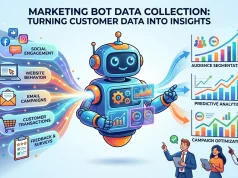
Moreover, AI Sales Bots are adept at capturing valuable customer data. Every interaction is an opportunity to analyze preferences, purchasing patterns, and feedback. This information feeds into predictive algorithms that allow businesses to anticipate future demand, optimize inventory, and design targeted marketing campaigns. Unlike static marketing methods, AI Sales Bots facilitate a dynamic and personalized approach, ensuring that every customer receives relevant offers and information tailored to their needs.
The adaptability of AI Sales Bots extends beyond simple customer support. For example, they can handle post-purchase interactions such as shipment tracking, follow-up offers, and loyalty program enrollment. This end-to-end involvement significantly enhances the overall customer experience and strengthens brand loyalty.
Key Features of AI Sales Bots
Modern AI Sales Bots come equipped with a variety of features designed to maximize e-commerce performance:
Personalized Recommendations – By analyzing browsing history, previous purchases, and demographic information, AI Sales Bots can suggest products that align with the customer’s interests, increasing the likelihood of conversion.
24/7 Customer Support – Unlike human staff, AI Sales Bots are always available. They can answer queries instantly, ensuring that potential customers are not lost due to delayed responses.
Automated Upselling and Cross-Selling – AI algorithms identify complementary products or higher-value alternatives to present to customers during their shopping experience, boosting average order value.
Data Analytics and Insights – AI Sales Bots collect and process interaction data to generate actionable insights, helping businesses understand customer behavior and optimize marketing strategies.
Multi-Channel Integration – From website chat windows to social media platforms and messaging apps, AI Sales Bots can operate seamlessly across multiple channels, providing consistent support wherever customers engage.
The Importance of Metrics in Tracking AI Sales Bot Success
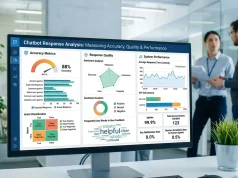
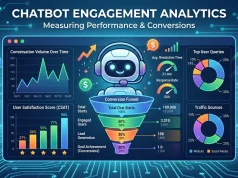
Implementing an AI Sales Bot is only the first step. To ensure a positive return on investment, businesses must monitor specific metrics that indicate success and areas for improvement. Key metrics include:
Conversion Rate – The percentage of customers interacting with the bot who complete a purchase.
Engagement Rate – Measures how effectively the bot captures and maintains customer attention.
Average Response Time – Evaluates the bot’s speed in providing helpful responses.
Customer Satisfaction Score (CSAT) – Gathers feedback to determine the quality of interactions.
Cart Abandonment Reduction – Tracks the effectiveness of the bot in guiding customers toward completing purchases.
A well-designed AI Sales Bot leverages these metrics to continuously improve performance. Through machine learning, the bot adapts over time, refining its responses, suggestions, and strategies to maximize customer satisfaction and ROI.
Integrating AI Conversational Commerce into E-commerce Platforms

One of the most exciting developments in the AI Sales Bot ecosystem is AI Conversational Commerce. Unlike traditional automated systems, this technology allows bots to engage in rich, human-like conversations that are contextually aware and highly personalized.
For example, imagine a customer browsing an online fashion store. An AI Sales Bot integrated with Conversational Commerce can greet the user, offer style recommendations based on previous purchases, provide inventory updates, and even highlight ongoing promotions. If the customer asks for alternatives, the bot can dynamically present options based on size, color, price range, or current trends. The entire interaction mimics a live shopping assistant, providing the immediacy and personalization that modern consumers expect.
The benefits of integrating AI Conversational Commerce extend to operational efficiency as well. Retailers can reduce the workload on human customer service agents, allowing them to focus on complex queries or high-value tasks. Additionally, the continuous learning aspect of AI ensures that the bot becomes more effective over time, refining its suggestions and anticipating customer needs with greater accuracy.
Real-World Use Cases
Leading e-commerce brands have already embraced AI Sales Bots and Conversational Commerce to drive growth. For instance, several global fashion retailers have reported a significant increase in online sales after implementing bots capable of guiding customers through product selections, promotions, and checkout processes. Similarly, electronics stores utilize AI Sales Bots to provide detailed specifications, compare products, and assist in technical troubleshooting, reducing return rates and increasing customer trust.
Even niche industries are seeing the advantages. Specialty food and beverage retailers use AI Sales Bots to recommend products based on taste preferences and dietary requirements. Subscription-based businesses leverage bots to suggest subscription plans, provide reminders, and maintain long-term engagement with users. These examples demonstrate the versatility and transformative potential of AI-driven chat solutions in e-commerce.
Expanding Beyond E-commerce: Chatbots in B2B Marketing
While AI Sales Bot technology has proven transformative for B2C e-commerce, its potential in B2B marketing is equally compelling. Businesses operating in the B2B space face unique challenges—longer sales cycles, complex decision-making processes, and multiple stakeholders per transaction. Traditional marketing strategies often struggle to maintain personalized engagement over extended periods, but AI-driven chatbots offer a powerful solution.
Chatbots in B2B Marketing allow organizations to engage prospects at scale while maintaining a personal touch. These AI systems can nurture leads, provide relevant product or service information, and schedule meetings automatically. For instance, a prospective client visiting a software company’s website can interact with an AI Sales Bot to learn about different subscription plans, request demos, and receive content tailored to their industry, all without waiting for a human representative.
The key advantage of deploying chatbots in B2B marketing lies in consistency and speed. Long email threads and delayed responses often cause potential clients to disengage. AI Sales Bots provide instant answers and guide users efficiently through complex offerings. Moreover, they continuously collect and analyze data from interactions, allowing marketing teams to identify trends, understand client pain points, and optimize campaigns for maximum ROI.
Lead Nurturing with AI Sales Bots
Lead nurturing in B2B contexts requires strategic communication over weeks or months. AI Sales Bots excel here by automating follow-ups, providing timely insights, and personalizing interactions based on previous engagements. For example, an AI Sales Bot can detect that a client frequently requests information about enterprise-level solutions and automatically prioritize content and responses relevant to those interests. This type of targeted interaction significantly increases the probability of converting leads into customers.
Another critical function is qualifying leads automatically. By asking a series of intelligent, context-aware questions, AI Sales Bots can segment prospects according to readiness to purchase, industry, budget, or company size. This reduces the workload on sales teams, allowing human representatives to focus on high-value interactions while the bot handles initial engagement at scale.
Enhancing Multi-Channel Engagement
Modern B2B buyers interact with businesses across various channels, including websites, social media, email, and messaging platforms. AI Sales Bots integrate seamlessly across these channels, providing consistent communication and a unified experience. Whether a potential client initiates a conversation on LinkedIn or returns to the company website after reading an email, the bot maintains context and continuity, ensuring smooth, coherent interactions.
Metrics and Analytics for B2B AI Sales Bots
Just as in e-commerce, tracking performance is essential for B2B AI Sales Bots. Key metrics include:
- Lead Conversion Rate – Percentage of qualified leads that convert into opportunities.
- Response Efficiency – Measures how quickly the bot addresses client inquiries.
- Engagement Depth – Number of interactions per lead, indicating interest and retention.
- Pipeline Acceleration – Reduction in time from lead generation to deal closure.
- Content Effectiveness – Identifies which informational materials drive conversions.
A carefully monitored B2B AI Sales Bot strategy not only improves ROI but also strengthens client relationships by providing timely, relevant, and personalized support throughout the buying journey.
AI Chatbots for Stock Analysis: Transforming Financial Decision-Making

Beyond marketing, AI-driven chatbots have entered highly specialized domains, including finance. AI Chatbots for Stock Analysis are becoming invaluable tools for investors, traders, and financial institutions seeking actionable insights from vast amounts of market data. Unlike traditional financial advisory methods, these AI bots can process real-time stock prices, market trends, and historical patterns, providing recommendations faster and with greater accuracy.
For individual investors, an AI Sales Bot integrated with stock analysis capabilities can answer queries like, “Which tech stocks are trending today?” or “What is the predicted performance of this portfolio?” These bots not only deliver instant responses but also provide visual dashboards and projections, enabling users to make informed decisions efficiently.
Predictive Analytics and Risk Management
One of the most significant advantages of AI chatbots in stock analysis is their ability to predict market movements using machine learning algorithms. By analyzing historical data, news sentiment, and trading patterns, these bots can identify potential opportunities and risks. For example, an AI Sales Bot may alert an investor to unusual activity in a particular sector, suggesting a closer look at the associated stocks before making investment decisions.
Moreover, AI chatbots offer personalized portfolio recommendations. By understanding user preferences, risk tolerance, and investment goals, the bot can propose tailored strategies, ensuring that financial decisions align with individual or corporate objectives.
Streamlining Communication in Financial Services
Financial advisors and institutions also benefit from AI Chatbots for Stock Analysis by automating routine communications. Instead of manually updating clients on market shifts or portfolio changes, advisors can rely on chatbots to deliver timely updates, generate reports, and even answer FAQs regarding market trends. This not only improves efficiency but also enhances client trust and satisfaction by providing consistently accurate and rapid insights.
Example Workflow of AI Chatbots in Stock Analysis
| Step | Function | AI Sales Bot Role | Benefit |
|---|---|---|---|
| Data Collection | Gather real-time market data | Automatic extraction from APIs and financial news | Accurate, up-to-date information |
| Analysis | Evaluate trends and patterns | Machine learning predictions and risk assessment | Predictive insights for decision-making |
| Recommendations | Suggest trades or portfolio adjustments | Tailored strategies based on user profile | Personalized financial guidance |
| Reporting | Generate daily/weekly summaries | Automated reports with visual analytics | Saves time, increases transparency |
| Alerts | Notify users of key changes | Real-time notifications on significant market events | Quick response to opportunities and risks |
The above workflow highlights how AI Sales Bots in finance extend far beyond simple Q&A functionalities, providing sophisticated, data-driven insights that support both professional and retail investors.
Chatbots in Virtual Classrooms: Elevating Education
The potential of AI Sales Bots extends even into education. Chatbots in Virtual Classrooms are transforming how students interact with content, instructors, and peers. By providing instant responses to queries, personalized learning paths, and engagement tracking, AI chatbots enhance the virtual learning experience while relieving instructors from repetitive administrative tasks.
For example, a student navigating an online course platform can ask an AI bot for clarification on complex topics, receive tailored study recommendations, or even schedule virtual tutoring sessions. This approach ensures that learning is continuous, interactive, and adaptive to each student’s pace.
Personalized Learning and Feedback
One of the critical advantages of integrating AI Sales Bots into virtual classrooms is the ability to deliver personalized learning experiences. Bots can track student progress, identify areas of difficulty, and suggest supplementary materials, exercises, or interactive modules. Additionally, students receive instant feedback, fostering engagement and reinforcing learning objectives.
Enhancing Instructor Efficiency
Educators benefit from AI chatbots by AR Quantum Computing administrative tasks such as grading quizzes, monitoring attendance, or providing course updates. This allows instructors to dedicate more time to higher-value tasks, like designing curriculum, mentoring students, and facilitating discussions.
Use Cases in Modern Education
- AI tutors providing real-time explanations and examples
- Bots facilitating group discussions and peer collaboration
- Tracking performance trends to identify at-risk students
- Automating reminders for assignments and deadlines
The integration of AI Sales Bots in virtual classrooms demonstrates the versatility of AI-driven conversational systems. They are not only boosting engagement and learning outcomes but also showcasing the broader applicability of chatbots beyond traditional commercial settings.
Future of AI Sales Bots in E-commerce
The future of e-commerce is increasingly shaped by AI Sales Bots. As machine learning and natural language processing advance, these bots will deliver even more personalized, predictive, and seamless customer interactions. Integration with technologies like AR Quantum Computing and AR Autonomous Agents will create immersive shopping experiences, while analytics-driven insights will enable smarter business decisions. Brands that adopt AI Sales Bots early will gain a competitive edge, optimizing ROI, enhancing engagement, and driving loyalty. The evolution of AI-powered chatbots promises not just automation, but intelligent, human-centric e-commerce growth.
Conclusion
AI Sales Bots have become indispensable tools for modern e-commerce, bridging the gap between technology and personalized customer engagement. By integrating AI Conversational Commerce, businesses can deliver tailored recommendations, streamline support, and drive measurable ROI. Beyond retail, applications extend to B2B marketing, stock analysis, and virtual classrooms, demonstrating the versatility of AI-driven chat systems. With proper tracking of engagement, conversion, and satisfaction metrics, companies can optimize bot performance continuously. Embracing AI Sales Bots allows brands to enhance operational efficiency, deepen customer relationships, and stay competitive in a rapidly evolving digital marketplace.
Frequently Asked Questions (FAQ)
What is an AI Sales Bot?
An AI Sales Bot is an intelligent chatbot that uses artificial intelligence to engage customers, provide recommendations, and optimize sales interactions in e-commerce and other industries.
How do AI Sales Bots improve ROI?
They increase conversions, reduce operational costs, personalize customer experiences, and provide actionable analytics, allowing businesses to make data-driven decisions.
Can AI Sales Bots be used outside e-commerce?
Yes, they are effective in B2B marketing, financial stock analysis, virtual classrooms, and other domains requiring intelligent, automated interactions.
What metrics should I track for AI Sales Bot success?
Key metrics include conversion rate, engagement rate, customer satisfaction, average response time, and cart abandonment reduction.
How does AI Conversational Commerce relate to AI Sales Bots?
AI Conversational Commerce enables chatbots to understand customer intent, provide contextually relevant suggestions, and engage users in human-like conversations, enhancing overall sales performance.