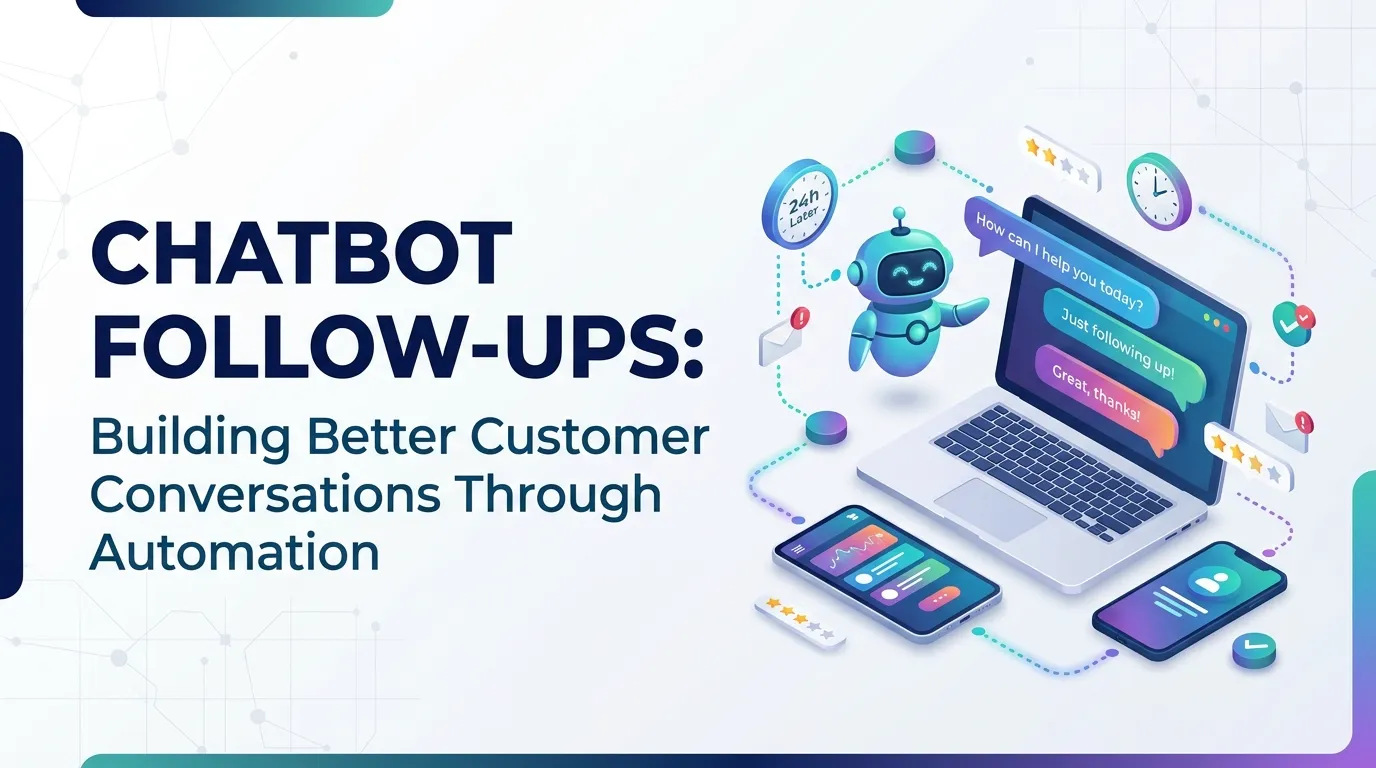
Chatbot follow-ups help businesses maintain meaningful customer communication through automated messages, personalized reminders, and timely responses. By delivering relevant messages at the right time, businesses can nurture leads, answer questions, recover incomplete actions, and strengthen customer relationships. When integrated with CRM systems and marketing activities, chatbot follow-up automation improves communication consistency and supports long-term customer engagement.
Customer communication does not always end when someone leaves a website, asks a question, or interacts with a chatbot. Many potential customers need additional information before making a decision, while existing customers may require reminders, updates, or assistance after their initial interaction. Without a reliable way to continue these conversations, businesses can miss valuable opportunities to build relationships and support customer needs.
Chatbot follow-ups provide a practical way to maintain communication after an initial conversation. Using automated messaging systems, businesses can send relevant responses, reminders, helpful resources, and updates based on a customer’s previous interaction and expressed interests.
For example, someone who asks about a product may need additional details before purchasing. A chatbot can offer relevant information during the initial conversation and, where the customer has agreed to receive further communication, provide a suitable follow-up later. Similarly, a customer who begins a booking process may benefit from a reminder or assistance completing the next step.
The value of this approach comes from relevance rather than message volume. Repeated, generic messages can frustrate customers and reduce trust. Thoughtful follow-ups, on the other hand, help people continue their journey without requiring them to restart the conversation or search for information again.
Businesses can improve these interactions through chatbot follow-up messages, automated conversation reminders, personalized communication, and well-planned engagement sequences. When these elements work together, follow-ups become a useful part of the customer experience rather than another source of unwanted notifications.
Understanding the Role of Chatbot Follow-Ups
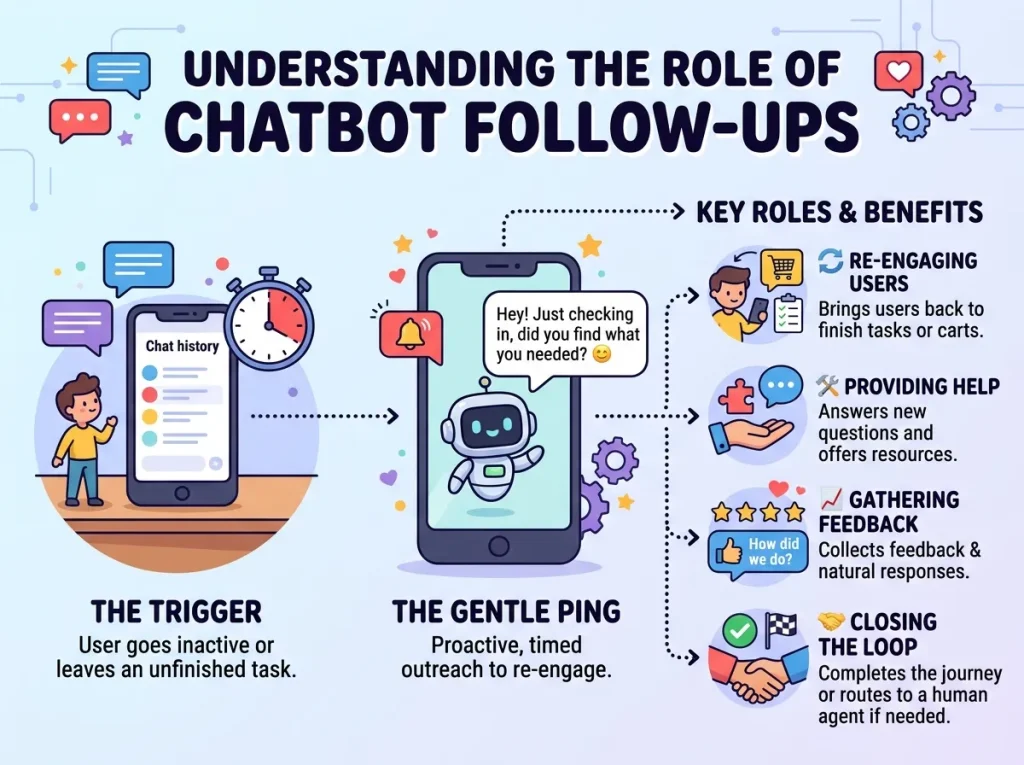
Chatbot follow-ups are messages or conversational interactions that occur after an initial exchange between a user and an automated assistant. They help businesses continue a conversation when additional information, assistance, or action may be useful.
These interactions can support different stages of the customer journey. A visitor exploring a service may need more information, a potential buyer may have questions about pricing, and an existing customer may need an update about an order or account activity. The appropriate follow-up depends on the context and the customer’s needs.
Unlike generic broadcast messages, effective follow-ups use relevant information from previous interactions. A chatbot may recognize that a customer requested product details or asked about a particular service and provide information related to that request. This reduces repetition and makes the conversation more useful.
Follow-ups also help businesses respond consistently when human representatives are unavailable. Automated systems can provide approved information, explain the next steps, or direct customers to appropriate support channels. More complex questions can be transferred to a human representative when necessary.
However, chatbot follow-ups should not be treated as a replacement for meaningful customer service. Their purpose is to make communication more convenient, not to force every customer through an automated process.
When businesses understand the role of follow-ups within the broader customer experience, they can create interactions that are timely, relevant, and aligned with customer expectations.
Chatbot Follow-Up Messages and Customer Engagement
Chatbot follow-up messages work best when they provide a clear reason for continuing the conversation. A message should help the customer understand something, complete an action, or access information connected to the original interaction.
For instance, after someone requests information about a service, a chatbot may share a relevant explanation or direct the person to a suitable resource. Following a support conversation, it might confirm that the issue has been addressed or provide the next steps if additional assistance is required.
The language used in these messages also influences engagement. Short, natural sentences are usually easier to understand than formal announcements filled with technical terms. A conversational tone can make automated communication feel more accessible while maintaining the professionalism of the business.
Context is equally important. A customer who has already completed a purchase should not receive a follow-up that assumes the transaction is still pending. Similarly, someone who has resolved a support issue should not continue receiving messages asking whether they need help with the same problem.
A well-designed chatbot uses conversation history and relevant customer actions to determine what information remains useful. This requires coordination between the messaging system, customer records, and the rules that control message delivery.
Businesses should also make it easy for customers to request more information, speak with a representative, or stop receiving optional messages. These choices preserve customer control and help maintain trust.
When chatbot follow-up messages respond to genuine needs, they can strengthen engagement without making communication feel repetitive or intrusive.
Automated Chatbot Follow-Ups and Workflow Efficiency
Automated chatbot follow-ups allow businesses to continue suitable conversations without requiring a team member to manually send every message. Automation can determine when a follow-up is appropriate, which message should be delivered, and what action should happen next.
This can be particularly valuable for businesses handling a large number of customer inquiries. Without automation, employees may struggle to remember every request, follow up consistently, and maintain accurate communication records.
A chatbot can use predefined conditions to trigger a message after a relevant event. For example, a customer who requests a product demonstration may receive a confirmation and information about the next steps. Someone who asks about a service may be offered related resources, provided the communication is appropriate and permitted.
Automated systems can also organize conversations according to their status. A completed request may be removed from an active follow-up sequence, while an unresolved question can be directed to a support representative. This reduces unnecessary messages and helps teams focus on interactions requiring personal attention.
The benefits extend beyond saving time. Automation creates a more consistent communication process because follow-ups can follow established rules rather than depending entirely on individual employees remembering to send them.
Nevertheless, automation requires regular review. Incorrect triggers, outdated information, or poorly designed workflows can send irrelevant messages at scale. Businesses should test their sequences, monitor delivery behavior, and ensure that customer actions update the system appropriately.
Effective automation combines efficiency with careful oversight, allowing organizations to maintain communication quality as their customer base grows.
Chatbot Follow-Up Automation and Conversational Strategy
Chatbot follow-up automation becomes more effective when it is connected to a broader conversational follow-up strategy. Instead of sending isolated messages, businesses can plan how conversations should progress according to customer needs and previous actions.
A useful sequence begins with the context established during the initial interaction. The chatbot identifies the customer’s request, provides an appropriate response, and determines whether additional communication is necessary. If the customer needs time to make a decision, a later message may provide relevant information. If the customer has already completed the requested action, further promotional follow-ups may no longer be appropriate.
The sequence should have a clear purpose at every stage. A reminder might help someone complete a requested process, while an educational message could explain a feature that the customer previously asked about. A support follow-up might confirm whether a problem has been resolved.
The number of messages matters as much as their content. Too many follow-ups can create frustration, especially when each message repeats the same offer or question. A controlled sequence with clear stopping conditions helps prevent this problem.
Businesses can also use branching logic to make conversations more responsive. If a customer requests additional details, the chatbot can provide them. If the customer declines further assistance, the system can stop the relevant sequence. If a question requires specialized knowledge, the conversation can move to a human representative.
A well-planned strategy therefore combines automation with flexibility. The goal is not to keep every conversation active indefinitely but to provide the right information when it can genuinely help.
Chatbot Reminder Messages and Automated Conversation Reminders
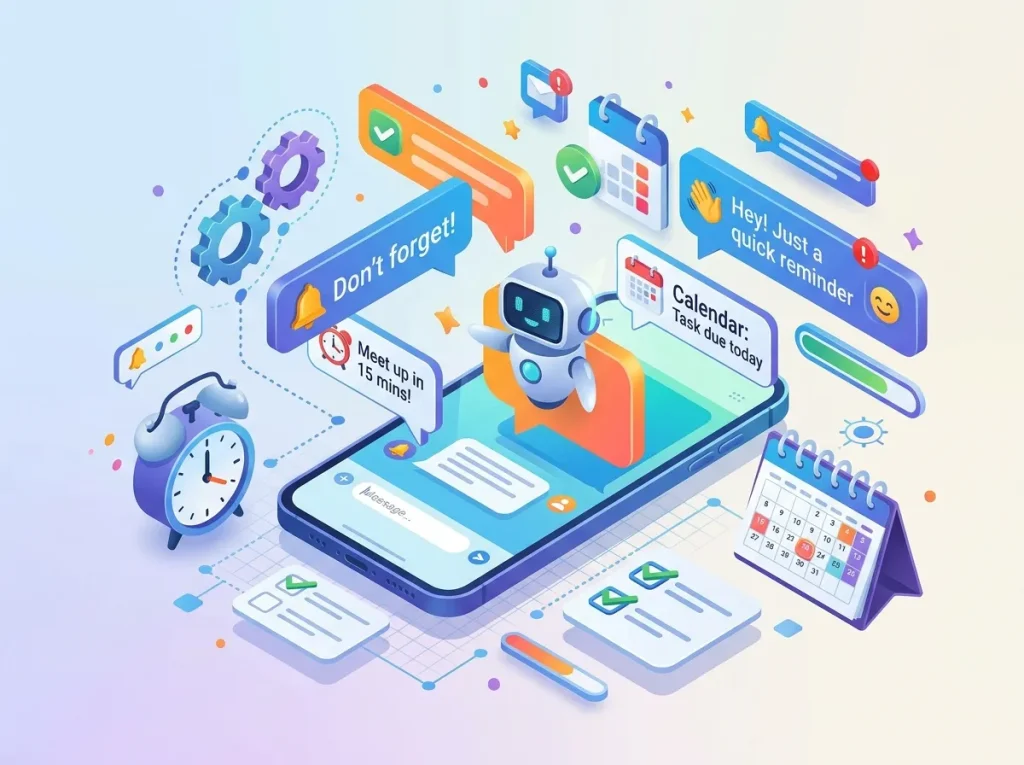
Chatbot reminder messages help customers remember important actions, appointments, deadlines, or unfinished processes. They are especially useful when the next step is clear but may be overlooked because of competing priorities.
A reminder could confirm an upcoming appointment, notify a customer about a scheduled service, or provide an update about a request that requires attention. In each case, the message should communicate the relevant information without unnecessary detail.
Automated conversation reminders can also support customers who begin a process but do not complete it. A business might remind a user about an unfinished booking or offer assistance with a form that was left incomplete. These reminders should be based on reliable activity data and delivered only when appropriate.
Timing is an important consideration. A reminder sent too early may not be useful, while one delivered after the relevant deadline may have little value. Businesses should consider the nature of the action, customer expectations, and any stated communication preferences when deciding when to send messages.
Resources about chatbot message timing can help businesses understand why delivery schedules and conversational context matter when designing automated interactions.
Reminders should also account for changes in customer activity. If an appointment is canceled or a booking is completed, the original reminder sequence should stop or update accordingly. Otherwise, customers may receive contradictory information.
When carefully timed and connected to current records, chatbot reminders help reduce missed steps and make customer interactions easier to manage.
Chatbot Lead Follow-Ups and Customer Follow-Up Automation
Chatbot lead follow-ups help businesses continue conversations with potential customers after an initial inquiry. Rather than allowing a promising interaction to disappear, businesses can use relevant follow-ups to answer questions, share useful information, and help prospects evaluate their options.
The first step is understanding the context of the inquiry. Someone asking about pricing may need a clear explanation of available options, while a person comparing services may want information about features or suitability. Follow-ups become more effective when they address these specific needs instead of immediately pushing for a purchase.
Customer follow-up automation can also connect chatbot conversations with customer relationship management systems. This connection allows relevant information to be recorded, inquiries to be assigned, and follow-up activity to be coordinated with sales or support teams.
For example, a chatbot may collect a customer’s requested service category and preferred contact method. The information can then help a sales representative continue the conversation without asking the customer to repeat everything. If a prospect requests a human conversation, the system can route the inquiry to the appropriate team.
This integration is especially useful when several channels contribute to the same customer relationship. A chatbot interaction can provide context for later email communication, sales outreach, or support conversations. Resources on AI chatbots for CRM explore how chatbot systems can connect automated interactions with customer information and relationship management.
Businesses should ensure that contact information is collected transparently and that further communication follows applicable consent requirements. Automated lead nurturing should remain relevant to the prospect’s interests and respect their communication preferences.
By combining contextual messaging with accurate customer records, chatbot lead follow-ups can help businesses manage inquiries more consistently and support a smoother transition from initial interest to meaningful engagement.
Chatbot Engagement Sequences and Personalized Follow-Ups
Chatbot engagement sequences organize follow-up interactions into a connected series of messages. Each message serves a particular purpose, and the overall sequence responds to the customer’s progress rather than sending unrelated notifications.
For example, after a user requests information about a product, the chatbot may first provide the requested details. A subsequent interaction could answer a related question, while a later message might offer additional support if the customer has indicated that they need it. If the customer completes the relevant action or declines further communication, the sequence should adjust accordingly.
Personalized chatbot follow-ups improve this process by adapting messages to relevant customer information. Personalization may include using the customer’s preferred language, referencing the topic they asked about, or sharing resources associated with their selected interests.
It does not require collecting excessive personal information. In many situations, the context of the conversation provides enough information to make the next message more relevant. Using only the information needed for the interaction also helps businesses maintain a more responsible approach to customer data.
Language can be another important element of personalization. Businesses serving international audiences may need to communicate across multiple languages while preserving the meaning and tone of their messages. Tools and approaches related to AI-NLP chatbot translation can support more accessible multilingual conversations.
Personalized engagement sequences should still feel natural. Overly familiar language, unnecessary references to past behavior, or repeated requests for information can make customers uncomfortable.
The strongest sequences combine relevant context, simple language, appropriate timing, and clear choices. This allows automation to support more individualized communication without making the experience feel mechanical or intrusive.
Integrating Chatbot Follow-Ups With Customer Retention
Chatbot follow-ups can support customer retention by maintaining useful communication after a purchase or other completed interaction. The objective is to help customers receive continued value rather than treating every follow-up as another sales opportunity.
After a purchase, a chatbot might provide setup information, answer common product questions, or explain where customers can find support. Following a service interaction, it may confirm the next steps or help customers access relevant account information.
These interactions can reduce uncertainty and make the customer experience more convenient. They also provide opportunities to identify unresolved issues before frustration grows.
Loyalty-related follow-ups can be valuable when they are connected to genuine customer benefits. For instance, a chatbot may explain how a rewards program works, share information about an available benefit, or help a customer understand their progress toward a reward. Businesses exploring chatbot loyalty programs can use these types of interactions to connect automated messaging with ongoing customer relationships.
Retention-focused follow-ups should not overwhelm customers with constant offers. A useful service update may be more valuable than another promotional message, particularly when the customer has recently contacted support or expressed a concern.
Businesses should also recognize when a human response is necessary. Complaints, complex account issues, and sensitive requests may require direct assistance rather than an automated sequence.
When follow-ups focus on customer value, they can help businesses provide more consistent support and strengthen relationships beyond the initial transaction.
Measuring Chatbot Follow-Up Performance
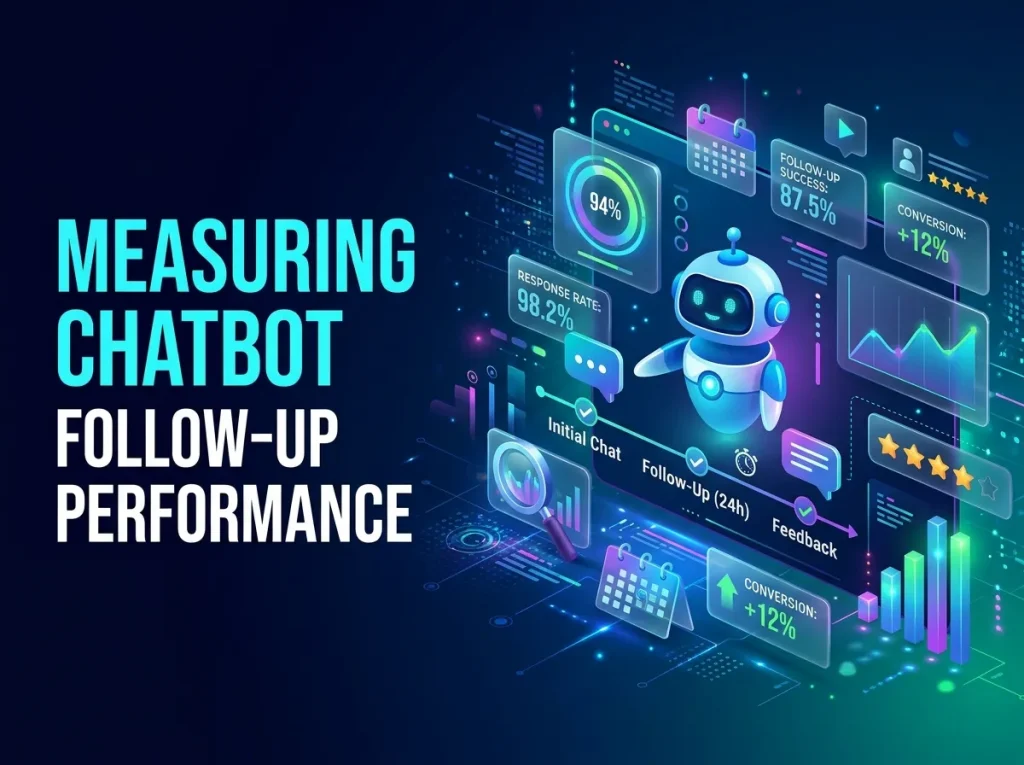
The effectiveness of chatbot follow-ups depends on whether they improve the customer experience and help achieve meaningful business objectives. Counting the number of messages sent is not enough to determine whether an automated sequence is successful.
Engagement indicators can provide an initial view of performance. Depending on the channel, these may include message delivery, response rates, interaction completion, and the number of customers who continue a conversation. Businesses should interpret these measures in context rather than assuming that every response indicates a positive experience.
Conversion metrics can help evaluate whether follow-ups support actions such as completing a booking, submitting a qualified inquiry, or purchasing a product. For customer service workflows, resolution rates and the number of conversations successfully handled without unnecessary repetition may be more relevant.
Businesses should also monitor negative signals, including opt-outs, repeated unanswered messages, complaints, and requests to speak with a human representative. A sequence that produces clicks but also creates considerable frustration may need to be redesigned.
Comparing different message versions can help teams understand which wording, timing, or conversational approach performs better. However, changes should be evaluated carefully so that improvements in one metric do not undermine the overall customer experience.
Regular monitoring also helps identify technical problems. Outdated triggers, incorrect customer statuses, or disconnected CRM records can lead to irrelevant follow-ups. Reviewing these issues ensures that the automation remains aligned with actual customer activity.
Ultimately, successful chatbot follow-ups are measured by the quality and usefulness of the interactions they create. Businesses should aim for relevant communication, successful outcomes, and stronger customer relationships rather than maximizing message frequency.
Conclusion
Chatbot follow-ups help businesses maintain communication after an initial customer interaction while reducing the manual effort required to manage recurring conversations. Through automated messages, contextual reminders, lead nurturing, and personalized engagement sequences, organizations can provide relevant information at appropriate moments.
Success depends on understanding customer needs, selecting suitable triggers, maintaining accurate records, and respecting communication preferences. Businesses should also ensure that automated sequences stop when they are no longer relevant and that customers can access human assistance when necessary.
When integrated with CRM systems and broader customer engagement activities, chatbot follow-ups can improve operational consistency and create smoother customer experiences. By focusing on relevance, timing, and genuine value, businesses can turn automated follow-ups into a practical tool for engagement, support, and long-term relationship development.
Frequently Asked Questions
1. What are chatbot follow-ups?
Chatbot follow-ups are automated messages or interactions that continue a conversation after a customer has engaged with a chatbot. They can provide additional information, reminders, support, or relevant next steps.
2. Why are chatbot follow-ups important?
They help businesses maintain consistent communication, respond to customer needs, nurture leads, and reduce missed opportunities. Well-designed follow-ups can also improve convenience and support customer retention.
3. How does chatbot follow-up automation work?
Chatbot follow-up automation uses predefined rules, conversation history, customer actions, and timing conditions to determine when a message should be sent. The system can also stop or change a sequence when the customer’s situation changes.
4. What should an effective chatbot follow-up message include?
An effective message should have a clear purpose, relevant information, natural language, and an appropriate next step. It should connect to the previous interaction rather than repeat information the customer already received.
5. When should chatbot reminder messages be sent?
The timing depends on the customer’s action and the purpose of the reminder. Businesses should consider deadlines, customer preferences, the urgency of the information, and whether the action has already been completed.
6. How can chatbots help with lead follow-ups?
Chatbots can answer initial questions, share relevant resources, collect necessary inquiry details, and direct qualified leads to sales teams. They can also coordinate follow-up activity through CRM integrations.
7. What are personalized chatbot follow-ups?
Personalized chatbot follow-ups adapt messages to relevant information, such as the customer’s previous questions, selected interests, preferred language, or current interaction status. Personalization should remain helpful and respect privacy expectations.
8. How can businesses avoid sending too many chatbot follow-ups?
Businesses can set frequency limits, establish clear stopping conditions, account for completed actions, and respect opt-out preferences. Each message should provide a meaningful reason to continue the conversation.
9. Can chatbot follow-ups improve customer retention?
Yes. They can provide post-purchase support, explain product features, communicate relevant updates, and help customers access loyalty benefits. Their effectiveness depends on providing useful communication rather than excessive promotions.
10. How can businesses measure chatbot follow-up success?
Businesses can monitor response rates, engagement, completed actions, lead quality, customer satisfaction, and opt-out rates. The most relevant metrics depend on whether the follow-up is designed for sales, customer service, reminders, or retention.